The Online Fitness Coach Handbook
Positioning: why you, in one paragraph
Updated August 2026 · 7 min read
The short version. Positioning is the paragraph that answers “why this coach and not the other three I know?” — without hype and without your life story. One honest paragraph: who you coach, what changes for them, and the one thing about how you work that's actually different. Written once, reused everywhere.
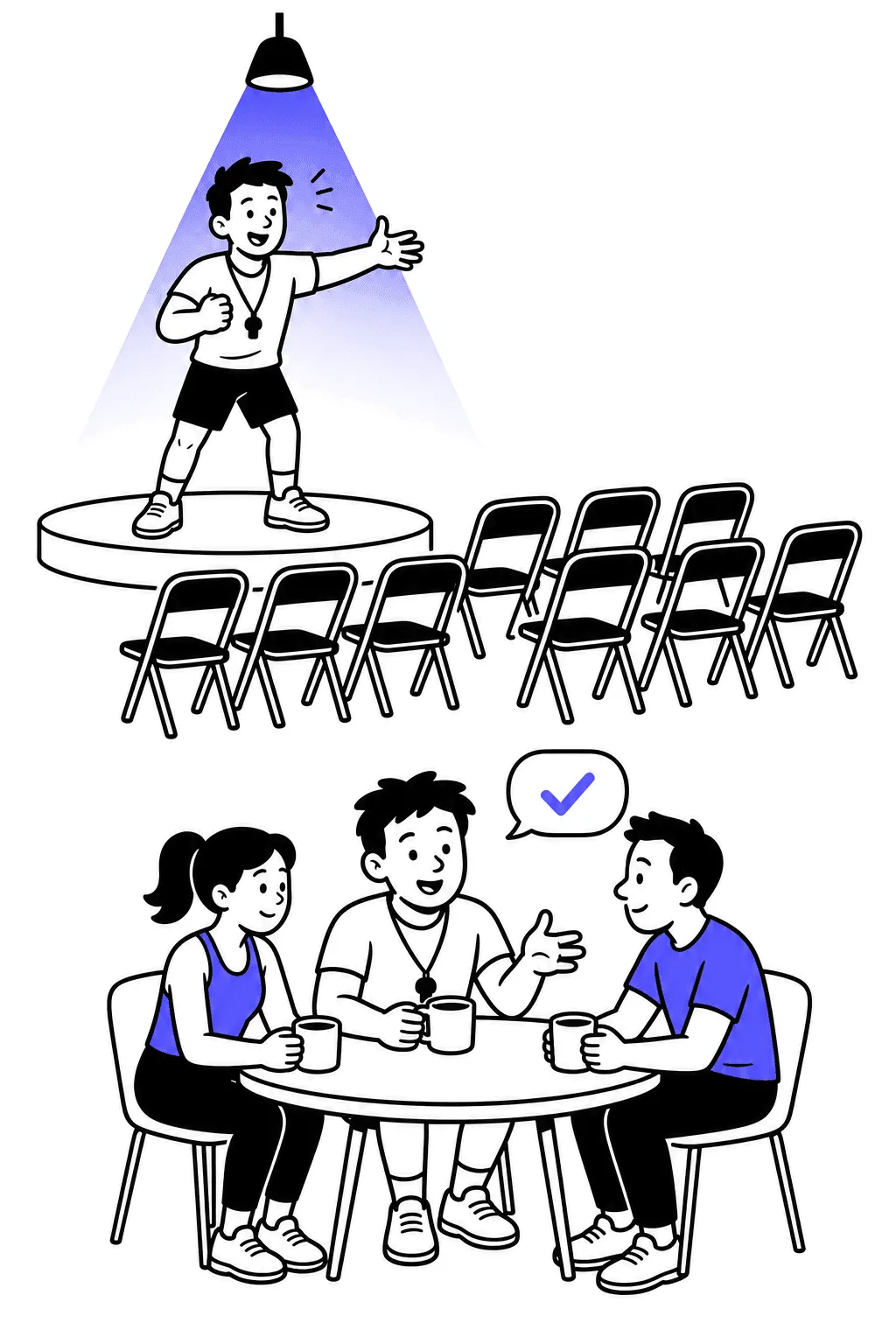
Famous to the family, not to the feed
The influencer model says: be known by a million strangers. The working-coach model is the opposite — be the obvious choice inside a small circle: your past clients, their families, their group chats, your gym, your corner of a hobby community. In that circle you don't need to out-shout anyone; you need to be describable. Positioning is the describable part.
The bar is embarrassingly practical: when someone says “I need to get in shape”, does anyone in that circle say your name — and can they say why in one sentence? That sentence is your positioning working without you in the room.
The paragraph, assembled
Four sentences. No adjectives doing heavy lifting.
- Who + situation. “I coach ___ who ___.” (Your excavated niche from the previous chapter.)
- The change. What's different after six months — concrete, observable, no dollar figures, no “transform your life”.
- The how, in one distinctive detail. Not your whole method — the one thing clients actually mention: feedback on every rep, programs that survive business trips, strength without the gym.
- The proof hook. One true fact that earns the rest: years coaching, results delivered, the population you've handled.
Example shape (write your own, don't adopt this one): “I coach desk-bound dads in their 30s and 40s who used to train and want it back. In six months they're lifting confidently three times a week and out of the ‘my back is 60’ phase. Every workout gets real feedback — you film your sets, I answer on the exercise, not in a Sunday summary. Twelve years on the gym floor before I took this online.”

Where the paragraph lives
Write once, deploy everywhere — this is why it beats “personal branding” as a project:
- your profile bio (compressed to two lines),
- your one-link page / coach page,
- the answer when someone asks “so what do you do?”,
- the top of your announcement post,
- the first message to a referral who “heard about you”.
Consistency is the trick. The circle hears the same paragraph from five directions and it hardens into reputation. Five different clever pitches harden into nothing.

What not to do
- Don't write a manifesto. One paragraph. The moment it needs scrolling, it's marketing again.
- Don't claim a method you can't name. “My proven system” is a guru-marker; “feedback on every rep” is a fact.
- Don't position against other coaches by name. Position by difference, not by disrespect — the circle notices.
- Don't wait until it's perfect. Version one this week beats version five never. You'll rewrite it after your next ten clients anyway.
FAQ
Is this “personal branding”?
It's the useful 5% of it. Colors, fonts and content pillars can wait forever; the paragraph can't.
I coach two different groups. Two paragraphs?
Yes — but one at a time in any given channel. A bio that alternates confuses the circle.
What if my distinctive detail sounds small?
Small and true beats big and vague. “I answer within a day, every day” has closed more clients than “elite results-driven coaching” ever will.
Previous: Your niche is hiding in your client list · Next: Your offer