The Online Fitness Coach Handbook
Your niche is hiding in your client list
Updated August 2026 · 8 min read
The short version. “Niche down” is the most repeated and least useful advice in coaching. The useful version: your niche already exists — encoded in the clients you've coached best and enjoyed most. You don't invent it in a workshop; you excavate it from your own history, then say it out loud.
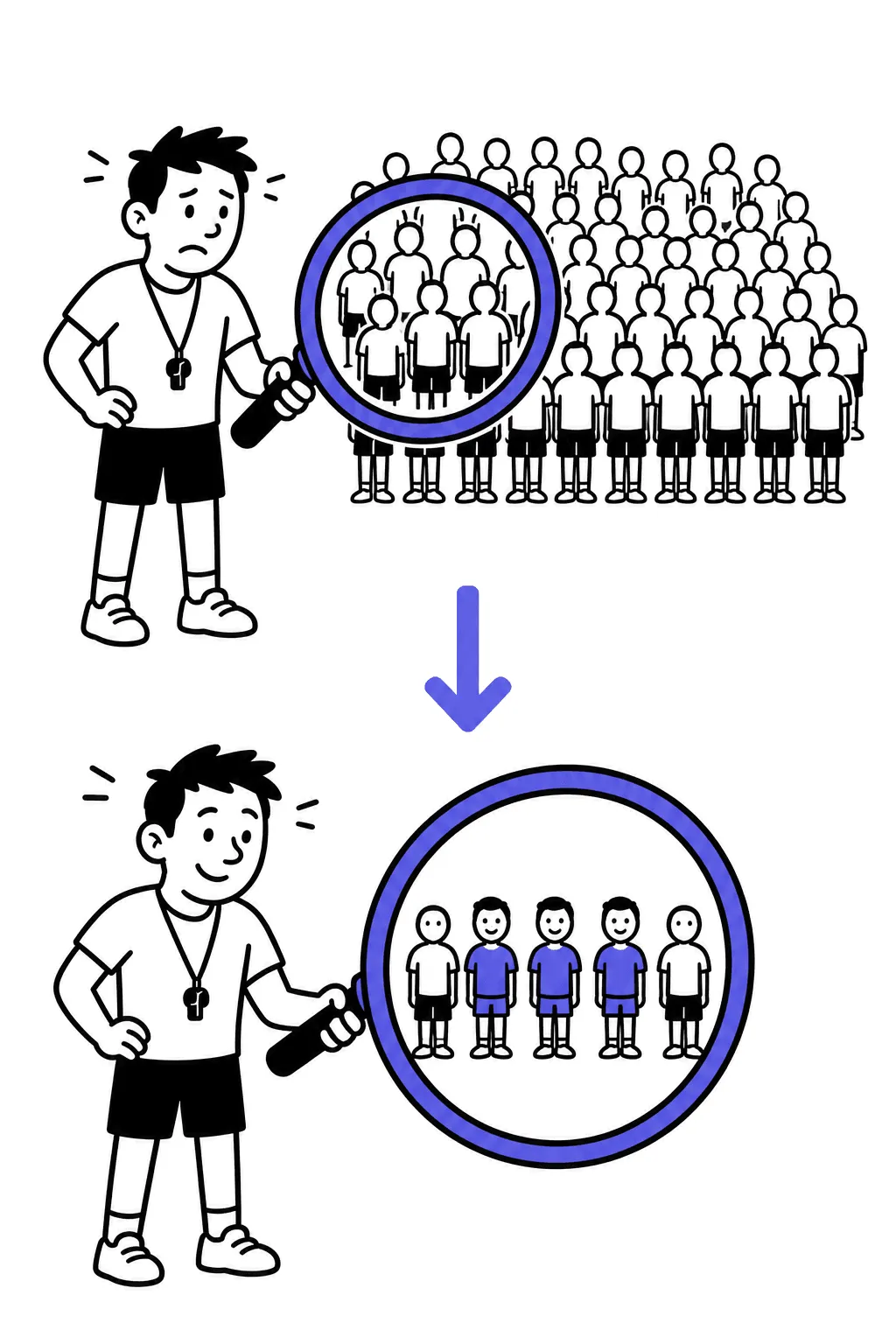
Why “pick a niche” paralyzes people
The standard exercise — pick an avatar, demographics, pain points, give her a name like “Busy Professional Brenda” — produces a document and no clarity. You're guessing about a stranger. Guesses feel arbitrary because they are, so you never commit, and “niching down” becomes the thing you'll do after the next client. Meanwhile:
“Niche down… I know it sounds like marketing gibberish, but it works.”
Both things are true: niching works, and the standard way of doing it doesn't. The fix is direction: work backwards from evidence, not forwards from imagination.
The excavation (20 minutes, real data)
Take your last ten to twenty clients — every one you can remember coaching properly. For each, answer three things:
- Did they get results? Not “did they renew” — did the thing you coach actually work on them?
- Did you enjoy the work? Some wins drain you. That matters at year three.
- Would you take five more exactly like them?
The clients scoring three-for-three cluster. Sometimes by demographic (new dads, postpartum moms, over-50s), more often by situation: people returning after a layoff, desk workers with cranky backs, former athletes who hate feeling average, busy people who want strength without living in a gym. That cluster is your niche. It was there all along — you just hadn't counted.
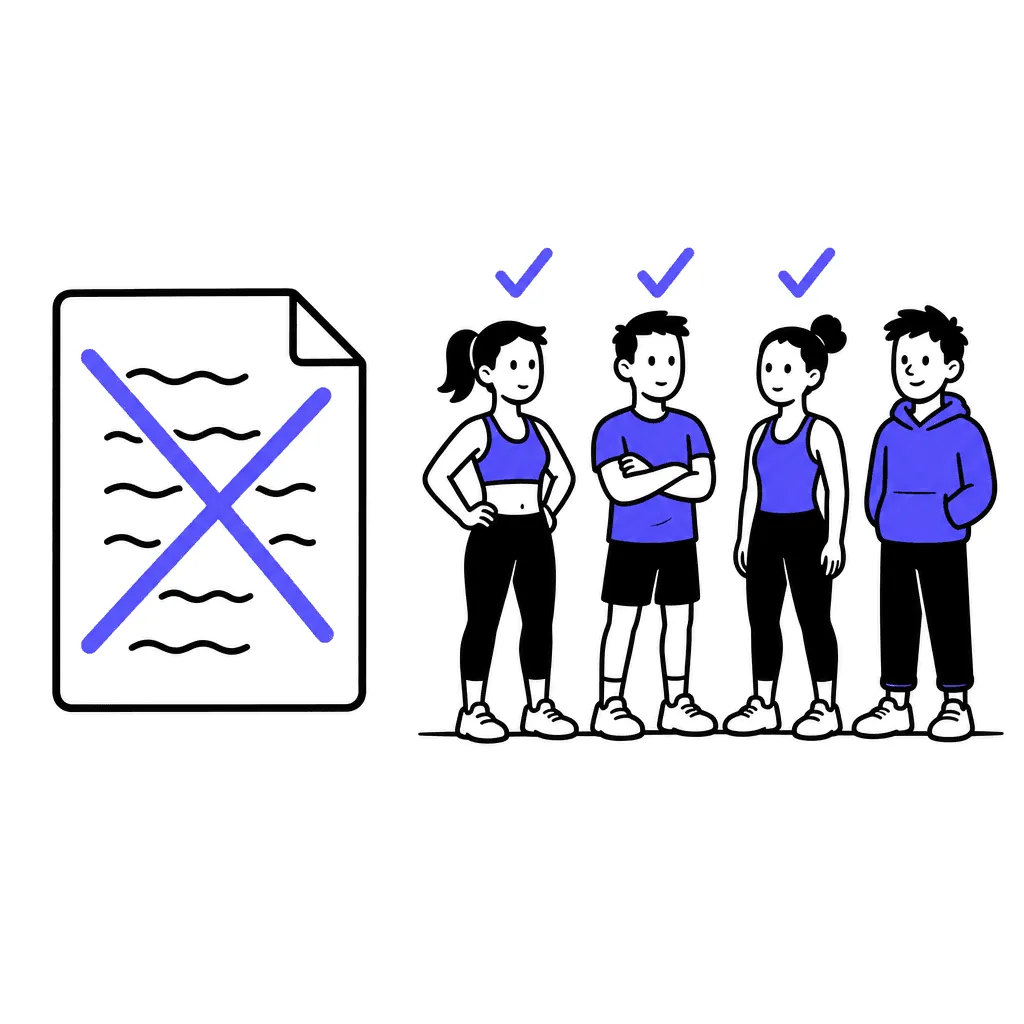
Saying it without shrinking
A niche is a headline, not a fence. “I coach desk-bound dads getting strong again” doesn't mean you turn away a 55-year-old woman — it means the right person instantly knows you're for them. Specific attracts; generic evaporates. The referral test: can a past client finish the sentence “you should talk to my coach, they're great with ___”? If the blank is “everyone”, nobody gets referred.
Two cautions from the market data:
- Be careful building everything on weight loss. The medication era is reshaping that market fast; niches built on strength, capability, longevity and sport are aging better.
- Your niche will evolve. The first version buys you clarity for a year, not a tattoo. Coaches who revisit the excavation yearly stay sharp; coaches who never commit stay invisible.

What not to do
- Don't buy a niche workshop. You just did it, for free, with better data.
- Don't niche by ego. “Executives” sounds prestigious; if your three-for-three cluster is stressed-out nurses, that's your gold.
- Don't wait for the niche to start. If you're pre-excavation, coach whoever comes for a season — you're not stalling, you're collecting the data.
- Don't confuse niche with exclusion. Headline, not bouncer.
FAQ
What if my cluster is “people like me”?
That's the most common honest answer and a great one — you speak their language natively and your own story is the proof.
What if I genuinely enjoy coaching everyone?
Enjoy coaching everyone; market to someone. The headline is for strangers deciding in three seconds; your roster can stay wonderfully mixed.
Two clusters showed up. Which one?
The one you'd take five more of tomorrow morning. If it's still a tie: the one with more money-and-urgency overlap — the situation people actively pay to fix.
Previous: 1:1, hybrid, or in-between · Next: Positioning: why you, in one paragraph