The Online Fitness Coach Handbook
1:1, hybrid, or in-between
Updated August 2026 · 8 min read
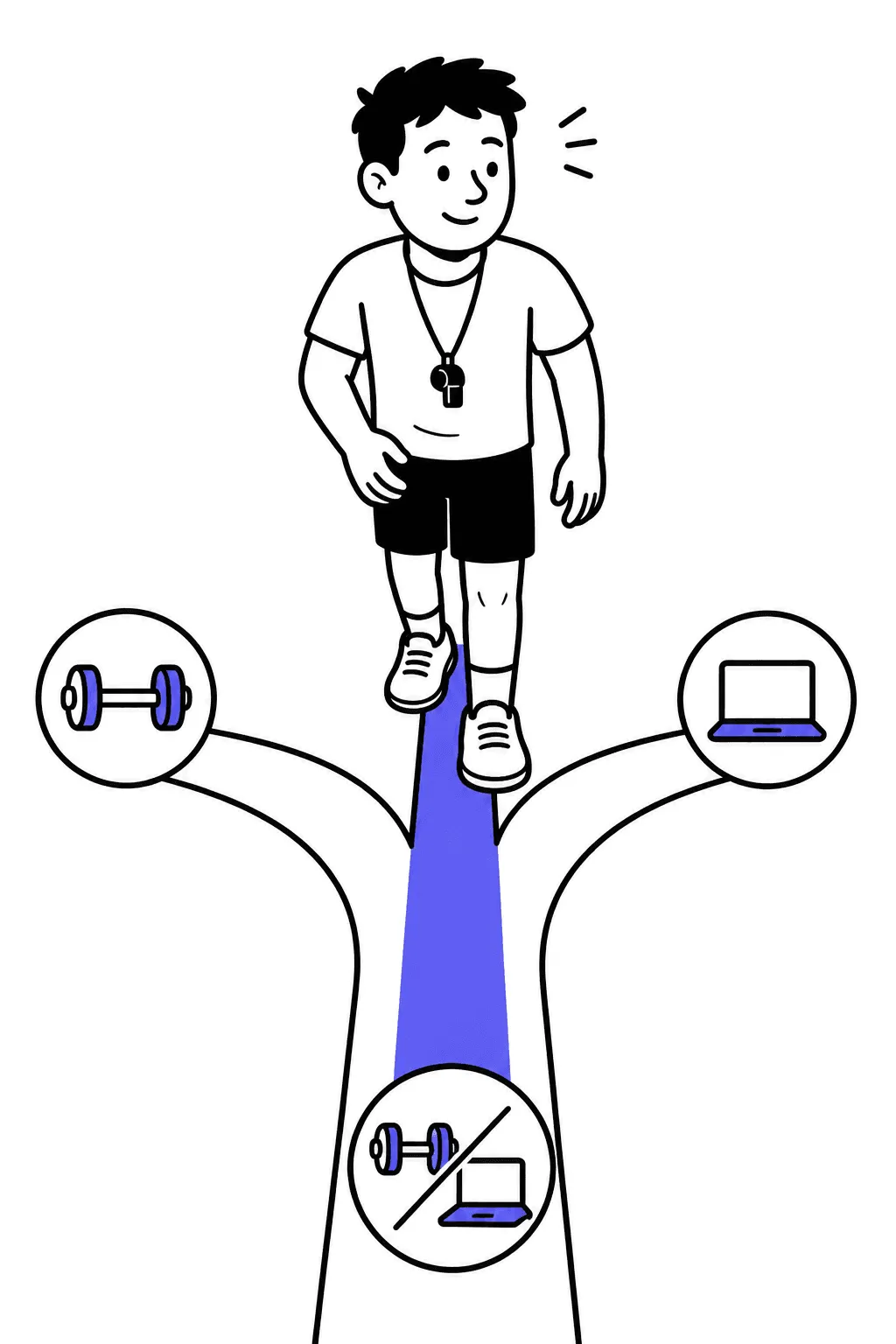
The short version. There are three honest ways to coach people online: fully remote 1:1, hybrid (some floor, some phone), and “in-between” arrangements you invent per client. Hybrid is the right answer for most coaches more often than the internet admits — and not every client belongs online at all.
The three models, honestly
Fully remote 1:1
You program, they train alone, feedback flows asynchronously — they attach results and technique videos, you respond. Geography-free, schedule-free, and the purest version of “your income isn't your body”. The catch: it demands the most from your systems and your communication, because nothing is carried by your physical presence.
Hybrid
One in-person session a week (or month), everything between handled online. This is the underrated workhorse: clients keep the human contact they love, you cut floor hours by two thirds, and your gym remains a warm-lead machine. Most coaches who “went online” successfully actually went hybrid first — some stay forever, on purpose.
In-between
Occasional check-in sessions, online programming for a gym client who travels, seasonal switches. Not a business model so much as flexibility per client — fine, as long as each arrangement has a clear price and clear boundaries (a later chapter deals with what happens when they don't).
Not every client is an online client
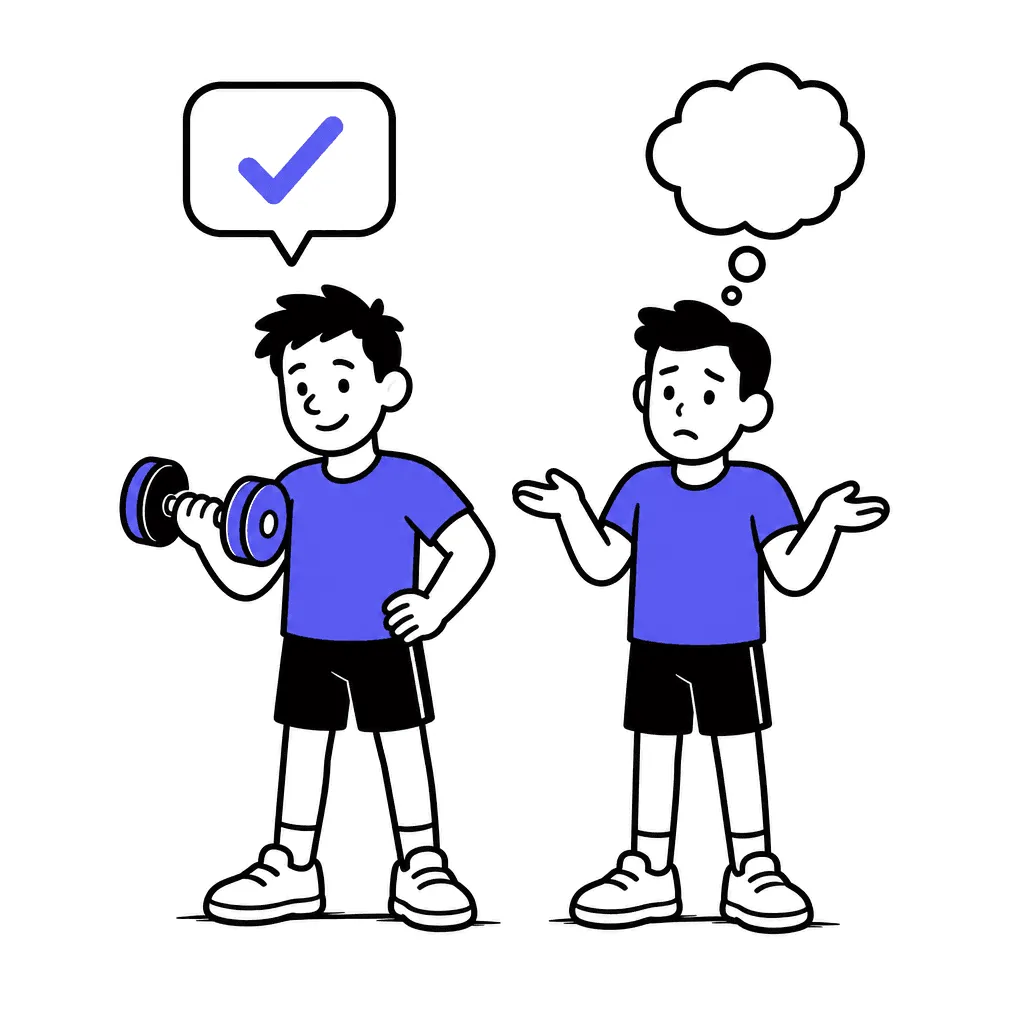
“Not every client is an online client.”
Online works for clients who are self-accountable enough to train alone between touchpoints. It quietly fails for the client who, deep down, pays for the appointment — the person standing next to them at 7am. Moving that client online doesn't upgrade them; it loses them slowly.
Quick sorting heuristic from practitioners: who among your current clients already trains alone sometimes and reports back without being asked? Online candidates. Who cancels when you're sick rather than taking the written workout? Floor people. Serve both — with different offers.
Live video calls: the honest asterisk
You can run training sessions over video call — some coaches do, and clients with home gyms sometimes ask. But know what you're choosing: live calls put your hours back into the product, which resurrects the exact ceiling you left the floor to escape. Most sustainable online practices use asynchronous coaching as the default (programs + recorded technique videos + feedback on the rep) and reserve live calls for onboarding, monthly reviews, or a premium tier — priced accordingly.
Why this book is about 1:1 and hybrid
You'll notice what's missing from the three models: group programs, courses, memberships. That's deliberate. Those are different businesses — audience businesses — with different economics and a different failure mode (marketing full-time, coaching part-time). This handbook is the complete manual for the coaching business: you, real clients, real attention, at a price that respects it. Master that first; it funds every experiment you might run later.

What not to do
- Don't promise “the same as in person, but online”. It's better at some things (consistency, data, availability) and worse at others (presence, spotting, vibe). Sell what it is.
- Don't move your whole roster at once. The 90-day plan exists for a reason: five self-accountable clients first.
- Don't invent a new arrangement per client without a price. Flexibility without structure is how coaches end up running eleven bespoke services for the price of one.
- Don't do live-call training by default. Do it by decision, priced as your time deserves.
FAQ
Can I stay hybrid forever?
Yes. Hybrid isn't a transition state you failed to complete — for many coaches it's the destination: best retention, warmest lead flow, half the floor hours.
What about running online group challenges?
As a marketing event, fine. As your core business — that's an audience business; this book deliberately isn't about it.
My client wants online but I know they'll drift. Do I say no?
Say “not yet, and here's why” — and offer hybrid. Losing a training fee beats collecting one from someone quietly failing.
Previous: Before you start: the honest inventory · Next: Your niche is hiding in your client list