The Online Fitness Coach Handbook
Before you start: the honest inventory
Updated August 2026 · 8 min read
The short version. Online coaching is a great business built on one unfair advantage: already being a good coach. Before you spend a dollar or film a single video, take twenty minutes to check what you actually have — experience, people, materials — and what you're expecting. Most online coaching failures are packing failures, not talent failures.
The uncomfortable doctrine
Ask working online coaches what you need first, and the answer is remarkably consistent — and it isn't a funnel:
“Spend at least 1-3 years coaching in person. You won't be successful online otherwise. You have nothing to market yourself as, no expertise to demonstrate, no client portfolio.”
The courses selling “start TODAY” disagree, for obvious reasons. But the practitioners are right about the mechanism: online, you lose the gym floor's free trust. Nobody sees you coach. Your credibility has to come from somewhere — past clients, results, reps. That's why this book assumes you're already a coach. If you're not yet, the best online business move is an offline job.
The inventory
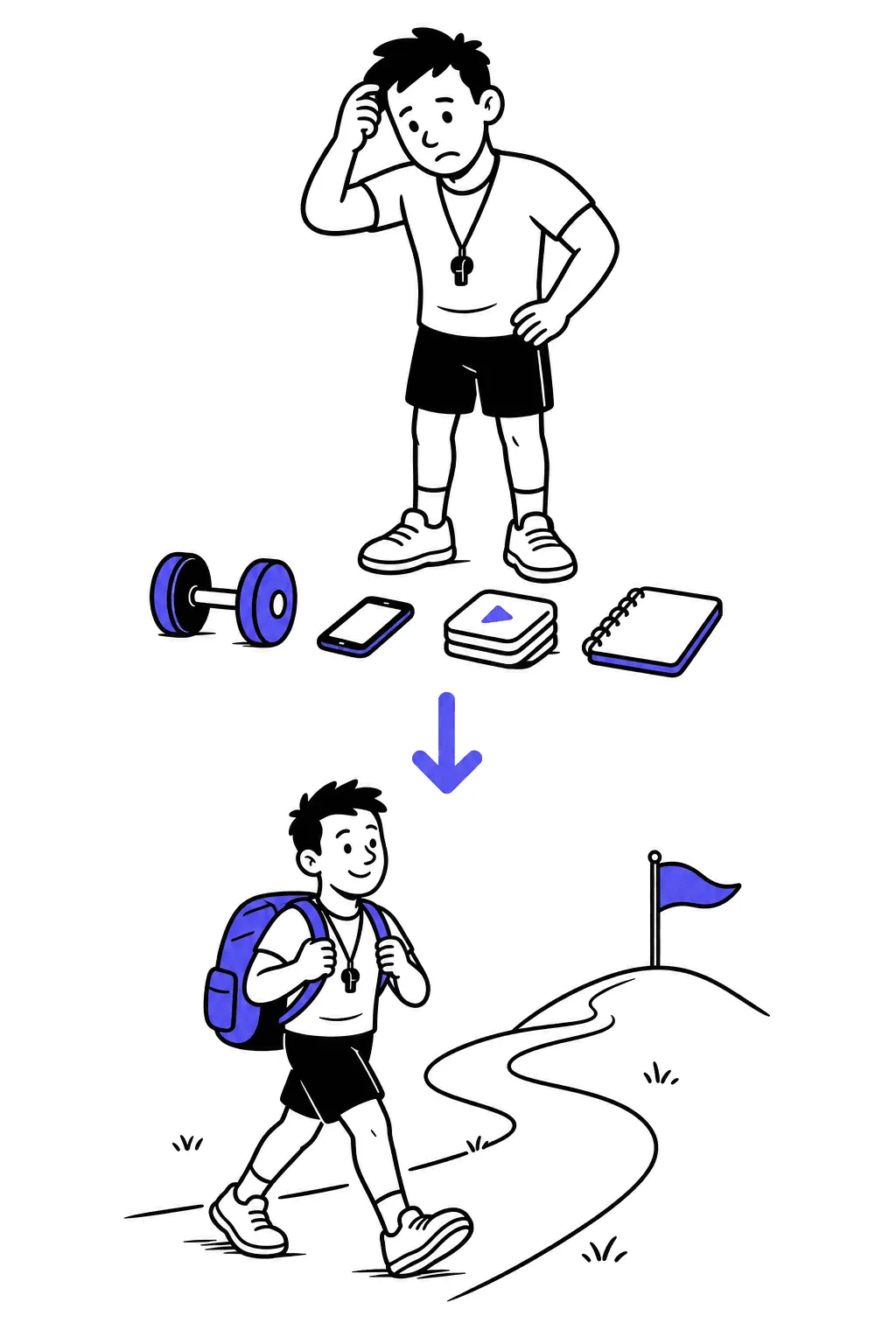
Take stock of four things. Be honest — nobody's watching.
1. Coaching reps
Have you coached real humans through real plateaus, aches and motivation dips? Online removes your ability to improvise in the room; you need the pattern library in your head already.
2. People who know you coach
Current clients, past clients, gym regulars, the colleague who asks you about protein. This list — not your follower count — predicts your first-year revenue. Count them. Twenty names is plenty.
3. Materials
Exercise demo videos are the big one — your future programs point at them. Got a library already? You're weeks ahead. Got nothing? That's fine, but budget a filming weekend before you expect your first online client to have a smooth week one — there's a whole chapter on filming.
4. Expectations
“Don't be fooled into thinking it's passive income. It's just a different kind of hard.”
Online coaching is a service business. The leverage is real — no commute, no floor hours, geography-free — but it's leverage on your attention, not freedom from it.

What you don't need
- A big following. Your first clients come from people who already know you — the first five chapter is entirely about this.
- A logo, an LLC, a brand palette. Paperwork follows revenue, not the other way around (see the actual legal minimum).
- Perfect videos. Clear beats cinematic. Your phone is enough.
- A niche statement polished to death. Your niche is hiding in your client list — you'll discover it, not invent it.

What not to do
- Don't quit your income source to “focus”. The transition chapter exists precisely so you never have to jump without a bridge.
- Don't buy readiness. No $3,000 course makes you ready; twenty honest conversations with people who trust you do.
- Don't wait for perfect. The inventory is about knowing your gaps, not filling them all before you start.
- Don't compare your month 2 to someone else's year 3. That one's verbatim from a coach who learned it the hard way.
FAQ
I've only coached in person for a year. Too early to go online?
If you have real clients with real results and people asking about online — start hybrid, small. The doctrine is a warning about zero experience, not a permission system.
I have experience but zero videos. Can I start anyway?
Yes — with your warm list and simple written programs while you film. Just don't onboard ten clients into an empty library.
Is online coaching saturated?
The feed is saturated. The service — a real coach who answers, adjusts and cares — is not. You're competing with the three coaches your prospect actually knows, not with two million reels.
Previous: From the gym floor to online · Next: 1:1, hybrid, or in-between