The Online Fitness Coach Handbook
From the gym floor to online
Updated August 2026 · 12 min read
The short version. You don't need an audience, a personal brand, or a $5,000 mentorship to take your coaching online. You need the asset you already have — the list of every person you've ever trained — and a boring 90-day plan for converting a slice of that list into online clients. That plan is this chapter.
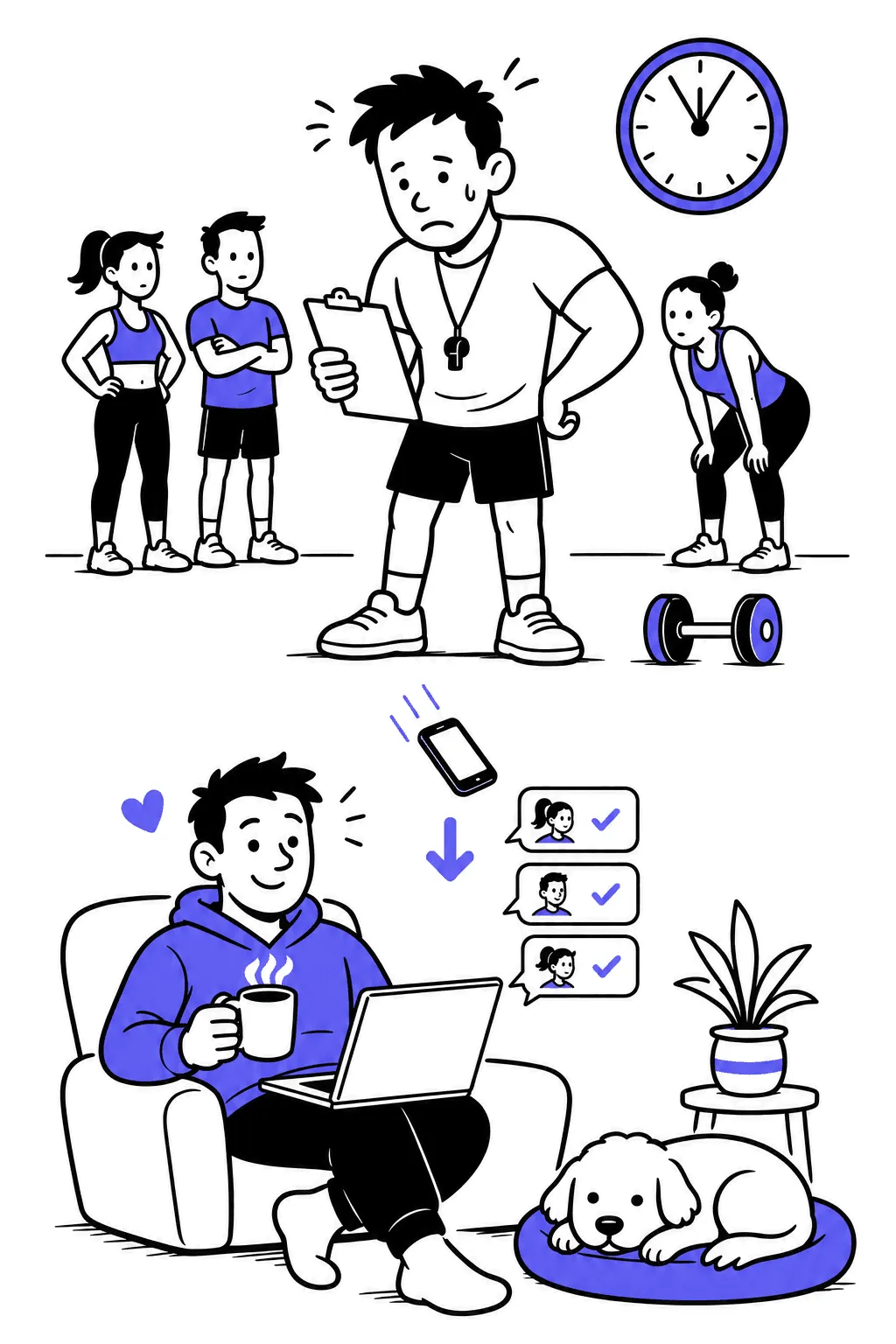
The math that ends careers
Every busy trainer eventually does the same arithmetic on a napkin:
- 30–35 sessions a week is what “fully booked” actually means
- each session costs an hour of your spine, knees and voice
- your income stops the moment your body does
“35 clients a week across two gyms… body is cooked.”
There's no promotion at the end of a fully booked calendar. The hourly model has a ceiling, and the ceiling is made of cartilage.

Your ceiling, in numbers
On the floor, that's
$7,794/mo
for 30 hours a week of your body's time — and it stops when you do.
The same money online is
39 clients
≈ 20 hours a week of desk work — none of it standing on a gym floor at 9pm.
Assumes ~30 minutes per client per week for programming and check-ins once your system is set up. Your spine counts these hours differently.
The move that actually works is embarrassingly boring
Forget what the ads told you. Trainers who successfully go online almost never start with content, ads, or a niche worksheet. They start with the list: current clients, past clients, the people who ask you questions between sets, the phone contacts who know exactly how you coach.
One coach in our research corpus described writing a plain email to his old client base — about 500 addresses collected over the years. A third of them became online clients. No ads, no reels, no landing page drama.
This isn't a growth hack. It's the referral trust you've been building for years, pointed at a different offer. Strangers need months of convincing; your list needs one honest email and a clear price.
“But I'm not an influencer”
Good news: nobody's asking you to be.
The influencer route is real but brutal — practitioners who've tracked it put it at roughly seven hours of watch time before someone books a call. That's hundreds of reels for one client. If you have a 6am shift and a family, that math is not for you.
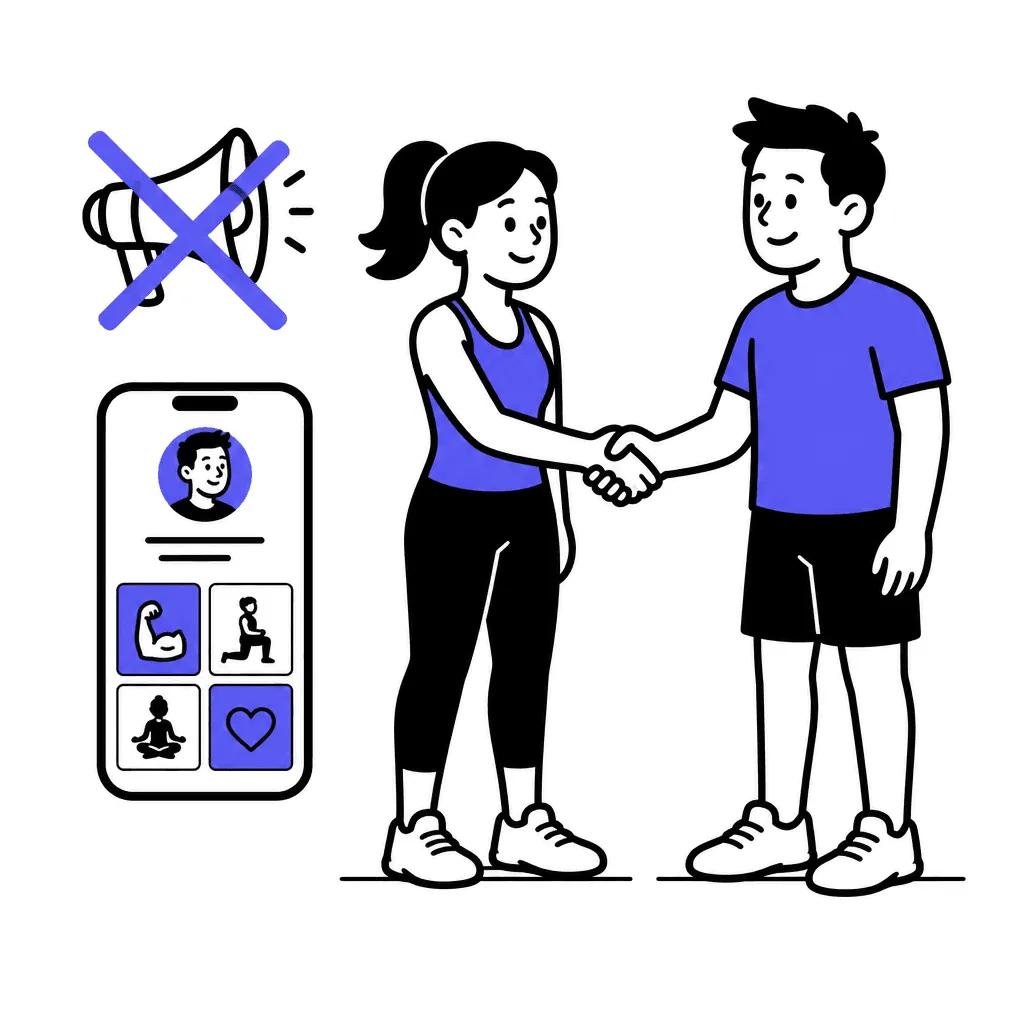
Your Instagram's actual job is much smaller: it's a business card, not a lead machine. When a past client recommends you to a friend, the friend checks your profile for thirty seconds to confirm you're real and still coaching. That's the whole truth of it.
The 90-day plan
Days 1–30: five clients, zero risk
Don't quit anything. Pick the five clients who already trust you most and offer them a hybrid deal: one in-person session a week instead of three, the rest of the week programmed and checked in online, at a slightly lower total price. You just bought back ten hours of floor time without losing a client.
Days 31–60: write the email
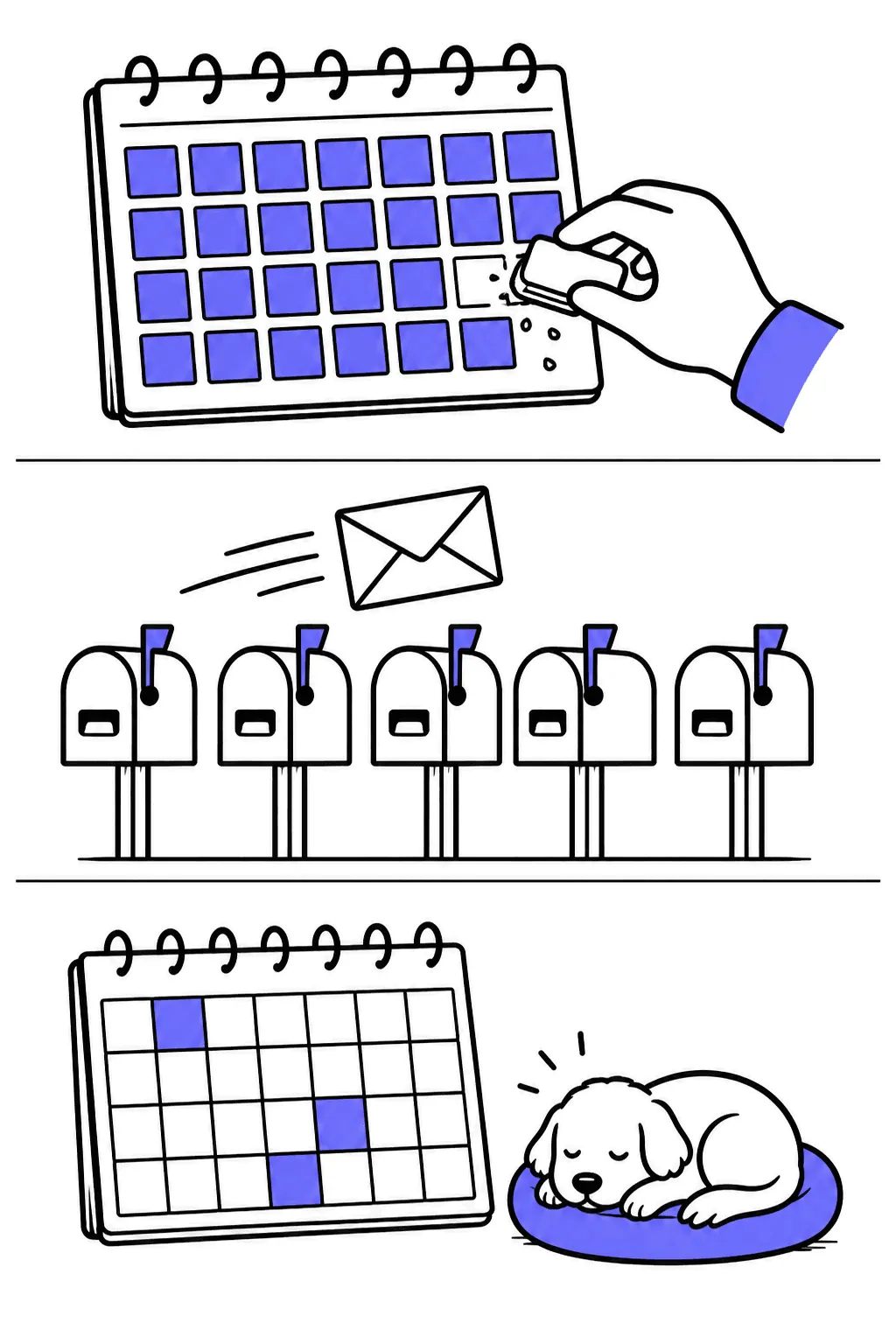
One honest message to everyone you've ever trained. What you're doing now, who it's for, what it costs, how to start. No countdown timers. People who moved away, people who “got too busy”, people who stopped because of money — online coaching solves all three.
Days 61–90: raise the floor
By now you know your real online capacity and your real price. Cut one gym day. Then another. Keep the floor shifts you actually enjoy — plenty of great online coaches never go fully remote, and the gym keeps refilling your list.
What not to do
- Don't buy the $5,000 map. The mentorship industry sells exactly the plan you just read, wrapped in a “secret system”. You needed ten ways to get clients and permission to pick two. Consider permission granted.
- Don't torch the gym bridge. The dramatic “I quit!” post feels great for a day. The gym is where your list refills itself.
- Don't build your whole offer on weight loss. GLP-1 changed that market for good. Strength, mobility, longevity, sport-specific — alive and underserved.
- Don't start a content treadmill you can't sustain. One good email beats thirty rushed reels.
“Will it feel less professional to my clients?”
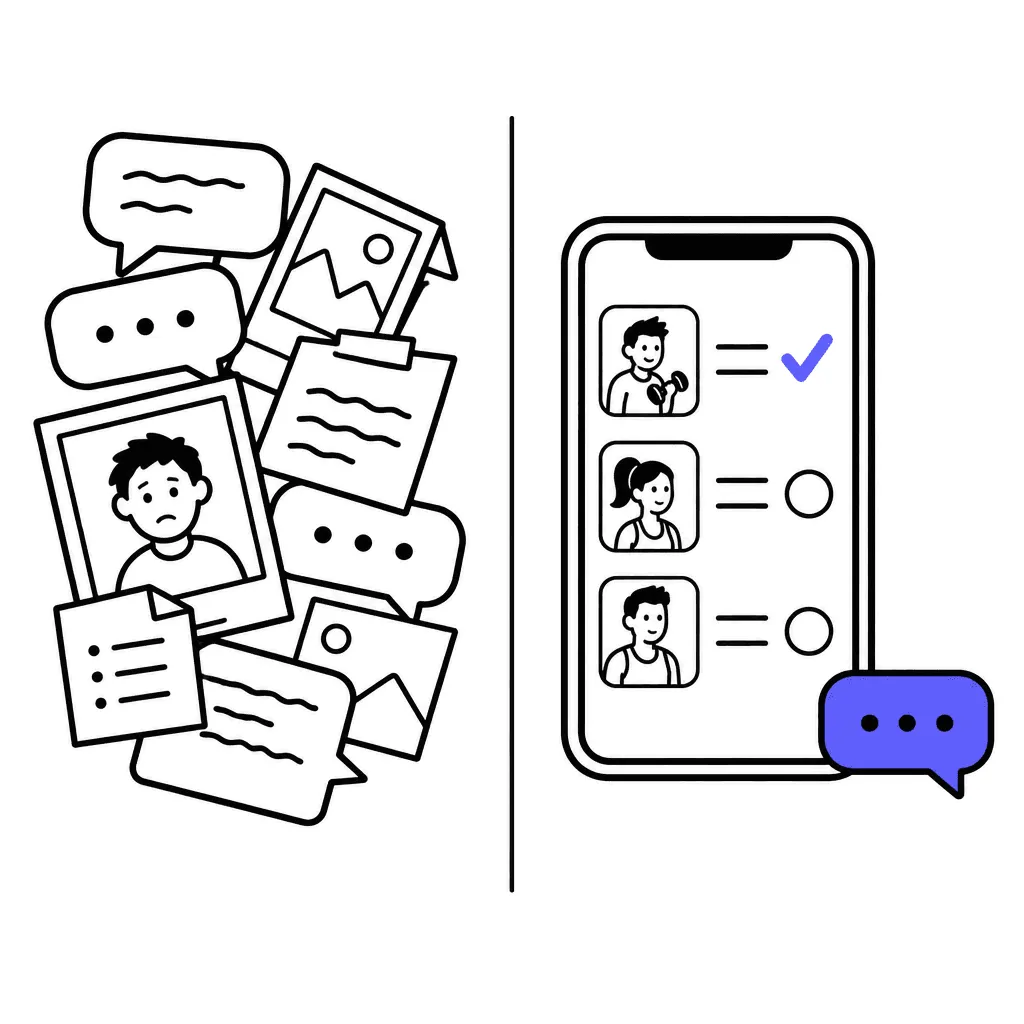
This is the fear nobody says out loud: that online coaching means messy WhatsApp threads, payment requests with a muscle emoji, and looking like an amateur to people who used to see you in your element.
“When a client gets a clean invoice from Stripe it signals that you're running a real business. When you send a Venmo request with a muscle emoji it signals that you're winging it.”
The fear is legitimate — and it's a tooling problem, not a talent problem. Honestly: spreadsheets and a chat app will carry you to about 10–15 online clients. Past that, the cracks show — scattered check-ins, lost videos, chasing payments. Whatever platform you pick (including ours — this handbook is published by one), the bar is the same: your client should get a cleaner, more looked-after experience online than they ever got between gym sessions. Online done right feels like an upgrade, not a downgrade.
FAQ
How many clients do I need to replace my gym income?
Run your numbers in the calculator above. The typical shape: 20–40 online clients on a monthly retainer replace 30+ floor hours a week, depending on where your retainer lands.
Should I go hybrid or fully online?
Hybrid first, always. It de-risks the transition — and most trainers keep one or two floor days permanently, by choice.
What about clients who can't afford full online coaching?
Keep a smaller check-in tier. Someone paying a third of your full rate for weekly programming is still better revenue per hour than a floor session.
When do I need software?
Around 10–15 clients — the point where juggling five apps starts costing you clients, not just evenings.
Next chapter: Before you start: the honest inventory