The Online Fitness Coach Handbook
The boring armor: waivers, insurance, scope
Updated August 2026 · 8 min read
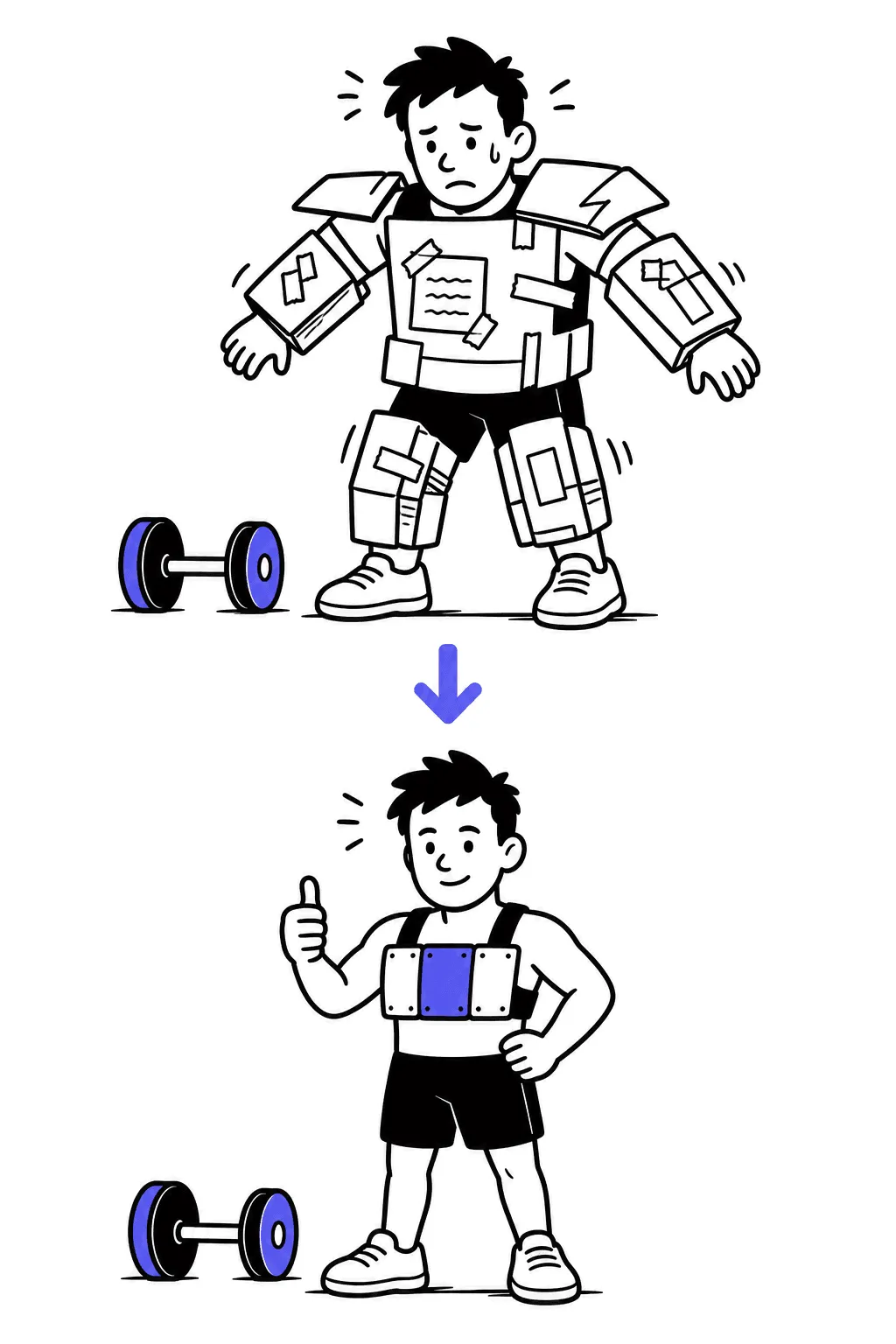
The short version. The legal side of online coaching is smaller than your anxiety says and bigger than your to-do list admits. Three pieces of armor before your first paying online client: a signed liability waiver, professional insurance that explicitly covers online delivery, and a clear sense of where coaching ends and medicine begins. Everything else can follow revenue. (One disclaimer for this whole chapter: rules vary by country and state — treat this as the checklist of questions, and verify locally.)
Piece one: the waiver, signed before sweat
“Get a liability waiver signed before your first session. Not after.”
The waiver (liability release + informed consent) is the single non-negotiable document. Online it matters more, not less: nobody's spotting your client, and their environment is beyond your control. Practitioner baseline:
- Signed before workout one — during onboarding, not “eventually”. Digital signature is fine almost everywhere.
- Written for online delivery: acknowledges training without in-person supervision, in the client's own space, with their own equipment.
- Paired with a health screen (a PAR-Q-style questionnaire): it protects the client first and demonstrates professional diligence second.
- From a real template for your jurisdiction — insurers and professional bodies provide them; a lawyer's one-hour review is the premium version once revenue justifies it.
Piece two: insurance that knows you're online
The mistake isn't skipping insurance — most coaches have some, via a gym or an association. The mistake is carrying a policy that quietly assumes in-person delivery. When you go online, one phone call or form matters: does professional liability (and general liability where relevant) explicitly cover remote/online coaching, in the places your clients live? Cross-border clients are the detail to raise proactively. Boring call, twenty minutes, real armor.

Piece three: scope — the line that protects everyone
- Pain, injuries, symptoms → refer out. “That's one for a physio/doctor — here's how we train around it meanwhile” is a complete, professional sentence.
- Nutrition: habits and guidelines, not prescriptions. Where exactly the legal line sits varies by jurisdiction — some regions restrict meal planning to licensed dietitians. Habit-level coaching is broadly safe territory; clinical conditions are not.
- Mental health → you're an ally, not a therapist. Care, notice, and refer.
Scope discipline isn't just legal cover — it's positioning. The coach who says “that's beyond my scope, here's who to see” reads as more professional, not less. Gurus promise everything; professionals draw lines.
The paperwork that can wait
Beginners invert the order: they form an LLC before they have a client and skip the waiver because it feels awkward. The practitioner order is the reverse:
- Now (before client one): waiver + health screen, insurance call, scope clarity.
- At real revenue: business registration appropriate to your country, a separate bank account (next chapter), terms of service for your offer.
- Later, if ever: trademarks, contracts beyond templates, entity optimization — problems of scale you'll be glad to have.

What not to do
- Don't coach a single online session without the waiver. The one time it matters, it's the only thing that matters.
- Don't assume your gym's insurance follows you home. It almost never does.
- Don't play dietitian. The meal plan that helped one client can be the complaint that ends your business in the wrong jurisdiction.
- Don't let legal anxiety become procrastination. Three pieces, one focused afternoon, done — this chapter is deliberately short.
FAQ
Do I need an LLC/company before starting?
Usually no — most coaches start as sole traders/self-employed and formalize at revenue. Country-specific; the waiver and insurance come first either way.
My client is in another country. Whose rules apply?
Genuinely murky — mention cross-border clients to your insurer and use a waiver that specifies governing law. This is the one spot where a professional's hour is cheap.
Are digital signatures actually valid?
In most jurisdictions, yes, for this class of document. Your platform's onboarding or any reputable e-sign tool is fine; a photographed paper signature also works.
What records should I keep?
Signed waiver, health screen answers, and your program/feedback history — your platform keeps that last one automatically. If you ever need them, you'll need them organized.
Previous: Your tech stack (and why it doesn't matter much) · Next: Money hygiene: accounts, records, taxes