The Online Fitness Coach Handbook
Onboarding: the first 30 days
Updated August 2026 · 8 min read
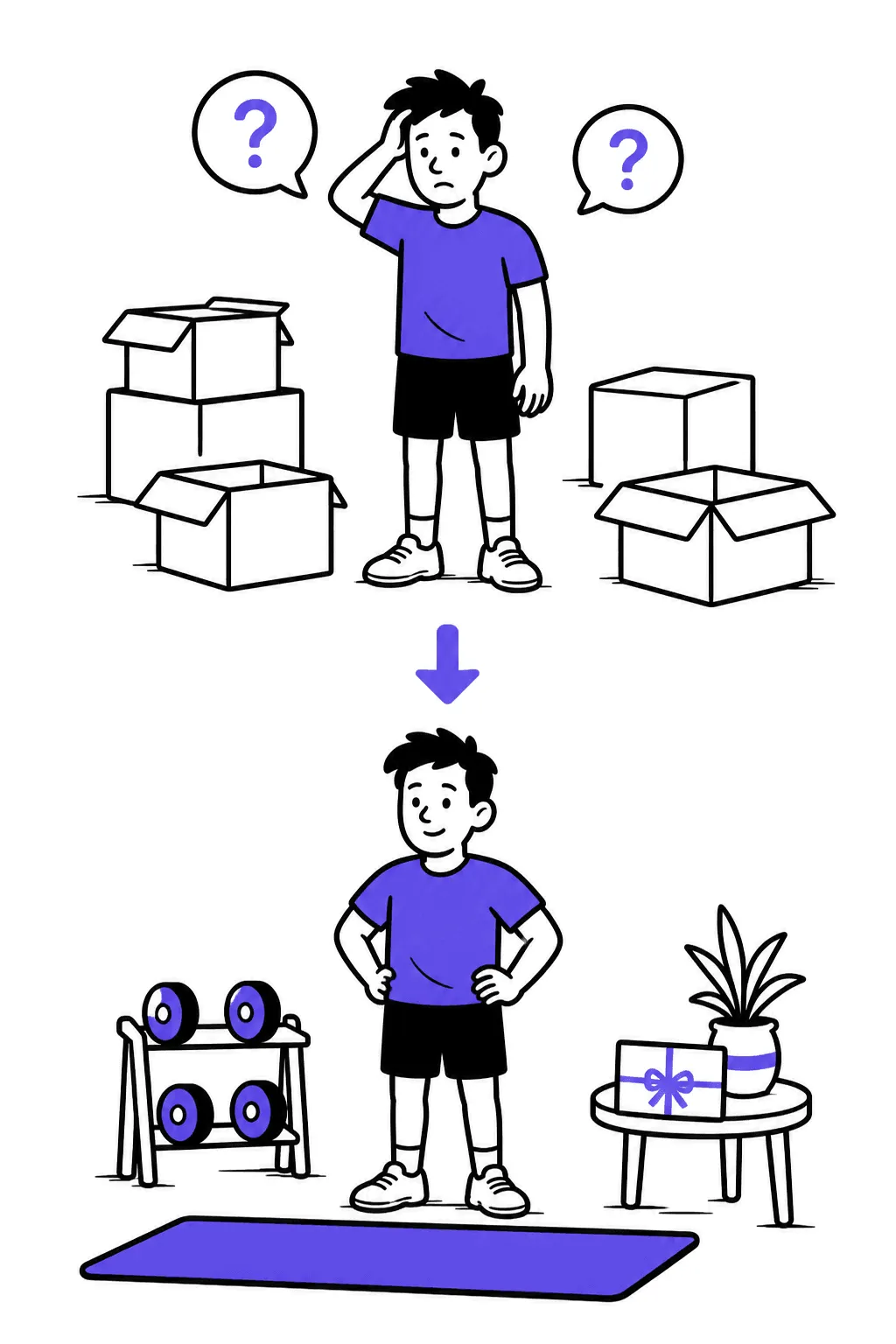
The short version. Retention is decided in the first month, not the sixth. A great onboarding is boring and repeatable: an intake form before the first call, a waiver before the first workout, expectations in writing, and a deliberately easy first two weeks. The client should land in a furnished apartment — not a moving truck.
Before day one: the intake
“Send an onboarding form before the first call — medical history, goals, experience, equipment, schedule.”
The intake form is your remote replacement for everything your eyes used to catch on the gym floor. The practitioner-standard fields:
- Health screen (PAR-Q-style) + the waiver from the boring armor — signed before sweat, no exceptions.
- Goals in their words — not your dropdown categories. You'll quote these back at week six when motivation dips.
- Training history — what they've done, quit, and hurt.
- Environment — equipment, space, schedule realities, travel patterns. Programs that ignore Tuesdays-are-chaos die on Tuesdays.
- Communication preferences — when they train, when they're reachable, what they want feedback on most.
Ten minutes for them, an hour saved for you, and the first professional signal they receive: this coach runs a system.
The kickoff conversation
One call or one thorough voice-note exchange. Three jobs: confirm the plan matches the intake, set the rhythm (“your program lands Sunday; you attach results and videos as you train; I respond within 24h on weekdays”), and set the boundaries kindly — the offer clause, said out loud once, so it never needs enforcing as a surprise.
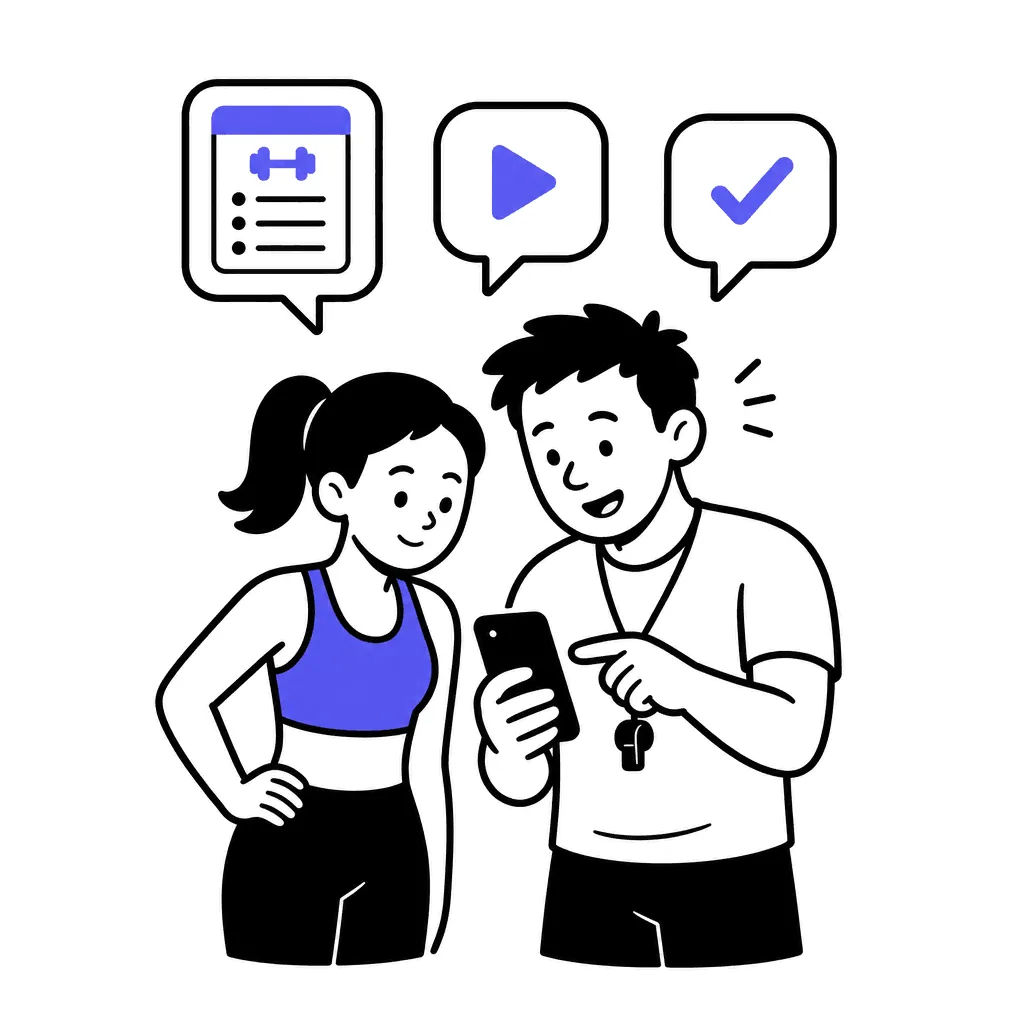
Then the piece almost everyone skips: show them how to be coached. Walk through the app together — where the program lives, how to attach a result or a technique video to the exercise, where your feedback appears. Five minutes of guided tour prevents the three-week silence of a client who “didn't want to bother you” because they didn't know where the door was.
The deliberately easy first two weeks
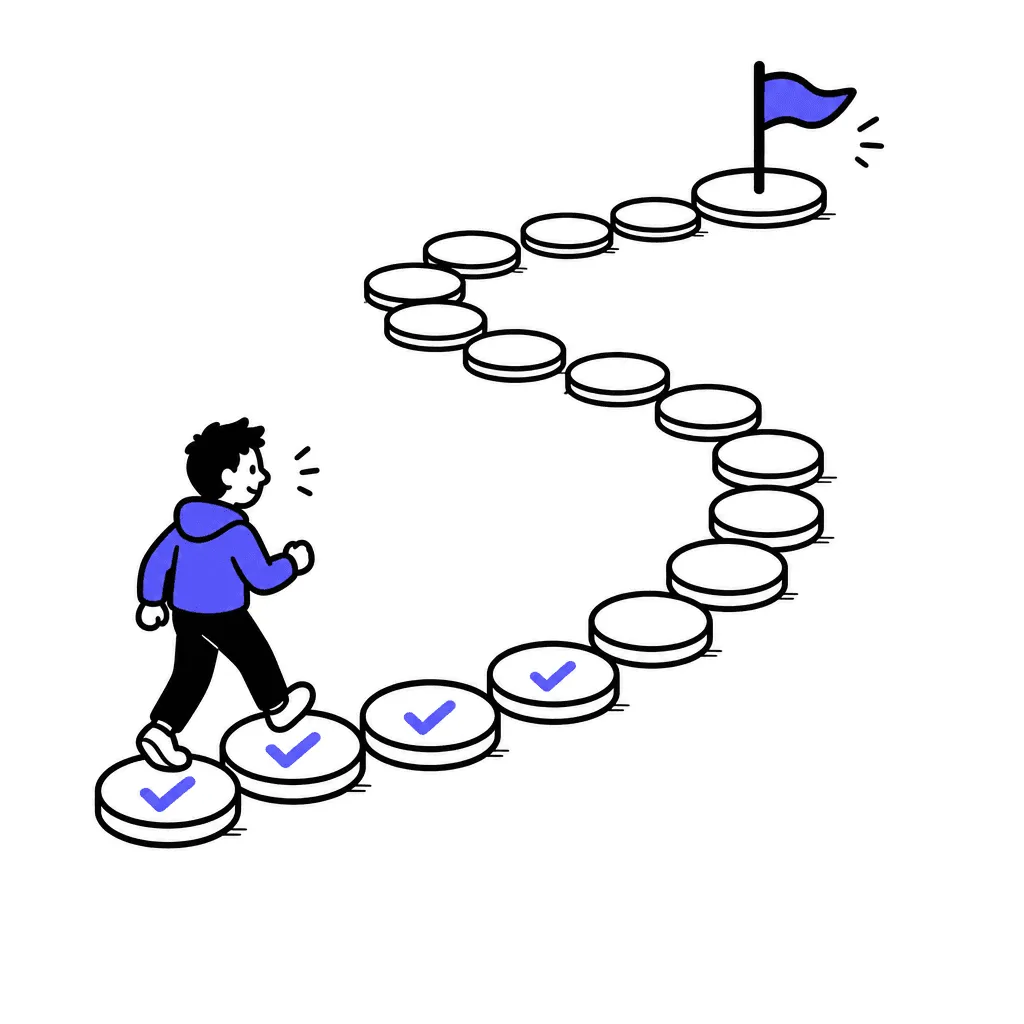
The classic online coaching failure: a perfect, ambitious program that meets a real, chaotic life — and loses. Practitioners' fix, verbatim: “Start small, meet the client where they are.” Two to four sessions a week, 25–45 minutes, difficulty they can definitely clear. The first two weeks are not training — they're habit installation and confidence banking. Wins get celebrated, friction gets fixed, and only then does the program grow teeth.
Week-one message cadence matters more than it ever will again: a check on day two (“how did the first one feel?”), feedback on every early video, a small summary at week's end. Front-load your attention; it buys months of trust.
The 30-day marker
At day 30, close the loop formally: a short review — what the numbers and videos say, what changes in block two, one honest question (“what's been harder than expected?”). This is also where the referral window first opens: they've just experienced the system working, and they know someone who needs it.
What not to do
- Don't onboard into an empty library. Programs that point at nothing teach the client the app is optional.
- Don't dump the full methodology on day one. Nobody reads the 12-page welcome PDF. Drip the education inside feedback, where it lands.
- Don't skip the tour because the app “is intuitive”. Intuitive to you. The silent confused client doesn't complain — they drift.
- Don't program for the client you wish they were. Program for the intake form; adjust upward with evidence.
FAQ
Group kickoff call or per-client?
Per-client, always — it's fifteen minutes, and you're 1:1 coaching, not a webinar business.
What if a client ignores the intake form?
That's data. Chase it once warmly; if it stays blank, you've learned how coaching them will feel — address it before money deepens.
Paper contracts too, or is the waiver enough?
Waiver is the legal floor; a one-page terms summary (payment, pauses, cancellation) sent with the welcome note prevents 90% of future awkward conversations.
When does onboarding end?
When the client attaches results without being reminded and asks questions in the exercise thread unprompted — usually week three or four. Until then, you're still installing the system.
Previous: Social proof that doesn't feel gross · Next: Feedback belongs on the rep, not on Sunday