The Online Fitness Coach Handbook
Referrals as a system
Updated August 2026 · 8 min read
The short version. Referrals are every coach's best channel and almost every coach's most neglected one — because “word of mouth” gets treated as weather instead of plumbing. The system is three moves: ask specifically, ask at the right moment, and thank properly. Fifteen minutes a month, compounding for years.
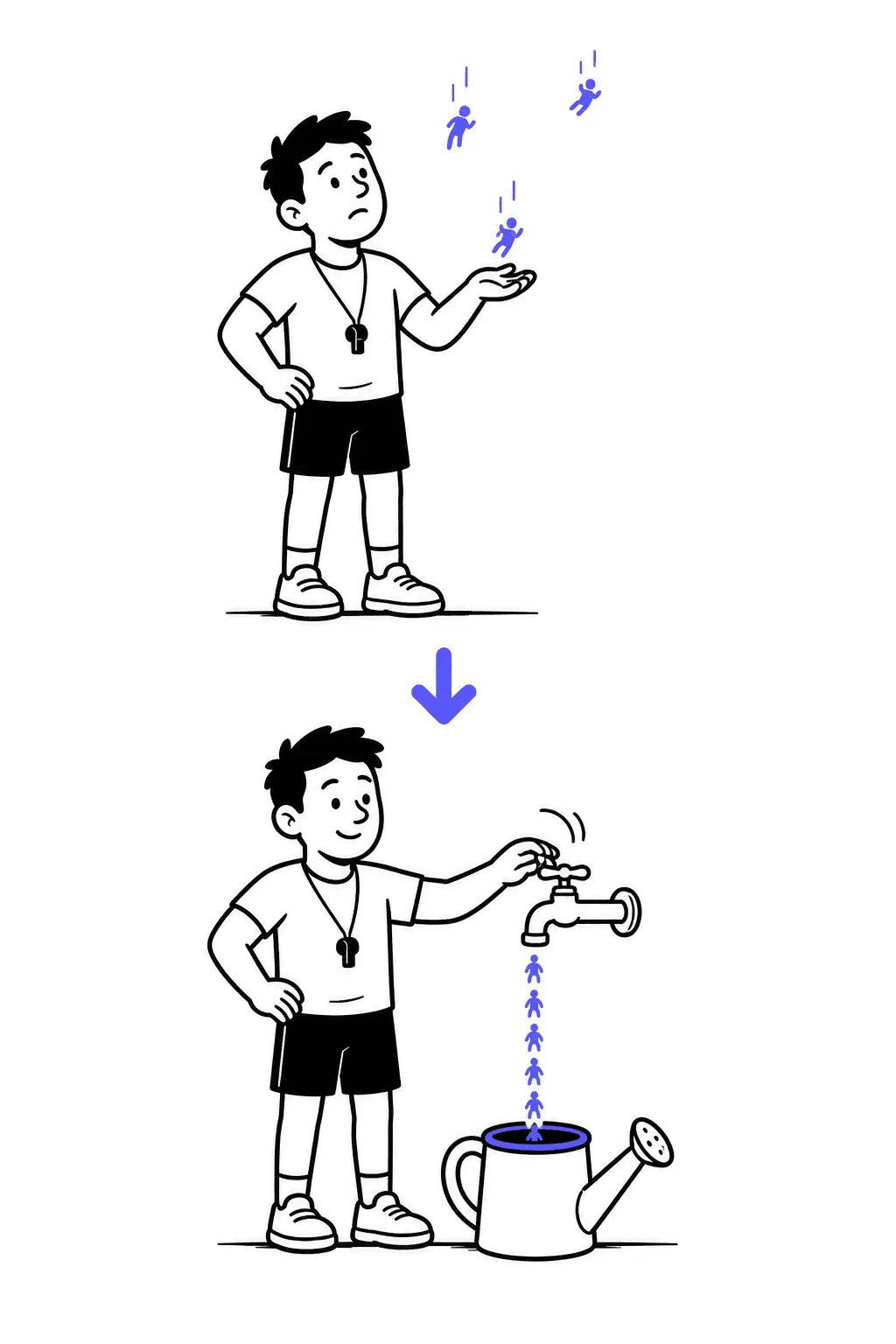
Weather vs plumbing
Ask coaches where clients come from and most say “referrals, mostly” — then describe doing absolutely nothing to cause them. That's the weather model: sometimes it rains clients. The plumbing model treats referrals as a repeatable mechanic, and the difference between the two is most of a full roster.
Why referrals outperform every other channel for coaching specifically: trust transfers. The referred client arrives pre-sold by someone they believe, skips the skepticism phase entirely, and stays longer than any cold lead. “Nobody trusts the vendor, everyone trusts the peer” is how the market itself puts it. Referrals are the peer channel, industrialized.
Move one: the specific ask
The generic ask — “know anyone who needs a trainer?” — returns nothing, because everyone technically needs a trainer, so no face comes to mind. The specific ask summons an actual person:
Not “know anyone who needs a trainer?” but “who do you know who wants to get strong without a gym?” Specific asks get answers.
Build your ask from your niche excavation: “who do you know who's coming back after a long break?”, “…whose back complains about their desk?”, “…training for their first race?” The question should paint one recognizable face in your client's mind. When it does, they say a name.
Move two: the right moment
- After a visible win — first pull-up, PR, clothes fitting, a check-in full of green. “Love seeing this. Quick thought — who do you know who…”
- After spontaneous praise — the client says “this is working, honestly.” That message is the window.
- At renewal — they just voted with their wallet; confidence is peak.
One ask per client per season, maximum. The system is a light touch applied consistently — not a squeeze.

Move three: thank like you mean it
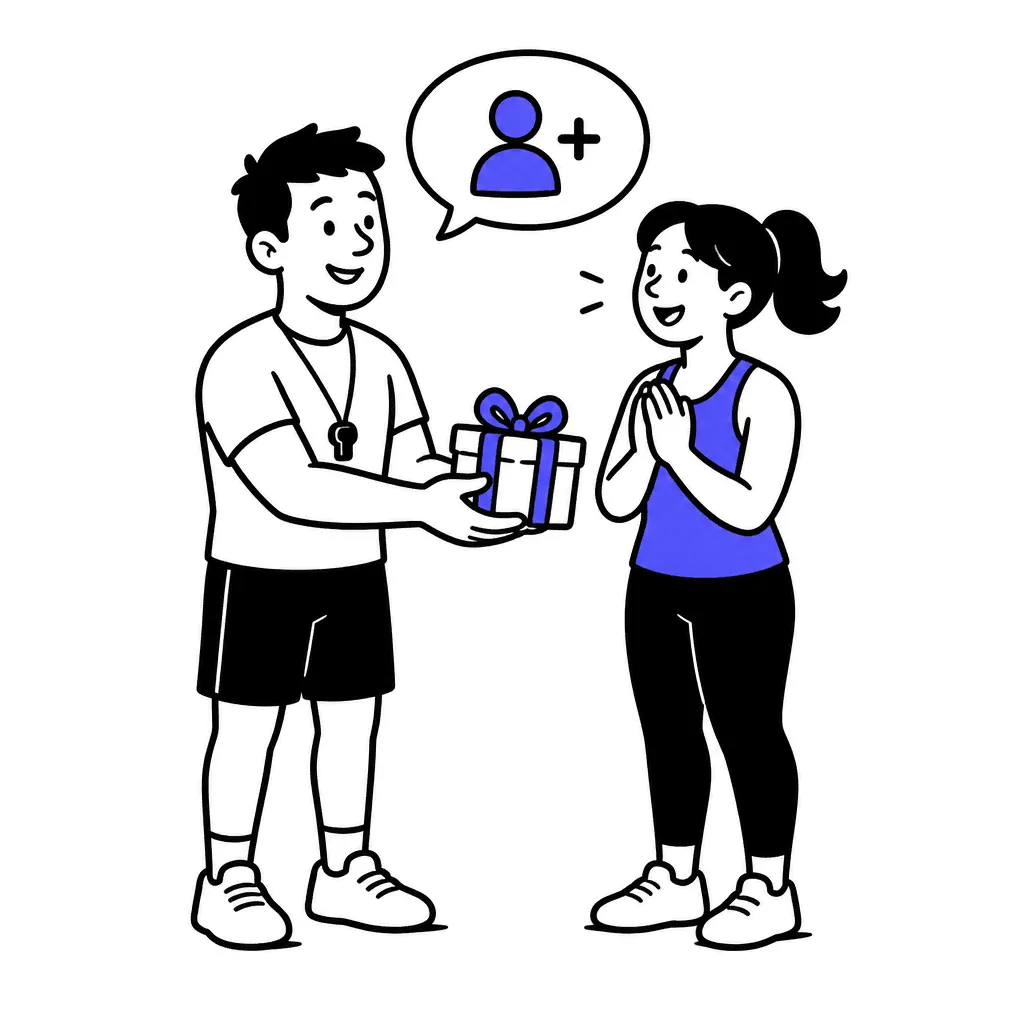
The rule of this move: thank every referral with something real — a free month works.
The thank-you calibrates the whole loop. A real thank-you — a free month, a heartfelt note plus their favorite coffee, anything sincere and proportional — tells the referrer their gesture mattered, and quietly licenses the next referral. This is also the honest alternative to formal “referral programs” with commission structures: for a solo coach, warmth beats bureaucracy every time; the moment referring feels like sales work, friends stop doing it.
Close the loop, too: tell the referrer how it went (“she started Tuesday — thank you again”). People refer more into loops they can see.
What not to do
- Don't pay cash commissions to clients. It reframes friendship as commerce and cheapens both. Gifts and free months carry gratitude; cash carries awkwardness.
- Don't ask during a client's rough patch. The ask lands on the emotional high, not week three of a plateau.
- Don't blast a “referral program announcement”. The system is personal asks in personal moments — the mass version reads as desperation.
- Don't skip the ask because “good work speaks for itself”. It doesn't; it whispers. The ask is you helping happy clients help you.
FAQ
How many referrals is realistic?
A well-tended roster of 15 produces a handful of quality referrals a year — which at coaching retention rates is most of the growth a solo practice needs.
What do I give my client to pass along?
The door: one link that explains everything and lets their friend actually start. Never make the referrer do the explaining.
Partnerships with other professionals — same thing?
Same trust mechanics, different relationship — worth its own chapter, which is next.
What if I'm new and have three clients?
Three clients with specific asks beat three hundred followers. The system starts at client one; the founding-rate offer even gives their friends a reason to move now.
Previous: Your list: the asset no algorithm can take · Next: Partnerships: borrowed trust