The Online Fitness Coach Handbook
Your list: the asset no algorithm can take
Updated August 2026 · 8 min read
The short version. Every follower is rented; every contact is owned. The list — emails and phone numbers of clients, past clients, and people who raised a hand — is the only marketing asset that survives an algorithm change, a banned account, or a platform dying. You already have the start of one in your phone. Maintain it with an hour a month, and once or twice a year it will quietly produce more clients than everything else combined.
The 500-address story
From our research corpus, the canonical version of how offline coaches successfully go online:
One coach described writing a plain email to his old client base — about 500 addresses collected over the years. A third of them became online clients. No ads, no reels, no landing page drama.
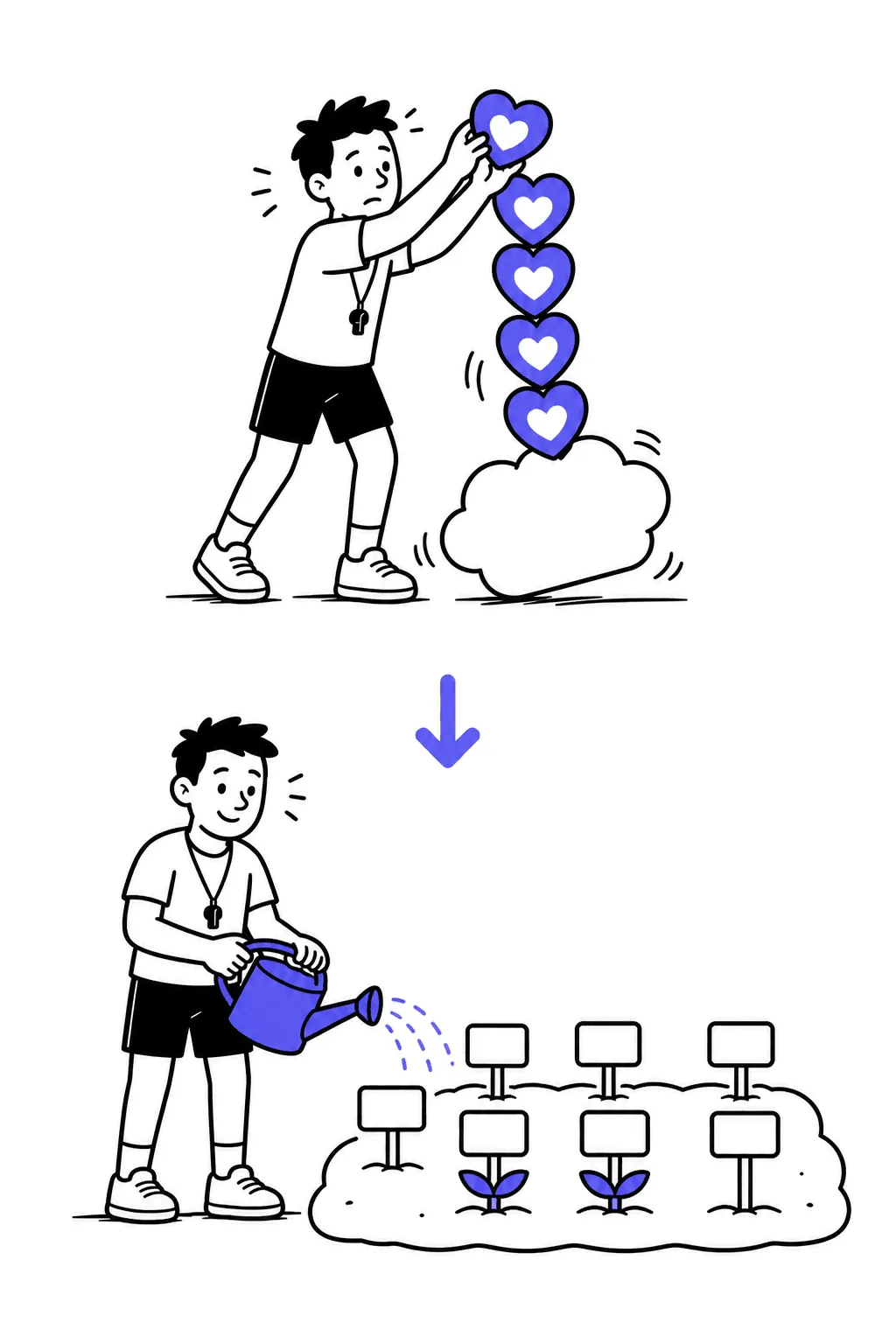
Five hundred addresses, one honest email, over a hundred clients. That's not a growth hack — that's a decade of trust, stored in a list, cashed in one afternoon. Meanwhile accounts with 50k followers post into the void, because the algorithm decides who sees what, and the algorithm doesn't work for you. The asymmetry is the whole argument: reach you rent, contacts you own.
Building it without becoming a spammer
- Everyone you coach, automatically. Clients and past clients — the warmest list that will ever exist. If you've coached for years, your phone and old booking messages are the list; spend one evening consolidating it.
- The door, softly. A “want the starter guide / first-week program?” option on your page catches interested-but-not-ready people. Not-ready today is exactly who the list is for.
- The hand-raisers. Anyone who ever DM'd “how does your coaching work?” and drifted. Ask once: “want me to keep you posted when a spot opens?” A hand once raised stays warm for years.
That's it. No pop-ups, no bribes, no “join my community” theater.

Using it without burning it
- A few times a year, when you have something real: spots opening, a price change coming (grandfather your list first — instant goodwill), a new offer, a genuinely useful piece you made.
- Written like a text to a friend, not a campaign. Plain words, your voice, one clear point, one link (the door). The 500-address email that converted a third read like a person, not a brand.
- The ask can be tiny. “Reply ‘curious’ and I'll send details” outperforms polished buttons for warm lists — replies start conversations, and conversations are where coaching sells.
And the classic move this list exists for: the reactivation note. Past clients who left for money, time or chaos — six months later, one kind message: “thought of you — the online setup is a third of what sessions cost, if timing's ever right.” No pressure, real warmth. This single pattern refills winter rosters, and it only works if you kept the list.

What not to do
- Don't buy or scrape contacts. Illegal in most places, useless everywhere. The list's value is the consent.
- Don't drip-campaign warm humans. Seven-email “nurture sequences” are for strangers in guru funnels. Your list gets a person, occasionally.
- Don't let perfect stop you. A spreadsheet with names, emails and “how I know them” beats the email platform you'll configure someday.
- Don't go quiet for two years, then sell. The list stays warm through occasional usefulness. If you've gone dark: one honest reintroduction first, ask second.
FAQ
Do I need email software?
Under a few hundred contacts: BCC from your normal email or send individually (better anyway). Software earns its place when volume makes personal impossible.
Email or WhatsApp/SMS?
Whatever channel each contact actually gave you. The medium matters less than the ownership; a phone contact list is a list.
What about legal consent rules (GDPR and friends)?
The honest-practice version: only people who gave you their contact in a real interaction, always with an obvious way to say “stop” — that's the compliant spirit nearly everywhere. Verify your jurisdiction's specifics — same philosophy as the boring armor chapter.
Is a newsletter worth it?
Only if you'd genuinely enjoy writing it — then it's the content chapter's compounding asset with distribution built in. As an obligation, it dies by issue four.
Previous: Funnels: the door that works while you coach · Next: Referrals as a system