The Online Fitness Coach Handbook
Funnels: the door that works while you coach
Updated August 2026 · 9 min read
The short version. Strip the guru paint off the word “funnel” and what's left is a door: a page where an interested stranger can understand your coaching, try something real, and start — without you being awake. Every channel in this book ends at that door. Build it once: one page, one taste of your coaching, one clear way in. Two minutes on a phone from “heard your name” to “booked.”
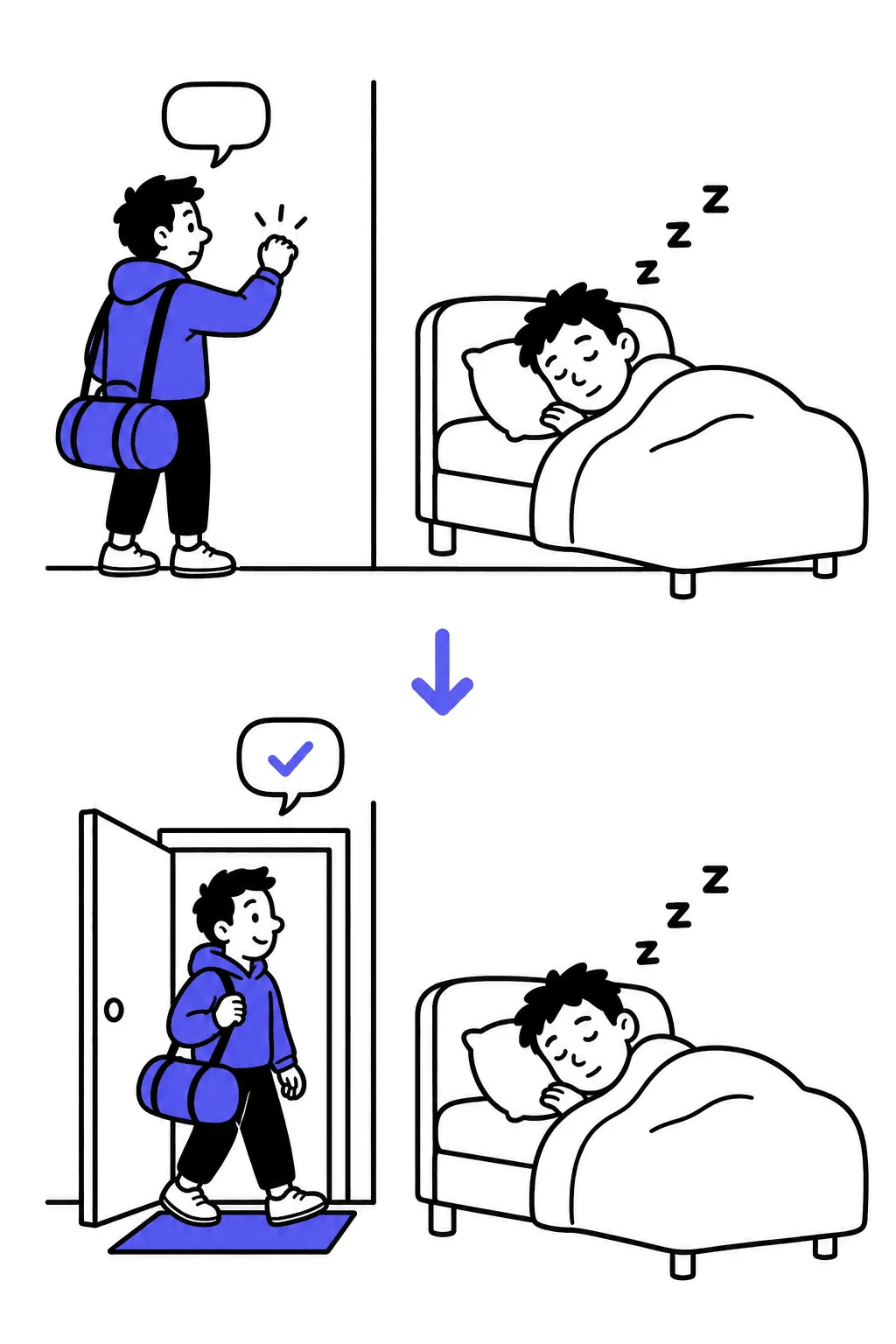
Why “DM me” is a broken door
Every way of getting clients — referrals, your gym floor, your announcement, your content — produces the same moment: someone interested, phone in hand, deciding whether to act now or never. What they usually meet is “DM me for details”: a door that requires composing a message to a stranger, waiting for a reply, negotiating in chat. Most interest dies right there, politely.
The practitioners' bar from our sales research is blunt: prospects respond to clarity before contact — what coaching is, what it costs, how it starts, before they have to talk to anyone. The door does that around the clock.
The anatomy of a working door
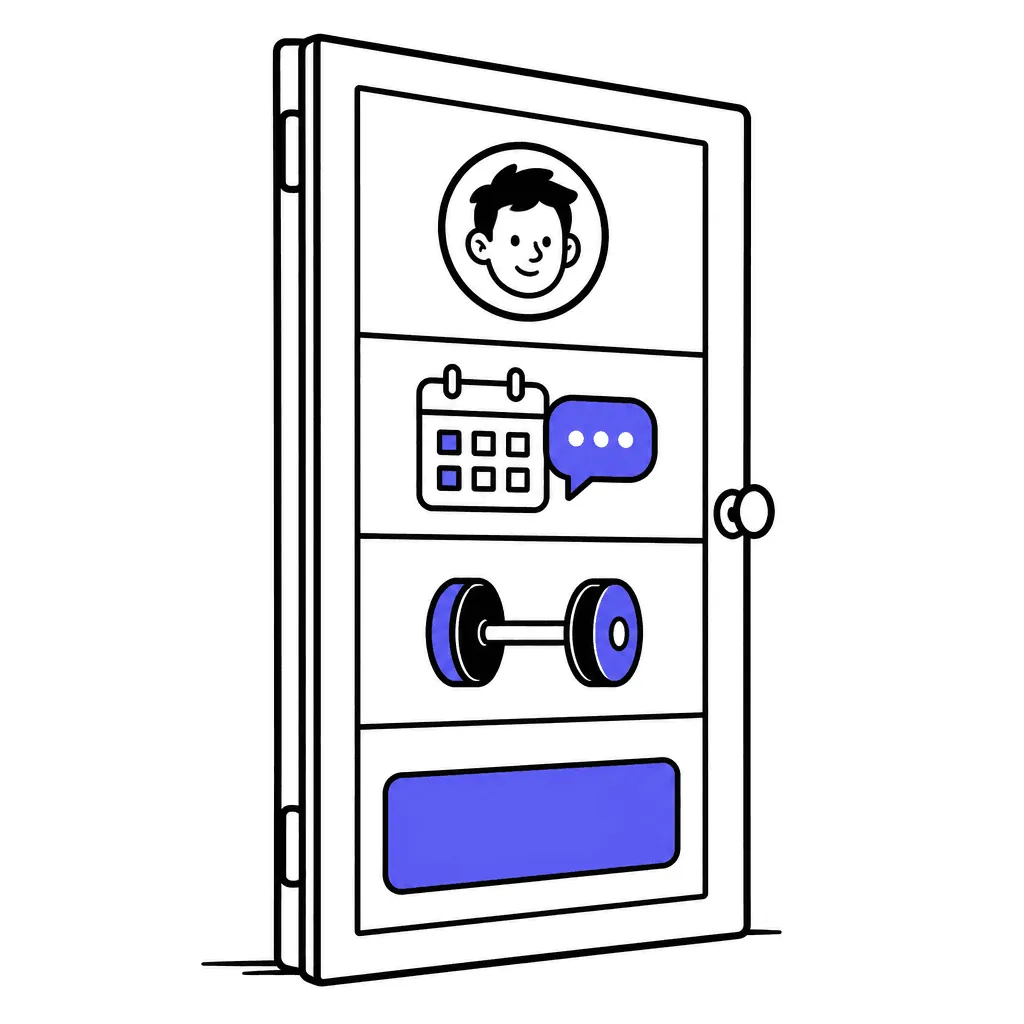
One page. Four jobs, top to bottom:
- Recognition — your positioning paragraph and face: the right person thinks “this is for me” in five seconds.
- The picture — what working with you actually looks like: the weekly rhythm, the feedback, the app they'd use. Show, don't adjective.
- A real taste — the trust-builder that replaces the sales pitch. The strongest version in coaching: a real trial workout they can do today — your actual programming, your actual demo videos, a real feel of being coached by you. A taste converts skeptics that ads never will.
- One way in — a booking, an application form, a start button. Singular. Every added option subtracts action.
Full disclosure, and the bar
This is the one chapter where the platform publishing this handbook is exactly the product: coach pages with a lead magnet, a funnel and a free trial workout the prospect can try before paying are literally what we build. So hold us — and anyone — to the same bar: your door should let a referred stranger go from “heard your name” to “booked a start” in under two minutes, on their phone, without you touching anything. If assembling that door on any platform takes more than an evening, it's not a door, it's a construction project.
And the honest counterpoint from the research: a door doesn't create traffic. It converts the warm attention your list, referrals and profile already generate. Coaches who build funnels before warm sources have a beautiful door in an empty street — the paid ads chapter explains when cold traffic finally earns its place.
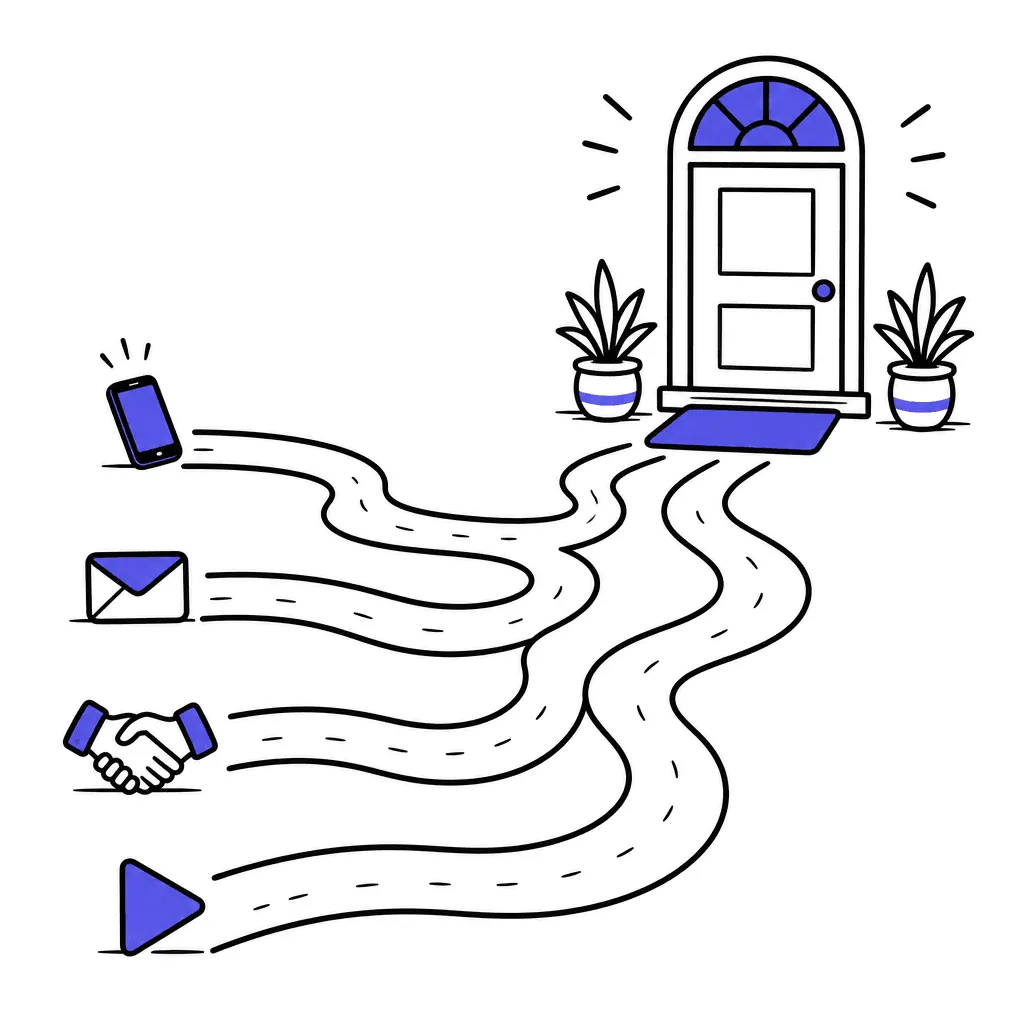
Wiring the channels to it
- Bio link → the door (not a linktree).
- Announcement post → “here's where to start” → the door.
- Referral message → you send the door, not a paragraph of explanation.
- Content → every video description and article footer → the door.
- Business cards at the gym, if you're hybrid → QR to the door. It works at the front desk.
One page, every channel, zero explaining the same thing in chat eleven times a week.
What not to do
- Don't build a five-step funnel with countdown timers. That's the guru version, and your anti-guru audience smells it. One honest page beats a “sequence”.
- Don't gate the taste behind a sales call. The taste is what earns the call — or replaces it entirely.
- Don't send warm people to a cold checkout. A referred friend clicking “buy now” with zero context churns; the picture and the taste exist to prevent exactly that.
- Don't rebuild the door monthly. Ship it, then leave it alone and work the channels. Door-polishing is procrastination's favorite disguise.
FAQ
Do I need a website?
You need one working page. A full website is optional decoration around it — practitioners run full rosters on a single well-built coach page.
Application form or direct booking?
Under a full roster: direct start, lowest friction. Near capacity: an application form quietly filters (and builds the waitlist the solo-endgame chapter loves).
What's a lead magnet and do I need one?
A useful freebie (a starter program, a guide) exchanged for contact. Useful as a softer entry for people not ready to start — it feeds the list chapter. The trial workout is usually stronger because it is your coaching.
Should the price be on the door?
At least the band (“from $200/month”). Pre-qualified people book calls that close; surprised people don't book at all — transparency before contact is verbatim practitioner consensus.
Previous: Content that compounds · Next: Your list: the asset no algorithm can take