The Online Fitness Coach Handbook
Paid ads, eventually
Updated August 2026 · 8 min read
The short version. Paid ads were labeled a trap in the first-five chapter — for beginners, they are. But “eventually” is a real word: with a proven offer, a working door, real proof and a price validated on humans, ads become an amplifier of a machine that already works. The readiness checklist below is the whole chapter; if you can't tick it, the honest move is to close the tab and go tend your referrals.
Why the trap label was earned
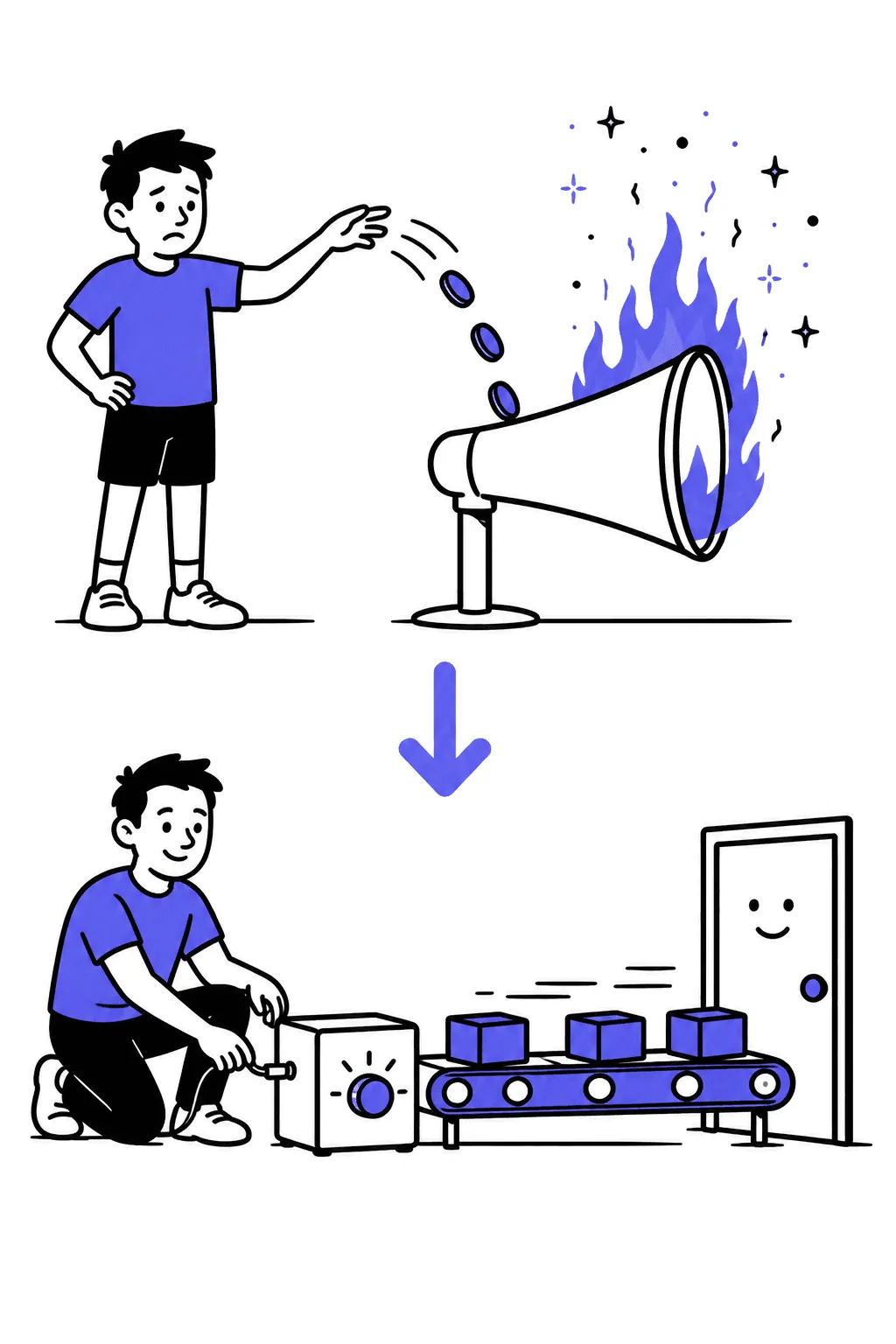
The economics of cold traffic are unforgiving to unproven offers. The field report from the DM chapter bears repeating: money spent on ads plus 300 cold DMs produced exactly one client. The mechanism: ads don't create demand for you — they buy strangers a look at your door. If the door is unfinished, the price untested, the proof thin — you're paying to show unready work to skeptics. “Right now it's a machine for converting savings into lessons” was this book's original verdict, and it stands.
But the same mechanism inverts at maturity. When warm channels already convert — when the door closes referred strangers reliably — ads simply manufacture more first looks for a system with known math. The practitioners who use ads well all describe the same sequence: organic proof first, paid amplification second. Never the reverse.
The readiness checklist
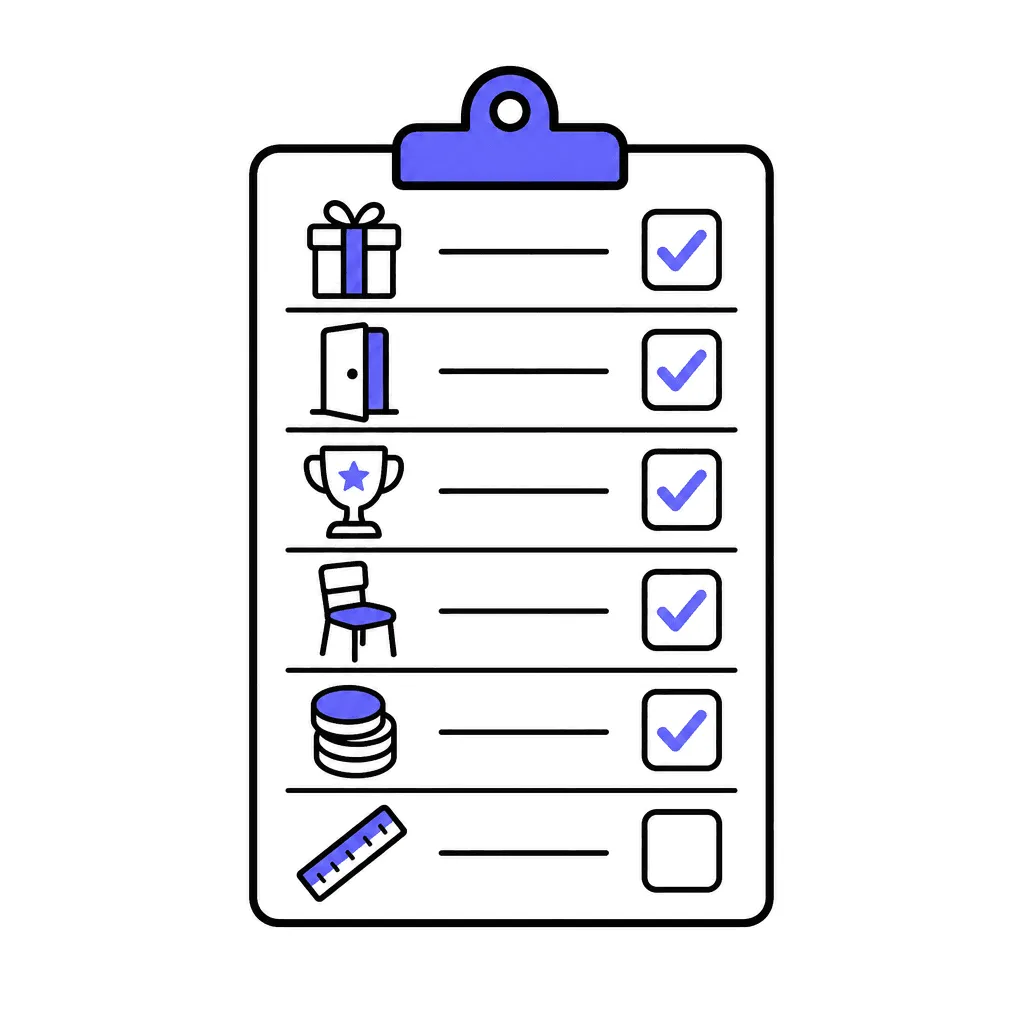
Tick all six honestly, or wait:
- A proven offer — ten-plus paying clients through the current offer at the current price band. Not founding-rate experiments: the real thing, bought repeatedly.
- A working door — the funnels-chapter page, converting warm traffic today. You know it works because referred strangers become booked clients without your intervention.
- Real proof on display — the social-proof stack live on the door: quotes, capability wins, a long-timer. Cold traffic trusts nothing else.
- Capacity to receive — open slots or a deliberate waitlist play. Paying for leads you can't take is the expensive version of full.
- A budget you can burn calmly — the first weeks are tuition: audience finding, creative testing, honest numbers. If losing it hurts the business, it's too early.
- A number you refuse to exceed for a client. Your economics from the numbers chapter give the ceiling: what a new client is worth says what a lead may cost. Without that number, the platform's optimizer sets it for you — generously, to itself.
Running them like a boring adult
The anti-guru operating mode, condensed:
- One goal: clicks to your existing door — not “brand awareness”, not a custom five-step funnel with countdown timers. The door already converts; ads just deliver visitors.
- Small, steady, measured: a modest daily budget, two or three creative variants (your best proof + your positioning line), local or niche targeting first — the warm-adjacent audience before the cold ocean.
- Weekly maths, monthly verdicts: cost per booked start against your ceiling number. Daily dashboard-staring optimizes anxiety, not campaigns.
- Ads obey the same honesty rules as everything: no income promises, no befores-and-afters you wouldn't defend, no urgency theater. Platforms' health-ad rules are strict — and your audience's scam-detectors are stricter.
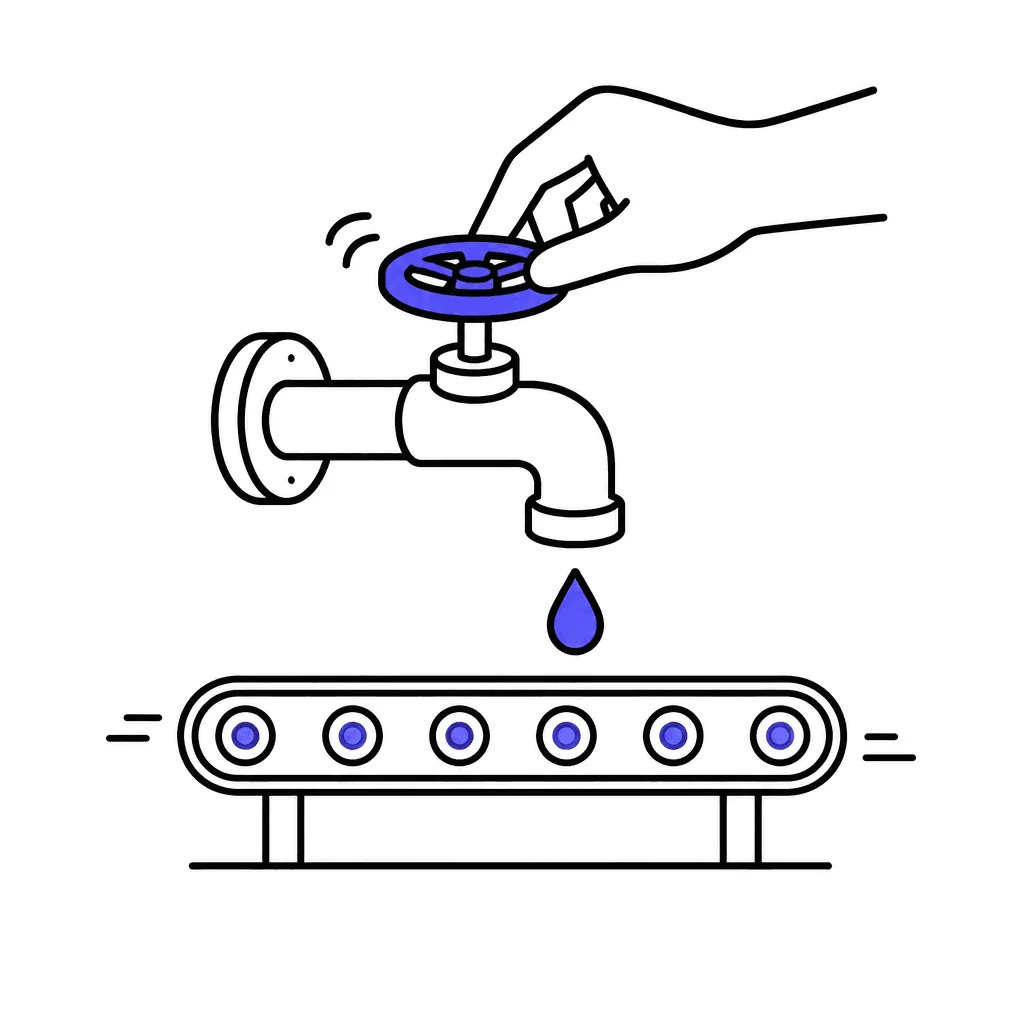
And the exit discipline: ads are a faucet, not a foundation. If the numbers sour for a quarter, turn the faucet off and the business still stands — because it stood before. That reversibility is exactly what the readiness checklist bought you.
What not to do
- Don't run ads to a DM. “Message me to learn more” at cold-traffic prices is paying for conversations that die. Ads end at the door.
- Don't boost posts “to see what happens”. That's donation, not marketing. Boosting has its uses — after the checklist, with the same math.
- Don't hire an ads agency at solo scale. Agency fees at coaching budgets eat the margin the ads were meant to create. Learn the boring basics or wait.
- Don't let ads paper over a churn problem. Filling a leaky roster with paid strangers is the most expensive way to avoid the retention chapters.
FAQ
Which platform first?
Where your niche actually scrolls — for most coaching niches that's Meta's ecosystem; for some it's YouTube or local search. One platform, learned properly, exactly like the social chapter's rule.
How much budget to start?
Small enough to burn without wincing, big enough to generate data — for most solo coaches a few hundred dollars over a month of testing tells the truth. Scaling comes after the math works, never to find out if it will.
Should I retarget my warm audience instead of cold?
Yes — retargeting site visitors and profile engagers is the gentlest paid step and often the only one a full-books coach ever needs.
Ads or more referral effort — where's the next dollar best spent?
Almost always referrals until they're systematized (the plumbing chapter), then ads. Paid traffic competes with free trust and usually loses on price.
Previous: Full books: the solo endgame · Next: AI in your coaching business