The Online Fitness Coach Handbook
Social proof that doesn't feel gross
Updated August 2026 · 8 min read
The short version. Proof sells coaching better than any pitch — and the fitness industry has poisoned the well with fake befores-and-afters and walls of twelve five-star reviews. The honest system: collect testimonials with five specific questions, treat client photos as sacred (opt-in, client-owned, permission per use), and lean on the underrated proof types — non-scale victories, capability wins, and simply being visibly real. One honest review outweighs a fake wall, in both directions.
Why the well is poisoned
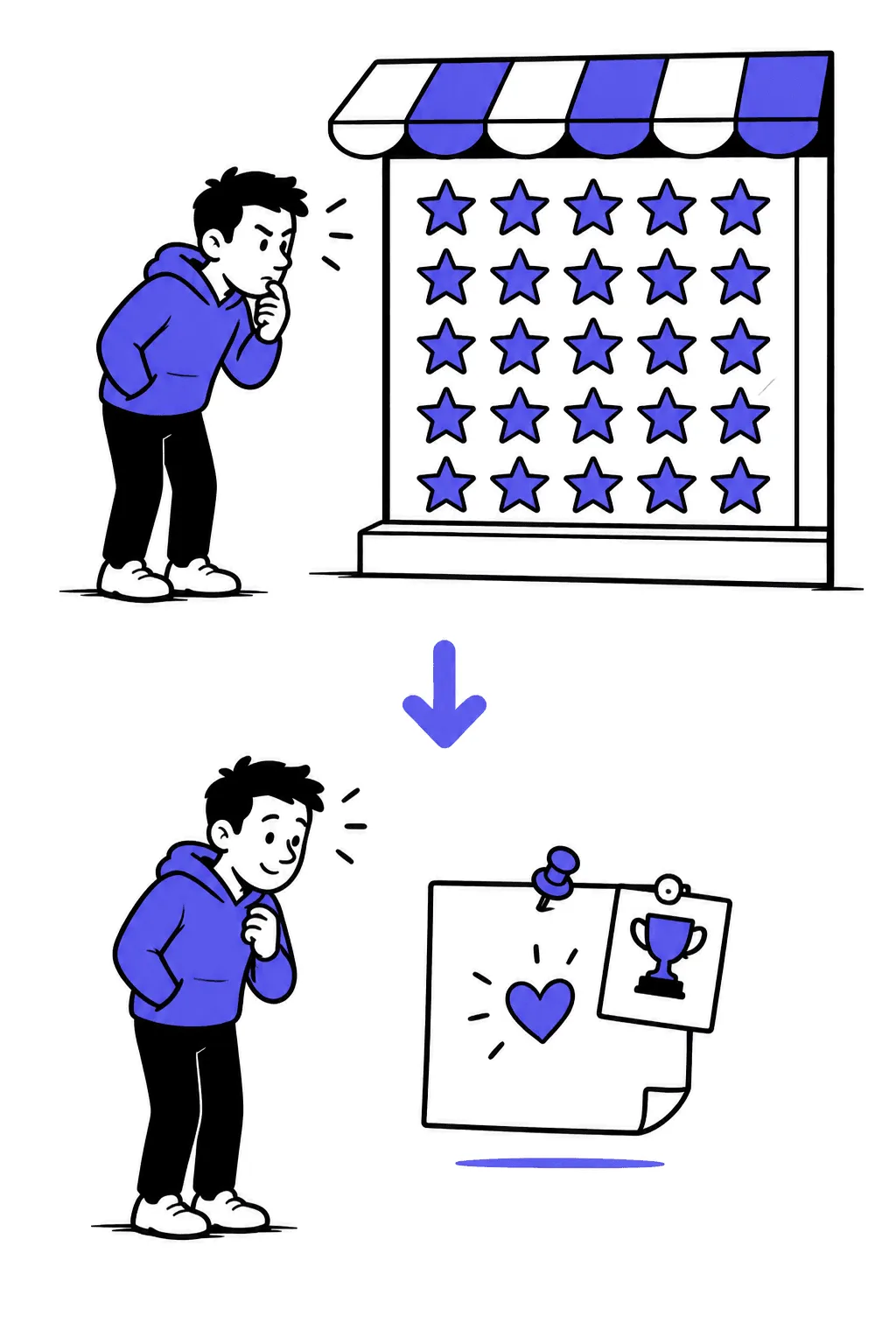
Our research includes a 118-upvote client post calling out a fitness influencer's coaching program; the title ends, verbatim, “fitness influencers 1:1 coaching programs = scam”. The details are instructive: $295/month for “1:1 coaching” that turned out to be a template — “it felt like I was using chat gpt tbh” — sold off a wall of uniform 5-star reviews. The community's forensic read:
“She currently has 12 5-star, but it only takes one honest review for others to not feel ashamed or alone.”
Your prospects have read threads like this. They arrive suspicious of exactly the proof formats gurus lean on: too-perfect review walls, dramatic transformations, outlandish claims (“Advertising on Facebook with outlandish claims is a reliable red flag” — verbatim). Which is good news for you: honest proof, honestly presented, now stands out more than inflated proof ever did.
Collecting testimonials that sound like humans
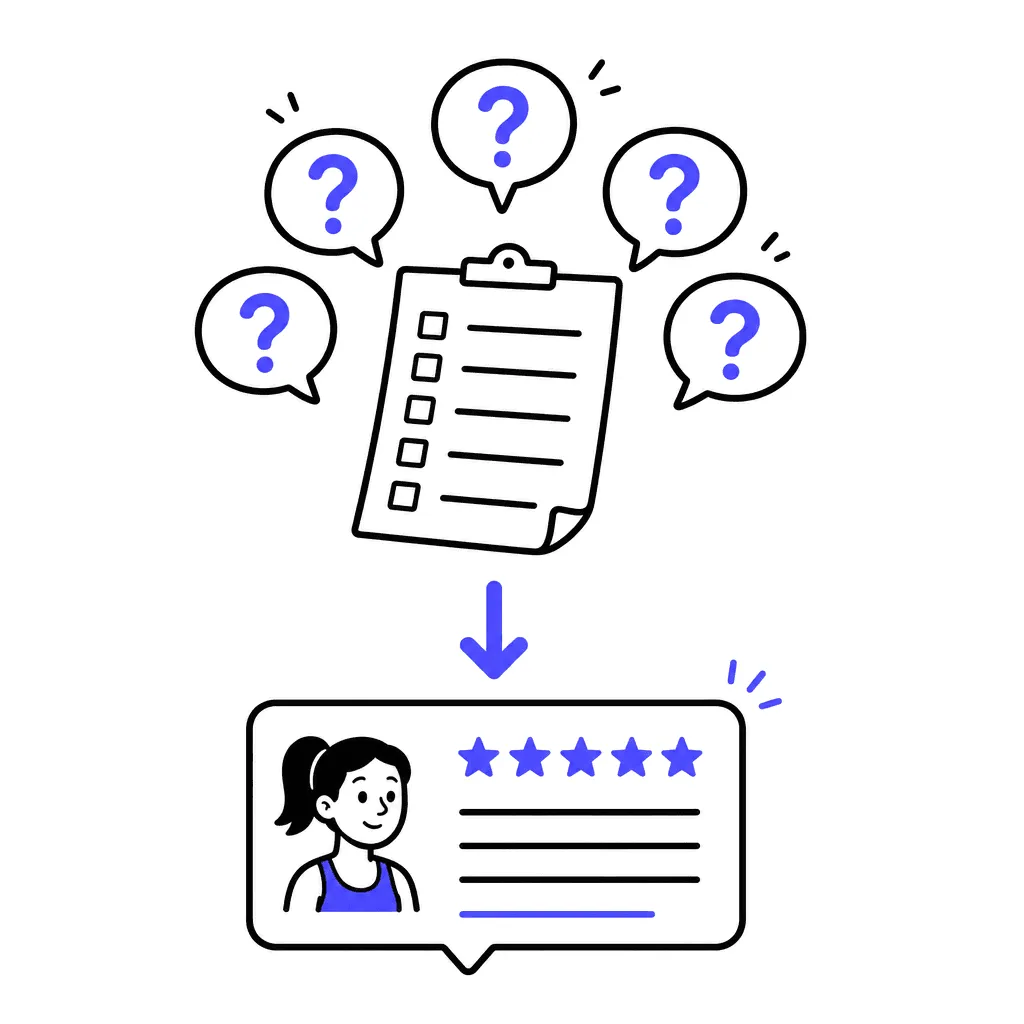
The practitioner method is almost embarrassingly simple — ask five specific questions instead of “can you write me a review?”:
“1. What's your favorite part about working with me? 2. What can you do now that you couldn't do before?…”
Send it as a short form after a real win or at a renewal — the same emotional windows as the referral ask. The answers arrive specific (“I can carry my kid upstairs without stopping”) instead of generic (“great coach!!”), and specific is the entire difference between proof and noise. Light editing for length is fine; changing meaning never is.
Photos: the consent line
The research is unambiguous and the industry keeps crossing it anyway. The standard that protects everyone:
- Client-kept by default — progress photos are theirs, taken for their progress (the proving-it chapter), not your marketing.
- Permission per use, in writing, revocable — a yes for “my private files” is not a yes for Instagram. The cautionary tale from the threads: a trainer showing one client another client's photos — “The fact he showed her other people's progress pictures without their consent tells you everything.”
- Anonymized unless they want credit — cropped heads, no names, unless the client is proud and says so.
- Never required. “I never use progress photos… it's very misleading towards potential clients and it's just not something I am personally comfortable with” is a fully professional stance — because the alternatives below carry the same weight.
The underrated proof stack
The corpus's favorite proof types need no befores-and-afters:
- Non-scale victories, quoted. Clothes, stairs, sleep, energy, “carried all the groceries.” Practitioners: these convince skeptical spouses better than charts. A one-line client quote about stairs beats a bikini photo for your audience.
- Capability wins. “[Name] has lifted a whole 5KG dumbbell!” — beloved, verbatim, joyful. First pull-ups, first 5Ks, PRs: shareable, gameproof, warm.
- The long-timer. “Client of three years” is proof no transformation photo can fake — retention is the testimonial.
- Being visibly real. Your consistent presence, your reply in a community, a client tagging you unprompted — ambient proof that accumulates while you sleep. It's the trust layer everything else sits on.

What not to do
- Don't fabricate or “enhance” anything. One honest negative review pierces a fake wall — and your market actively hunts for the pierce.
- Don't pay for reviews or trade discounts for five stars. The beta exchange (“testimonial if it earns it”) is honest; “5 stars for 10% off” is the scam-adjacent version.
- Don't post transformations as your default content. Beyond consent risk: the medication era and the anti-diet turn make dramatic weight-loss proof read differently now (and the niche chapter already told you not to build there).
- Don't wait for “impressive enough”. The stairs quote from week six is collectable today. Proof compounds like content — the earlier it starts, the older and deeper the stack.
FAQ
Where does proof actually go?
The door (one or two quotes near the way in), pinned posts, and sprinkled — sparingly — in stories. Not a wall; a seasoning.
Video testimonials — worth pushing for?
Never push. Accept joyfully when offered; a shaky 20-second phone clip of a real human beats produced video anyway.
Client wants to stay fully private but loves the coaching?
Perfect — ask for the anonymous quote (“online client, 41, desk job”). Specific circumstances stand in for a name just fine.
Can I use platform review sites?
If your market uses them, claim your presence — but your owned proof (quotes + capability wins on your page) converts warm traffic better than third-party stars ever will.
Previous: Free, trial, beta: value without giving yourself away · Next: Onboarding: the first 30 days