The Online Fitness Coach Handbook
Proving it works: remote progress
Updated August 2026 · 8 min read
The short version. Online, nobody sees the work — so progress must be made visible on purpose, or clients decide “it's not working” from vibes alone. The system: pick 3–4 signals per client at onboarding (numbers, measurements, photos optional, capability tests), collect them on a light rhythm, and narrate the story monthly. “How is this client actually doing?” should have an answer in one glance, for both of you.
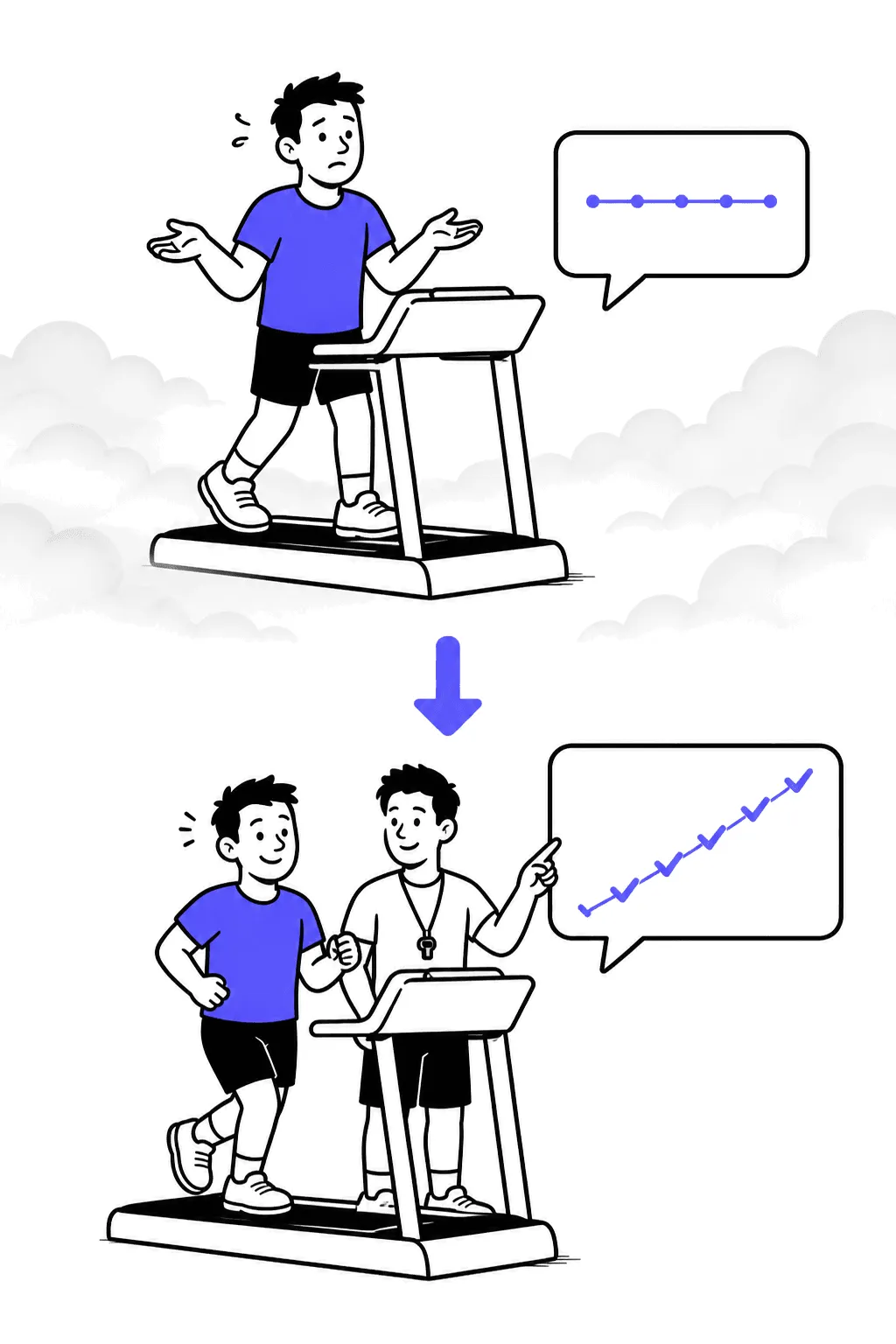
Why progress dies quietly online
On the gym floor, progress narrates itself — the coach saw the ugly first squat and sees today's clean one. Online, the client is alone with a mirror and a mood. The coach's side of the problem, verbatim:
“Coaches end up piecing together: MFP screenshots, step counts, sleep data, weight trends, check-in forms… across like 5 different apps/chats just to answer ‘how is this client actually doing?’”
And the client's side is worse: no visible progress means the question “is this worth $200 a month?” gets answered by whichever morning they felt bloated. Unmeasured progress defaults to “no.” Retention starts here.
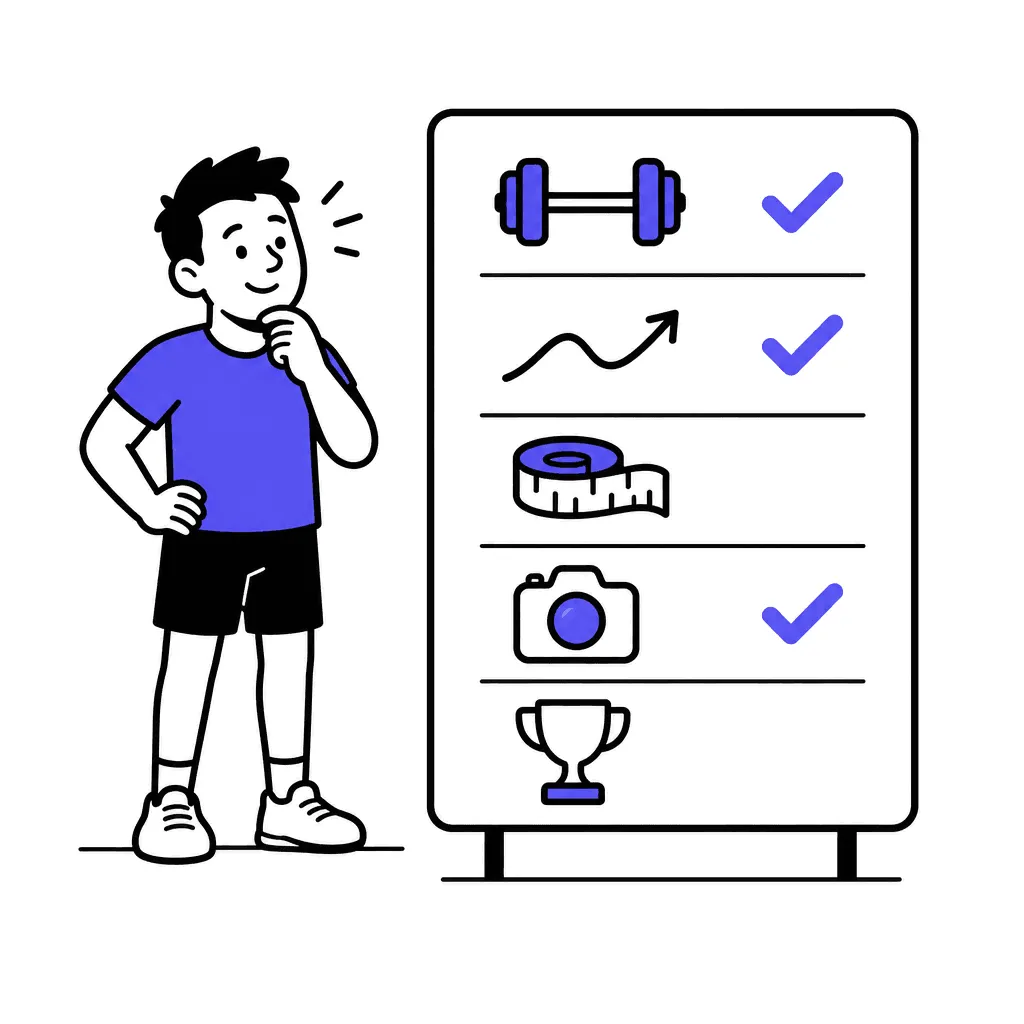
The signal menu (pick 3–4, not 12)
- Training numbers — the free signal, produced by logging itself: weights climbing, reps accumulating, sessions completed. The fastest-moving win and the core of week-to-week morale.
- Bodyweight trend — trend, never single points; weekly average smooths the daily noise that panics people. Only for clients whose goal genuinely involves it.
- Measurements — waist, hips, arms; monthly. Moves when the scale sulks, which is exactly when it's needed.
- Photos — monthly, same light, same spot; client-kept by default, shared only if they choose. Forced photos poison trust — “offered as an optional choice” is the practitioner standard.
- Capability tests — the pull-up attempt, the 5k time, the stairs-without-stopping. The most shareable wins and the least gameable.
Non-scale victories deserve explicit collection too: sleep, energy, clothes, “carried all the groceries.” Practitioners report these convince skeptical spouses better than any chart.
The monthly narration
Data doesn't retain clients — the story of the data does. Once a month (the 30-day marker from onboarding, continued): three sentences connecting the dots. “Squat up 15%, waist down 3cm while weight's flat — that's muscle replacing fat, which is exactly the plan. Next block we push pressing.” Thirty seconds of narration converts a spreadsheet into proof, and proof into another quarter of retention.
Full disclosure where it belongs: the platform publishing this handbook keeps measurements, weight trend and every logged result in one place for exactly this reason. The bar for any tool you use: both of you can see the trend without you compiling anything. If proving progress requires your Sunday, the system is the problem.

What not to do
- Don't measure everything daily. Signal drowns in noise, and clients burn out on logging before they burn out on training.
- Don't let the scale be the only voice. Single-signal systems break on water weight and break clients with it.
- Don't require photos. Offer, explain, respect the no. The measuring tape carries the same information without the vulnerability.
- Don't hide the data until it's impressive. Flat months narrated honestly build more trust than suspicious silence.
FAQ
My client refuses all tracking — now what?
Capability and consistency are still visible from logging alone; coach on those. But name the trade at onboarding: less data means slower course corrections.
How do I handle a genuinely flat month?
Narrate it straight: what the data says, the most likely why, the one change for next block. Honesty about plateaus is what makes your good news credible.
Fitness watches and step data — worth integrating?
Only if it changes decisions for that client's goal. Every extra stream is noise until it answers a question you're actually asking.
Who owns progress photos legally?
The client, always. Client-kept by default, and using any of it publicly needs explicit permission — no exceptions.
Previous: Boundaries: you're not a 24/7 vending machine · Next: Why clients ghost in week 3