The Online Fitness Coach Handbook
Boundaries: you're not a 24/7 vending machine
Updated August 2026 · 8 min read
The short version. The most repeated regret in every “what I wish I knew” thread isn't about marketing or programming — it's boundaries. Set communication windows from day one, put them in the offer, restate them warmly at onboarding, and hold them kindly. Boundaries aren't the opposite of great service; they're what makes great service survivable past month three.
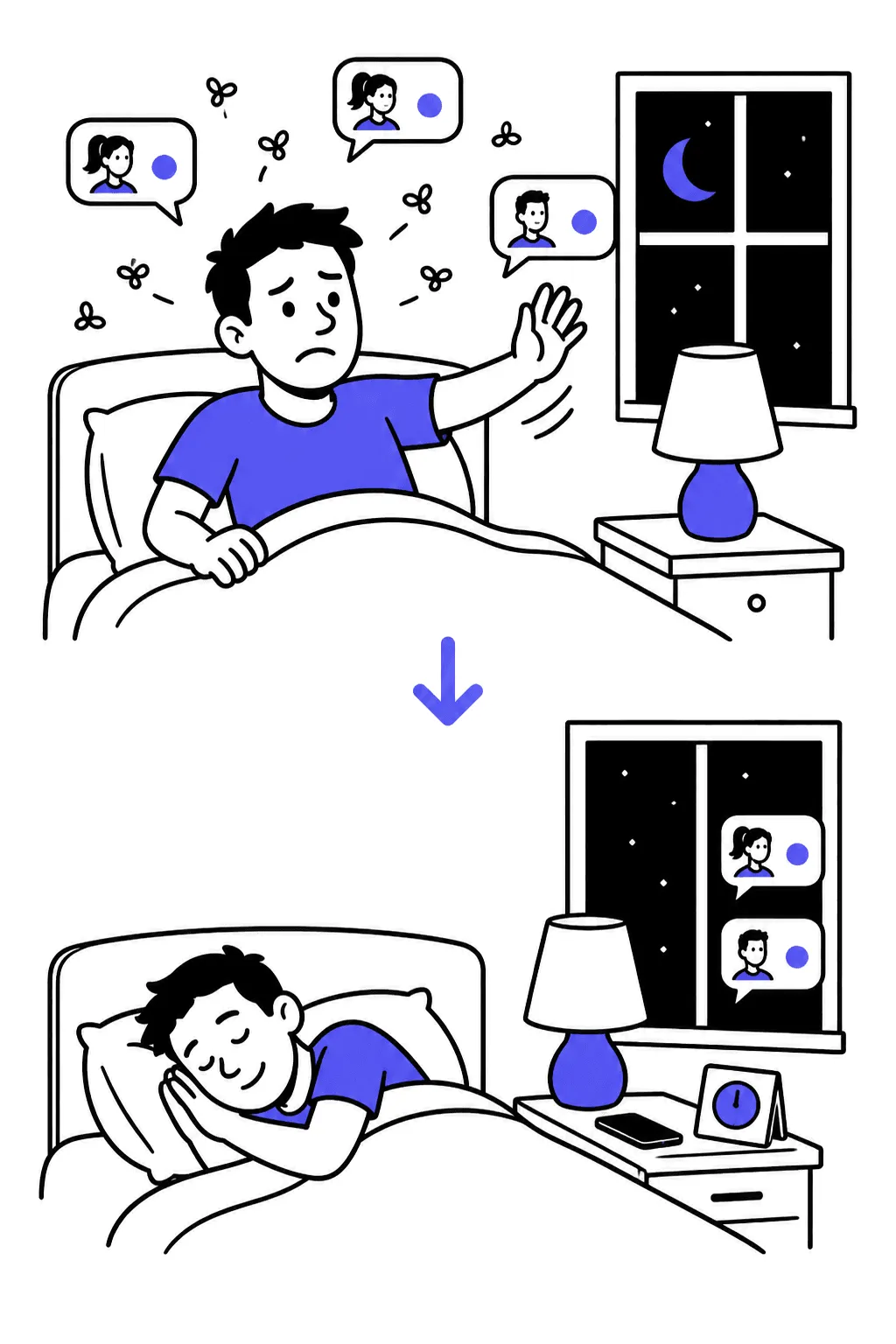
The burnout math
“Set communication boundaries early — ‘24/7 access’ will burn you out in 3 months flat.”
The mechanism is structural, not personal weakness. Online coaching removes the natural walls of the gym: no session times, no closing hours, no physical distance. Every client carries you in their pocket. Without declared boundaries, availability becomes infinite by default — and infinite availability isn't generosity, it's a resource with no protection, consumed until gone. The coaches who quit the industry rarely quit coaching; they quit the 11pm guilt.
Boundaries as product design
The reframe that changes everything: boundaries aren't something you impose on the service — they're part of the service's design, decided in the offer and merely operated here:
- Response windows: “I respond within 24 hours on weekdays.” Not a confession — a spec. Clients relax when they know when to expect you; anxiety lives in unpredictability, not in delay.
- Off hours: evenings, one full weekend day, your own training time. Written down. A coach who trains and rests is the product working as advertised.
- Channels: coaching happens where the coaching lives — the exercise threads and the weekly touch — not scattered across four messaging apps. One channel is a boundary too.
- Vacations: announced ahead, programs pre-loaded, expectations set — the burnout-proofing chapter turns this into a full protocol.
The magic of declaring these at onboarding: you never “enforce” anything. The 11pm message still arrives — and your 9am answer is exactly what was promised, so nobody's disappointed and nothing needs defending.

Holding the line kindly
The test isn't the policy — it's week six, when a lovely client drifts into nightly voice notes. The practitioner move is warm redirection, not confrontation: answer the substance in the right place at the right time (“Great question — putting the answer on your squat thread so it's saved”), and let the rhythm re-teach itself. For the rare boundary-steamroller, one kind explicit reset: “I answer everything within a day on weekdays — that's how I stay good for you at month six, not just week six.” Clients don't leave over boundaries held kindly; they leave over coaches who visibly fray.
And the boundary nobody admits needing: your own scroll-guard. Checking the app at 11pm “just to peek” trains you into the vending machine voluntarily. Your response window protects the client's expectations; your phone-down hour protects you from yourself.

What not to do
- Don't sell “unlimited access” to compensate for new-coach insecurity. Underpriced availability attracts exactly the clients who consume it.
- Don't answer instantly for two months, then change. The first weeks teach clients what normal is. Start as you mean to continue.
- Don't apologize for the boundary. “Sorry for the late reply” — when the reply is inside your stated window — trains guilt where none belongs.
- Don't confuse boundaries with coldness. Warmth lives in the quality of attention, not its clock coverage. Boundaried and warm is the craft.
FAQ
A client is paying $250/month — don't they deserve fast answers?
They deserve reliable answers of high quality. Study the coaches with decade-long clients: reliability beats speed everywhere in the data.
What about a genuine crisis — an injury mid-workout?
Define the exception explicitly: “if something hurts, stop and message me — that one I want same-day.” One declared emergency lane keeps the whole system humane without dissolving it.
Do boundaries apply to a five-client roster too?
Especially then — habits form when the roster is small. Five clients trained on 11pm replies become twenty clients expecting them.
Time zones — my client is nine hours away?
Windows are yours, not theirs: “within 24h weekdays” works across any offset. Async coaching is time-zone-proof by design.
Previous: Feedback belongs on the rep, not on Sunday · Next: Proving it works: remote progress