The Online Fitness Coach Handbook
Why clients ghost in week 3
Updated August 2026 · 8 min read
The short version. Clients almost never quit coaching — they fade from it, and the fade has a schedule: week three, when novelty dies and life returns. The defense isn't better programming; it's an accountability system that catches the first missed workout, not the third missed week — plus the uncomfortable truth that the program was probably too ambitious to survive contact with their actual life.
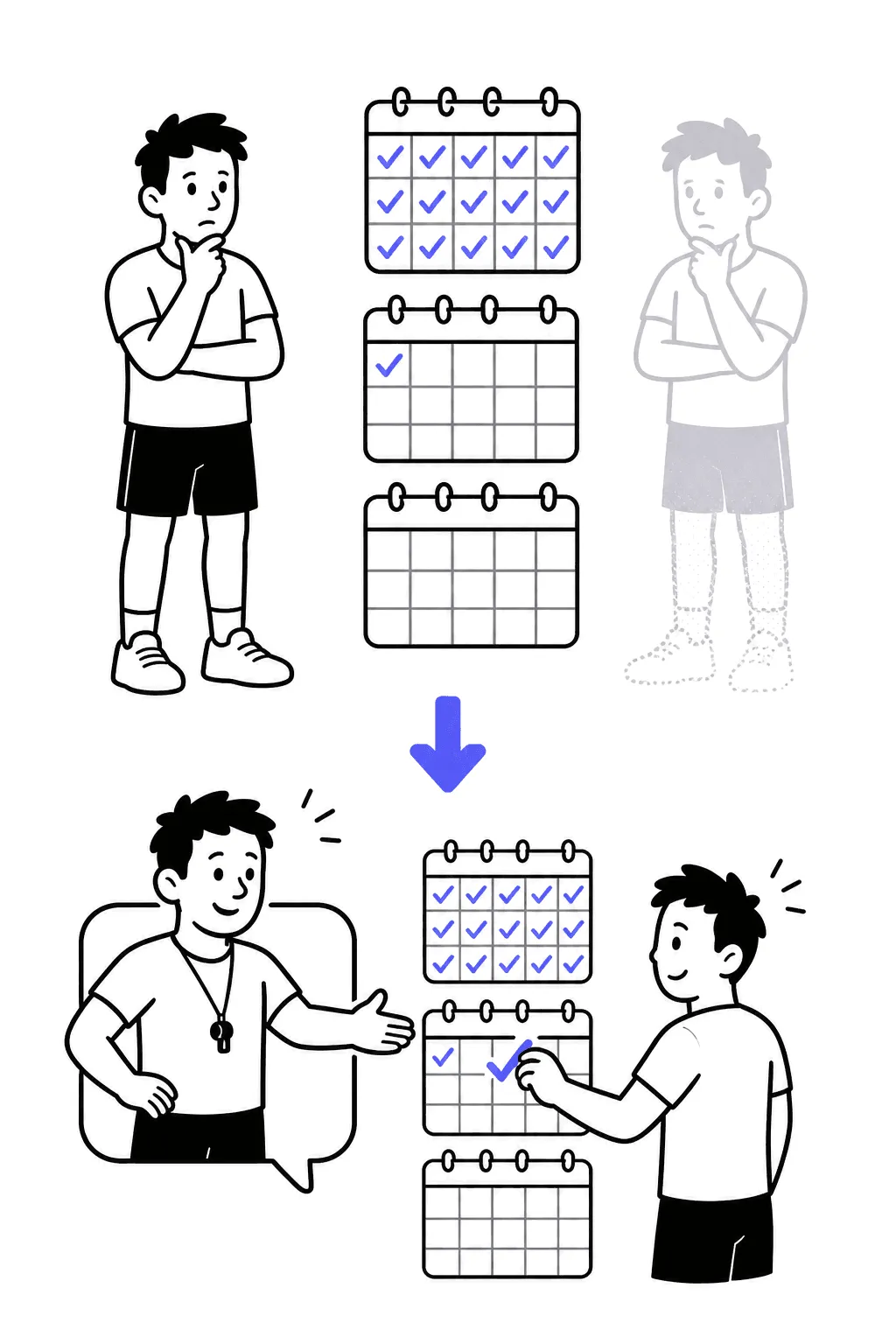
The anatomy of a ghost
The pattern, documented in a thousand coaching threads: enthusiastic start, perfect week one, good week two, then — a business trip, a sick kid, one skipped Monday. The client feels behind. Feeling behind feels bad. The app now represents guilt, so they avoid it. Avoidance compounds; by day ten of silence they're too embarrassed to return, and by week six they cancel “because of money.” Money is rarely the reason; shame spiral is the reason.
“The trainers who retain clients long term… are better at building systems that keep clients engaged between sessions. Check-ins, progress tracking, quick responses. That's the stuff that stops people from ghosting in week 3.”
Note what's on that list: systems. Not charisma. Plumbing.
Accountability is the product
The deeper reframe, again in practitioners' own words: “Accountability is far more valuable than a fancy program (AI can make amazing programs, probably better than you).” The program is table stakes; being noticed is what clients pay for. The system that catches the fade:
- Visibility: your platform shows who trained and who didn't, without you asking. You can't catch what you can't see — the spreadsheet-and-WhatsApp stack fails exactly here.
- The 48-hour rule: first missed planned session → one light human touch within two days. Not “why did you miss?” but “how's the week treating you?” Early, warm, zero guilt.
- The reframe script: when they confess chaos, kill the shame before it kills the client: “Perfect week? Nobody has those. Let's make a two-workout week — that's a win at your current load.”
- The plan shrinks before the client quits. A client on a temporarily-shrunk plan is retained; a client “catching up” on an impossible one is churning in slow motion.

Week-3-proofing starts at week zero
Most ghosts are manufactured at onboarding: a five-day program sold to a three-day life, heroic difficulty to impress early, no conversation about what happens when (not if) a week collapses. The vaccination is honesty on day one: “Some weeks will fall apart. When one does, we shrink the week, we don't abandon it. Missing isn't failing — vanishing is.” Clients who've been told the fade is normal don't shame-spiral when it arrives; they use the protocol.
And the quiet structural ally: feedback on the rep means a client three days silent is visibly three days silent — not lost in a chat scroll until Sunday. Retention is mostly reaction time.

What not to do
- Don't guilt-trip the returner. “Where have you been?!” — even joking — confirms the shame that caused the silence. Celebrate the return like it's day one.
- Don't silently watch the fade to “see if they come back”. They won't. The third missed workout is already late.
- Don't mistake a shrunk plan for failure. Two workouts done beats five planned; consistency compounds, heroics don't.
- Don't chase forever, either. Two warm touches unanswered → one honest note (“door's open, no guilt either way”) → the pause protocol. Dignity retains better than desperation.
FAQ
Isn't checking on people needy?
It's the service. The entire value gap between $30 AI programs and $200 coaching is a human noticing. Clients experience the 48-hour touch as being coached, not as neediness.
What's a healthy monthly retention picture for solo online coaching?
Practitioner reality: losing roughly a client a month on a full roster is normal churn; losing three is a system problem. The numbers chapter puts real math on it.
A client ghosts every third week like clockwork — fire them?
First shrink the plan to their demonstrated life. Some clients thrive permanently there — and a stable two-day client at full price is a great client.
Do streaks and badges help?
Lightly, for some — but mechanical gamification wears off. The durable version is human: your genuine two-line reaction to their logged week beats any badge.
Previous: Proving it works: remote progress · Next: Pauses, holidays and comebacks