The Online Fitness Coach Handbook
Pauses, holidays and comebacks
Updated August 2026 · 8 min read
The short version. Life interrupts every client eventually — vacations, injuries, newborns, brutal quarters. Coaches without a pause protocol lose these clients forever; coaches with one turn interruptions into loyalty. The protocol: make pausing easy and explicit, keep a thin thread alive during the pause, and script the comeback before they leave. A paused client is a future client — if the door stays visibly open.
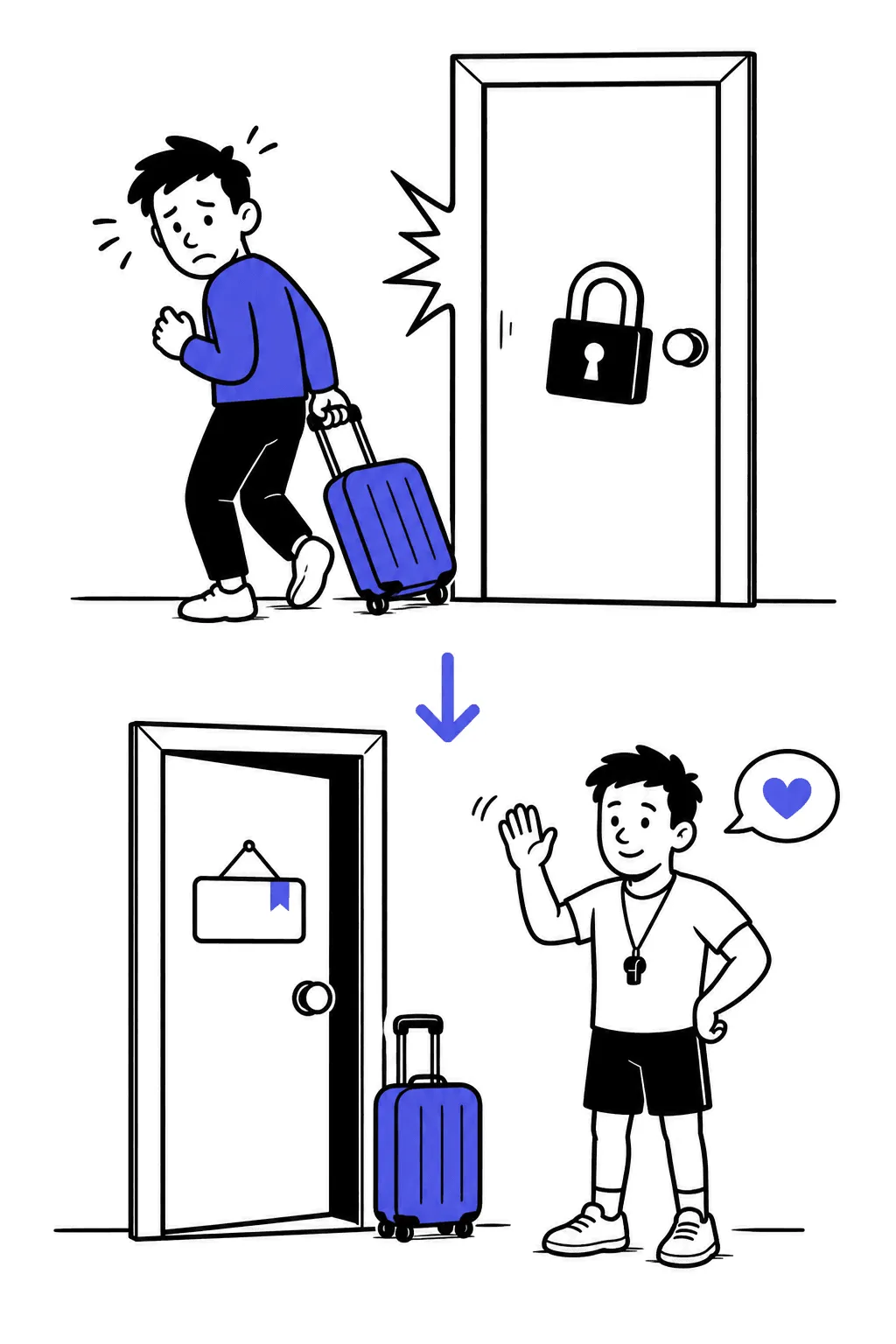
Why pauses go wrong by default
Without a protocol, a pause is an awkward negotiation: the client feels guilty asking, the coach feels the income wobble, both improvise. The classic industry failure makes it worse — platforms and coaches that punish pausing financially. From the market's angriest reviews:
“Makes it near impossible (financially) to reactivate clients.”
When leaving is expensive and returning is friction, paused clients simply become ex-clients. The mindset shift: pauses aren't churn — unmanaged pauses are. A client who pauses well and returns is often more loyal than one who never paused: they tested the exit and chose to come back.
The protocol
Declare it in the offer. One written sentence: “Life happens — coaching can pause for up to N weeks, no penalty, your spot and rate held.” The sentence prevents half the disappearances: clients who know pausing is legal ask instead of vanishing.
Make the pause concrete. Fixed end date (open-ended pauses are goodbyes in costume), what stays and what stops. Confirm in writing, thirty seconds.
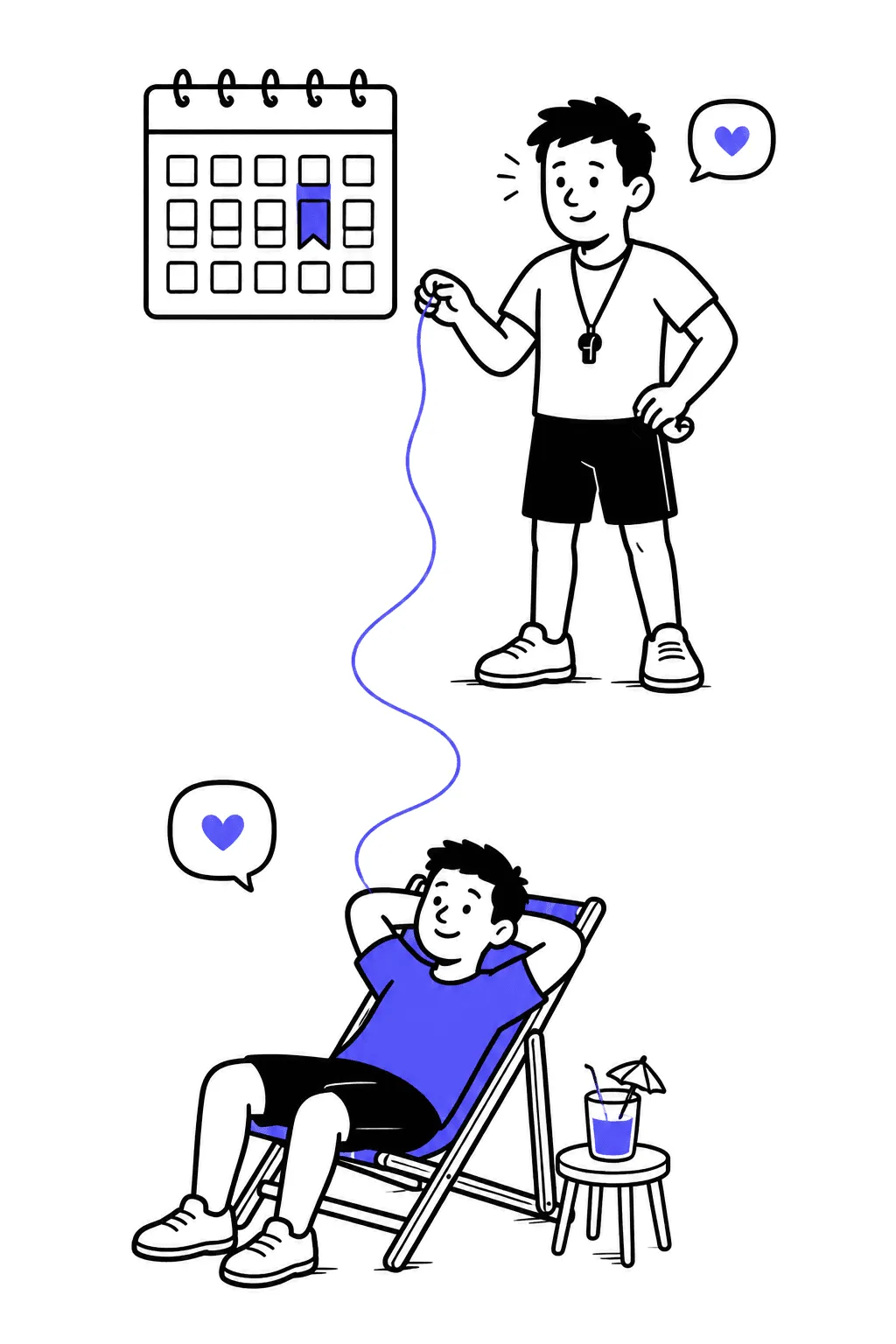
Keep the thin thread. One light, zero-pressure touch mid-pause: “No coaching agenda — how's the ankle/newborn/deadline?” Not retention mechanics; just personhood. It's also the message that should never be automated.
Script the comeback before they go. “When you're back, week one is deliberately light — we rebuild, not resume.” This kills the biggest comeback killer: the fear of returning weaker and disappointing you. Comeback week one is onboarding-lite: easy wins, zero comparisons to their old numbers.
Holidays — theirs and the calendar's
Client vacations are micro-pauses with better options: a hotel-friendly mini-program (“20 minutes, no equipment — or genuinely rest, both are fine”) keeps identity alive without vacation-policing. The explicit permission to rest matters more than the workout: clients who feel judged for resting come back slower.
December deserves its own line: the whole roster wobbles at once, and coaches panic-discount into it. The protocol view: normalize maintenance mode for everyone (“December goal: two workouts a week and enjoying your holidays”), bank the goodwill, and let January's natural energy do the rebuilding. Your own holidays are the burnout-proofing chapter — same protocol, other direction.

What not to do
- Don't charge “reactivation fees”. The industry's most-hated pattern in one word. The comeback should be the easiest purchase of their year.
- Don't guilt the pause request. “That's a shame, we were making progress…” converts a 6-week pause into a permanent exit with a bad aftertaste.
- Don't keep programming into silence. Unread programs pile up as guilt-artifacts. Pause formally instead.
- Don't let pauses hide a system problem. If half the roster wants pauses, that's a program-fit or boundaries issue wearing a costume.
FAQ
Should I hold the client's rate during a long pause?
Hold it for the stated window — it's cheap goodwill and a return incentive. Past the window, honest reset: “my current rate is X; as a returning client you get Y.”
What if “pause” is clearly a soft cancellation?
Let it be one, gracefully. The dignity of an easy exit is precisely what makes the reactivation note work six months later.
Injury pauses — keep coaching or stop?
Neither extreme: refer out per the scope chapter, then coach what's trainable if the professional clears it. “We train around it” clients become your most loyal.
How many pauses per client per year is too many?
Two planned ones are life; a quarterly pattern is a signal to shrink their baseline plan instead — permanent light-mode beats perpetual pausing.
Previous: Why clients ghost in week 3 · Next: Difficult clients and hard conversations