The Online Fitness Coach Handbook
Free, trial, beta: value without giving yourself away
Updated August 2026 · 8 min read
The short version. Free is a tool with a safety catch. Used with structure — a trial that leads somewhere, a beta with a price and a purpose — it converts skeptics no ad ever will. Used as a hope strategy — coaching people for free until they “see the value” — it attracts exactly the people who never will. The rule from the field: people don't respect free, and free clients don't behave like clients.
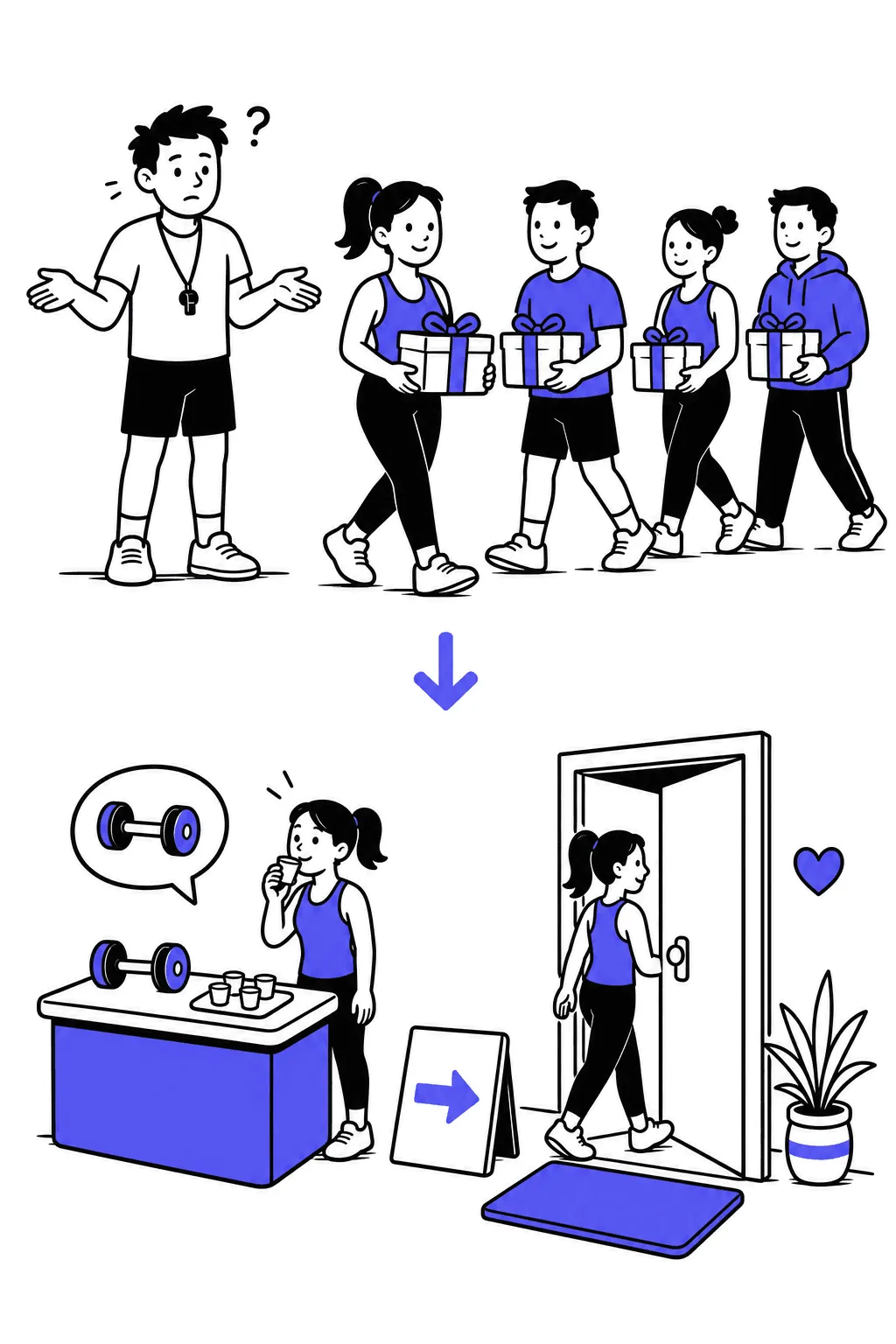
The free-client experiment, run for you
A coach trained fifteen people for free to “build confidence and testimonials”. The community's diagnosis, verbatim:
“You don't have a sales problem. You've trained 15 people for free. That's the problem… Stop giving it away.”
“People won't buy what they're getting for free,” adds the same thread. And the behavioral mechanism, from a 20-year veteran: “People don't respect free. It's as simple as that. They know you need them to hire you. As such, they act this way.” Free clients ghost check-ins, skip programs, and — the cruelest part — never convert, because converting would mean admitting the thing they got free was worth money. The founding-rate rule exists precisely because discounted-and-invested beats free-and-absent.
Free that works: structure, destination, limit
The same research shows free working — always with three properties:
- A structure, not a favor. The soft-sell school's free intro session: “they come and learn to squat, press and deadlift… We lay out what the next three months would look like if they joined.” Real coaching, fixed shape, one session.
- A destination. The free thing points somewhere concrete. The best-documented version in the corpus ran free session → paid trial pack → full program, with strong conversion at each step. The taste exists to make the next step easy — the trial workout on your door is this pattern, productized and automatic.
- A limit. One session, one week, one workout. An end date converts; open-ended free evaporates. Even no-shows respond to structure: “I started messaging them a couple of hours beforehand asking them to confirm. That stopped a lot of the no shows.”
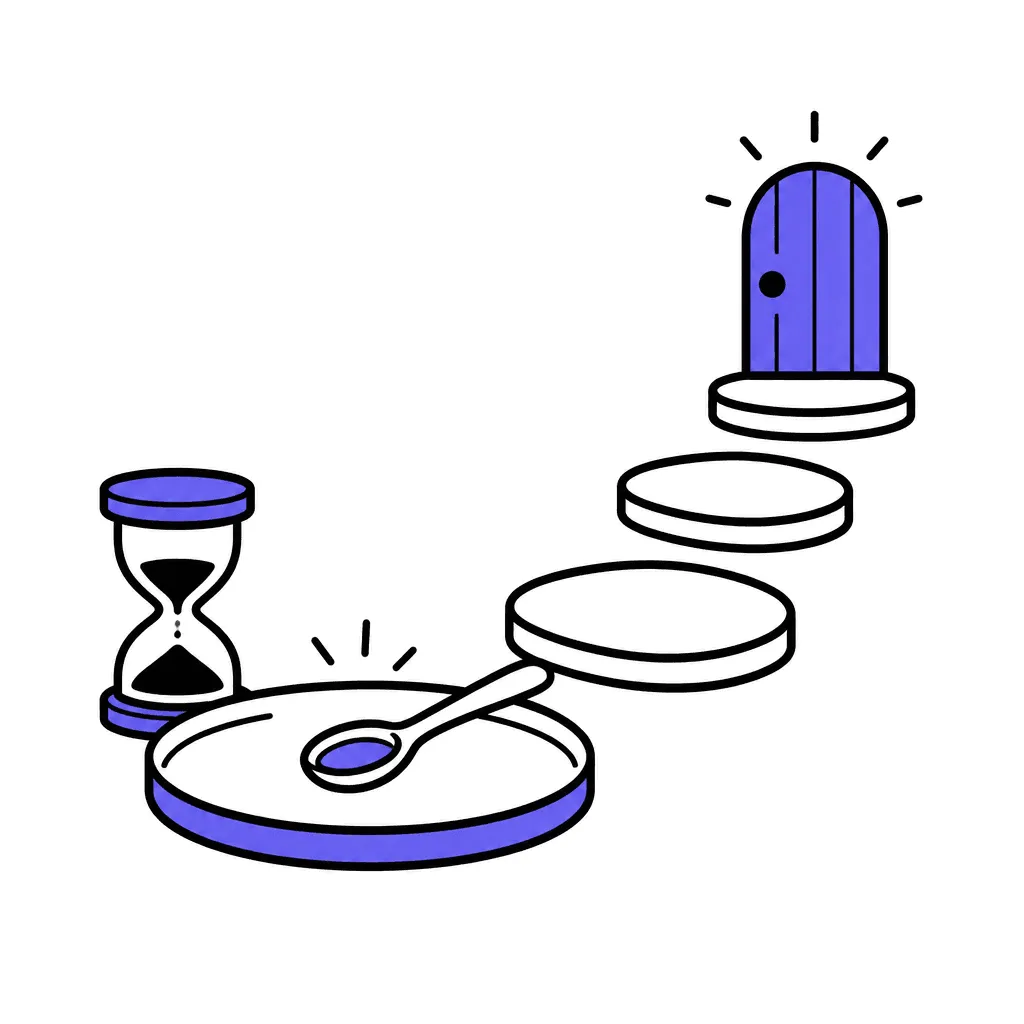
The beta, done honestly
The “beta spots at a discount for testimonials” pattern is legitimate — it's the founding rate wearing launch clothes — and the practitioner framing keeps it honest: real money (never free), a defined cohort and window, an explicit exchange (“honest feedback, and a testimonial if it earns it”), delivered like it's full price. One caution from watching a beta post get roasted: the offer is fine; broadcasting it into communities as a stranger is spam. Betas are for your warm list and hand-raisers — which is exactly who deserves the founding deal anyway.
Challenges: the honest asterisk
Free challenges print short-term signups and long-term damage — a 15-year veteran's account: participants “went right back to their old habits, or literally went to faceplant in a pizza after we did ‘after’ pictures”; a former wrestler gamed the weigh-in to win. His verdict stands: consistency and habit challenges (winner = longest streak) instead of weight-loss stunts — identity-building instead of crash-and-rebound. If you run challenges at all, run those, priced small, feeding your normal offer. “Keep the monthly fees” — verbatim — is the underlying principle: events serve the retainer, never replace it.

What not to do
- Don't coach anyone for free “for exposure”. Fifteen free clients taught one coach a public lesson; it's been learned for you.
- Don't run open-ended trials. No end date, no decision. Limits are kindness.
- Don't give the free sample without the frame. “Don't give them a free sample workout. That signals to them to workout without a coach” — the taste must demonstrate coaching, not hand out programming.
- Don't discount your core offer as an acquisition strategy. The founding rate is a launch event, once. Rolling discounts teach the market to wait.
FAQ
Free trial workout on my page vs free intro call — which?
The workout, usually: it demonstrates the actual product (being coached) with zero calendar friction. The call earns its place for complex cases and bigger commitments.
How big should a beta discount be?
Big enough to reward risk, small enough to stay real money — a third off with a time-boxed lock is a common practitioner shape. And it converts to full rate on a named date, agreed upfront.
Someone finished the trial and vanished. Chase?
One warm message, then the easy-out: “no pressure either way — want me to leave the door open?” Field wisdom: give trial clients an easy out and the honest ones tell you why. Data beats a chase.
Can I ask trial users for a testimonial?
Only paying clients with real results — a trial-taste testimonial is thin and reads that way. The social proof chapter covers what's actually worth collecting.
Previous: “It's too expensive” and friends · Next: Social proof that doesn't feel gross