The Online Fitness Coach Handbook
AI in your coaching business
Updated August 2026 · 8 min read
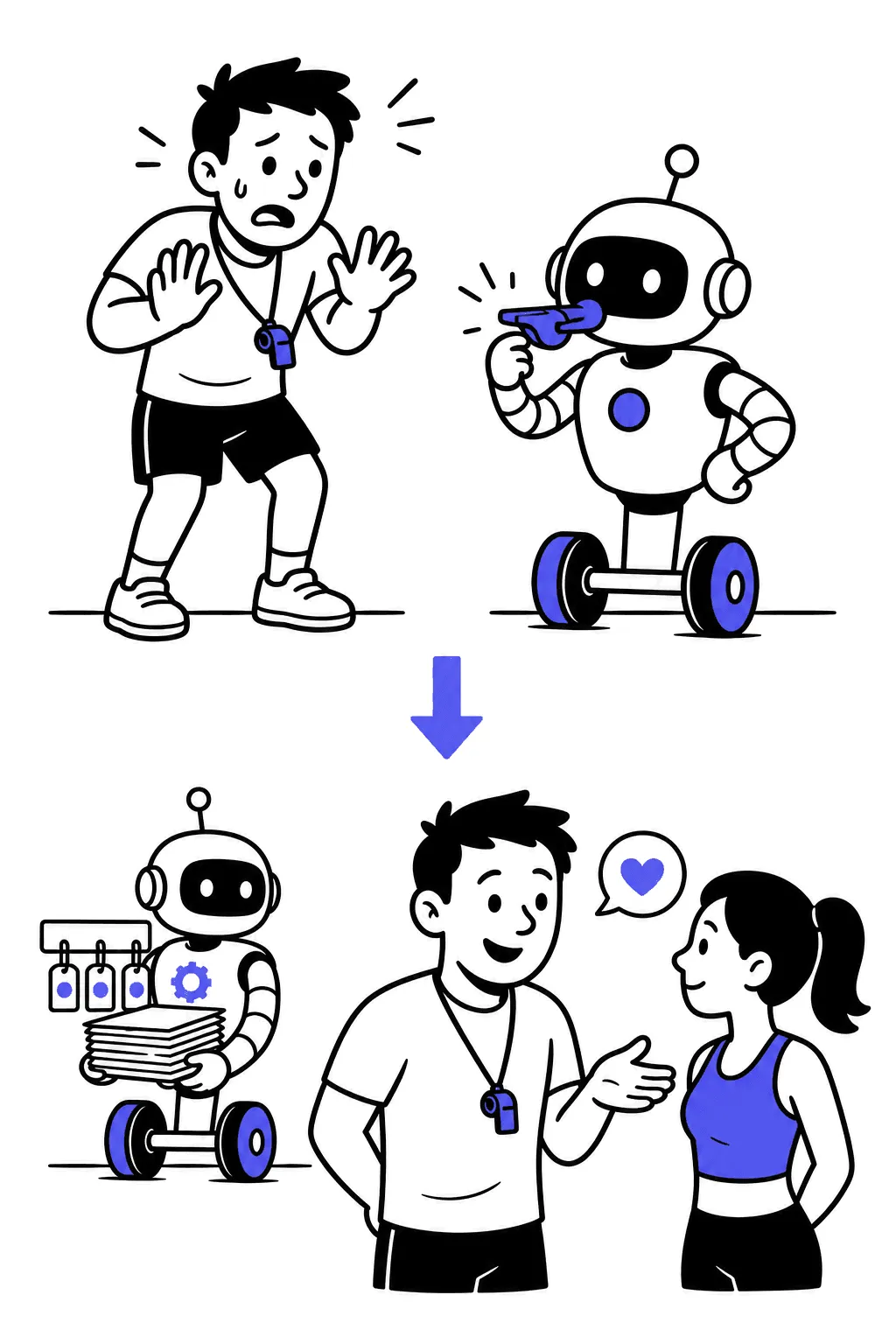
The short version. AI will not replace coaches — it's already replacing the part of coaching that was never the point: the admin, the drafting, the tagging, the busywork. The working split, straight from this book's spine: AI takes the routine and the technical side; you take the humans — the noticing, the adjusting, the motivating, the relationship. Clients themselves drew this line before the industry did.
The line clients already drew
The AI anxiety conversation happened in public, and the top-voted client-side verdict (157 likes in our corpus) is the strategy:
“I don't think people would want to be held accountable by a robot PT… people will start to yearn and cherish human connection more.”
And the flip side, from clients dismissing coaches who are replaceable: “Why would you pay some fitness guru when AI is 10 times better and FREE?” Both are right. AI genuinely writes decent generic programs — practitioners themselves admit “AI can make amazing programs, probably better than you.” What it cannot do is notice that this client's squat video shows Tuesday-fatigue, remember that she hates burpees since March, and say the exact sentence that keeps her training through a brutal week. Programs are commodities; being known is the product. AI eating the commodity layer makes the human layer more valuable, not less.
Where AI earns its keep today
The practical map, from lowest to highest judgment required:
- Metadata and organization. Uploading a library and having titles, descriptions and tags drafted automatically (the library chapter's afternoon-move depends on it). Zero judgment, pure time.
- Drafting and summarizing. A first draft of the weekly touch, a summary of a client's month, the boring half of content writing (the content chapter's intern rule: AI outlines, you voice). The automation chapter's Tier 2: machine drafts, human decides.
- Pattern flagging. Noticing across a roster what tired human eyes miss: fading logging frequency, a stalled trend — the trigger layer feeding your 48-hour touch.
- Your assistant, on tap. Modern setups let a coach talk to their own business — and with open protocols like MCP, even from a general AI assistant: query your roster, draft from your data, operate your tools conversationally. The technical side, taken off your hands.
Full disclosure, per the book's rule: the platform publishing this handbook builds along exactly this line — AI metadata on upload, an AI assistant in the coach's cabinet, AI-drafted social content, and an MCP connector so coaches can work their business from their own AI assistant. The bar is the same for any tool: AI should hand you time and drafts — never speak to your clients as you.

The two red lines
The automation chapter set them; AI makes them urgent:
- Tier 3 stays human, forever. Wins, silences, pain, goodbyes. The canned “Great job! 💪” is the moment a $200 coach becomes a $30 app in the client's head — and AI makes canned infinitely cheap, which makes genuinely human infinitely more distinctive.
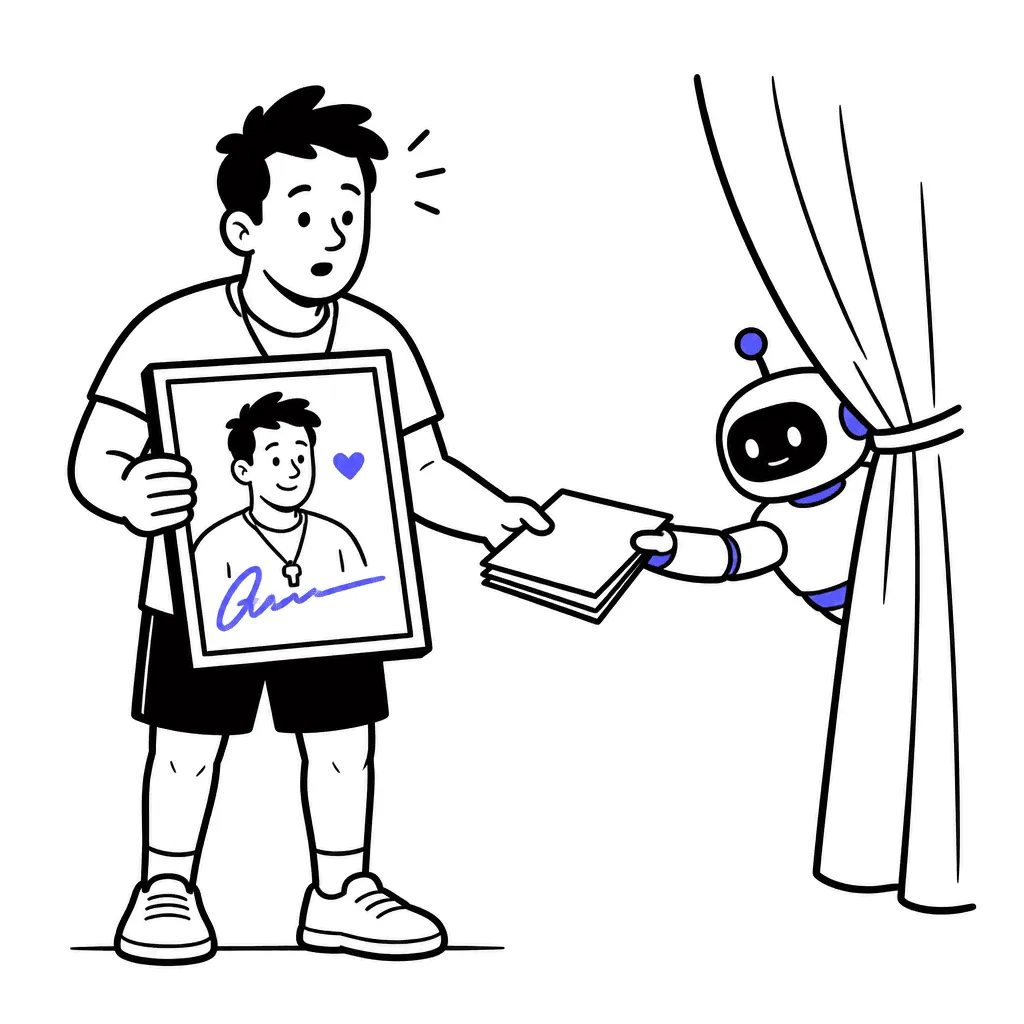
- Your voice is not delegable. AI drafting for your edit is leverage; AI publishing as you is identity theft you performed on yourself. The blind test from the automation chapter: if a client couldn't tell, you've already crossed.
And one strategic red line for the business: don't sell “AI-powered coaching” as your differentiator. Your clients aren't buying AI — they're buying not-AI: a human who notices. Let AI silently fund that humanity with reclaimed hours; market the humanity.
What not to do
- Don't hand AI your client conversations. Drafts in, judgment out, your fingers on send. No exceptions survive contact with trust.
- Don't use AI to fake volume. Ten AI-written generic posts a week is the treadmill chapter's failure mode at machine speed — and your audience's scam-detector evolved on exactly this content.
- Don't ignore it out of principle, either. The coach spending Sundays on tagging and summaries isn't more authentic — just more tired. Purism donates your evenings to no one.
- Don't outsource your thinking about clients. AI flags patterns; the interpretation — what the fading logs mean for this human this month — is the craft. Keep the meaning-making.
FAQ
Will clients pay less because “AI does part of it”?
The opposite, when framed honestly: AI on admin buys the client more of your actual attention. Depth of noticing per dollar goes up — that's a raise-justifier, not a discount trigger.
Should I tell clients I use AI?
For admin and drafting — if asked, honestly and unremarkably (“it handles my paperwork so I can watch your training”). For anything touching their data, transparency isn't optional.
Which AI tools specifically?
The ones inside systems you already use, first (the tech-stack rule against new-tool shopping). A standalone chatbot subscription rarely beats the AI already built into your coaching platform and your writing workflow.
Is prompt engineering a skill I need?
Plain clear English about your actual situation beats clever prompts. The skill worth building is editing AI output into your voice fast — that one pays weekly.
Previous: Paid ads, eventually · Next: The numbers that matter