The Online Fitness Coach Handbook
Content that compounds
Updated August 2026 · 8 min read
The short version. There are two kinds of content: the treadmill kind that dies in 24 hours, and the compounding kind that answers a real question and keeps answering it for years. If you make content at all beyond your business-card profile, make the second kind: one durable format, one sustainable pace, measured in months. This is a long game — which is exactly why almost no coach plays it, and why it works.
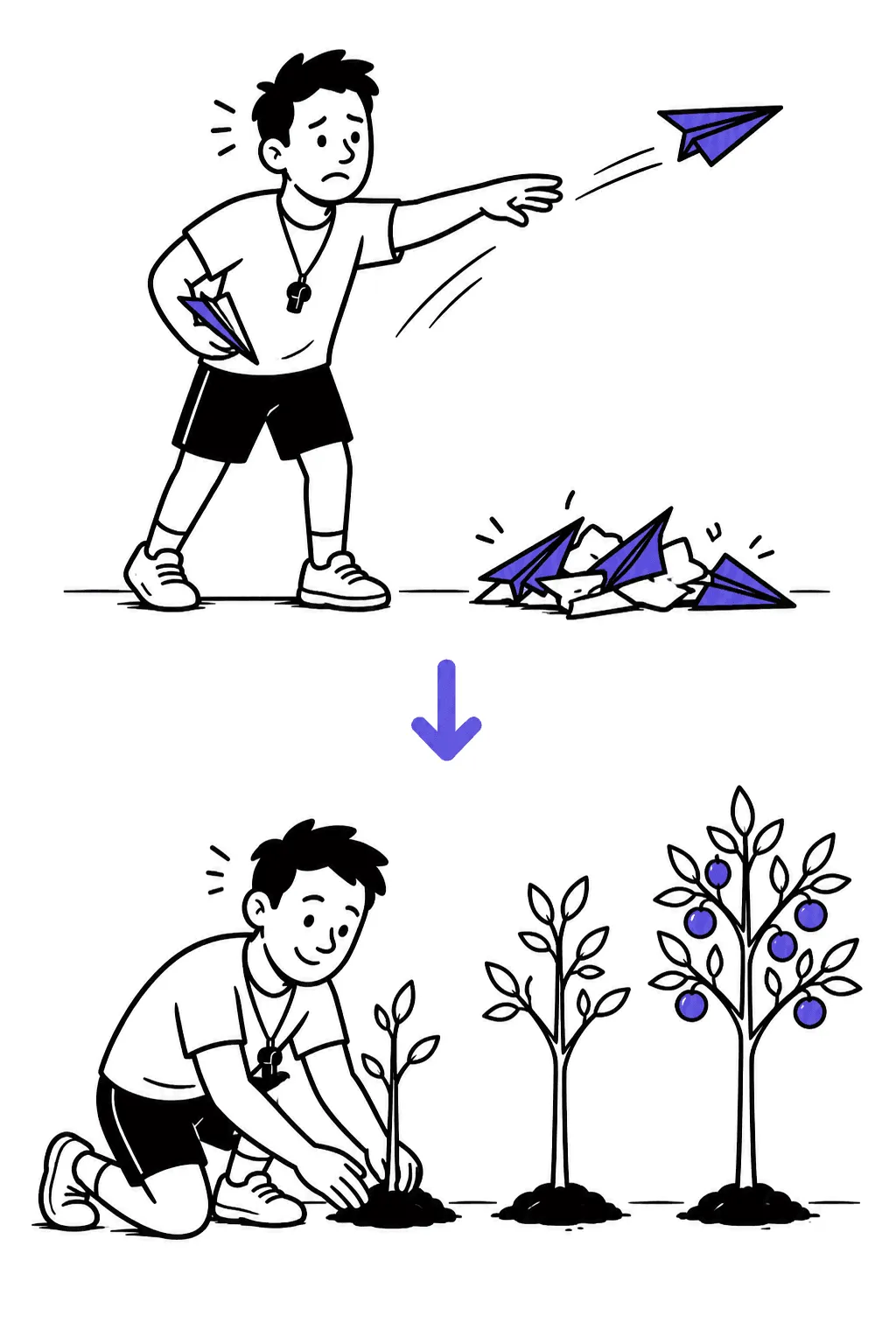
Treadmill vs asset
A reel about “3 exercises for lower back” gets its views this week and is gone. A thorough answer to “how do I train around a cranky lower back after 40” — as a video, a long post, or an article — gets found by exactly the right person next month, and the month after, for years. Same knowledge, opposite half-life.
The compounding formats, in rough order of effort:
- Genuinely helpful answers in the communities your niche inhabits — with zero pitching (your profile does the selling silently). Fifteen minutes a week, compounds into “the helpful coach” reputation.
- Long-form video — one honest, useful video on a question your clients actually ask, once or twice a month. Searchable forever; seven minutes of you coaching on camera builds more trust than fifty reels.
- Written deep answers — the “everything I know about training through pregnancy / for masters athletes / with a desk job” piece. One a quarter is a real pace.
The one-format rule
Pick one format you could sustain for a year without hating your life — that phrasing is deliberate, and it's the whole strategy. Four pieces batched ahead makes you consistent through any busy month. Every guru plan fails at “and then do this daily”; the compounding plan works because it's almost embarrassingly light.
The topics come from one source: questions real clients have actually asked you. Keep a running note; every repeated question is a piece of compounding content waiting. You're not inventing content — you're transcribing your coaching.

Honest expectations (the anti-guru fine print)
- Timeline: months, not weeks. A helpful video finds its audience over quarters. If you need clients this month, this is the wrong chapter — first five and referrals are faster.
- Volume: irrelevant. Ten deep answers beat three hundred shallow ones. Search and shares reward the best answer, not the most recent.
- Perfection: also irrelevant. Useful and clear wins; production polish adds almost nothing to trust. Your phone, your voice, your actual knowledge.
- Attribution: fuzzy. Clients will say “I watched some of your videos” — you'll rarely trace a straight line. Measure it in “how did you find me” answers, not analytics dashboards.
What not to do
- Don't run treadmill and compounding simultaneously from zero. One sustainable thing. The treadmill can come later as amplification — or never.
- Don't write for coaches. The industry's content trap: performing expertise for peers. Your client doesn't care about periodization debates; she cares whether her knees are fine.
- Don't chase trends in evergreen content. The trending audio dies in a week; your answer to a real question shouldn't.
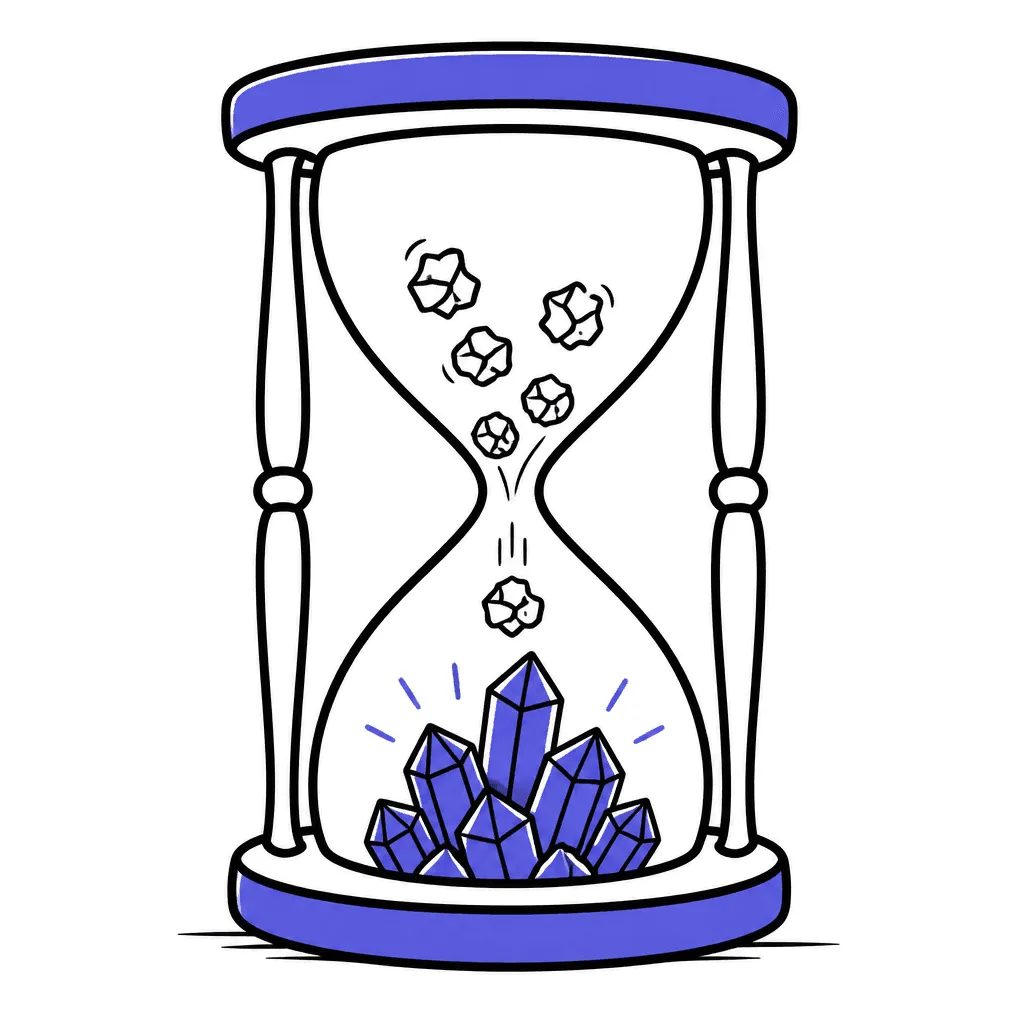
- Don't quit at month two. The compounding curve is flat exactly as long as most people's patience. That's the moat.
FAQ
Isn't YouTube oversaturated?
Generic fitness content, yes. “How to train for your first triathlon at 45 with a desk job” — your niche's real questions — barely has competition. Specificity is the whole game.
Do I need SEO skills?
No. Answer the question in the words your client would type, put it in the title, be genuinely thorough. That's most of SEO for a solo coach.
Can AI write my content?
AI can outline, tighten and repurpose. But the value is your coaching voice and your specific experience — the parts a reader can't get from asking a chatbot themselves. Use it as an intern, not a ghostwriter.
Blog, YouTube or podcast?
Whichever you'll actually sustain. Talking feels natural → video. Writing feels natural → articles. Podcast only if you love it; it's the hardest to make discoverable.
Previous: Social media without the treadmill · Next: Funnels: the door that works while you coach