The Online Fitness Coach Handbook
Social media without the treadmill
Updated August 2026 · 8 min read
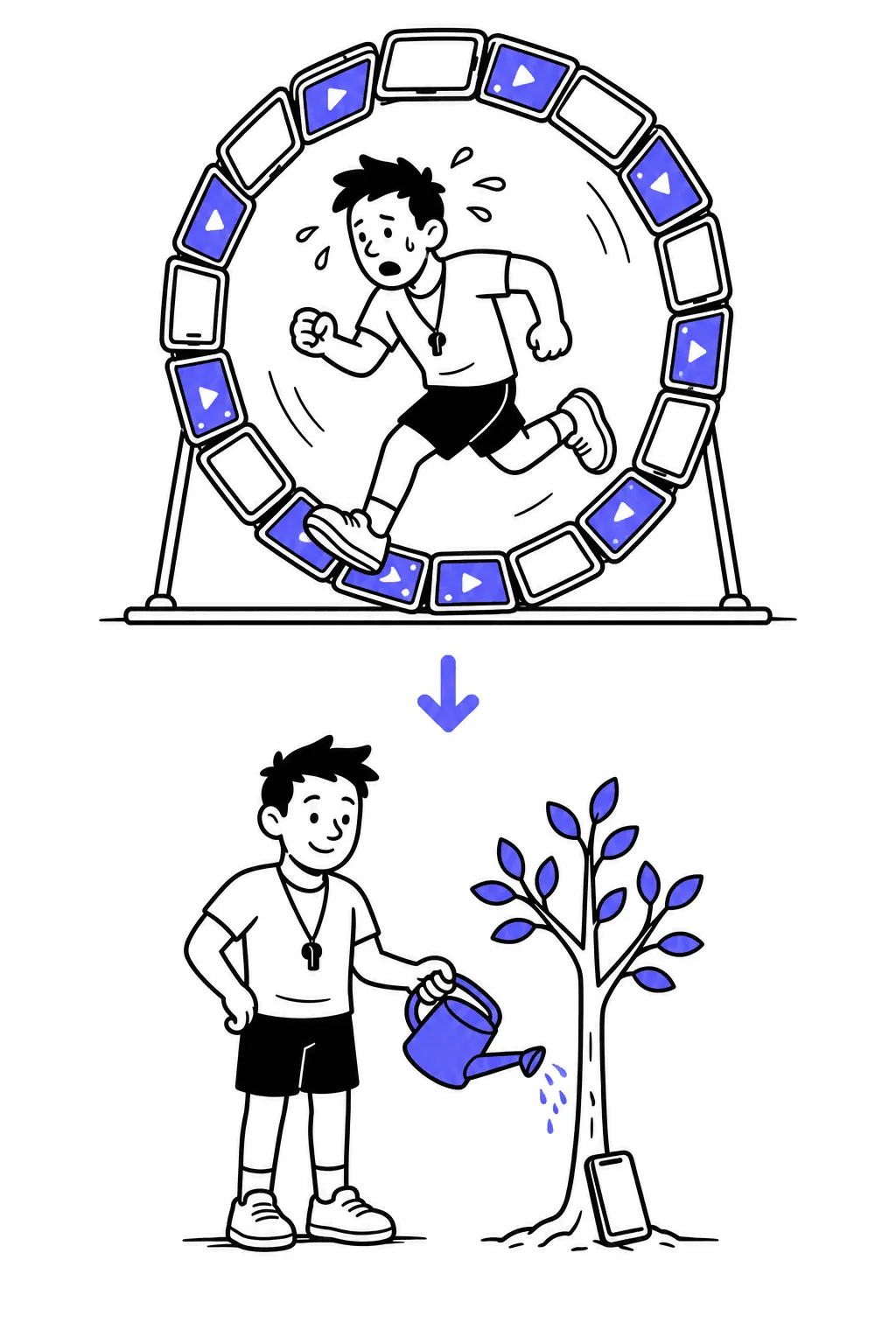
The short version. Your social media has one job: when someone hears your name, they check your profile and think “real coach, still active, I can see how to start.” That's a business card, not a broadcast tower. Three pinned posts, a clean bio, and a sustainable rhythm beat daily reels — because the treadmill you can't sustain markets your burnout, not your coaching.
The math nobody posts about
The dream is real — a working coach's words: “Clients just book themselves from my Instagram bio.” But the road the gurus sell to that dream is brutal, and practitioners who track it are honest:
“Short form video is a waste of time. Stats on how long a viewer needs to see your content… is around 7hrs.”
“I have 5 committed clients but I struggle to get more… posting consistently makes me anxious.”
Seven hours of watch time — in 30-second reels, that's hundreds of pieces of content for one sales call. Here's the reframe: the coaches winning clients from social media aren't out-posting anyone. Their profile converts the attention that referrals, conversations and real life already create. Traffic comes from your warm world; the profile just has to not fumble it.
The business card standard
A referred stranger gives you thirty seconds. The profile passes or fails on four things:
- Bio = your positioning paragraph, compressed. Who you coach, what changes, one distinctive detail (see the positioning chapter). No inspirational quotes, no emoji resume.
- One link that does something. Straight to the place they can actually start — your page with a trial or booking (the door). Not a linktree with nine destinations.
- Three pinned posts answering the three silent questions: Who are you? How does coaching with you work? How do I start? Write them once, pin them, update twice a year.
- Signs of life. Recent-ish activity so the profile doesn't read abandoned. That's it. That's the whole bar.

A rhythm you can hold for years
- Two posts a week, tops — one useful (answer a question your clients actually ask), one human (training, life, a client win with permission). Batch them monthly in one sitting.
- Stories over reels for the warm audience. Your existing followers — the ones who might actually hire you — see stories. Low production, high trust: today's session, a small win, a poll.
- Comments and DMs beat new content. Fifteen minutes replying genuinely does more for a coaching business than an afternoon editing a reel. Conversations are the channel; posts are just the excuse.
And the permission slip, since the industry won't give it to you: you are allowed to be bad at social media and still run a full roster. Plenty of fully booked coaches post monthly. Their clients come from the warm circle and referrals; the profile just doesn't sabotage it.

What not to do
- Don't buy the growth course. Follower count is the industry's favorite vanity metric; your business runs on twenty warm conversations, not twenty thousand strangers.
- Don't post through resentment. Audiences smell obligation. Two honest posts beat five resentful ones.
- Don't copy fitness-influencer content. Their business is attention; yours is coaching. Different products, different content.
- Don't let the feed replace the door. Likes that never reach a booking page are entertainment you're providing for free.
FAQ
Which platform should I be on?
The one where your niche already is and where you'll actually show up. For most coaches that's Instagram; for some niches it's a running club's Facebook group or a climbing forum. One platform, done properly.
Do I need to show my face?
Your face builds trust faster than any graphic — but “show up as yourself” doesn't mean daily talking-head reels. Photos from real coaching life are plenty.
What about posting client transformations?
Only with explicit permission, and non-scale wins often say more — the social proof chapter covers collecting these honestly.
Should I automate my DMs?
Warm leads can tell when they're being shoved through a script — that's a verbatim practitioner warning. Automate reminders and admin, never first conversations.
Previous: Your first five online clients · Next: Content that compounds