The Online Fitness Coach Handbook
Partnerships: borrowed trust
Updated August 2026 · 8 min read
The short version. Around your clients stand other professionals they already trust — physios, massage therapists, nutritionists, run-club captains. One honest coffee with the right adjacent pro creates a referral channel that compounds for years and costs nothing but reliability. This is the most underrated channel in the book, and the least guru-infested — because it can't be automated.
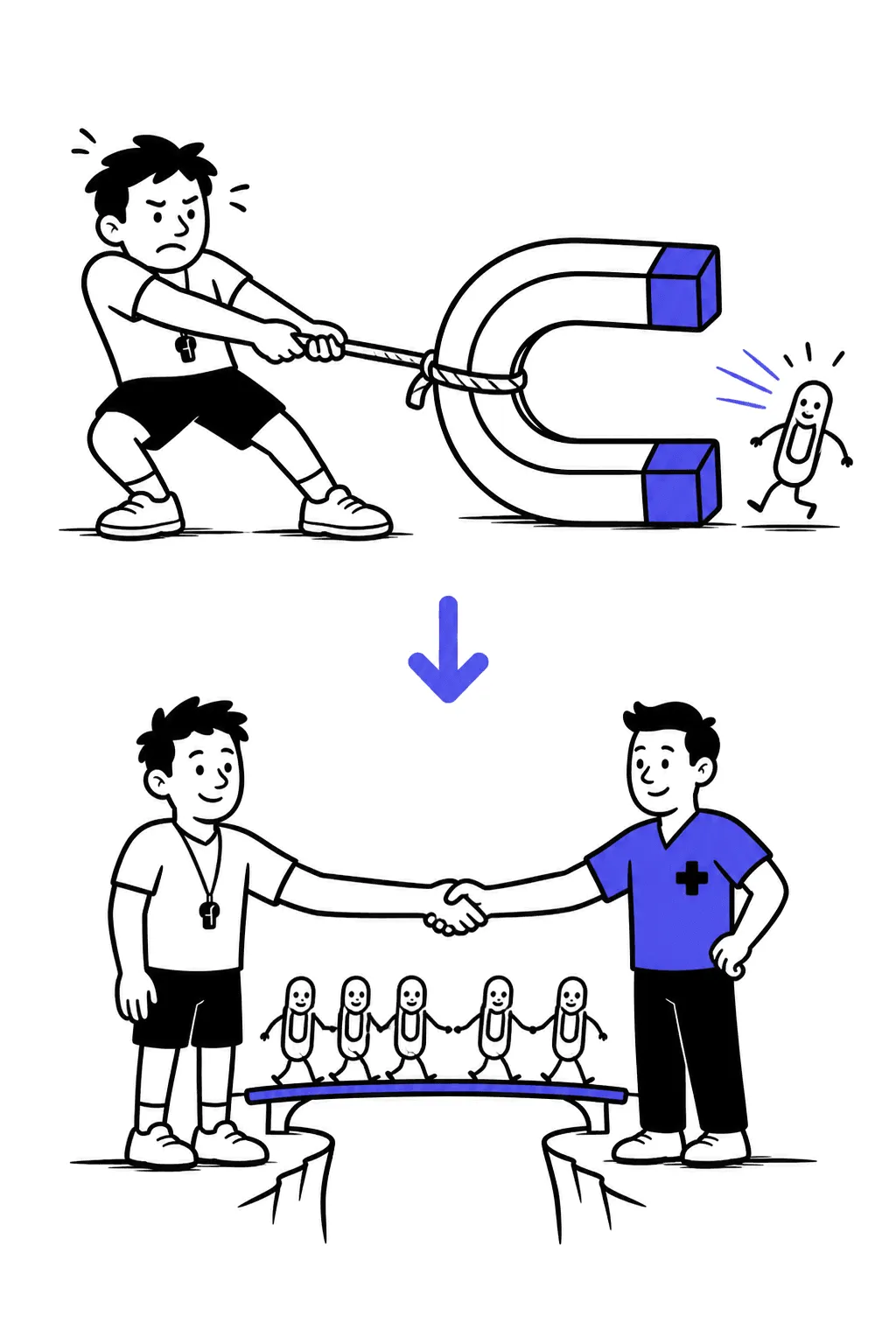
Why adjacent beats identical
A partnership with another coach is a turf war; a partnership with an adjacent professional is pure surplus. The physio finishes rehab and needs somewhere safe to send a patient who must now get strong. The massage therapist hears “I should really start training again” weekly. The running-club captain watches newcomers get injured from zero-to-hero enthusiasm. None of them coach; all of them are asked for a recommendation constantly.
What they're missing is exactly what you are: a specific, trustworthy answer to “who should I see?” Be that answer, and their years of client trust transfer to you in one sentence — the same peer-trust physics as referrals, but from a source that meets dozens of your ideal clients a month.
The map and the coffee
The map (ten minutes): list the professionals your excavated niche already sees. Desk-bound dads: physios, chiropractors, massage therapists. Postpartum moms: women's-health physios, doulas, mom groups. Masters athletes: sports medics, club coaches. Three names per category — the ones your own clients mention.
The coffee (one per week or two): not a pitch meeting. You're a colleague introducing yourself: what you do, who you're best for, what you don't do — your scope line from the boring armor is your credibility here; professionals trust people who know their limits. Then the only question that matters: “who's the right client for me to send you?”
Give first. Send them someone before they ever send you anyone. A professional who receives a thoughtful referral remembers it for years — you've just become the coach who sends good clients, which is the reputation everything else grows from.
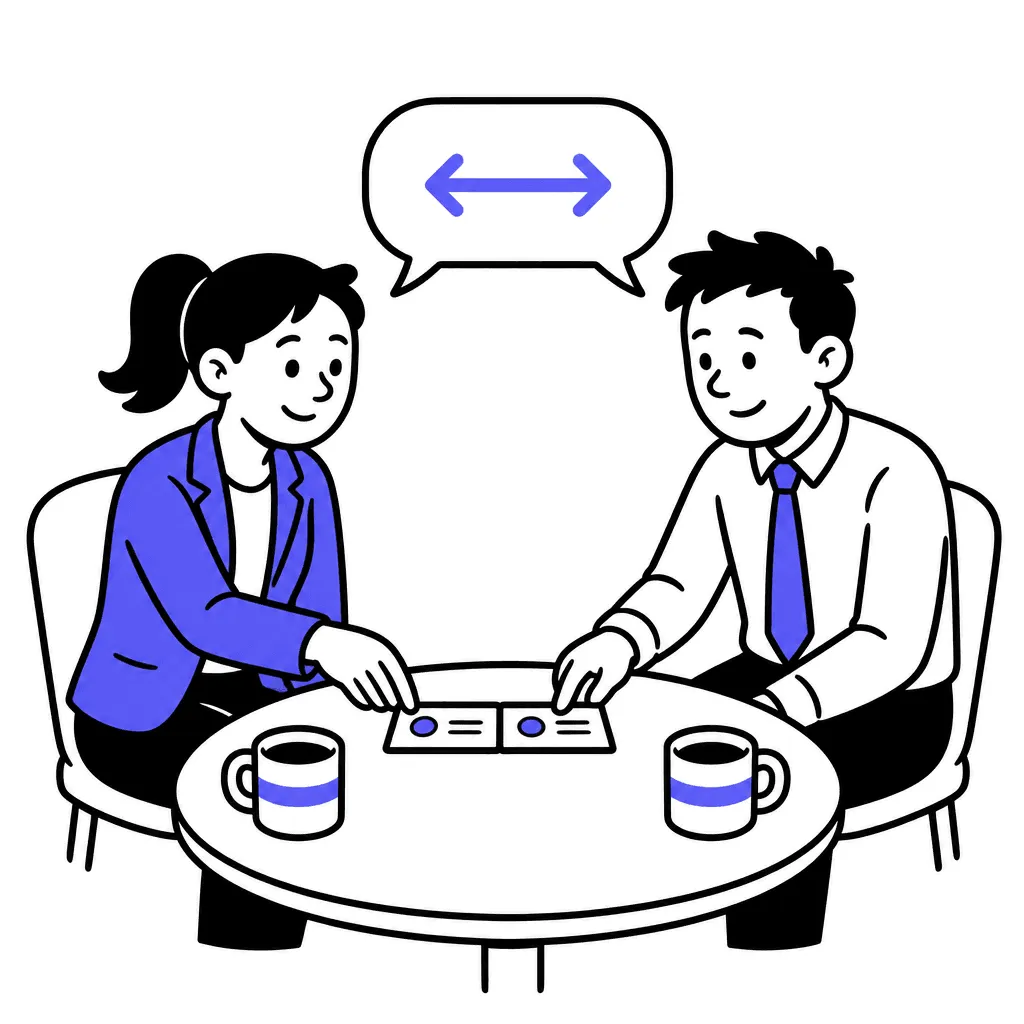
Making referring you effortless
- A one-line description they can repeat verbatim — your positioning paragraph's first sentence. If they have to improvise your pitch, they won't.
- The door — they send a link, not an explanation.
- A warm handover ritual: “Tell them to mention you — I'll take extra care.” Then actually do, and report back: “Your patient started Tuesday, we're going gently on the knee, thank you.” That closing-the-loop message is the entire retention mechanism of the channel. Professionals keep referring where they see outcomes; silence reads as a black hole.
And keep the exchange honest in both directions: when your client mentions a stubborn ache, you refer out — to your partner, by name. Now the loop feeds itself, and your scope discipline literally generates business.

What not to do
- Don't offer commission splits. Money contaminates professional referrals worse than client ones — most health professionals ethically can't accept them anyway. The currency is reciprocity and reliability.
- Don't partner with everyone. Two or three real relationships beat a stack of business cards from a networking event. Depth compounds; breadth evaporates.
- Don't ghost after the first referral. The loop lives on the report-back. One un-thanked referral quietly ends the channel.
- Don't pitch gyms as a “partnership”. If you're hybrid, your gym is a separate relationship with its own politics — this chapter is about the professionals outside your building.
FAQ
What can I offer a partner besides referrals back?
Being excellent with the people they send — that's genuinely the whole ask. Extras that help: a guest Q&A for their clients, priority slots for their referrals, being the coach they can hand difficult cases to safely.
What if the physio already has a coach they refer to?
Then be second: specific niches (“send me the postpartum ones”, “the over-50 lifters”) slide in beside an incumbent without a fight. Or find another physio — the map has more names.
Do online-only partnerships work, or is this a local game?
Both. Local is easiest to start (coffee is a superpower), but a physio with an online audience or a niche community moderator plays the same role at distance.
How long until this produces clients?
First referral often lands within weeks of a good coffee; the channel matures over months. Slower than your warm list, faster than content — and it never stops once the loop is running.
Previous: Referrals as a system · Next: From DM to yes