The Online Fitness Coach Handbook
From DM to yes
Updated August 2026 · 8 min read
The short version. DMs sell coaching — but not the way the gurus teach. Cold DMs cost 300 messages per client and your soul; warm DMs convert because someone already half-decided. The craft: slow down, understand before offering, and let them come to you. Conversations, not scripts — the numbers on both sides prove it.
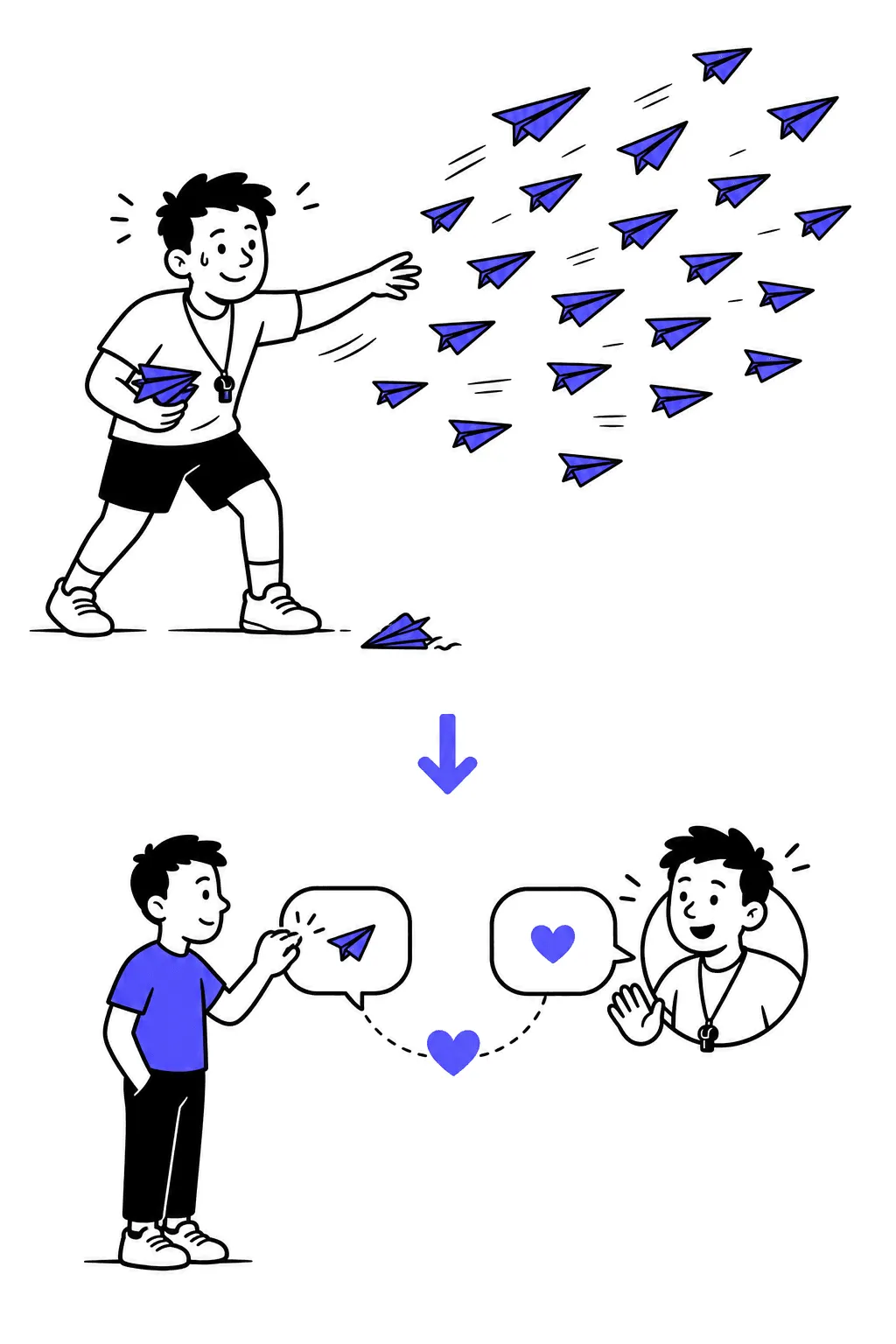
The cold math
The guru version — mass-DM strangers with a “magic script” — has public accounting from a coach who tried it honestly:
“I've spent an embarrassing amount of money on ads… advertised in about 8 Facebook groups, and Cold DM'd about 300 people. I've collected a whopping one client.”
Three hundred cold messages, one client. Meanwhile clients themselves report cold DMs as the red-flag signal for a pushy sales call to come. The economics don't work at coaching prices, and the reputation cost compounds — you become the “hey girl” message people screenshot for their group chats.
Warm DMs are a different product: a follower who watched you for months, a referral who “heard about you”, a hand-raiser on your announcement post. They're not being convinced; they're being helped to decide. That's the conversation this chapter is about.
Slow is smooth
The most-upvoted mechanic in our sales research, from a coach answering “how do you sell in DMs”:
“The issue is jumping to the call too fast. People need to feel understood before they trust you enough to get on a call with a stranger. Try spending 3 to 4 messages just showing you genuinely understand their problem before you mention anything about working together.”
And its cousin, on killing the interrogation vibe: “When someone just follows you and gets hit with ‘what are you dealing with, how long’ etc it can feel like work so they lose interest… slowing it down and making it more like a normal convo first… also sharing a small tip or insight before asking too much makes people more open.”
The shape of a good DM thread: they open (or reply to your story) → you respond like a person, not a form → a genuine question about their situation → listen → one useful thought, free, no strings → then, if it fits: “want me to tell you how I'd approach this properly?” The offer arrives as the natural next step of a helpful conversation — because it is.

The two questions that do the selling
Practitioners keep returning to two questions that outperform every pitch:
- “Have you ever worked with a coach on this before?” — opens history, expectations and wounds better than any form.
- “What made you reach out now — why today and not last month?” — surfaces the real motivation. Verbatim from the threads: “They will often share some pretty strong motivation when you do that.”
Notice neither question mentions you, your method, or your price. The prospect sells themselves while you listen — which is why practitioners summarize DM selling as: the one asking questions is steering.
Price, transparency, and when to move channels
Two practical calls the research settles:
- Be transparent about the price range early — before any call. “Being transparent about prices upfront goes a long way… they have an idea whether it's in their price range before they ever get on the phone.” Surprised people don't book; pre-qualified people do.
- Move to a call (or the door) when the conversation turns serious — logistics, start dates, detailed goals. Deep DM negotiation exhausts both sides; “Instagram wasn't designed to be a CRM” is a verbatim practitioner warning. The door from the funnels chapter is exactly what you send here.

What not to do
- Don't cold-DM strangers. The math (300:1), the reputation, the platform spam filters — everything says no. Build warm sources instead.
- Don't run “magic scripts”. “Does it mean you can use magical sentences in a dm to convert them? F—, no” — a practitioner, verbatim. Scripts read as scripts.
- Don't automate first conversations. “Warm leads can tell when they're being shoved through a script.” Automate admin, never first impressions.
- Don't take silence personally — or chase it. “Some convos just die and that is normal so don't overthink every single one.” Two unanswered messages = let it rest; the list chapter's hand-raiser note picks it up months later.
FAQ
Someone liked three posts. Do I DM them?
A story-reply-worthy reaction, sure — as a human (“glad that one landed — how's your training going?”). A pitch, no. Engagement is an invitation to talk, not to sell.
How many DM conversations should I be having weekly?
At founding-five stage: a handful of real ones beats fifty shallow ones. One good conversation a day compounds faster than any outreach quota.
What if they ask the price straight away?
Answer it (band + what's included, one sentence) and ask your question back. Hiding price to “build value first” is the guru move your audience already distrusts.
When is a DM “dead”?
After your genuinely useful message got a “thanks!” and nothing else — it's not dead, it's dormant. They know where the door is; the list keeps them warm.
Previous: Partnerships: borrowed trust · Next: The sales call