The Online Fitness Coach Handbook
Your tech stack (and why it doesn't matter much)
Updated August 2026 · 8 min read
The short version. The tool question is the most over-asked and least important question in online coaching. You need four capabilities — deliver programs, collect feedback, see progress, look professional — and almost any serious platform provides them. Pick in one evening using the bars below, then stop looking. “Stop app hopping” is verbatim practitioner advice.
Why the question feels bigger than it is
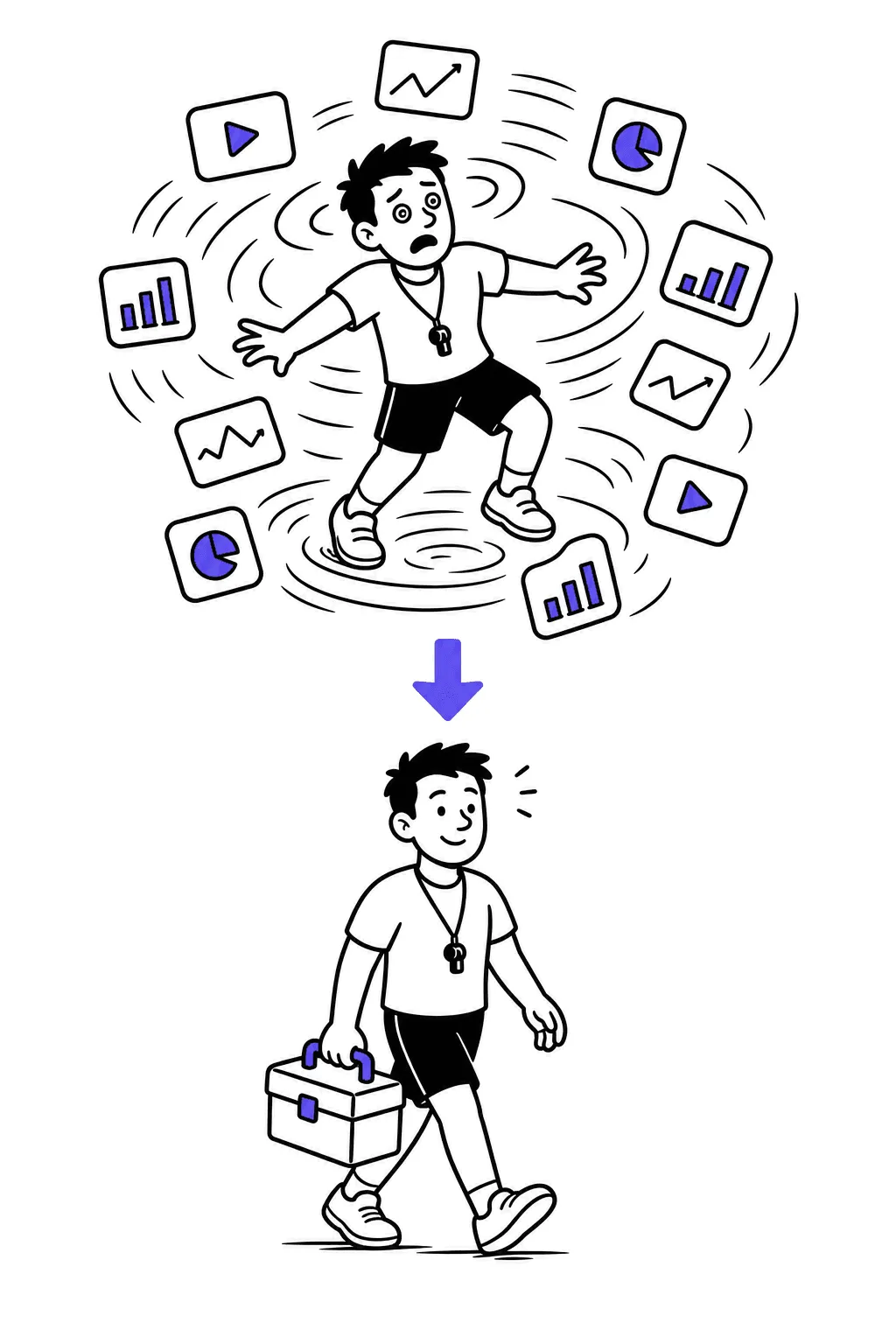
Choosing software feels like choosing your business's fate, so coaches demo five platforms, read forty reviews, and postpone their first client by a month. Meanwhile the practitioners who actually run online businesses are blunt:
“Pick one platform and commit… Stop app hopping.”
“Your problem is not that you don't know which app to use… What matters is the sales and marketing stuff and the packaging.”
The tool carries maybe five percent of your success. It just happens to be the five percent you can shop for, which is why it eats forty percent of beginners' attention.
The four capabilities (and the bars)
Whatever you evaluate, it's these four jobs. The bars come from this book's other chapters — hold any platform, including the one publishing this handbook, to all of them:
- Deliver programs that point at your videos. Bar: building and assigning a program shouldn't feel like data entry, and moving your library in should take an afternoon, not a month — the library chapter exists because mostly it doesn't.
- Collect feedback where the work happens. Bar: a client can attach a result or technique video to the exercise itself, and your answer lands there — not in a chat scroll where week-old context goes to die.
- Show progress without spreadsheets. Bar: weight trend, measurements, lift numbers visible to both of you without you compiling anything on Sunday.
- Look professional to the client. Bar: the client-side app is something you'd happily demo in a sales conversation — your client's experience is your retention.
Getting paid is deliberately not on this list — payments deserve their own decision and their own chapter.
The one-evening decision
Shortlist two platforms recommended by coaches whose business looks like yours (not by ads). Free-trial both with the same test: load five real exercises, build one real program, assign it to yourself, log a workout from your phone, attach a video, answer it as the coach. Whichever felt less annoying — that's your platform. Done. The difference between the top platforms is smaller than the cost of another week of indecision.

Switching costs are real — plan for the exit
One honest asterisk: platforms differ most not in features but in exits. Before you commit years of uploads, check the two doors: can you bulk-import (in), can you take your videos and client data out (out)? Lock-in by uploaded content is the industry's quiet retention strategy — the library chapter covers the hostage dynamics in full. A platform confident enough to make leaving easy is telling you something good about staying.

What not to do
- Don't run coaching through spreadsheets + WhatsApp past ~10–15 clients. It works until it doesn't, and it fails during your busiest month.
- Don't build your own app. Yes, someone in a forum did it. They now run a software company with a coaching side hustle.
- Don't switch platforms to fix a business problem. No app cures an empty pipeline or an offer nobody wants.
- Don't demo more than two. The third demo teaches you nothing except new anxieties.
FAQ
Free tools first, or straight to a platform?
If you're at zero clients, a spreadsheet and your phone are genuinely fine for your founding five — upgrade the week the juggling starts costing you attention.
What about all-in-one business suites (CRM, funnels, email, courses)?
Skip at this stage. They're built for marketing operations you don't run yet; you'd pay for twelve modules to use two.
Do clients care which platform I use?
They care that it works, looks clean, and doesn't make them think. No client ever chose a coach for the software brand — but some have quietly left over a clunky experience.
Previous: Your video library is the hostage · Next: The boring armor: waivers, insurance, scope