The Online Fitness Coach Handbook
Getting paid without chasing
Updated August 2026 · 8 min read
The short version. “Chasing payments” is in every coach's burnout vocabulary, and it's entirely optional. The system: automatic recurring billing (never manual invoices, never “just Venmo me”), a card on file before coaching starts, a scripted grace-and-pause sequence for failed payments, and prices that renew without annual drama. Money conversations happen once — at the sale — and then the plumbing talks.
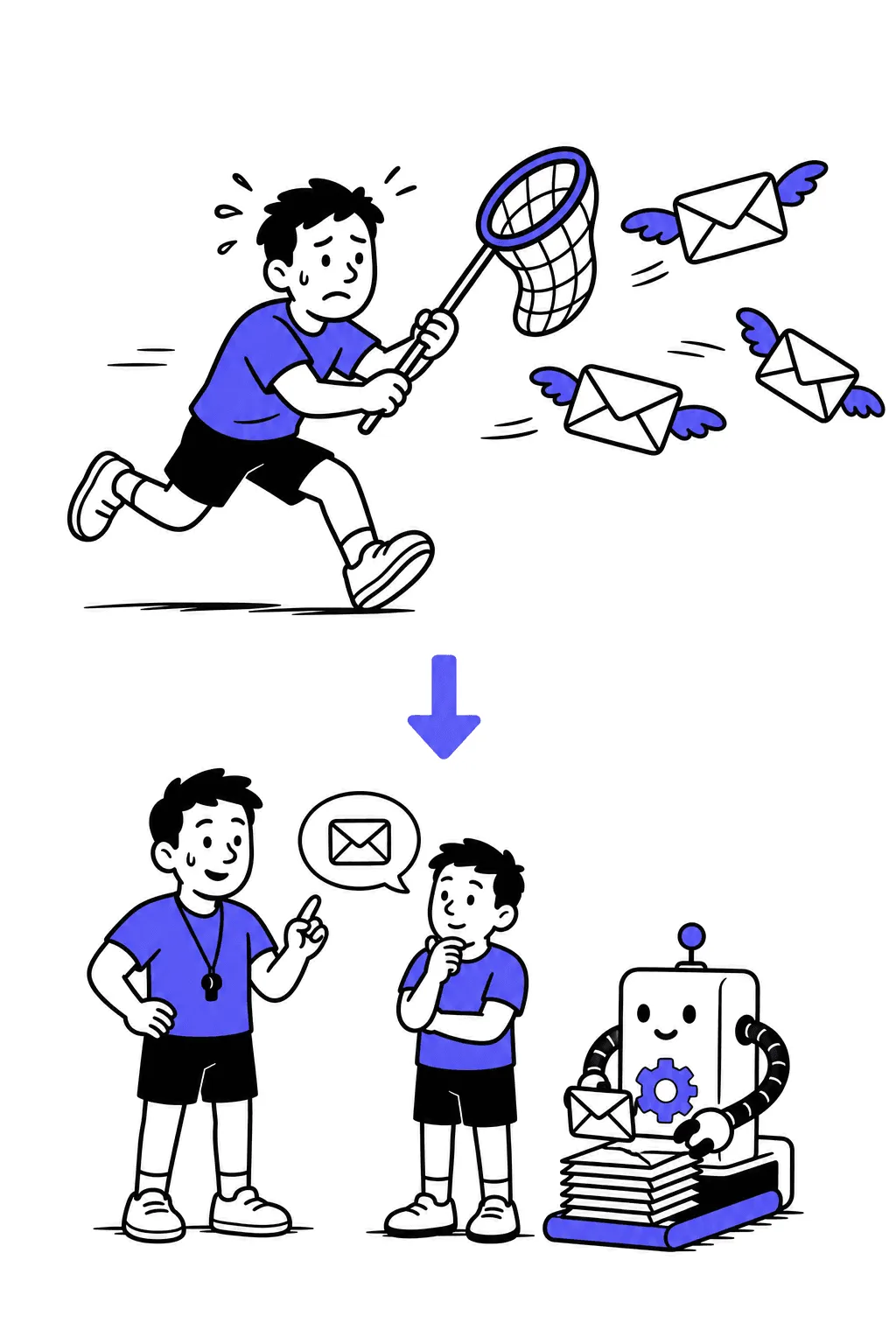
The muscle-emoji problem
“When a client gets a clean invoice from Stripe it signals that you're running a real business. When you send a Venmo request with a muscle emoji it signals that you're winging it.”
Manual payment collection fails on three axes at once: it looks amateur (positioning damage), it makes you the collections department (relationship damage — every reminder is you asking a friend for money), and it leaks real revenue (missed months, “I'll pay after vacation”, awkward silences that become discounts). The fix is structural: money moves automatically or the coaching doesn't start.
The plumbing, piece by piece
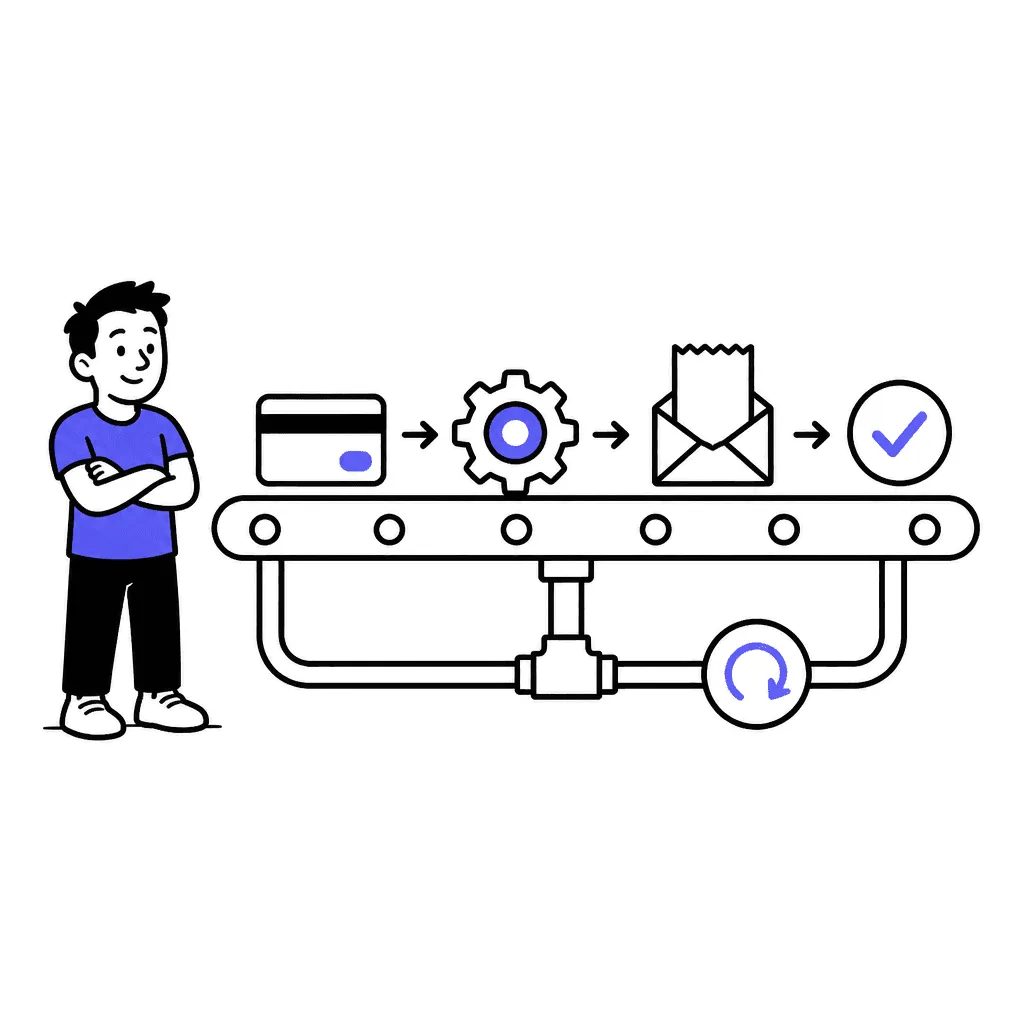
- Recurring by default. The offer priced coaching monthly; billing simply matches: an automatic subscription charge on a fixed date. Quiet retention fact: every manual payment is a monthly exit interview.
- Card on file before workout one. Part of onboarding paperwork, framed as the boring normality it is. Professionals don't renegotiate payment monthly; neither do you.
- A real payment processor. Whatever your setup — a payments platform, your bank's recurring tools, your country's standard — the bar: automatic charge, automatic receipt, automatic retry on failure. Friend-payment apps meet none of these. (Payment infrastructure varies by country — verify your local options once, per the money-hygiene philosophy.)
- The failed-payment script, pre-written: Day 0: automatic retry + friendly automatic note (cards just expire). Day 3: one human message, warm. Day 7: coaching pauses automatically, kindly, per the pause protocol. You never chase; the system escalates, and you stay the coach.
Renewals without drama
Monthly billing plus the no-trap philosophy means renewal isn't an event — but two moments still deserve scripts. The anniversary note: once a year, thank the long-timer like you mean it — loyalty acknowledged retains better than loyalty assumed. The price change: covered fully in the raising-prices chapter, but the billing rule is simple — announced in writing, generous notice, grandfathering where promised.
And declare the money-boundaries once, in the terms page from the offer chapter: what happens on failure, refund norms, pause rules. Every future awkward conversation is one sentence you wrote calmly in advance.

What not to do
- Don't coach into debt. Two unpaid weeks becomes an uncollectable month and a ruined relationship. The pause is mercy for both sides.
- Don't take “I'll pay you back when…” as a payment plan. You're a coach, not a lender. If price is the true blocker, the honest downsell beats the fictional IOU.
- Don't apologize for billing. “Sorry to bother you about the payment…” reframes your salary as an imposition. Be more robot about money, more human about everything else.
- Don't hand-build invoices monthly as “personal touch”. The personal touch clients value is in feedback, not accounting artisanship.
FAQ
Client insists on cash/bank transfer — accept?
If it's automatic (standing order) and recorded (money-hygiene ledger), fine. If it's “I'll transfer each month manually” — that's the exit-interview problem wearing a local costume; push for automation.
Should I offer annual prepay at a discount?
Optional and fine for proven clients — but never as a trap: your anti-contract stance is worth more than the float.
What about clients in other countries and currencies?
Charge in your currency by default; modern processors handle conversion. Just name the currency clearly in the offer to prevent surprise-math complaints.
Payment failed during my vacation — now what?
Nothing: the sequence runs itself, which is precisely the point. The burnout-proofing chapter counts this among the systems that make solo vacations possible.
Previous: Difficult clients and hard conversations · Next: How many clients you can actually handle