Equipment Mobility and recovery
Inversion table
A pivoting padded board with ankle clamps. You lie on it and tilt back so your head is below your feet and body weight pulls along the spine.
In short
An inversion table is a padded backboard mounted on a pivot inside an A-shaped frame, with clamps that hold the ankles. You stand on the footrest, lock your ankles in, lean back and the board tilts so your head ends up lower than your feet, anywhere from a slight angle to fully upside down. In that position your body weight pulls on the spine and hips lengthwise instead of pressing down on them.
People use it for the stretching, decompressed feeling it gives in the back. Research on inversion is limited and mixed, and it is not an established treatment for any condition. Being head-down raises blood pressure and pressure in the eyes, so manufacturers tell people with high blood pressure, heart or eye conditions, and several other conditions, to ask a doctor first.
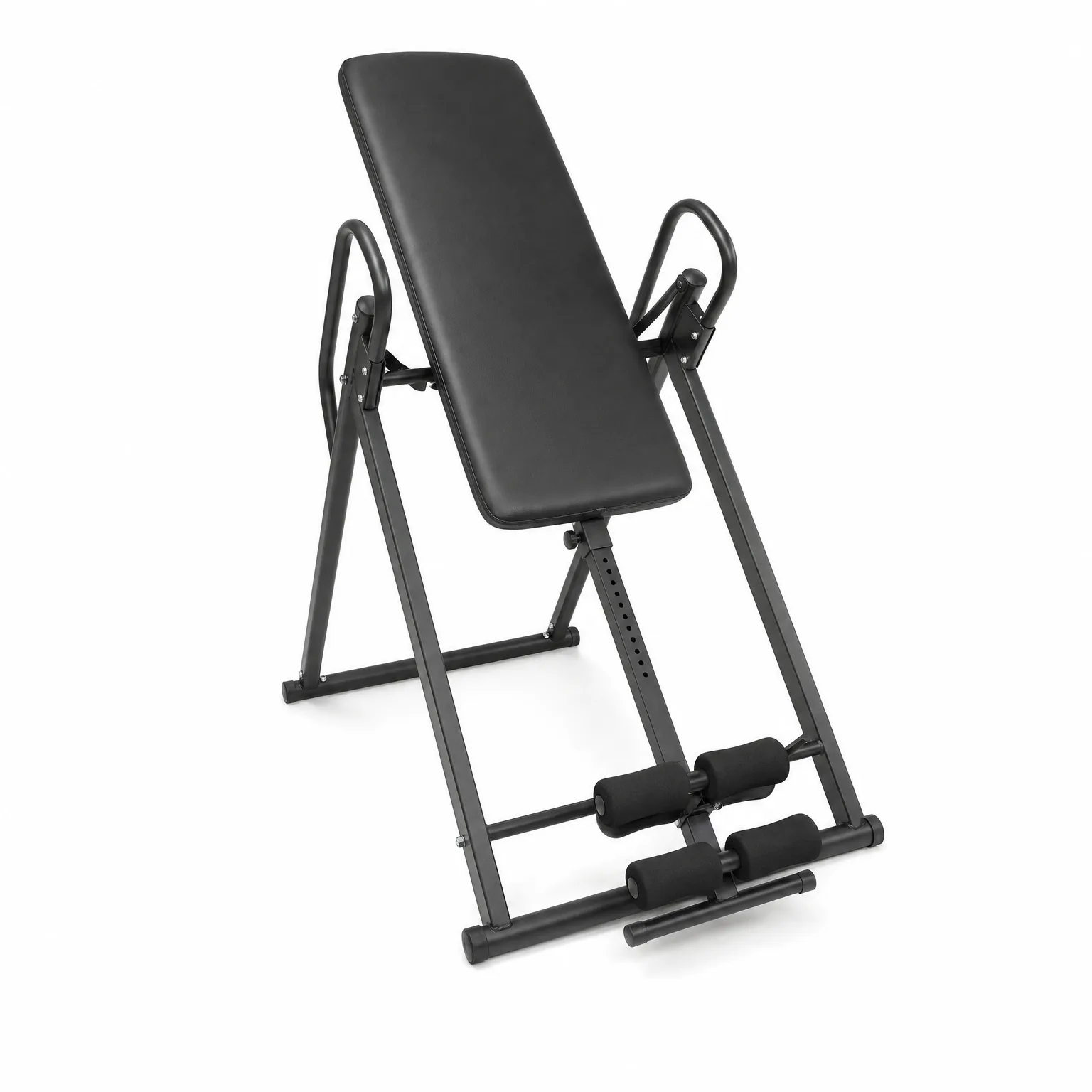
- Category
- Mobility and recovery
- Where
- Home
- Level
- Beginner and up
- Space
- Needs a dedicated area
- Typical sizes
- Frame about 120 x 70 cm and 150 cm tall (47 x 28 x 60 in), more when tilted; most fit users of 147–198 cm (4 ft 10 in to 6 ft 6 in)
- Also called
- inversion therapy table, gravity table, back inversion table, inverter table, upside down table, inversion bench, tilt inversion table
What it is used for
- Lying at a partial head-down angle for a minute or two at a time
- A lengthwise stretch through the back and hips using body weight
- Gentle side bends, rotations and overhead reaches while tilted
- Inverted crunches and squats at full inversion, for experienced users
Types
Manual pivot table. The standard type. You shift your arms to tilt, and a tether strap or pin sets the maximum angle. Simple and folds for storage.
Motorized table. An electric motor moves the board with a handheld control and stops at any angle. Easier to control, heavier and more expensive.
Inversion chair. You sit and are tilted back in a seated position, with less load on the ankles and knees. It does not reach full inversion.
Table with lumbar pad or heat. Extras such as an arched lumbar pad, a heated or vibrating pad or longer handles. They change comfort, not what inversion does.
How to choose
Check the height and weight ratings
The table must adjust to your height and be rated by the manufacturer for more than your body weight. Do not go by frame size alone. If you are near either limit, choose a different model.
Look closely at the ankle system
All your weight hangs from the ankles. Wide, contoured, padded cups are more comfortable than thin foam rollers. A long release handle lets you lock and unlock without bending right down to your feet.
Make sure the angle can be limited
A tether strap or a pin system with preset angles stops the table at a set angle, such as 20, 40 or 60 degrees. This is the feature that makes a gradual start possible. Avoid tables with no angle control.
Check stability and space
A wide steel frame with non-slip feet should not rock when you tilt. The board swings well beyond the frame: allow a clear area of about 2.2 x 1 m (7 x 3 ft) and enough ceiling height for your feet when inverted, often 2.2 m (7 ft) or more. The manual gives the exact clearance.
How to start using it
- Read the warnings and ask if they apply. Before the first use, read the manufacturer's list of conditions. It usually includes high blood pressure, heart and circulation problems, glaucoma and other eye conditions, pregnancy, hernia, recent surgery and some spine and joint conditions. If any apply, ask a doctor first.
- Set your height and the angle limit. Adjust the main shaft to your height, or slightly longer, and set the tether to about 20–30 degrees. Lock your ankles snugly while wearing flat lace-up shoes. With the right setting, the board rests at or just above horizontal with your arms by your sides and tips back only when you raise them.
- Tilt with your arms, slowly. Raise one arm, then both, toward your head to tip the board back. Lower them to return. Move slowly in both directions. Have someone nearby for your first sessions.
- Keep the first sessions short. Stay 1–2 minutes at a shallow angle, breathe normally and come up. Over several weeks you can increase the angle a little or the time to around 3–5 minutes. Full inversion is optional, and many users never go past 60 degrees.
- Return in stages. Come back to horizontal and rest there for 15–30 seconds before going fully upright. Rising too fast can make you dizzy. Stand for a moment before unlocking your ankles.
Common mistakes
Going fully upside down on day one
Full inversion puts the highest load on the ankles and the biggest change on blood pressure. Start at 20–30 degrees and add angle only when the previous one feels easy.
Staying inverted too long
Pressure in the head and eyes stays raised for as long as you hang. A few minutes is enough. A pounding head, facial pressure or blurred vision means come up now.
Wrong height setting
If the shaft is set too short or too long, the board tips too fast or will not return when you lower your arms. After any change to the setting, test the balance at a shallow angle first.
Loose ankle clamps or bare feet
A clamp that is not fully locked, or thin socks that let the foot slide, can release you. Wear shoes, close the clamp until it locks and tug against it before tilting.
Using it as treatment without advice
If you want to use inversion for back pain or a diagnosed condition, talk to a doctor or physical therapist first. They can tell you whether traction of this kind is appropriate for you.
What to use instead
There is no real stand-in for hanging head-down, but a dead hang gives a similar lengthwise pull through the spine with the head up. Hold a pull-up bar or the top rung of wall bars, keep the feet lightly on the floor or a step at first and relax for 10–30 seconds. Lying on your back with your calves resting on a chair seat is another unloaded position for the back. Neither puts the head below the heart.
-
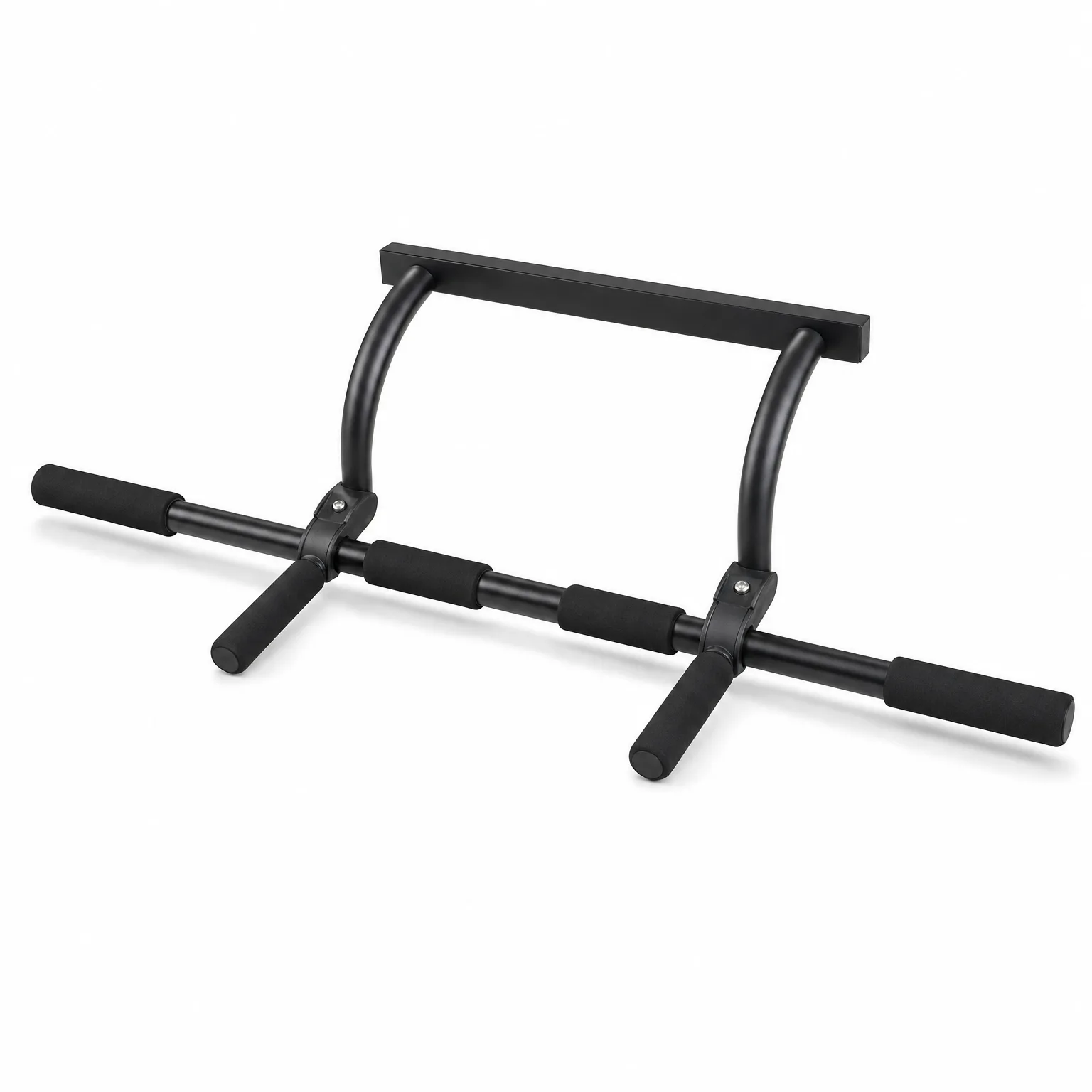
Pull-up bar
A fixed horizontal bar you hang from. Used for pull-ups, chin-ups, hangs and hanging leg raises, at home or outdoors. -
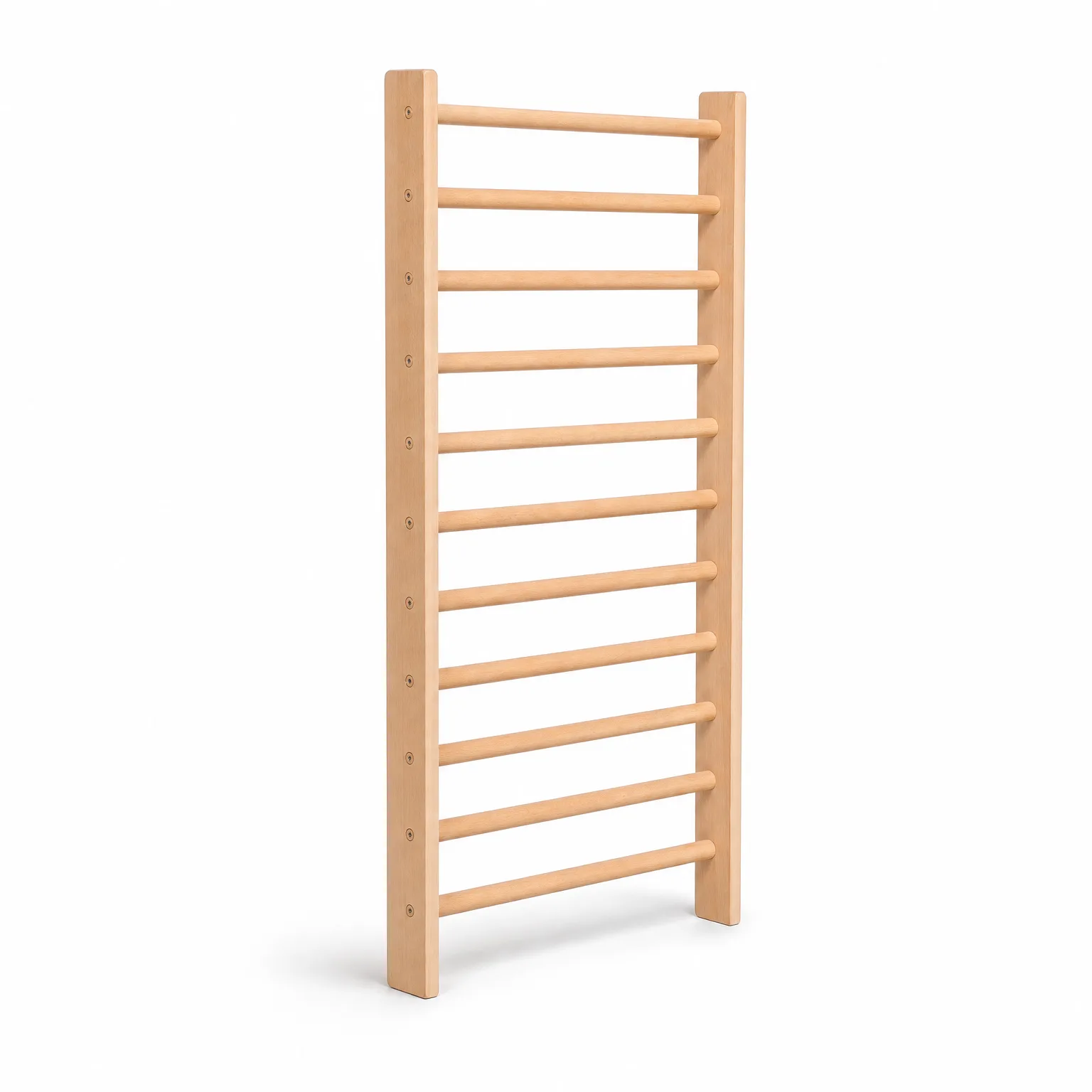
Wall bars
A ladder of horizontal wooden rungs fixed to a wall. Used for hanging leg raises, assisted stretching, pull-ups and band work.
Often used with
Questions about inversion table
What does an inversion table do?
It tilts you head-down while holding you by the ankles, so body weight pulls along the spine and legs instead of compressing them. Users describe a stretching feeling in the back and hips. Any lengthening of the spine is small and temporary and reverses once you stand up.
Do inversion tables help with back pain?
The evidence is limited. A few small studies report short-term relief for some people, and others find no lasting benefit. It is not a recognized standard treatment. If you have back pain, see a doctor or physical therapist before buying one for that purpose.
Who should not use an inversion table?
Manufacturers commonly list high blood pressure, heart disease, a history of stroke, glaucoma and other eye conditions, pregnancy, hernia, osteoporosis, recent surgery and some joint and spine conditions. People in these groups are told to get a doctor's approval first. Being head-down raises blood pressure and eye pressure even in healthy people.
How long should you hang on an inversion table?
Start with 1–2 minutes at a shallow angle. Many users settle on 3–5 minutes once or twice a day. There is no proven benefit to longer sessions, and discomfort in the head, eyes or ankles is a reason to stop sooner.
What angle should I use?
Begin at 20–30 degrees past horizontal. Many people never go past about 60 degrees, where the board is roughly parallel to the rear legs of the frame on many tables. Full 90‑degree inversion is not needed to feel the pull along the spine.
Build programs around what your client has
This guide comes from OnlineFitness.app, the app online coaches run their clients in.
Free for life for the first 100 coachesNo card