Equipment Benches, racks and bars
Pull-up bar
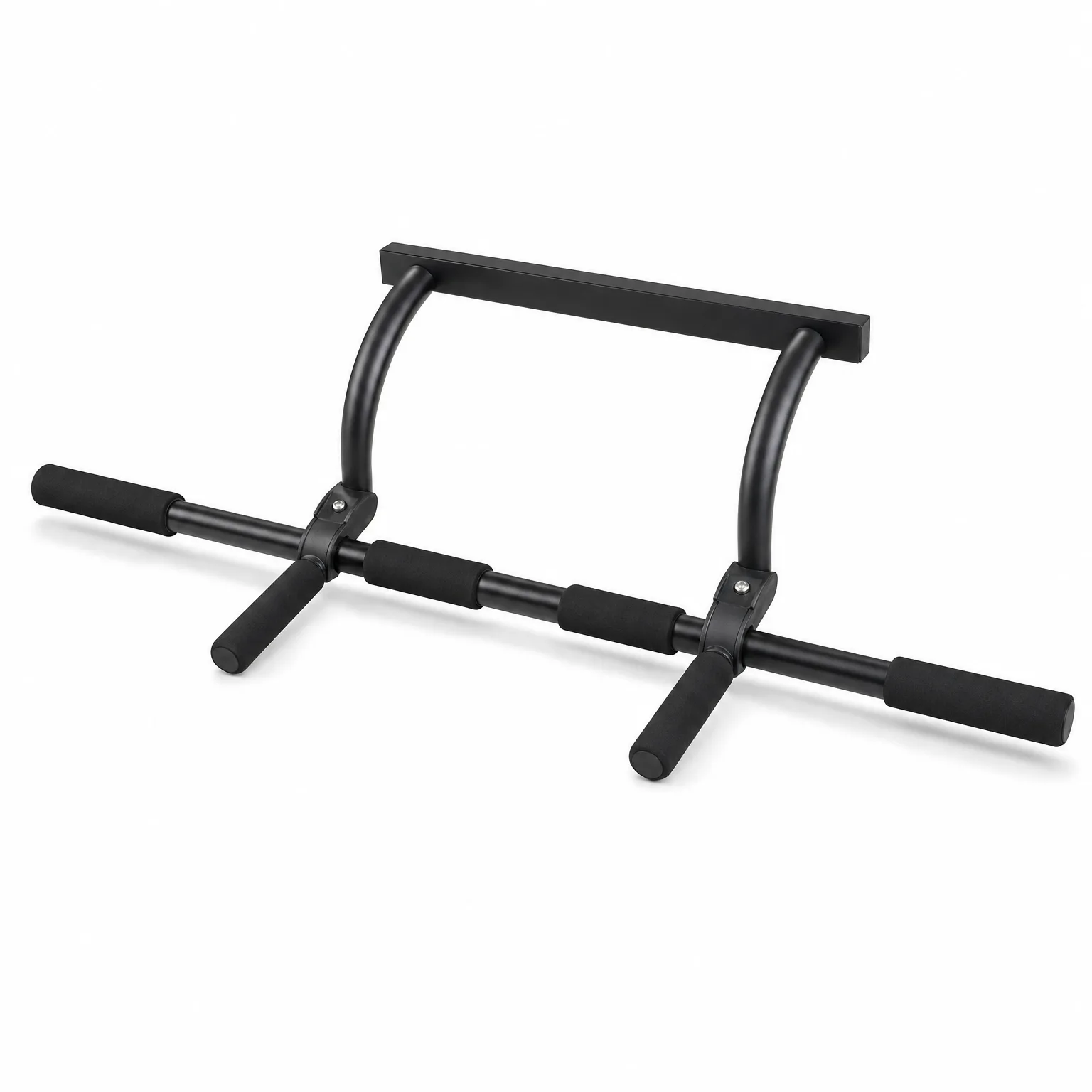
A fixed horizontal bar you hang from. Used for pull-ups, chin-ups, hangs and hanging leg raises, at home or outdoors.
In short
A pull-up bar is a horizontal bar fixed above head height that you hang from and pull yourself up to. It trains the lats, the middle of the back, the biceps and the grip using your own body weight. Pull-ups, chin-ups, dead hangs and hanging knee or leg raises are the main exercises.
It is one of the few simple tools that loads the pulling muscles hard at home. Beginners who cannot yet do a pull-up start with hangs, slow lowering and band-assisted reps, so the bar is useful from the first week.
- Category
- Benches, racks and bars
- Where
- Home, Gym, Outdoors
- Level
- Beginner and up
- Space
- Needs a corner of a room
- Typical sizes
- Bar about 28–35 mm (1.1–1.4 in) thick; doorway models fit frames roughly 61–91 cm (24–36 in) wide
- Also called
- chin-up bar, chinning bar, doorway pull-up bar, door bar, horizontal bar, wall-mounted pull-up bar
What it is used for
- Pull-ups and chin-ups with different grip widths
- Dead hangs and scapular pulls for grip and shoulder control
- Hanging knee raises and leg raises for the abs
- Slow lowering and band-assisted reps for those building up to a first pull-up
- An anchor point for rings, a suspension trainer or bands
Types
Doorway leverage bar. Hooks over the door frame and holds by leverage, with no screws. Goes up and comes down in seconds. Needs a sound frame with trim, and it sits low.
Telescopic doorway bar. A straight bar that twists to press against the two sides of the frame. Use the screw-in end cups it comes with. Friction alone can slip.
Wall or ceiling mounted. Bolted into masonry or structural timber. Stable, with full height and room for wide grips and leg raises. A permanent fixture.
Free-standing tower. A frame with a pull-up bar, dip handles and often a padded knee raise station. No drilling, but it takes floor space and can rock on lighter models.
Outdoor bar. Steel bars set in the ground in parks and calisthenics areas, usually at several heights. Free to use. Cold or wet steel is harder to grip.
How to choose
Start from where it can be fixed
A solid wall or ceiling joist allows a mounted bar, which is the steadiest. In a rented home, a doorway leverage bar avoids drilling. Check that your door frame is sturdy and matches the width and depth the bar is made for.
Leave room above and below
You need space for your head above the bar and enough height to hang with straight arms, even if the knees are bent. Bars close to the ceiling or low in a doorway shorten the movement.
Grip thickness and options
A bar around 28–32 mm thick suits most hands. Thicker bars work the grip harder and make pull-ups tougher. Neutral handles, where palms face each other, are a useful extra for people whose elbows or wrists dislike a straight bar.
Read the load rating
The rating has to cover your body weight plus any added weight, and it depends on the manufacturer and on how the bar is fixed. A mounted bar is only as strong as the wall and the bolts holding it.
How to start using it
- Begin with hangs. Hang with straight arms and a firm grip for 10–30 seconds. Then practice pulling the shoulder blades down without bending the elbows. These two drills build the grip and the first part of the pull-up.
- Use lowering and bands. Step or jump to the top position with your chin over the bar and lower yourself in three to five seconds. Or loop a long resistance band over the bar and put a foot or knee in it for help at the bottom.
- Do a full rep. Start from straight arms, pull until your chin clears the bar, and lower all the way down under control. Keep the body still. A few clean reps train more than many half reps.
- Test the bar before each session. Pull down on it with your hands and put part of your weight on it before you hang fully. Doorway bars can shift when a door frame swells or a fitting loosens.
Common mistakes
Half reps
Stopping short of straight arms at the bottom, or short of the bar at the top, skips the hardest parts of the movement. Count only full reps and use a band if needed.
Kicking and swinging
Using a leg kick to get over the bar takes work away from the back and arms. Cross the ankles, tighten the abs and pull from a still hang.
Dropping from the top
Falling quickly into straight arms puts a sudden load on the shoulders and elbows. Lower yourself for at least two seconds on every rep.
Trusting an untested doorway bar
A friction-only bar or a bar on a weak frame can come loose. Fit the supplied brackets or cups, and check the hold every time.
What to use instead
Gymnastic rings or a suspension trainer hung from a beam or a tree branch allow pull-ups and, set lower, bodyweight rows that are easier to start with. In a gym, the lat pulldown trains the same muscles with a load you choose, and an assisted pull-up machine takes away part of your body weight. Outdoors, a playground or calisthenics park usually has a bar.
-
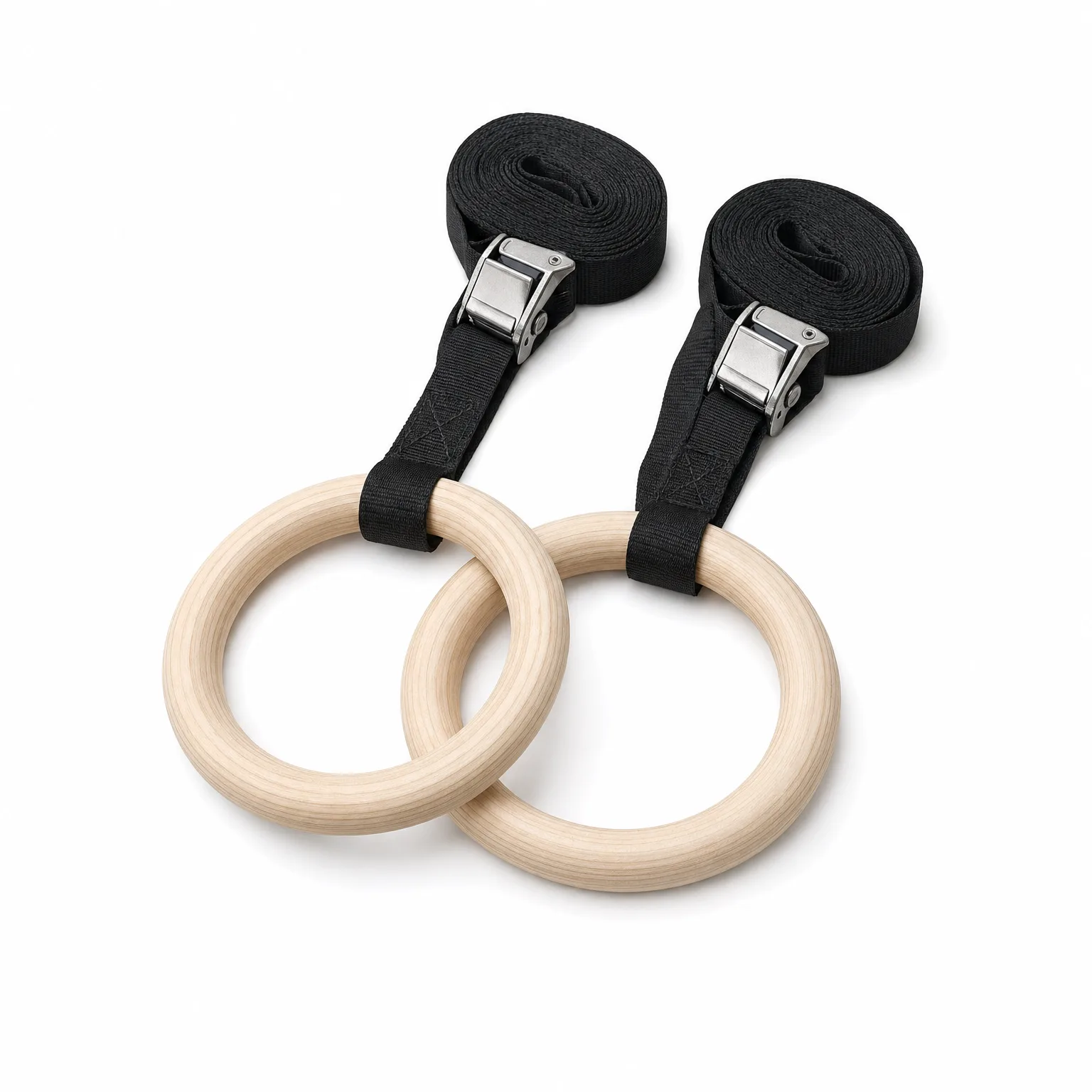
Gymnastic rings
Two rings on adjustable straps, hung from a bar or beam. Used for rows, pull-ups, dips, push-ups and support holds with body weight. -
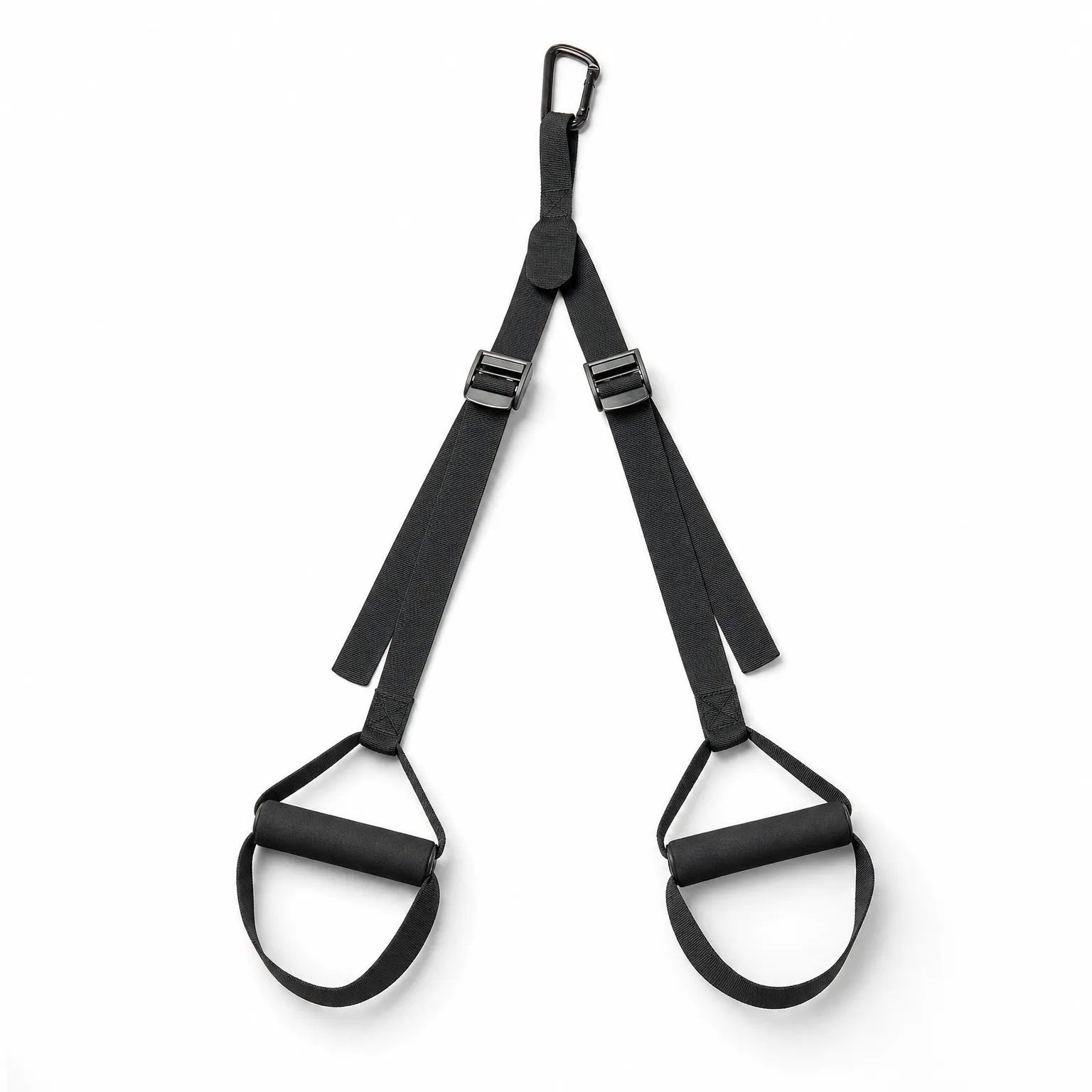
Suspension trainer
Two adjustable straps with handles, hung from one anchor point. You lean or hang on them and use your own body weight as the load. -
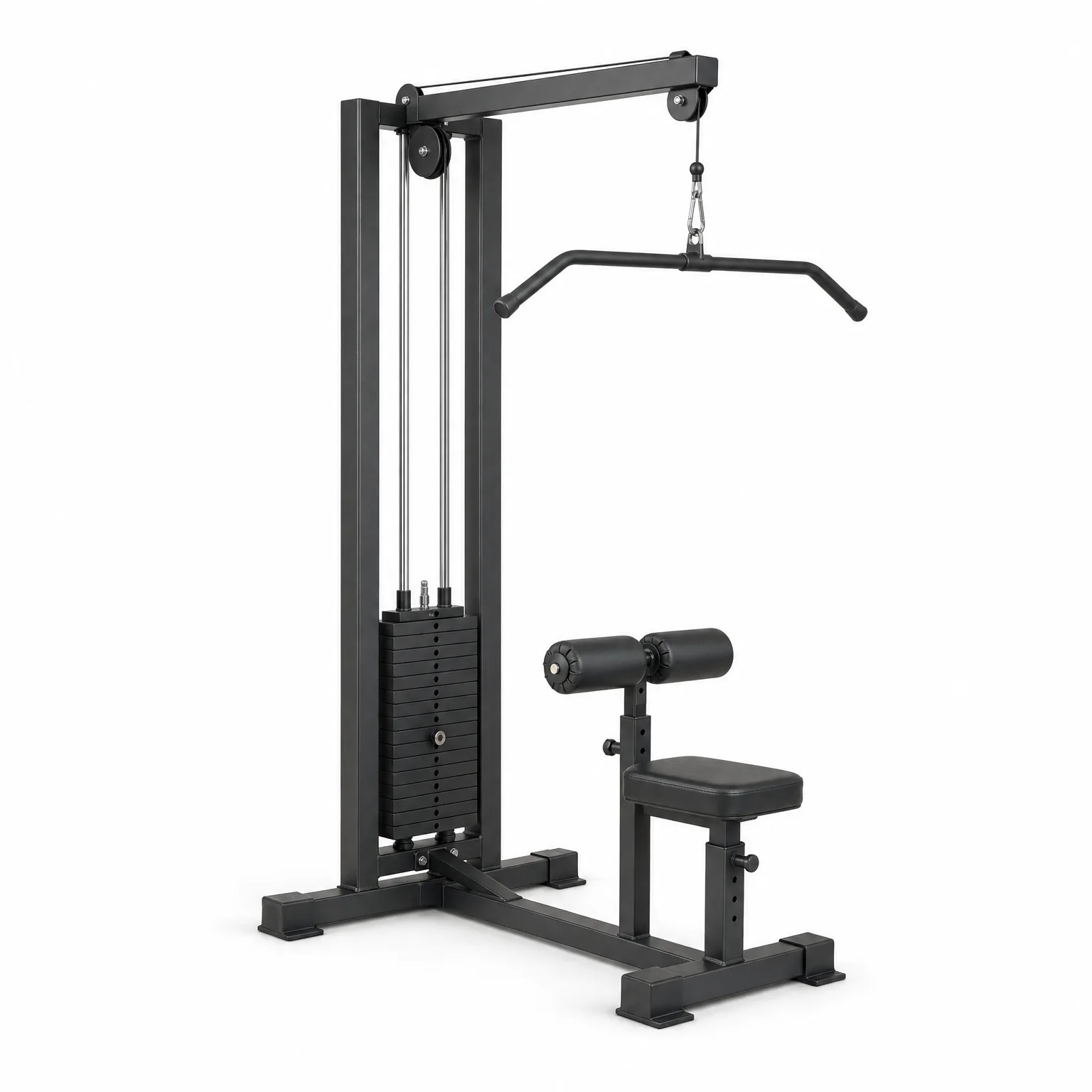
Lat pulldown machine
A seat with thigh pads under a high pulley and a wide bar. You pull the bar to your chest to train the lats and upper back. -
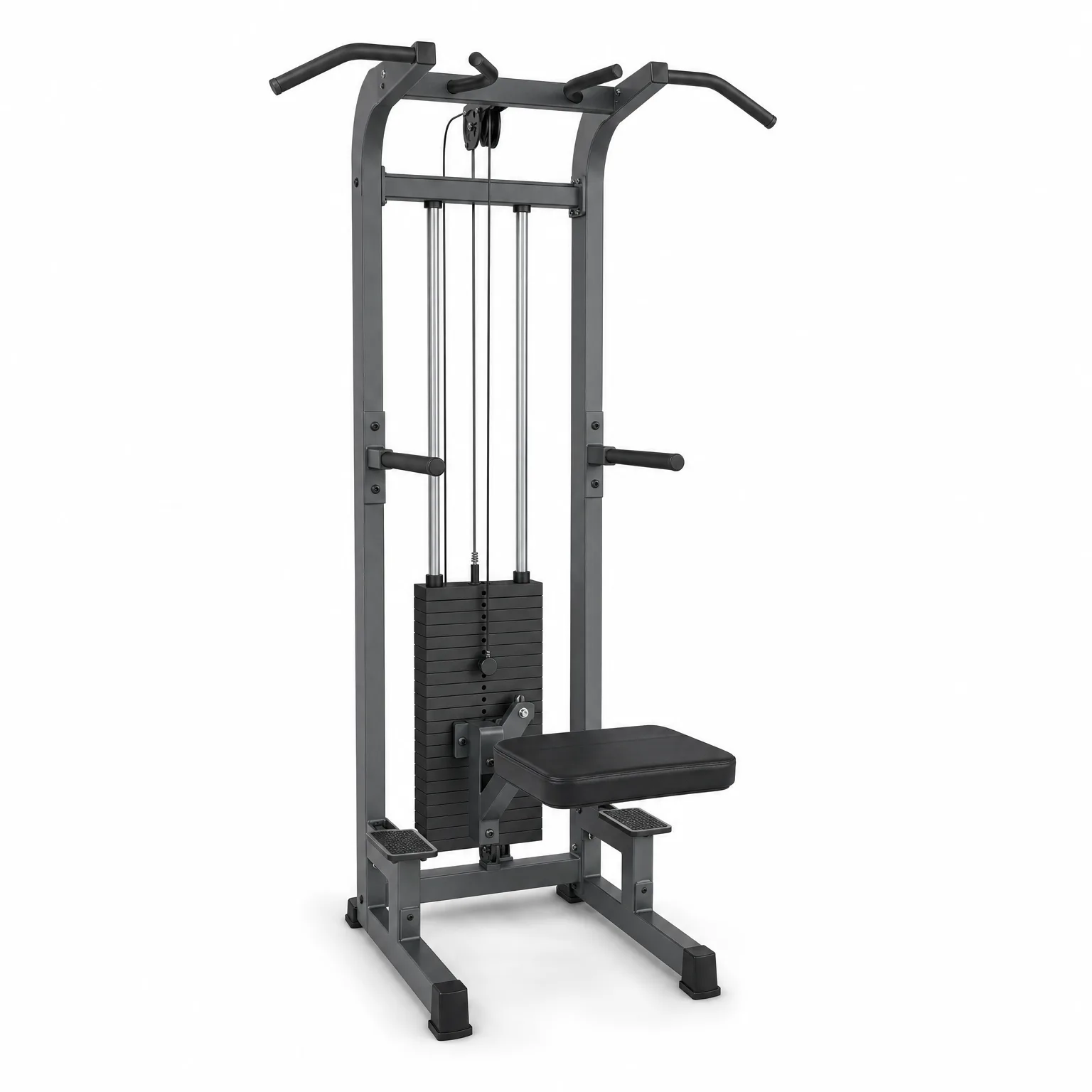
Assisted pull-up machine
A pull-up and dip station with a counterweighted pad that carries part of your body weight, so you can do full reps sooner.
Often used with
-
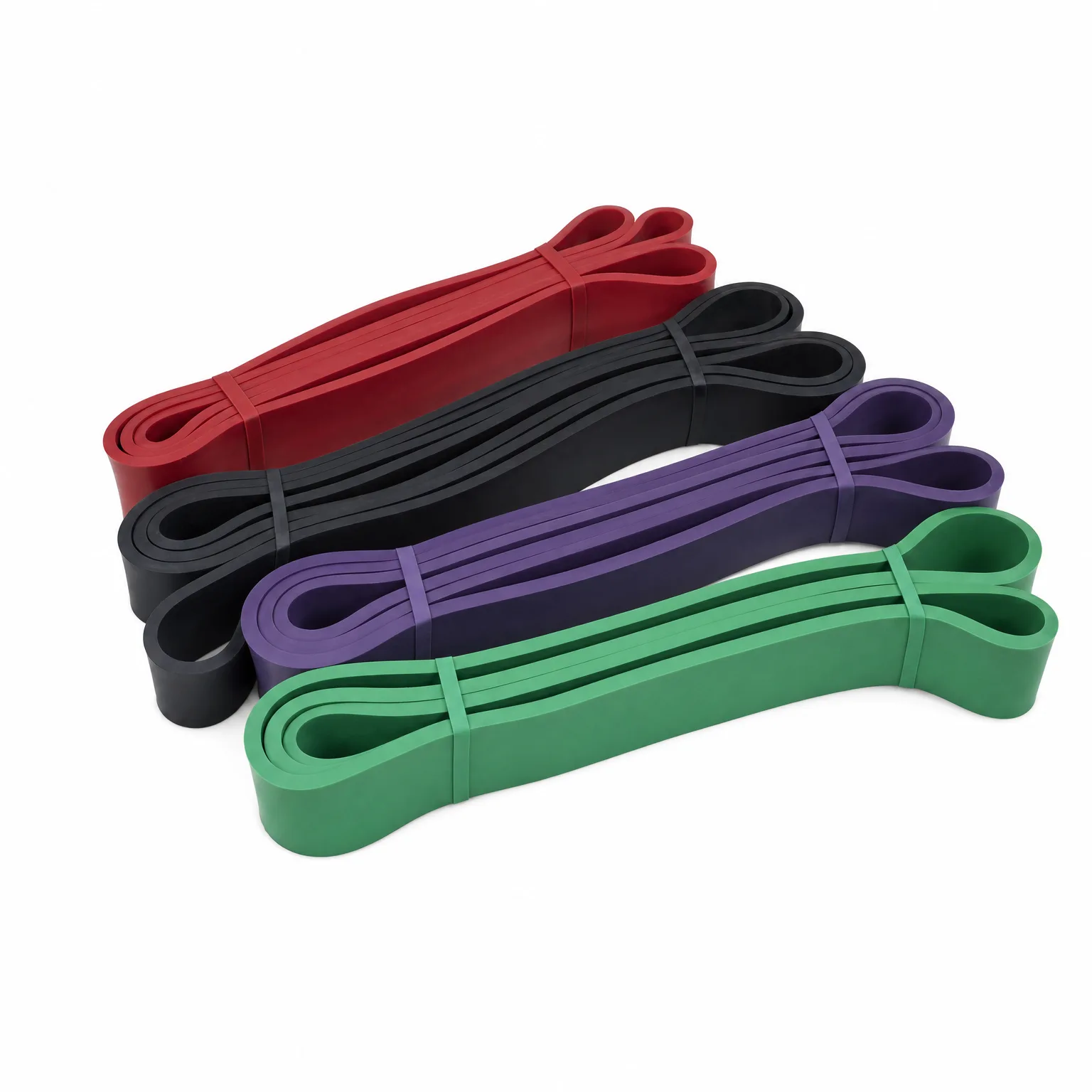
Resistance bands
Long closed loops of thick rubber. They add resistance to rows, presses and squats, or take weight off in pull-ups and dips. -
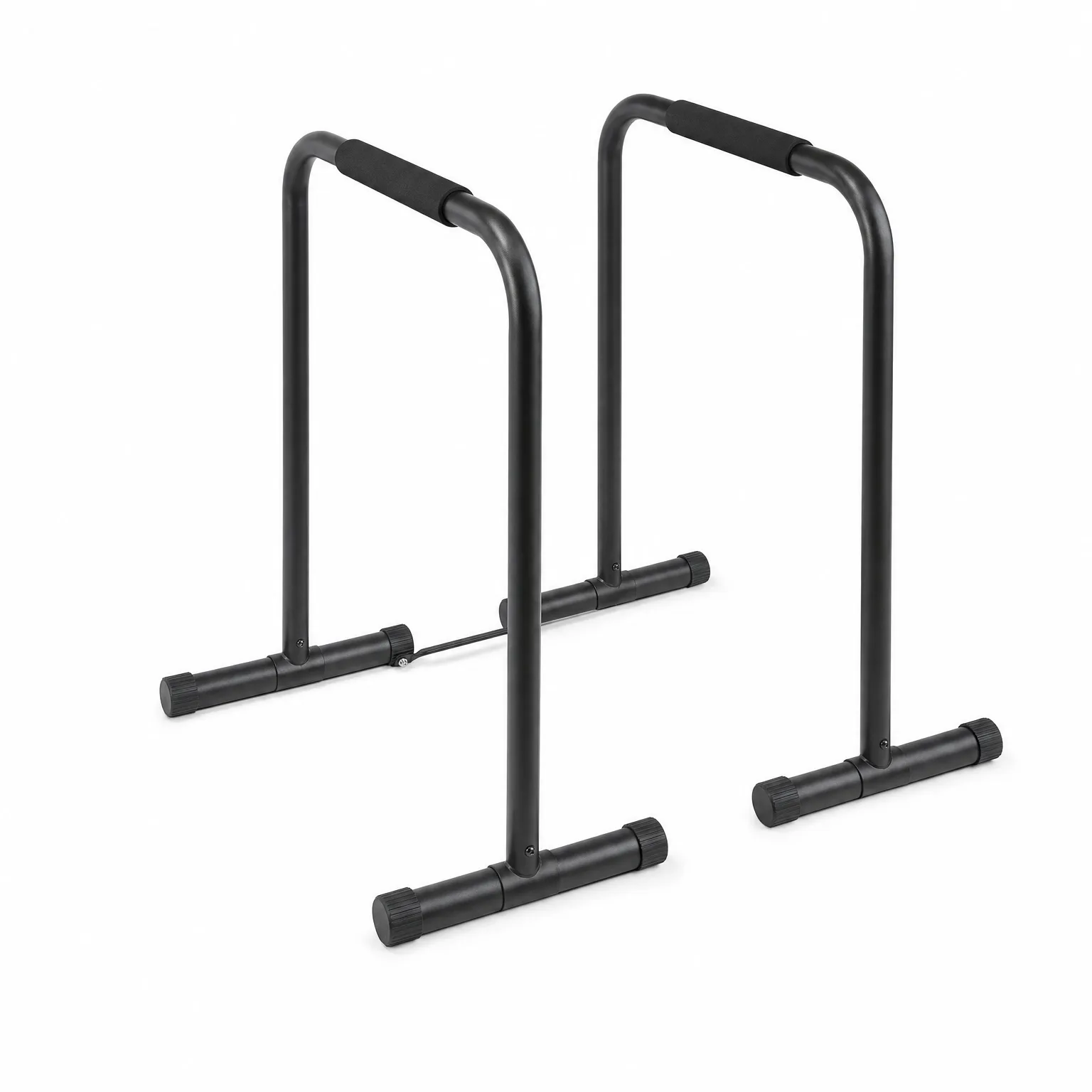
Dip bars
Two parallel bars at about waist height that you support yourself on. Used for dips, leg raises and bodyweight rows. -
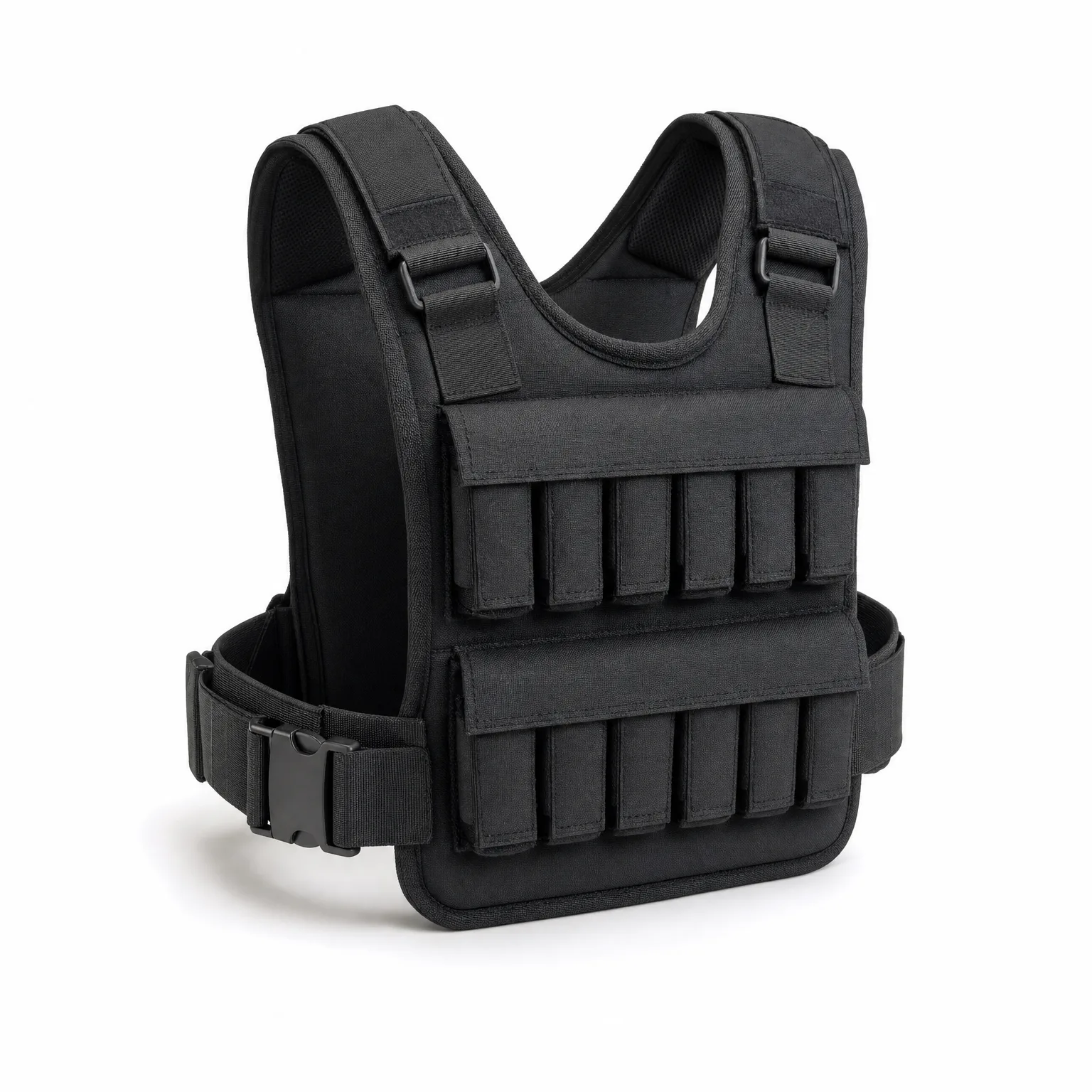
Weighted vest
A vest that carries extra weight on the torso. It makes push-ups, pull-ups, squats, walking and stair climbing harder with free hands. -
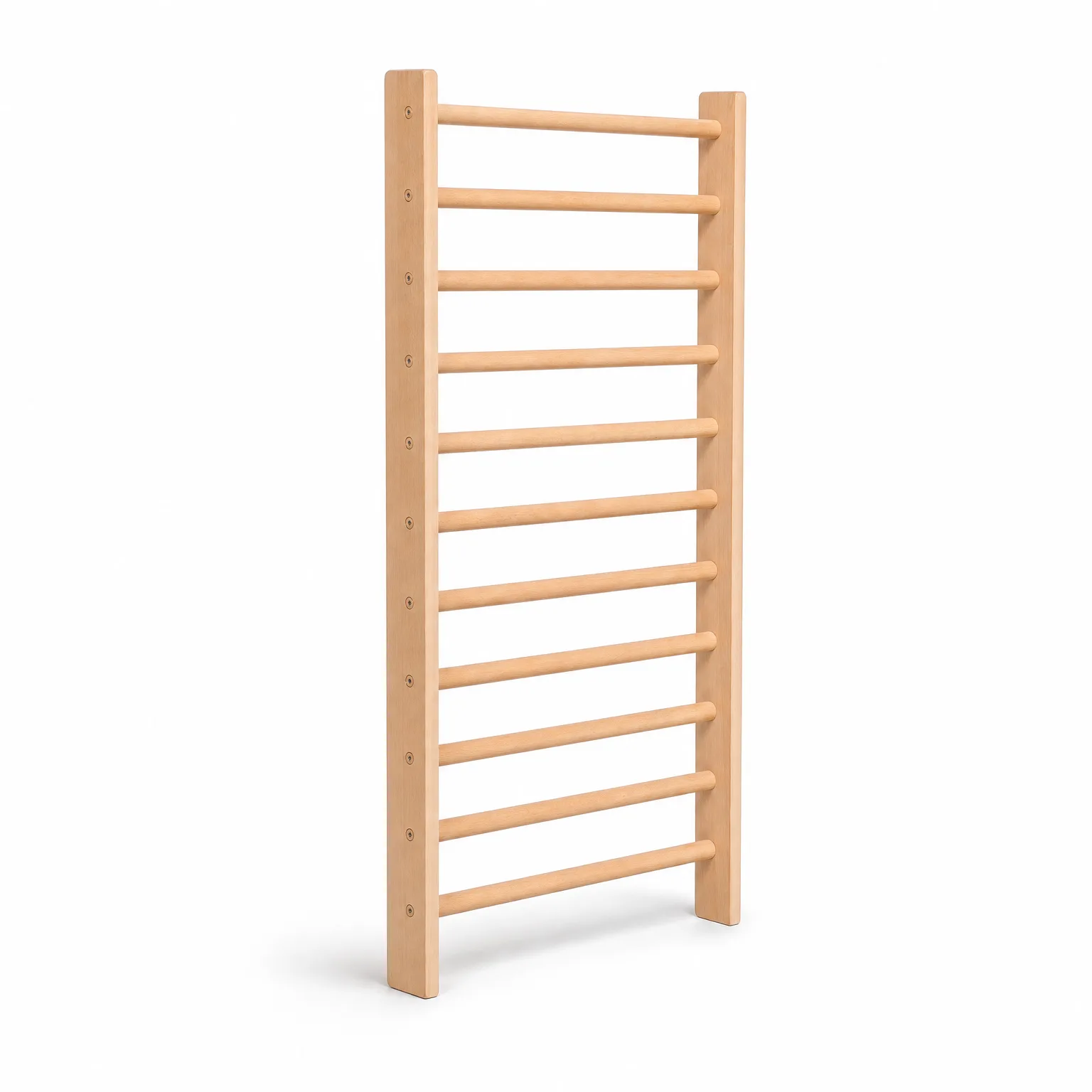
Wall bars
A ladder of horizontal wooden rungs fixed to a wall. Used for hanging leg raises, assisted stretching, pull-ups and band work.
Questions about pull-up bar
Pull-up vs chin-up: what is the difference?
In a pull-up the palms face away from you. In a chin-up they face toward you. Both work the lats and biceps. Most people find chin-ups slightly easier because the biceps are in a stronger position, so they are a good place to start.
Are doorway pull-up bars safe?
They hold well on a sturdy frame of the right size when fitted as the instructions say. They are not suited to weak, damaged or unusually shaped frames. Stay within the manufacturer's rating, avoid swinging, and test the bar before each session.
How do I get my first pull-up?
Train three things two or three times a week: dead hangs, slow lowering from the top, and band-assisted or foot-assisted reps. Add bodyweight rows on a low bar or rings. Most people need several weeks to a few months, depending on strength and body weight.
How high should a pull-up bar be mounted?
High enough that you can hang with straight arms without your feet resting on the floor, and with at least 30–50 cm of clear space above the bar for your head. In a low room, bending the knees behind you is fine.
Build programs around what your client has
This guide comes from OnlineFitness.app, the app online coaches run their clients in.
Free for life for the first 100 coachesNo card