Equipment Bands and bodyweight tools
Resistance bands
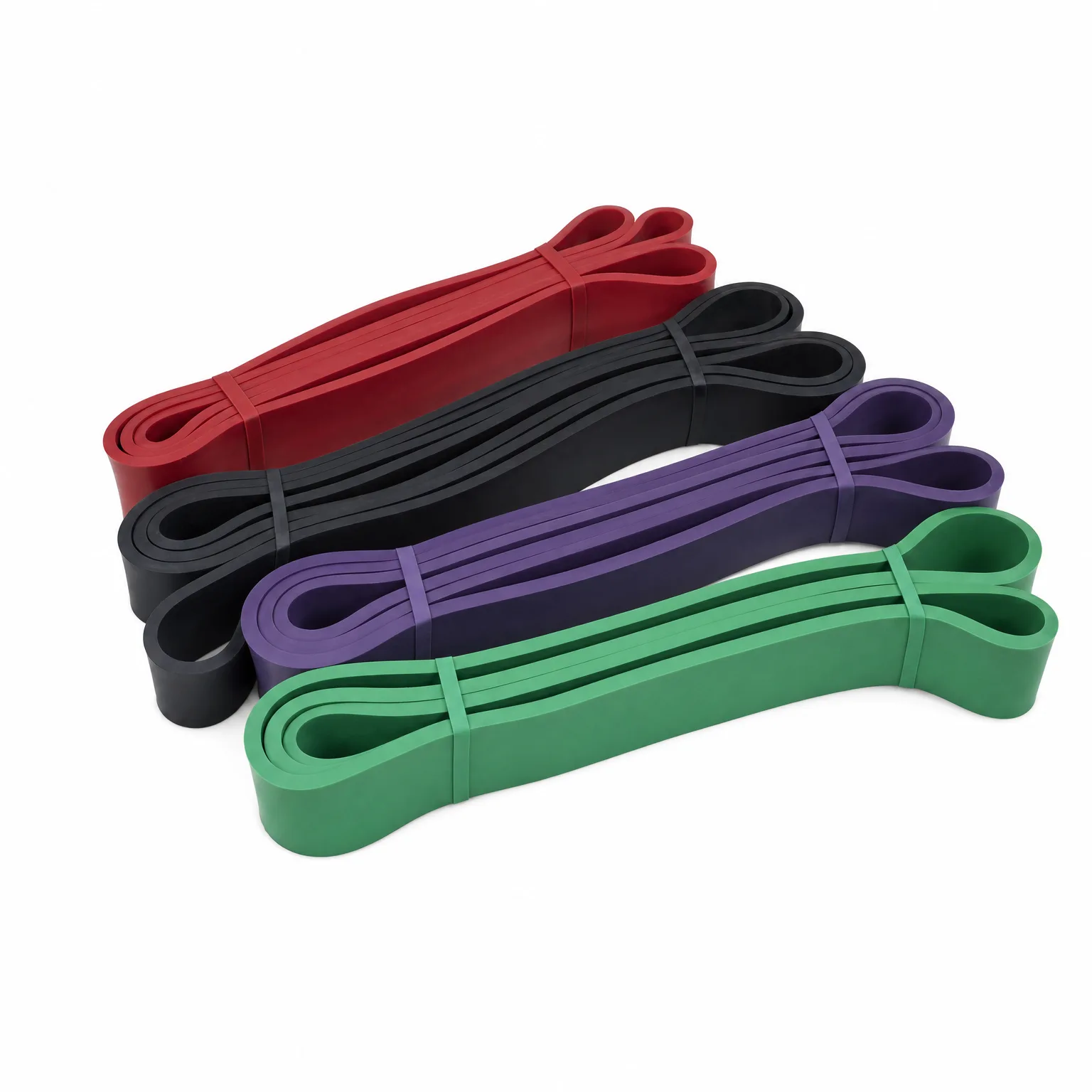
Long closed loops of thick rubber. They add resistance to rows, presses and squats, or take weight off in pull-ups and dips.
In short
Resistance bands of this type are long, continuous loops of layered latex or rubber, about a meter long when laid flat. You stand on them, anchor them to a bar or a door, or loop them around your body. The further the band stretches, the harder it pulls, so they give resistance without any weights.
They are used for rows, presses, squats, deadlifts and pull-aparts, for taking part of your body weight in pull-ups and dips, and for adding load to barbell lifts. A set of three or four bands fits in a bag and covers a full-body workout at home or on a trip. They suit every level.
- Category
- Bands and bodyweight tools
- Where
- Home, Gym, Outdoors, Travel
- Level
- Beginner and up
- Space
- Fits in a drawer or a bag
- Typical sizes
- About 104 cm (41 in) long laid flat; widths from about 6 to 100 mm (0.25–4 in), wider meaning stronger
- Also called
- loop bands, power bands, pull-up assist bands, pull-up bands, long loop bands, exercise bands, superbands
Muscles it works
- Main
- Lats, Mid back, Glutes, Chest, Rear delts
- Also works
- Biceps, Triceps, Quads, Hamstrings, Abs
What it is used for
- Assisted pull-ups and dips with a foot or knee in the loop
- Rows, presses, curls and pull-aparts when you have no weights
- Squats, deadlifts and good mornings standing on the band
- Warm-up and mobility drills for the shoulders and hips
- Extra resistance on barbell lifts and push-ups
Types
Light (about 6–13 mm wide). For pull-aparts, face pulls, shoulder warm-ups, curls and triceps work. Also a small assist for people close to an unassisted pull-up.
Medium (about 20–30 mm). The most used range. Rows, presses, squats and moderate pull-up assistance. If you buy one band, it is usually from this group.
Heavy (about 45 mm and wider). Strong assistance in pull-ups for beginners or heavier people, and added load for deadlifts, squats and hip thrusts.
Fabric-covered or latex-free. Bands with a woven sleeve or made from synthetic rubber. An option for people with a latex allergy. The sleeve also limits how far the band can stretch.
How to choose
Buy a set, not one band
Different exercises need very different resistance. A light, a medium and a heavy band cover almost everything, and two bands can be combined for a level in between.
Ignore the color, read the label
Color codes are not standard between manufacturers. Compare the width and the stated resistance range. Treat the numbers as approximate: resistance depends on how far you stretch the band.
For pull-up assistance
The more help you need, the wider the band. Choose one that lets you do about five to eight clean reps. As you get stronger, move to a thinner band.
Layered latex lasts longer
Bands made of many thin layers tend to split gradually and show wear first. Molded bands can tear suddenly. If you are allergic to latex, look for latex-free bands.
How to start using it
- Anchor it securely. Loop the band through itself around a pull-up bar, a rack upright or a sturdy post, or stand on it with the middle of both feet. Use a smooth, rounded anchor. Sharp edges cut bands.
- Set the tension with distance. Step away from the anchor, or take a wider stance on the band, to make an exercise harder. There should be light tension at the start of each rep and a hard but smooth finish.
- Control the return. The band pulls back hardest at full stretch. Return to the start in two to three seconds and do not let it snap you back.
- Assisted pull-ups. Loop the band over the bar, pull it down and place one foot or knee in it, using a box if needed. Keep the body straight and do full reps. Step out carefully so the band does not flick up.
- Progress like with weights. Add reps first, then stretch the band further, then move to a thicker band or use two together. Note which band and distance you used.
Common mistakes
Using a worn band
Small nicks, cracks and pale stretched patches are where a band breaks. Check the whole length before each session and replace it at the first sign of damage.
Slack at the start
If the band hangs loose for the first half of the movement, only the end of the rep is trained. Shorten it or step further away so there is tension from the start.
Stretching it too far
Pulling a band to more than about two and a half times its resting length wears it quickly and risks a snap. Use a longer setup or a lighter band for long movements.
Anchoring at face height carelessly
A band slipping off a door handle or a foot comes back at your face. Use a closed anchor, check it with a firm tug, and wear shoes when you stand on a band.
Staying on a strong assist band
A band helps most at the bottom of a pull-up and least at the top. If you never reduce the help, progress stalls. Move to a thinner band and add slow lowering without a band.
What to use instead
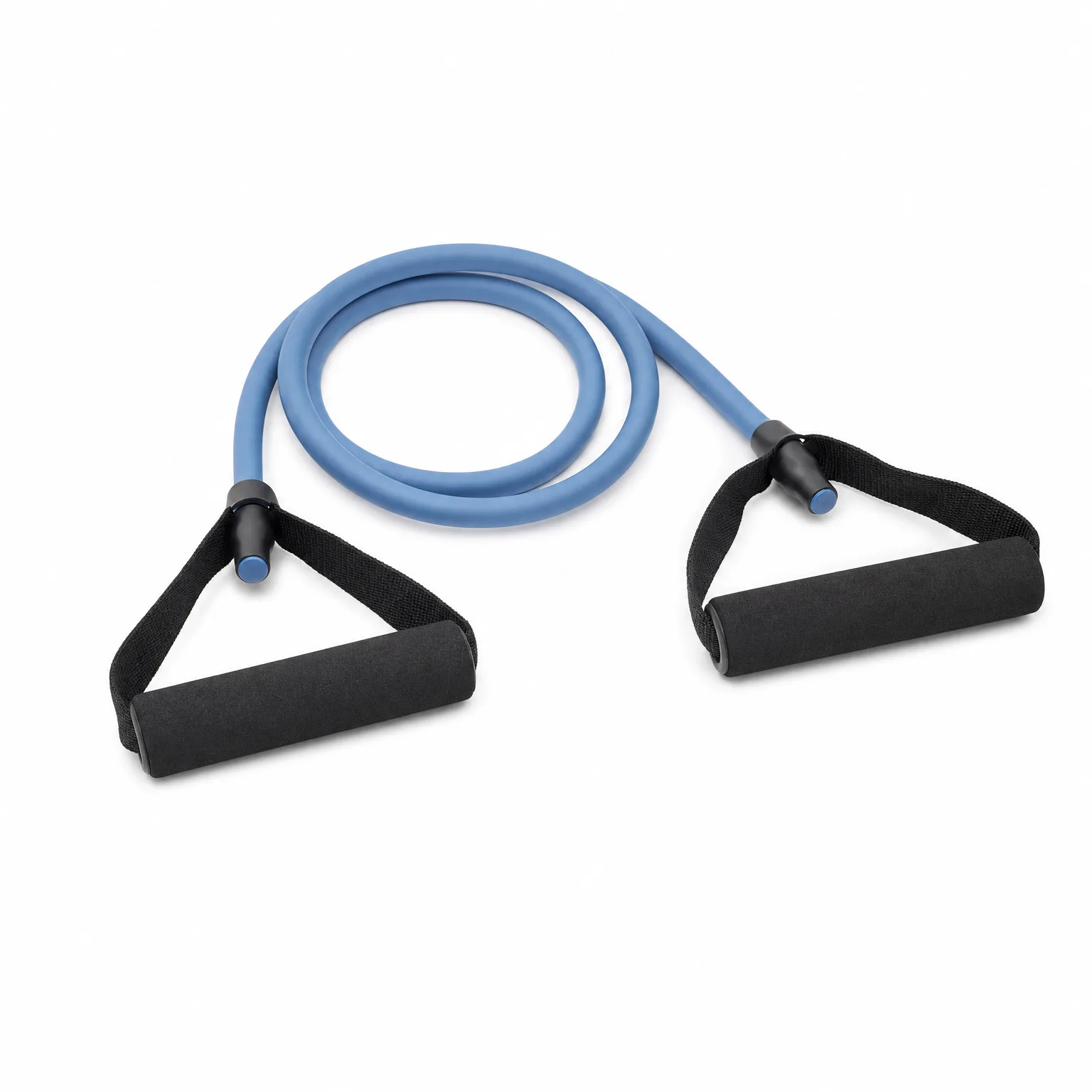
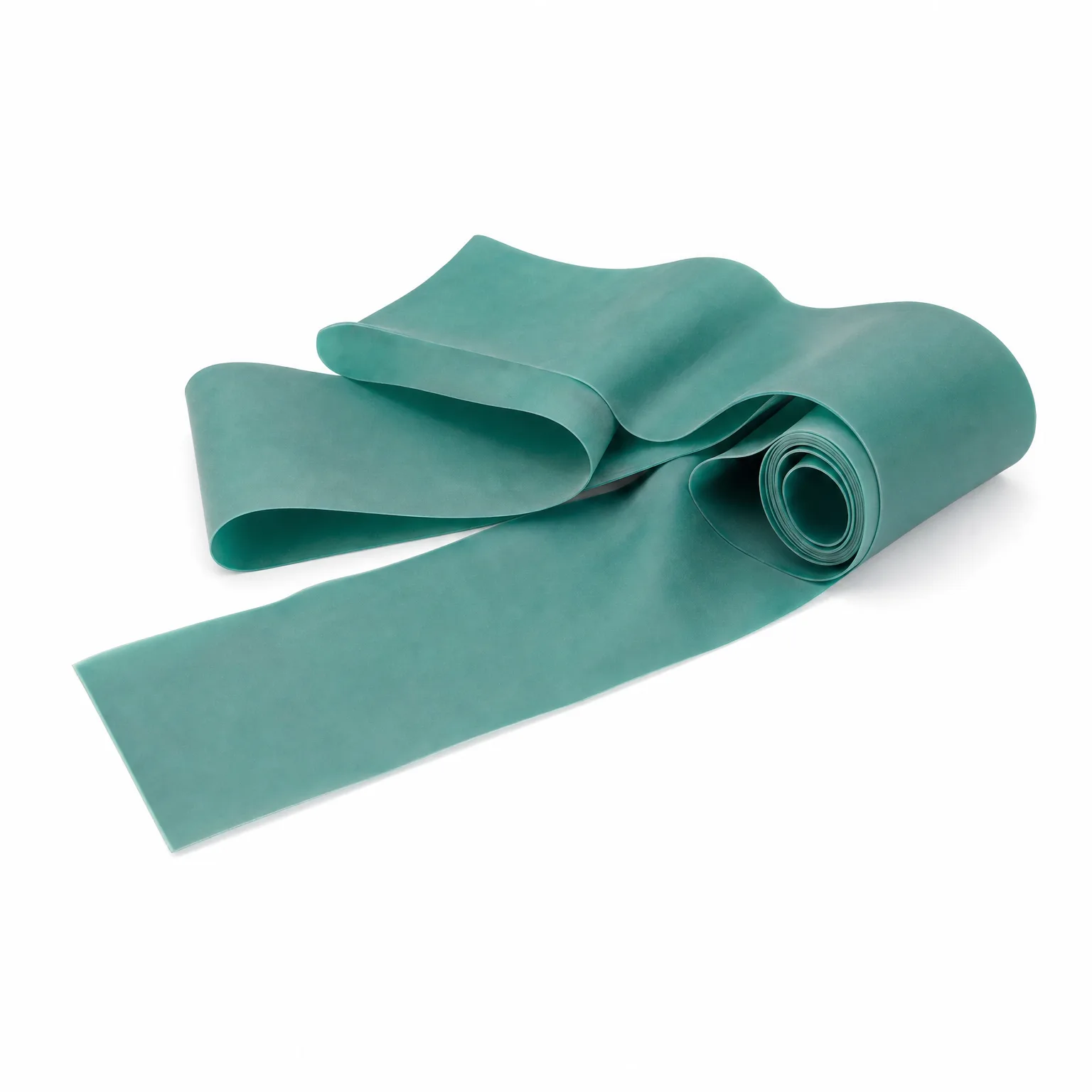
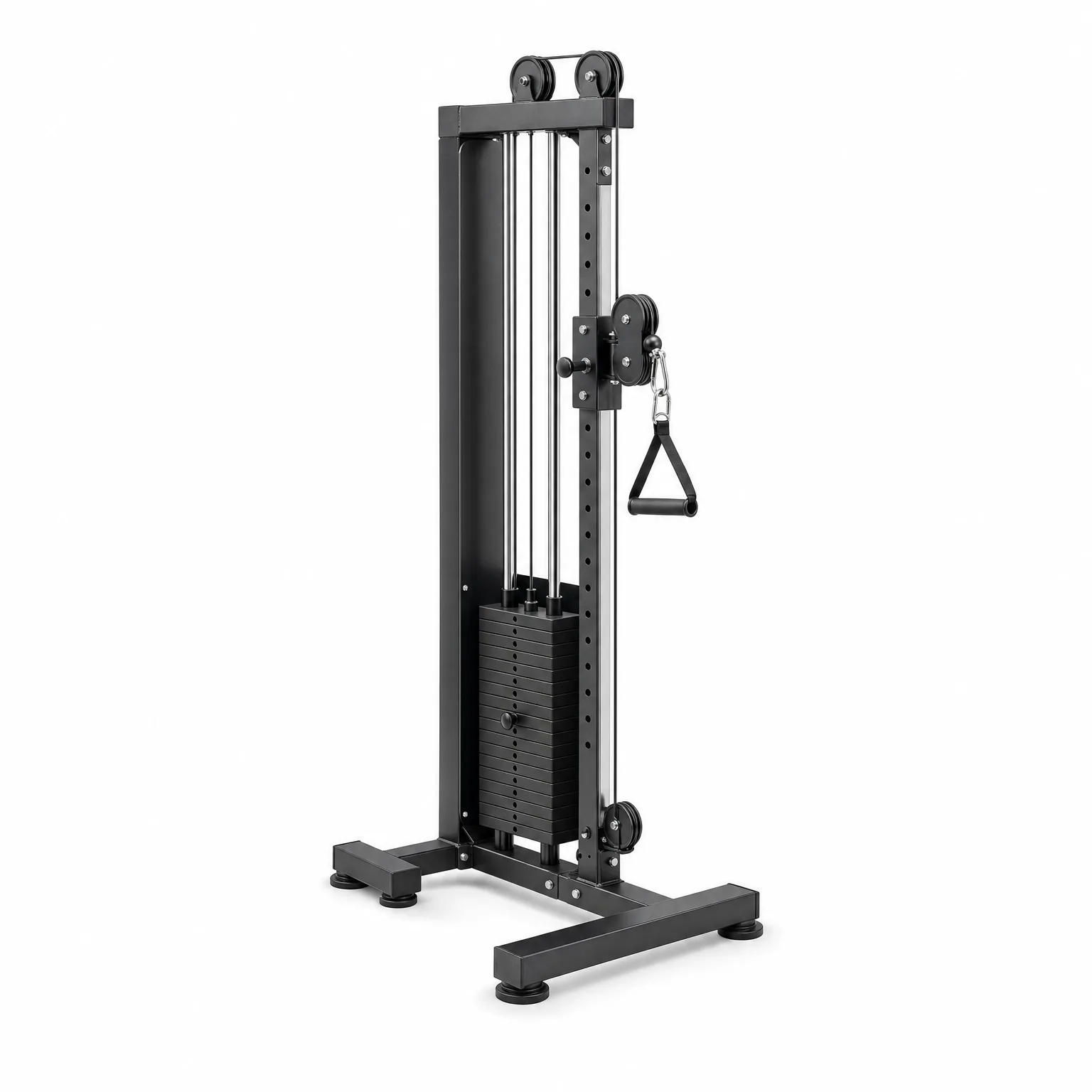
Tube bands with handles do the same pulling and pressing work and are more comfortable to grip, though they cannot be used for pull-up assistance. A flat therapy band covers light exercises. Dumbbells replace bands for most strength work, with constant load through the rep. In a gym, a cable machine gives the same lines of pull with adjustable weight. For pull-up help without a band, put your feet on a chair and let the legs assist.
-
Resistance tubes with handles
Elastic tubes with a handle at each end, often with a door anchor. A portable way to do rows, presses, curls and pulldowns. -
Flat resistance band
A long, thin, flat strip of elastic with open ends. Used for light strength exercises, Pilates, warm-ups and stretching. -

Dumbbells
A pair of short handles with a weight at each end. One pair trains every major muscle group, at home or in a gym. -
Cable machine
A weight stack on a pulley with a handle you can set at any height. It keeps tension on the muscle through the whole movement.
Often used with
-
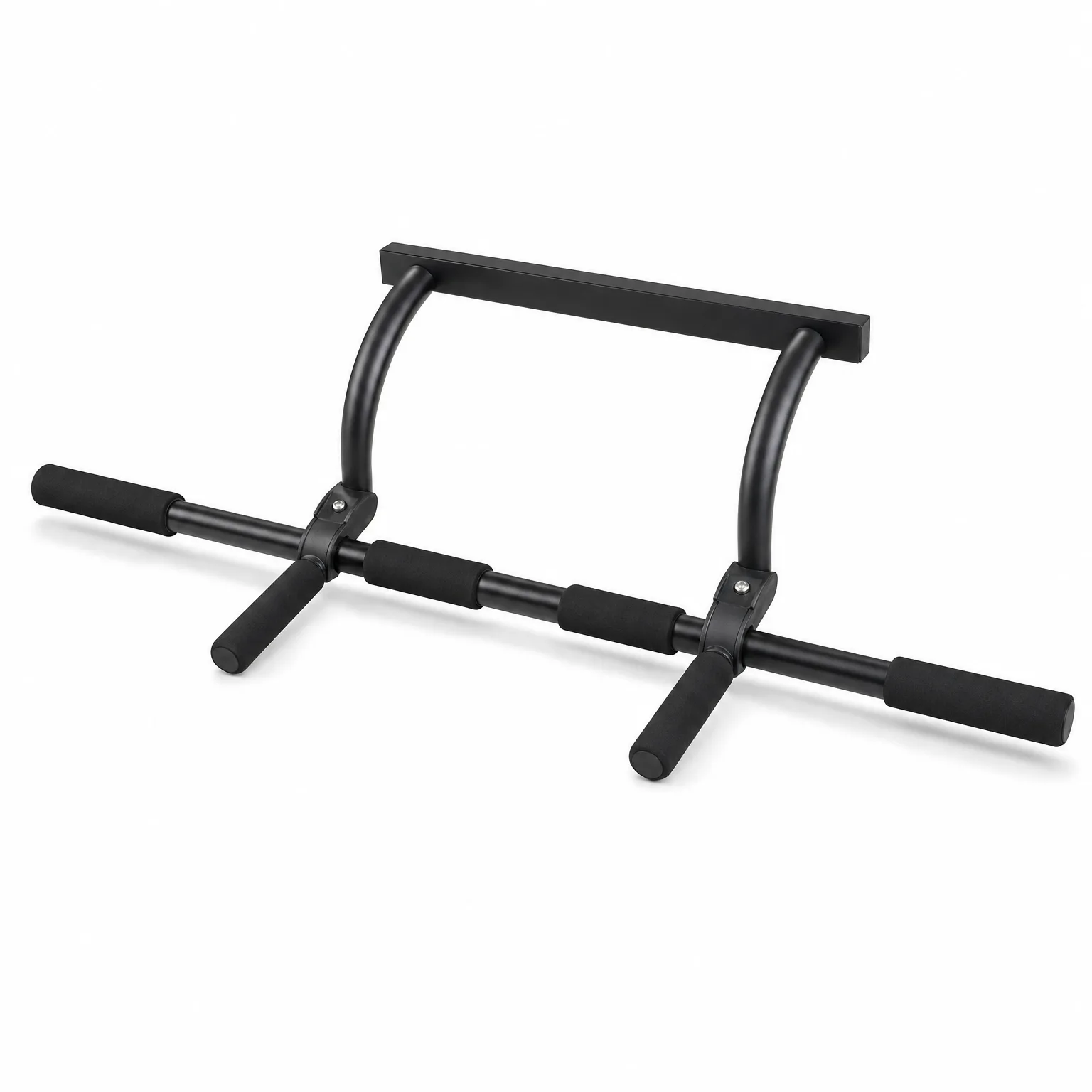
Pull-up bar
A fixed horizontal bar you hang from. Used for pull-ups, chin-ups, hangs and hanging leg raises, at home or outdoors. -
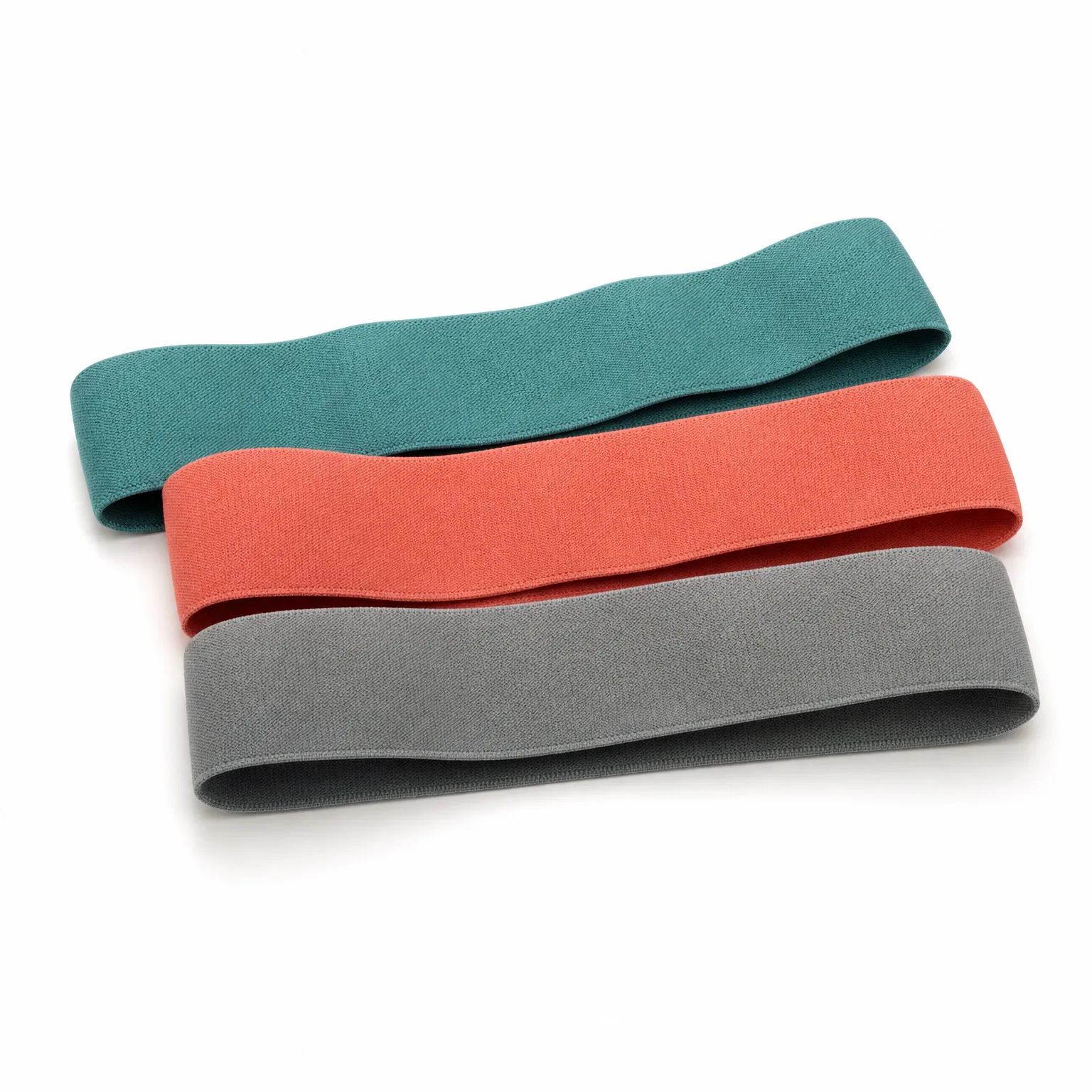
Mini bands
Short elastic loops worn around the thighs, knees or ankles. Used for glute and hip exercises and for warm-ups. -
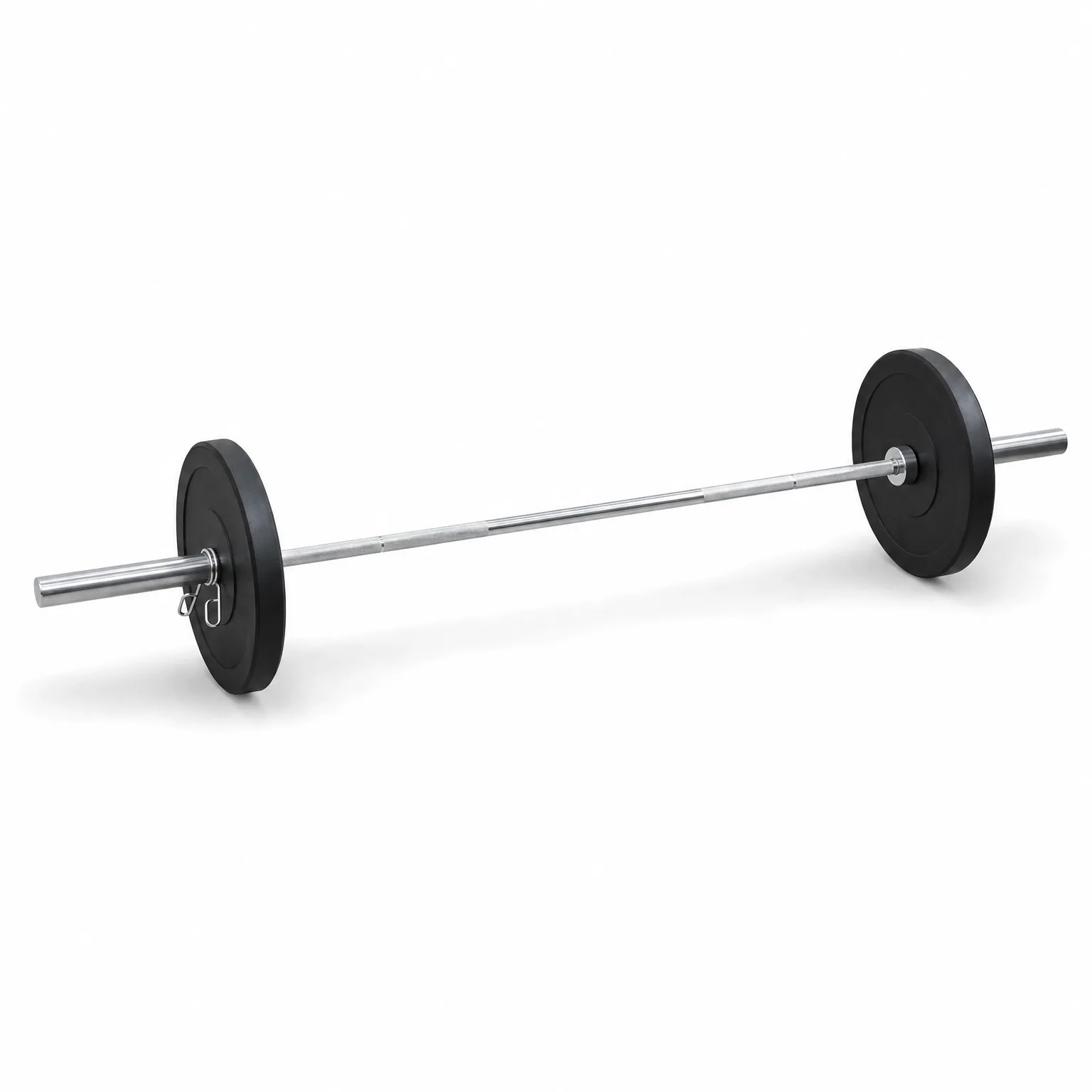
Barbell
A long steel bar loaded with plates at both ends. The standard tool for squats, deadlifts, presses and rows with heavy weight. -

Exercise mat
A cushioned, non-slip surface for floor exercises, stretching and yoga. The first thing most people need to train at home.
Questions about resistance bands
What size resistance band do I need for pull-ups?
It depends on your body weight and how close you are to an unassisted pull-up. If you cannot do one yet, start with a wide band, around 45 mm or more. If you can do a few, a 20–30 mm band is usually enough. The right band lets you do five to eight clean reps.
Can you build muscle with resistance bands?
Yes. Muscles respond to hard sets taken close to your limit, whatever provides the resistance. Bands work well for the upper body and glutes. Strong legs can outgrow them, which is where heavier bands, one-leg exercises or weights come in.
Resistance bands vs weights?
Weights give the same load through the whole rep and are easy to progress in small, known steps. Bands are light, cheap and portable, and pull harder as they stretch. Many people use both: weights as the base, bands for travel, warm-ups, assistance and extra exercises.
How long do resistance bands last?
From several months to a few years, depending on quality, how often they are used and how they are stored. Keep them away from sunlight, heat and sharp edges, and do not leave them stretched. Replace a band when it shows cracks or tears.
Build programs around what your client has
This guide comes from OnlineFitness.app, the app online coaches run their clients in.
Free for life for the first 100 coachesNo card