Equipment Bands and bodyweight tools
Flat resistance band
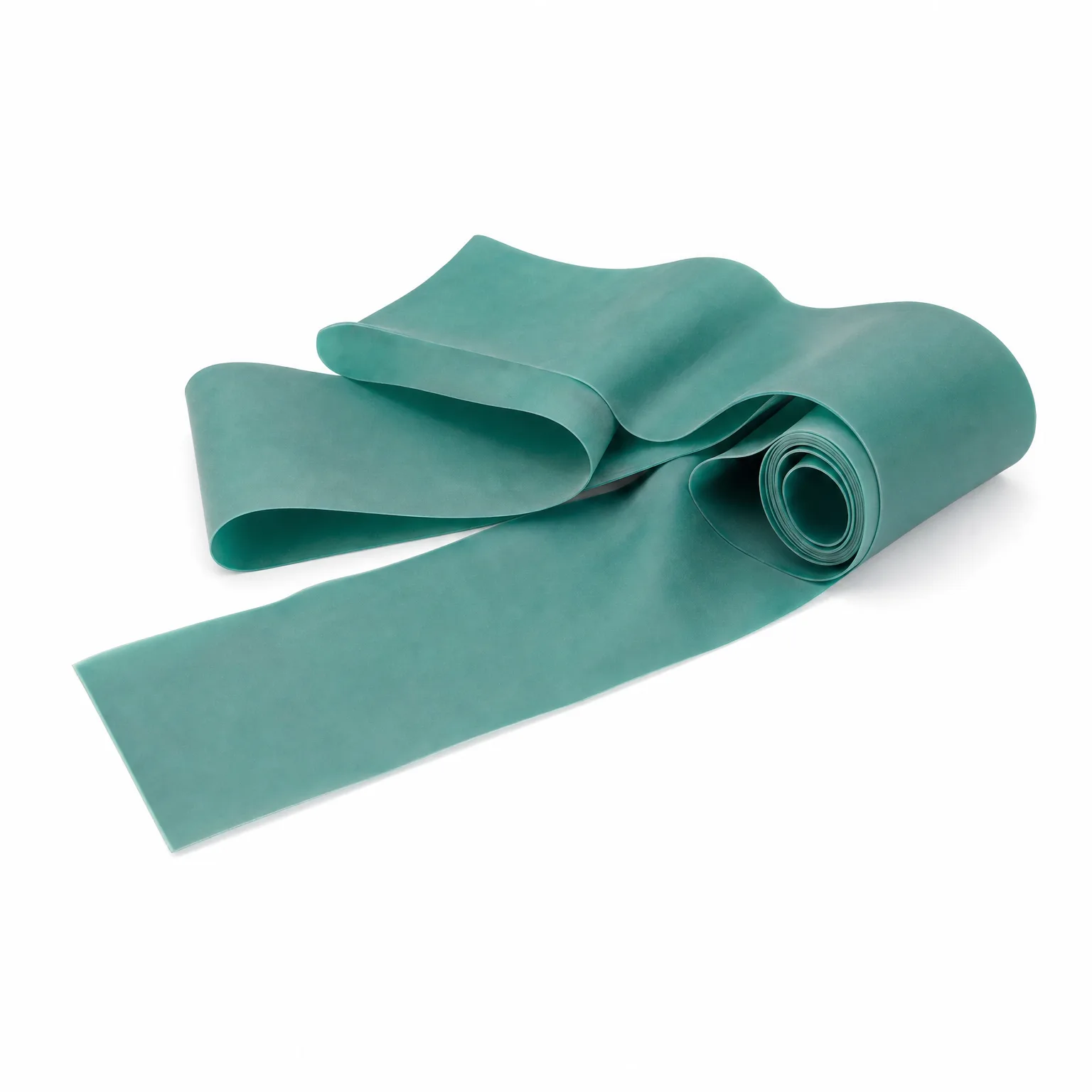
A long, thin, flat strip of elastic with open ends. Used for light strength exercises, Pilates, warm-ups and stretching.
In short
A flat resistance band is a wide, thin strip of latex or similar elastic, usually 1.2 to 2 meters long, with open ends and no handles. You wrap the ends around your hands, stand or sit on it, or tie it into a loop of any size. It gives light to moderate resistance that rises as the band stretches.
It is used for shoulder, arm and hip exercises, Pilates and seated workouts, warm-ups, and as an aid for stretching. Because the resistance starts very low and the grip can be adjusted to any length, it suits beginners, older adults and anyone who wants gentle, controlled work. It is also the band most often used in physiotherapy exercise programs.
- Category
- Bands and bodyweight tools
- Where
- Home, Gym, Travel
- Level
- Beginner and up
- Space
- Fits in a drawer or a bag
- Typical sizes
- About 10–15 cm (4–6 in) wide and 1.2–2 m (4–6.5 ft) long; also sold in rolls to cut to length
- Also called
- therapy band, flat band, latex exercise band, physio band, theraband, pilates band, stretch band
Muscles it works
- Main
- Rear delts, Mid back, Biceps, Triceps, Glutes
- Also works
- Side delts, Chest, Hamstrings, Calves
What it is used for
- Pull-aparts, external rotations and rows for the shoulders and upper back
- Curls, triceps extensions and presses with light resistance
- Leg presses, hip and ankle exercises lying or sitting
- Pilates and seated exercise routines
- Assisted stretches for the hamstrings, calves and shoulders
Types
Latex band. The standard type: smooth, very stretchy, sold in color-coded resistance levels. Lightly powdered when new. Not for people with a latex allergy.
Latex-free band. Made from synthetic elastic. Feels similar with slightly less stretch and no latex proteins or powder.
Roll for cutting. A long roll, often 5 m or more, cut to the length each person needs. Used by clinics, classes and coaches who equip several people.
Fabric band with loops. A woven elastic strip with sewn hand or foot loops along its length. Easier to hold and longer lasting, with a shorter stretch.
How to choose
Start with a light and a medium
Shoulder rotations and pull-aparts need very little resistance. Rows and leg work need more. Two or three levels cover most uses. Color codes differ between manufacturers, so read the label.
Choose the length for your height
A band of about 1.5 m works for most seated and standing exercises. For standing on the band and pressing overhead, or for tying it into a loop, 2 m is more useful. A long band can always be gripped shorter.
Latex or latex-free
If you or the people you train have a latex allergy or sensitive skin, choose a latex-free band. Otherwise latex has the most stretch for its thickness.
Consider grip comfort
A thin band wrapped around the hand can dig in. If that bothers you, look for clip-on handles made for flat bands, or a fabric band with loops.
How to start using it
- Wrap, do not clench. Lay the end across your open palm, wrap it once around the hand and close the fingers. This holds the band without squeezing hard. Keep the band flat and wide instead of twisted into a cord.
- Set the resistance with your grip. Holding the band shorter makes the exercise harder. Holding it longer makes it easier. Doubling the band roughly doubles the pull. Start each rep with light tension, not slack.
- Anchor it simply. Stand or sit on the middle of the band, loop it around the soles of both feet for seated rows, or tie it around a fixed post. For a door, tie a knot in the middle and close the door on it with the knot on the far side. Pull only from the side where your pull holds the door shut.
- Move slowly. Take about two seconds out and two to three seconds back, without letting the band snap you to the start. Aim for 10–15 controlled reps. When that is easy, shorten your grip or use the next level.
Common mistakes
Using a nicked band
A small cut at the edge turns into a tear under stretch, and a torn band snaps back. Check both edges before use. Rings, long nails and rough shoe soles are the usual cause.
Aiming the stretch at the face
In exercises where the band is anchored under a foot or pulled toward the head, a slip sends it upward. Fix it securely under the arch of a shoe, and turn your face slightly away in overhead pulls.
Too much resistance for small muscles
For shoulder rotations a strong band makes the body twist and the big muscles take over. Use the lightest band that lets you feel the back of the shoulder working.
Storing it damp or in the sun
Sweat, heat and sunlight make latex sticky and brittle. Wipe the band dry, dust latex with a little talc if it sticks, and keep it in a cool, dark place.
What to use instead
A tube band with handles covers the same pulling, pressing and arm exercises with a more comfortable grip. A long loop band works too, though even the thinnest is usually stronger. A mini band replaces a flat band tied into a small loop for hip work. For assisted stretching alone, a yoga strap, a belt or a towel does the job, since the stretch does not need elasticity.
-
Resistance tubes with handles
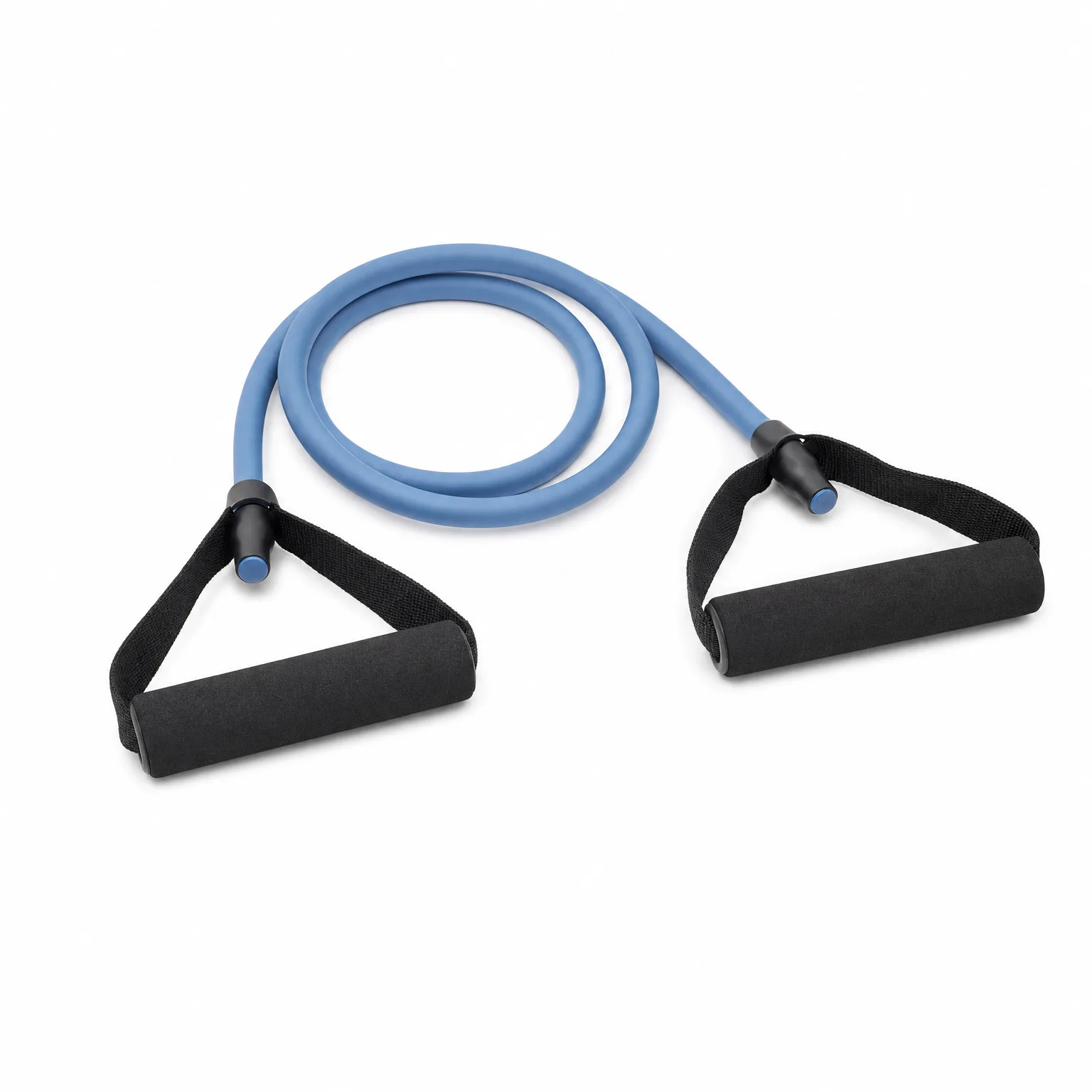
Elastic tubes with a handle at each end, often with a door anchor. A portable way to do rows, presses, curls and pulldowns. -
Resistance bands
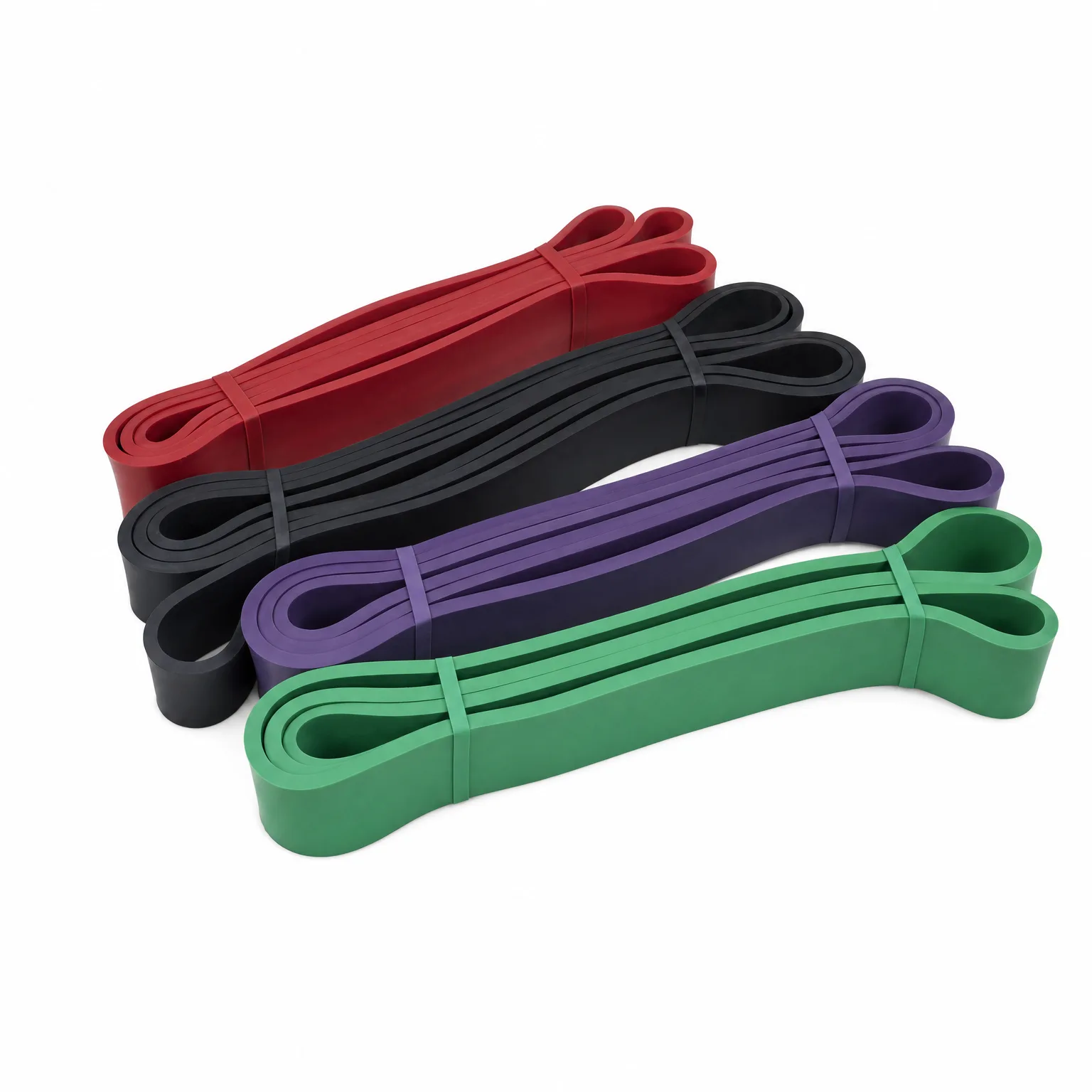
Long closed loops of thick rubber. They add resistance to rows, presses and squats, or take weight off in pull-ups and dips. -
Mini bands
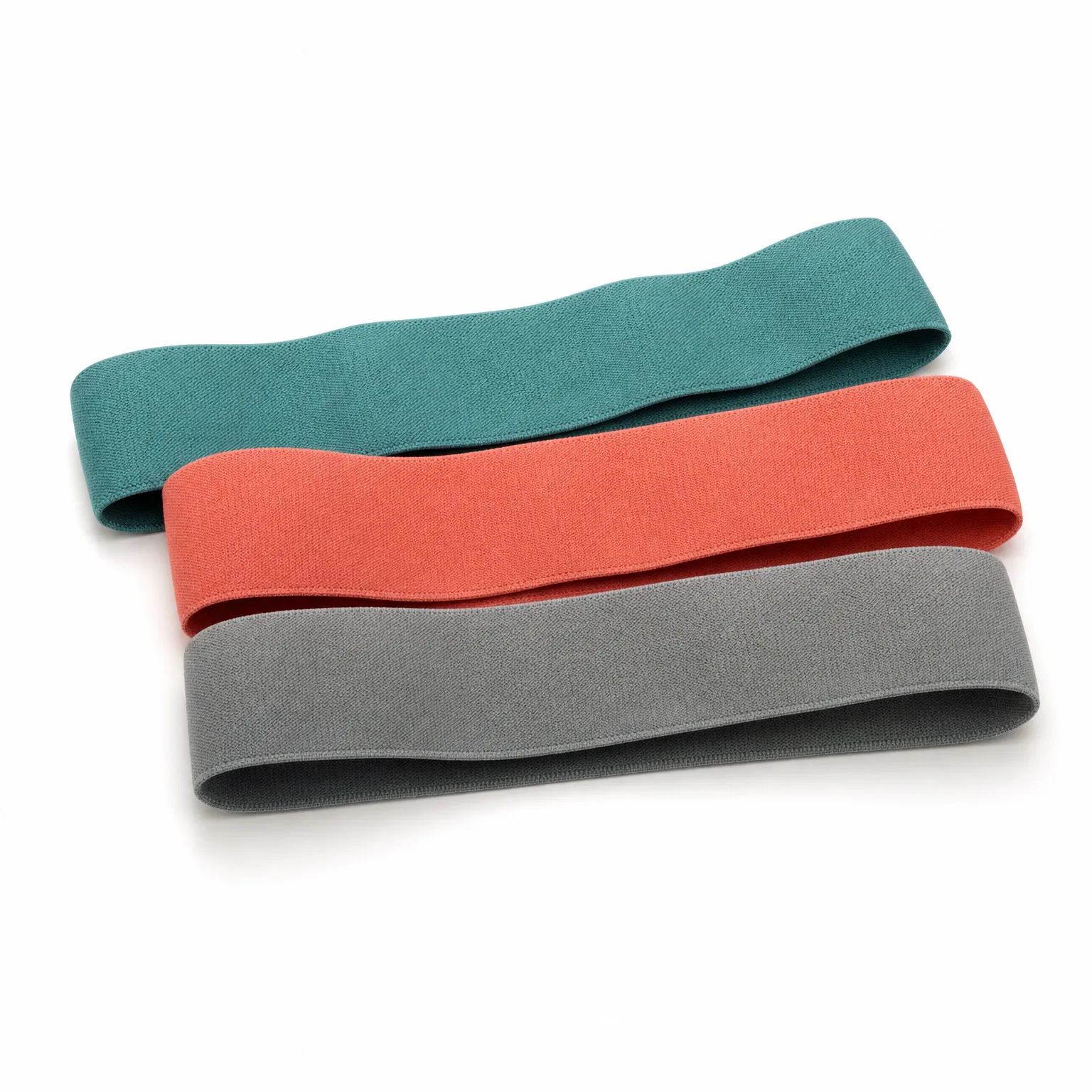
Short elastic loops worn around the thighs, knees or ankles. Used for glute and hip exercises and for warm-ups. -
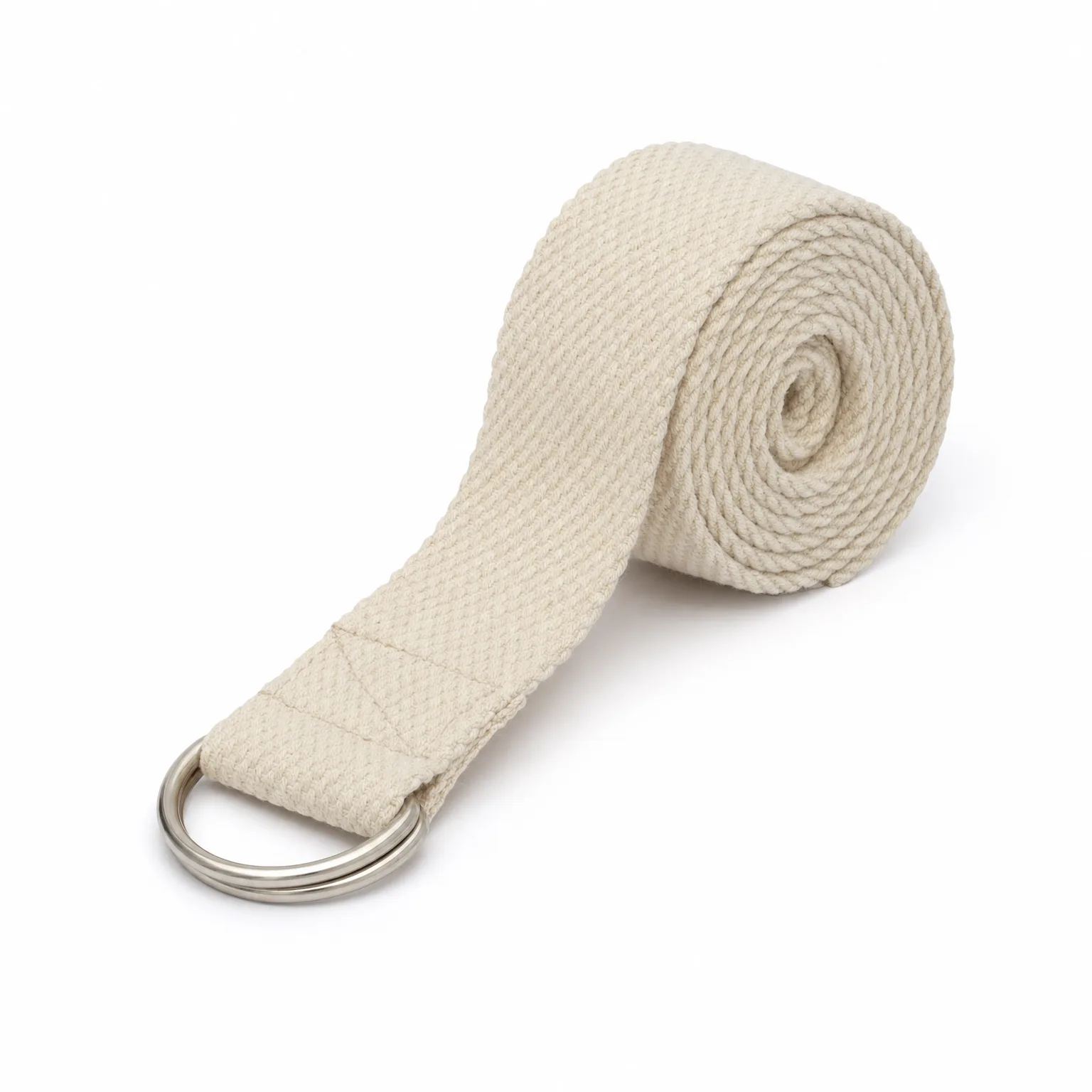
Yoga strap
A long, non-stretch cotton or nylon strap with a buckle that extends your reach in stretches, most often for the hamstrings.
Often used with
-

Exercise mat
A cushioned, non-slip surface for floor exercises, stretching and yoga. The first thing most people need to train at home. -
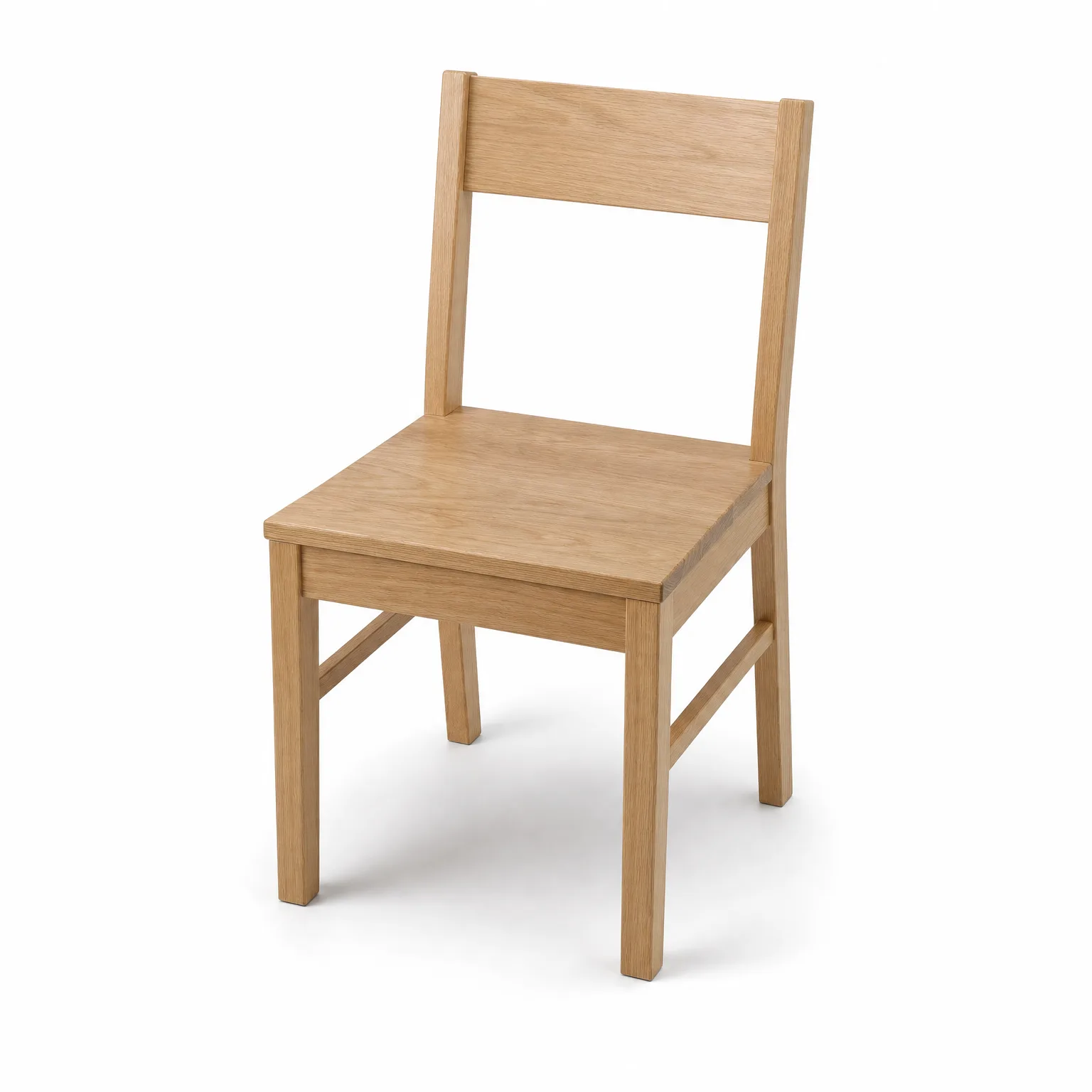
Chair
A sturdy household chair stands in for a bench, a low box or dip bars: sit-to-stands, step-ups, dips, split squats and incline push-ups. -
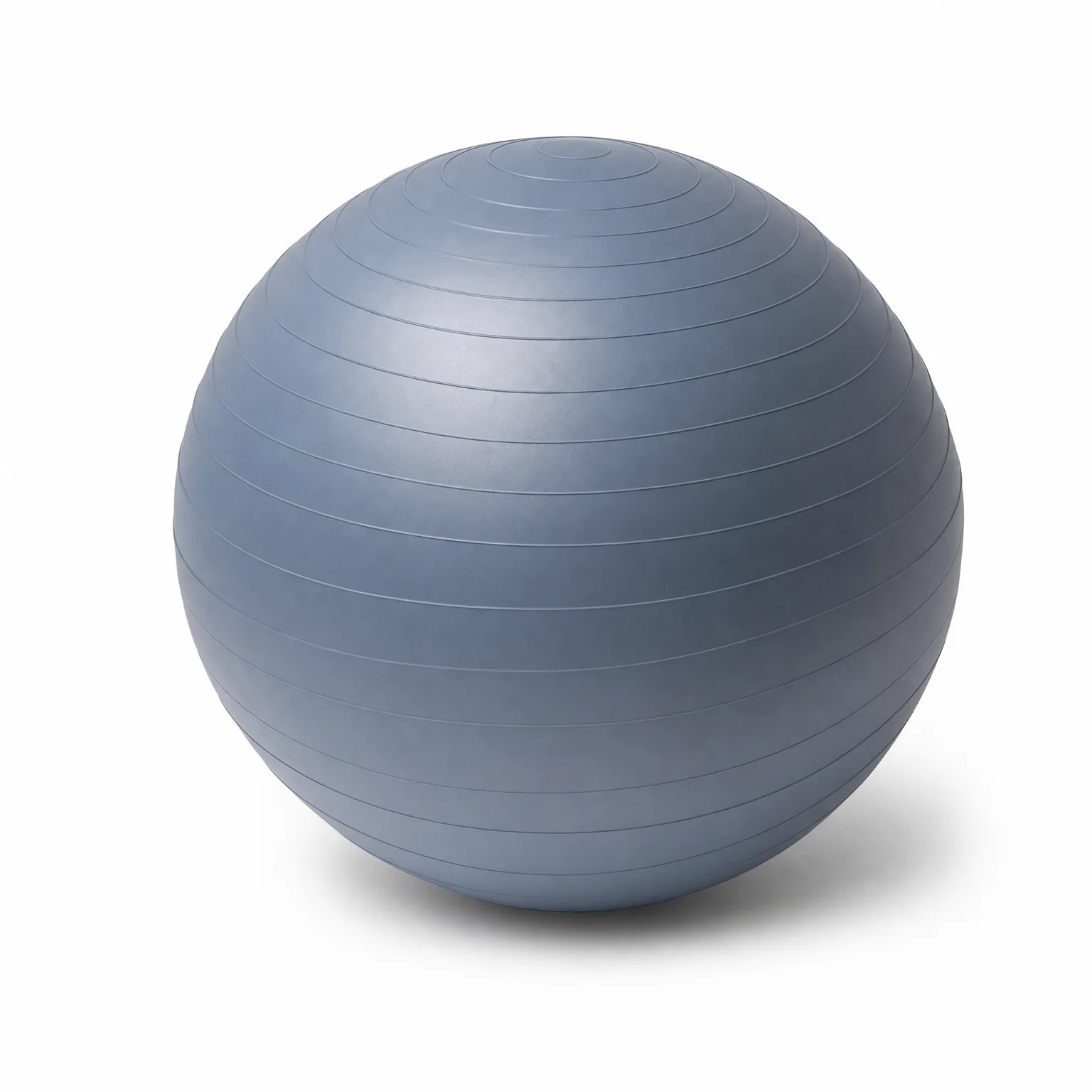
Stability ball
A large inflatable ball you sit, lie or lean on. The unstable surface is used for core exercises, hamstring curls and supported stretches.
Questions about flat resistance band
What is a flat resistance band used for?
Light strength exercises for the shoulders, arms, hips and legs, Pilates and seated routines, warm-ups before lifting, and assisted stretching. It is often used in exercise programs set by physiotherapists because the resistance is low and easy to adjust.
What do the colors of flat bands mean?
Each color marks a resistance level, from very light to very heavy, but the order differs between manufacturers. Yellow or tan is often the lightest and black, silver or gold the heaviest. Check the label or chart from the maker of your band.
How long should a flat resistance band be?
About 1.5 m suits most exercises. Choose 2 m if you are tall, want to stand on the band and press overhead, or plan to tie it into a loop. If you buy a roll, cut a piece, test it on your main exercises and adjust the next one.
Flat band or loop band?
A flat open band is lighter, adjustable in length and best for gentle upper-body work, seated exercise and stretching. Loop bands are thicker and stronger, and suit pull-up assistance and heavier leg and back exercises. They overlap only at the lightest loop sizes.
How do I tie a flat band into a loop?
Overlap the two ends and tie a simple overhand knot with both together, leaving a few centimeters of tail, then pull it tight. Make the loop smaller for more resistance. Untie it after the session so the knot does not weaken the band.
Build programs around what your client has
This guide comes from OnlineFitness.app, the app online coaches run their clients in.
Free for life for the first 100 coachesNo card