Chair
A sturdy household chair stands in for a bench, a low box or dip bars: sit-to-stands, step-ups, dips, split squats and incline push-ups.
In short
A plain, sturdy chair is one of the most useful pieces of home training equipment that nobody has to buy. Its seat is a fixed-height platform about knee high, which makes it a stand-in for a bench, a low box or dip bars. You can sit down to it, step onto it, put your hands or feet on it, or hold its back for balance.
It suits beginners especially well: squatting to a seat teaches the movement with a clear depth target, and holding the backrest makes one-leg exercises manageable. Stronger people use it for rear-foot-elevated split squats, dips and feet-elevated push-ups.
- Category
- Everyday items
- Where
- Home, Travel
- Level
- Beginner and up
- Space
- Needs a corner of a room
- Also called
- sturdy chair, dining chair, chair workout, chair exercises, kitchen chair
Muscles it works
- Also works
- Chest, Hamstrings, Abs, Front delts
What it is used for
- Sit-to-stands and box squats to the seat
- Step-ups and rear-foot-elevated split squats
- Triceps dips with the hands on the front edge of the seat
- Incline push-ups with hands on the seat, or decline with feet on it
- Balance support for lunges, calf raises and one-leg work, or a seat for presses, curls and knee lifts
How to choose
Four solid legs, no wheels
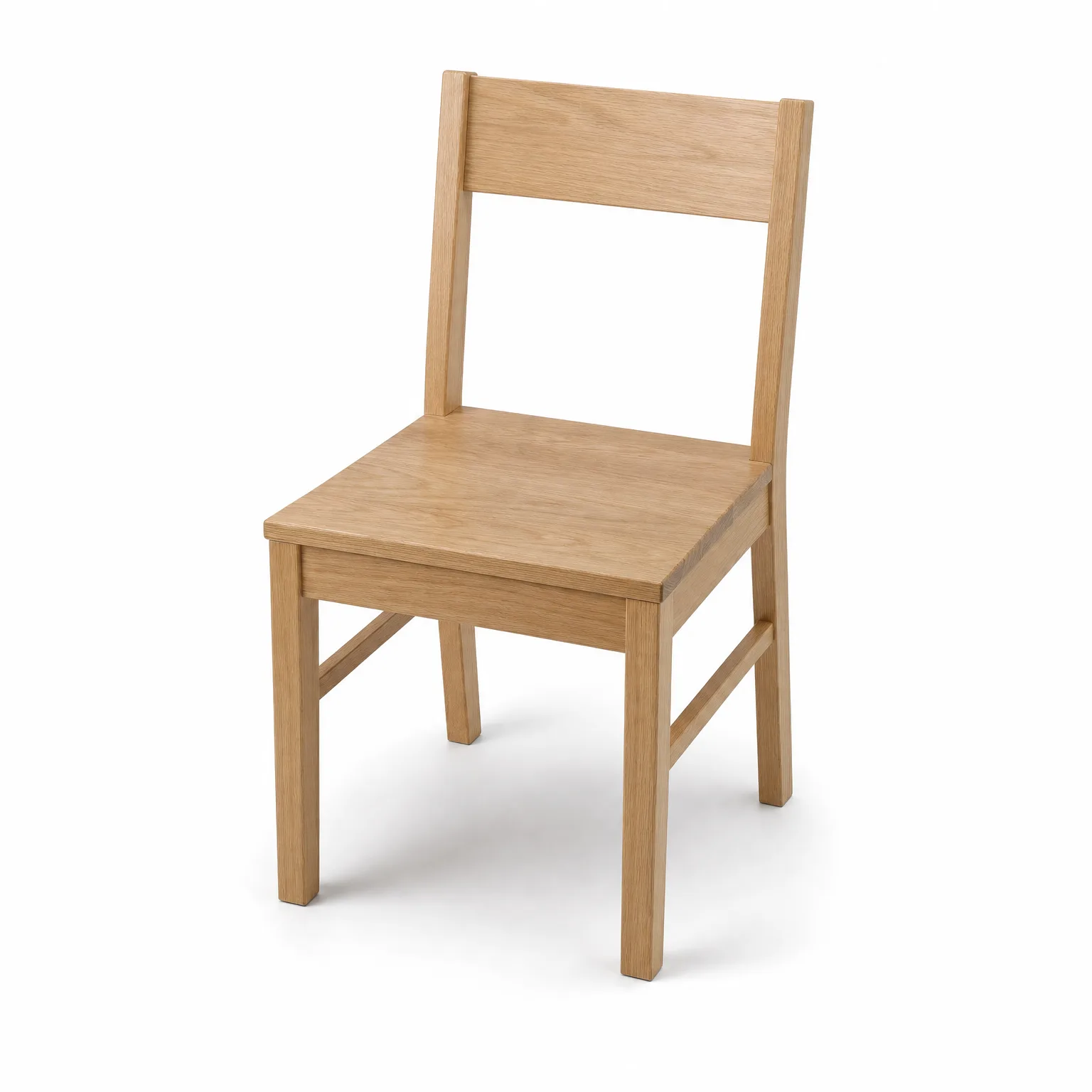
Use a rigid dining or kitchen chair with four legs on the floor. Do not use office chairs on wheels, swivel chairs, rocking chairs or folding chairs: they can roll, turn or collapse under a moving load.
A flat, firm seat
A hard or thinly padded seat gives a stable surface for hands and feet. Deep, soft cushions make the foot or hand sink and wobble. Armless chairs leave more room for dips and step-ups.
The right seat height
Most dining chairs are about 43–48 cm (17–19 in) high. For sit-to-stands and step-ups, a seat around knee height is a good start. If that is too hard, a higher seat or a firm cushion on the seat for squats makes it easier.
Sound joints
Shake the chair before you trust it. Loose or creaking joints, a cracked seat or uneven legs rule it out. How much load it takes depends on how it was built, so pick the sturdiest chair in the house.
How to start using it
- Put it against a wall on a non-slip floor. Push the back of the chair against a wall so it cannot slide or tip backward. On smooth floors, stand it on an exercise mat or a rug with a grippy underside. Press down on the seat with your hands and try to move it before every session.
- Load the middle of the seat. For step-ups, place the whole foot in the center of the seat, not on the front edge. For push-ups and dips, keep the heels of the hands on the seat itself, shoulder-width apart, and press straight down, not forward. Weight hanging off the edge is what tips a chair.
- Start with sit-to-stands. Stand in front of the chair, feet about hip-width apart. Push the hips back, lower under control until you touch the seat lightly, and stand up again without rocking. Arms out in front help with balance.
- Use the backrest for balance only. For lunges, calf raises and one-leg exercises, stand beside or behind the chair and rest fingertips on the backrest. It is there to steady you. Leaning your weight on the top of the backrest can tip the chair.
Common mistakes
Using a chair that moves
A chair on wheels, on a slippery floor or standing free in the middle of the room can shoot out from under you during dips or step-ups. Brace it against a wall and check it first.
Stepping on the edge of the seat
Weight on the front edge levers the back legs off the floor. Place the whole foot well onto the seat and step up and down under control, never by jumping.
Dropping onto the seat
Falling the last few centimeters of a squat turns the exercise into sitting down. Lower slowly, touch the seat lightly and stand straight back up.
Dips with the hips far from the chair
Letting the hips drift forward and sinking very low puts the shoulders in a strained position. Keep your back close to the seat edge and go down only as far as is comfortable for the shoulders, roughly until the upper arms are parallel to the floor.
Jumping onto a chair
A chair is not a plyo box. It is narrow, light and can tip. For jumps, use a low, wide, fixed step or a real box.
What to use instead
A chair is itself the substitute. The equipment it stands in for: a weight bench for seated work, step-ups and split squats, a plyo box or step platform for step-ups and box squats, and dip bars for triceps dips. Each of these is wider, more stable and rated for load, which matters once you add weight or speed. Around the house, a sofa edge, a bed frame or a low step can do the same jobs.
-
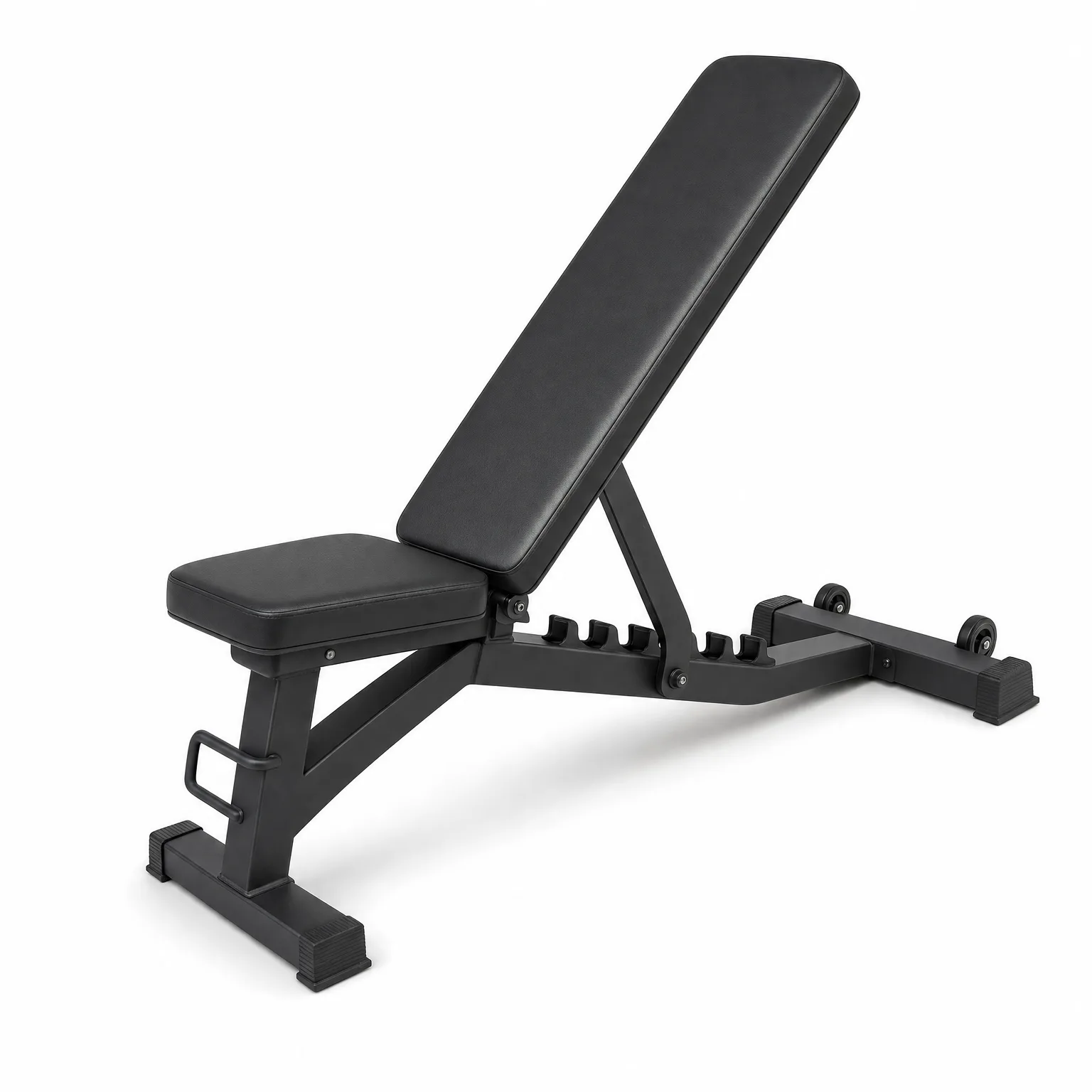
Weight bench
A padded bench you lie, sit or lean on while lifting. It supports the body for presses, rows, hip thrusts and seated work. -
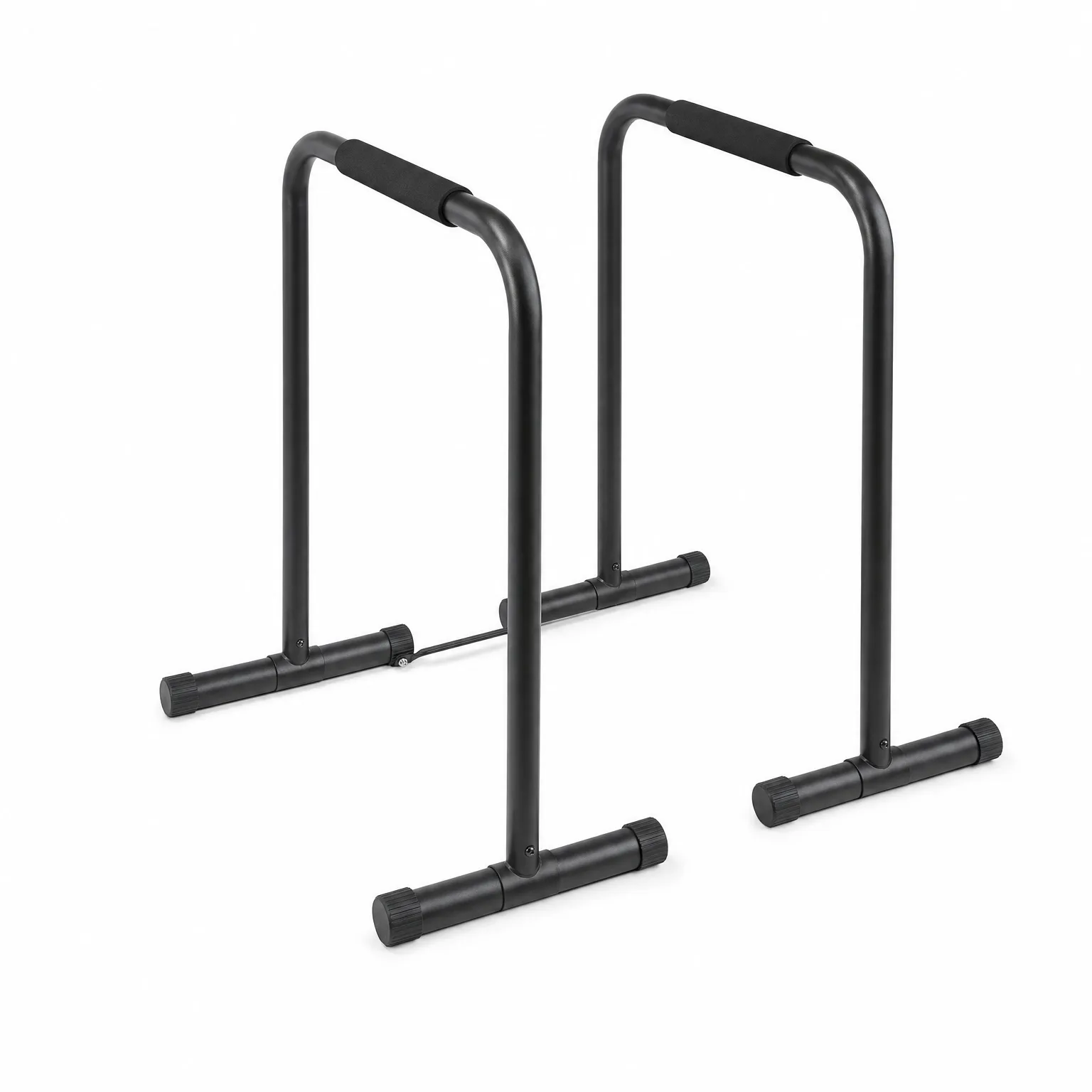
Dip bars
Two parallel bars at about waist height that you support yourself on. Used for dips, leg raises and bodyweight rows. -
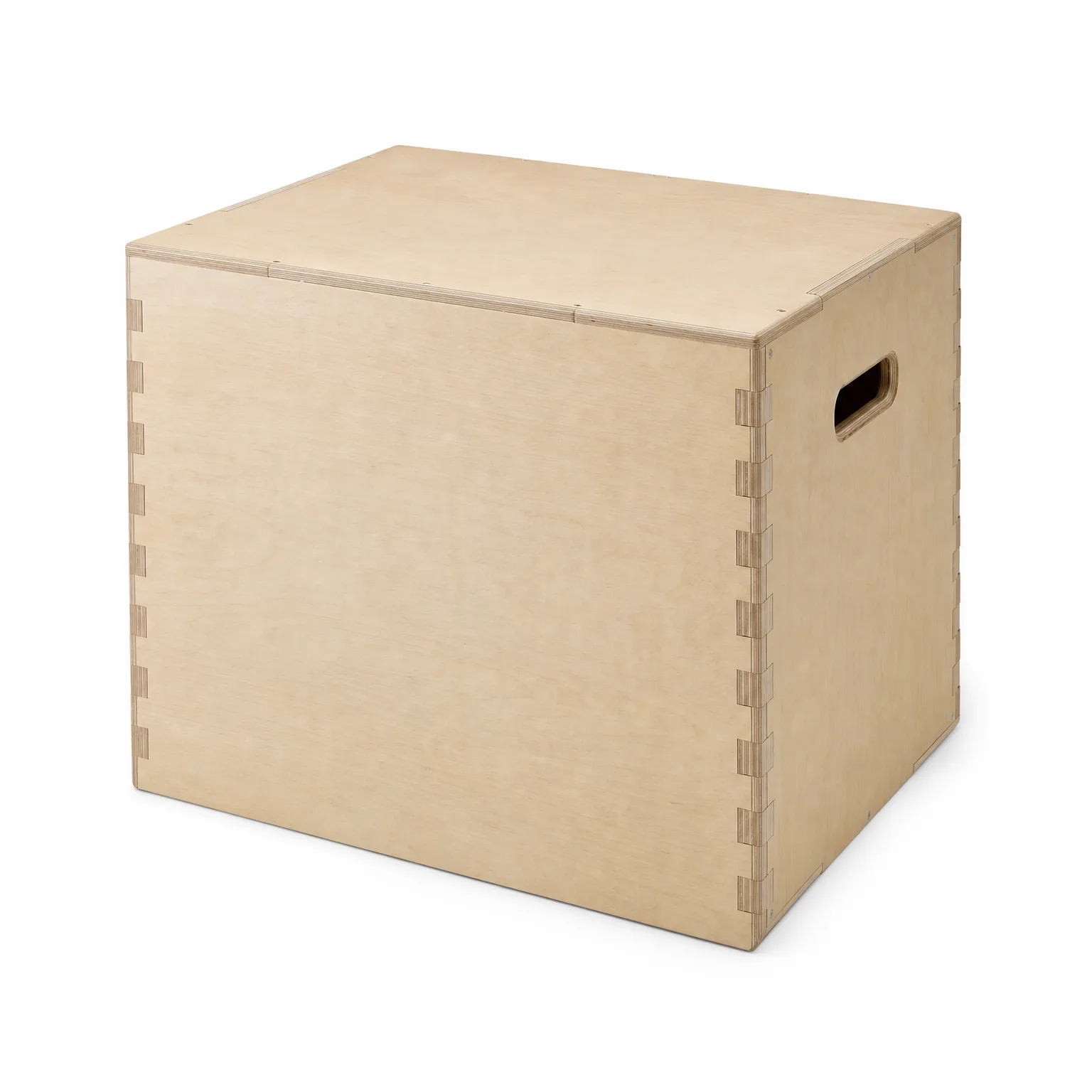
Plyo box
A sturdy box for jumping onto and stepping up on. Used for box jumps, step-ups, box squats and raised push-ups. -
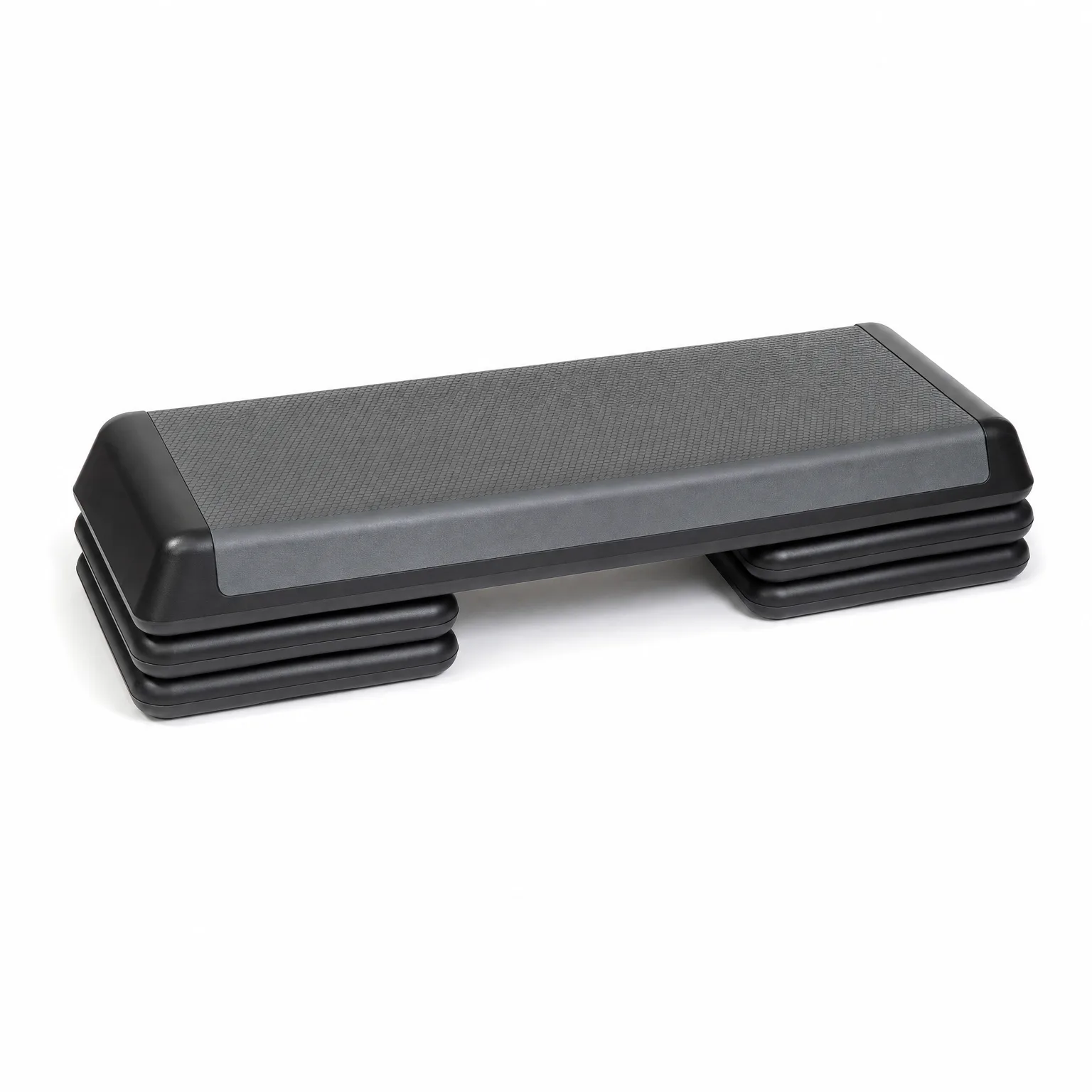
Step platform
A low, wide platform with removable risers. Used for step aerobics, step-ups, calf raises and as a low bench.
Often used with
-

Exercise mat
A cushioned, non-slip surface for floor exercises, stretching and yoga. The first thing most people need to train at home. -
Wall
A clear stretch of solid wall works as support, a balance aid and a fixed surface to push against: wall sits, wall push-ups, stretches. -
Loaded backpack
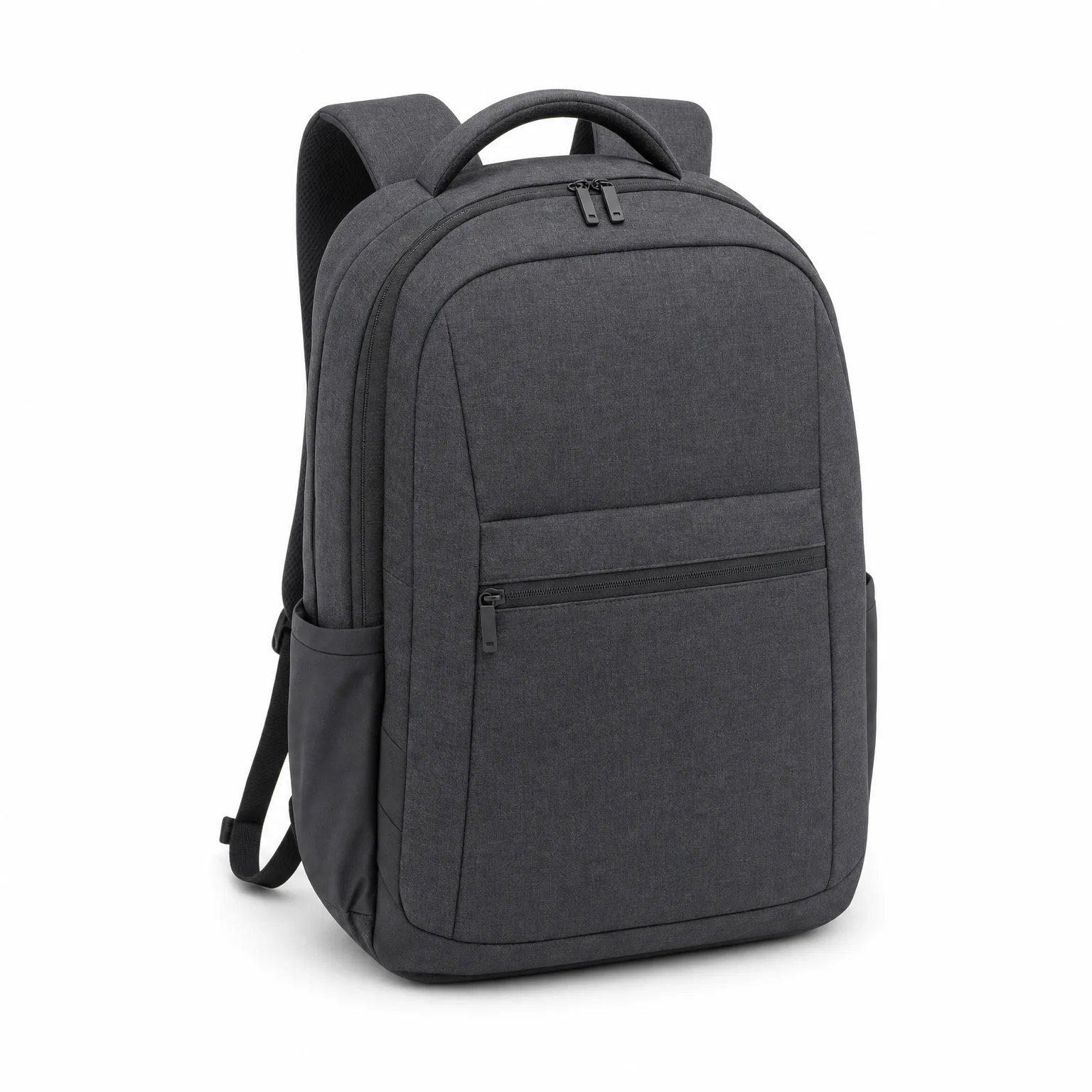
An ordinary backpack filled with books or water bottles works as an adjustable weight for squats, rows, push-ups and loaded walks. -

Dumbbells
A pair of short handles with a weight at each end. One pair trains every major muscle group, at home or in a gym.
Questions about chair
What exercises can I do with a chair?
A full session is possible: sit-to-stands or box squats, step-ups, rear-foot-elevated split squats, triceps dips, incline or decline push-ups, seated knee lifts and calf raises holding the backrest. Add a loaded backpack or dumbbells when body weight gets easy.
Is it safe to do dips on a chair?
It can be, with the right chair and setup. Use a rigid four-legged chair pushed against a wall on a non-slip floor, hands on the front of the seat. Keep the hips close to the seat and stop when the upper arms are about parallel to the floor. If your shoulders feel pinched, bend the knees more or swap dips for close-grip push-ups.
Can a chair replace a workout bench?
For bodyweight work, largely yes: step-ups, split squats, dips, incline push-ups and seated exercises. It cannot replace a bench for lying presses, because the seat is too short to support your back and head, and it is not rated for heavy external load.
What kind of chair is best for exercise?
A heavy, armless dining or kitchen chair with four fixed legs, a flat firm seat and tight joints. Avoid anything with wheels, a swivel base, a folding mechanism or a deeply cushioned seat.
Build programs around what your client has
This guide comes from OnlineFitness.app, the app online coaches run their clients in.
Free for life for the first 100 coachesNo card