Calves
Two muscles on the back of the lower leg. They point the foot and lift the heel when you walk, run, jump or do calf raises.
In short
The calves are two muscles on the back of the lower leg. The gastrocnemius is the visible, two-headed muscle near the top, starting just above the knee. The flatter soleus lies under it and starts below the knee. Both join the Achilles tendon on the heel bone, so their main job is to point the foot and push you up onto your toes in walking, running and jumping.
Calf raises build them: with straight knees mainly for the gastrocnemius, with bent knees for the soleus, because bending the knee slackens the gastrocnemius. A full stretch at the bottom of each rep matters more than heavy partial reps. Calf size depends a fair amount on genetics, so progress is often slower than elsewhere, but the calves do respond to hard, consistent training.
- Anatomical name
- Gastrocnemius and soleus
- Group
- Legs and glutes
- Also called
- calf muscles, calf, gastrocnemius, soleus, lower leg muscles
- Works with
- Tibialis anterior, Hamstrings, Quads
What it does
- Point the foot and lift the heel: rising onto the toes, pushing off the ground with each step
- Drive jumps and sprints and absorb the force of landing
- Keep the body balanced over the feet when standing (mostly the soleus)
- Help bend the knee together with the hamstrings (gastrocnemius only)
Parts of the muscle
Gastrocnemius. The two-headed muscle that gives the calf its shape. It crosses the knee, so it works most with the knee straight: standing calf raises, leg press calf raises, jumping.
Soleus. The broad, flat muscle under the gastrocnemius. It does not cross the knee, so it takes over in seated calf raises and other bent-knee positions. It also does much of the work in walking.
Exercises for the calves
Ordered from the most useful. Equipment links open its page in the equipment guide.
-
Standing calf raise
Balls of the feet on the edge of the step, knees straight but not locked. Lower until the heels are well below the step, pause a second, then rise as high as you can.
-
Seated calf raise
Pad snug on the lower thighs, balls of the feet on the plate. Drop the heels into a deep stretch, pause, and press up without rolling onto the outer edge of the foot.
-
Single-leg calf raise
Stand on one foot on a step, holding a rail for balance only. Lower slowly into a full stretch and rise to the top. Hold a dumbbell once 20 reps is easy.
-
Leg press calf raise
Balls of the feet on the lower edge of the platform, knees straight. Push the platform away with the ankles only, then let it ease the heels back into a stretch.
-
Seated dumbbell calf raise
Sit on a bench with the balls of the feet on a step and dumbbells resting on the knees. Lower the heels as far as they go and push up in slow, full reps.
-
Jump rope
Stay on the balls of the feet with small, quick hops just high enough to clear the rope. It builds calf endurance and conditioning but does not replace loaded raises for size.
How to train it
Do straight-knee and bent-knee raises
Standing raises train mainly the gastrocnemius, seated raises the soleus. Most programs use one of each across the week.
Pause in the stretch
The calves respond well to a deep stretch at the bottom of the rep. Hold for one to two seconds with the heels down so the Achilles tendon cannot bounce you up, then rise all the way.
Plan 10 to 16 hard sets a week
Split them over two to four sessions. The calves recover quickly, so short, frequent sessions work well. Walking and running add some work but rarely enough to build size.
Use moderate to high reps
Sets of 10 to 20 reps work well, and heavier sets of 6 to 10 are fine on standing raises if the range stays full. Take sets close to failure: the burn comes early and is not the real limit.
Add load steadily
The calves carry your body weight all day, so they need real load to grow. Once a single-leg raise passes 20 to 25 reps, add a dumbbell or move to a machine.
Common mistakes
Bouncing at the bottom
Fast reps let the Achilles tendon act like a spring and take work away from the muscle. Pause in the stretch and rise under control.
Cutting the range short
Heavy half reps through the middle of the range look productive but train the muscle less. Use a weight that lets the heels drop well below the step and rise fully.
Only doing standing raises
The soleus is a large muscle, and straight-knee raises train it less. Add seated or other bent-knee raises.
Bending the knees to move the weight
On standing raises a knee dip turns the rep into a small jump. Keep the knees fixed and move only at the ankles.
Equipment for these exercises
-
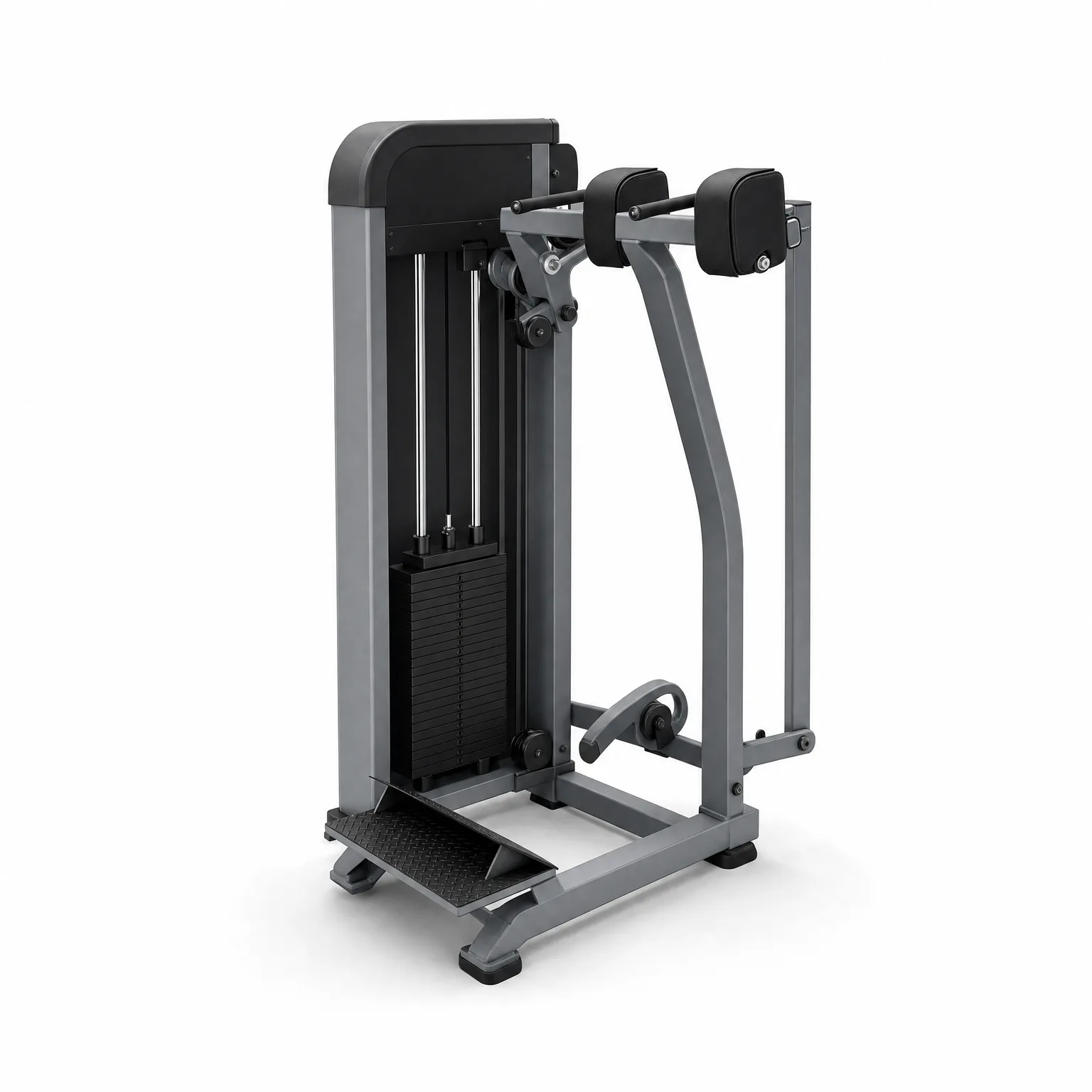
Calf raise machine
A machine that loads the shoulders or knees while you rise onto the balls of the feet on a raised step. Standing and seated types. -
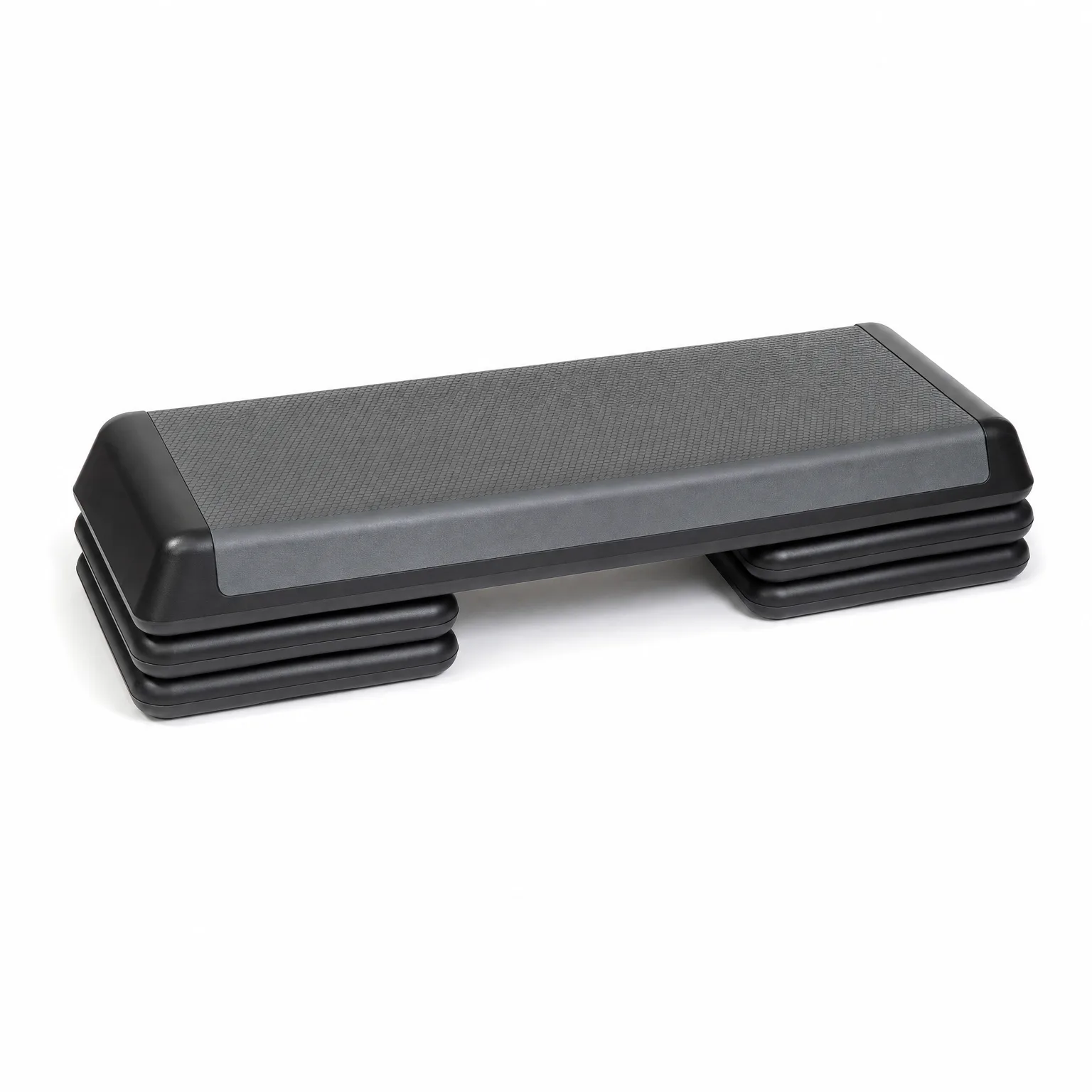
Step platform
A low, wide platform with removable risers. Used for step aerobics, step-ups, calf raises and as a low bench. -

Dumbbells
A pair of short handles with a weight at each end. One pair trains every major muscle group, at home or in a gym. -
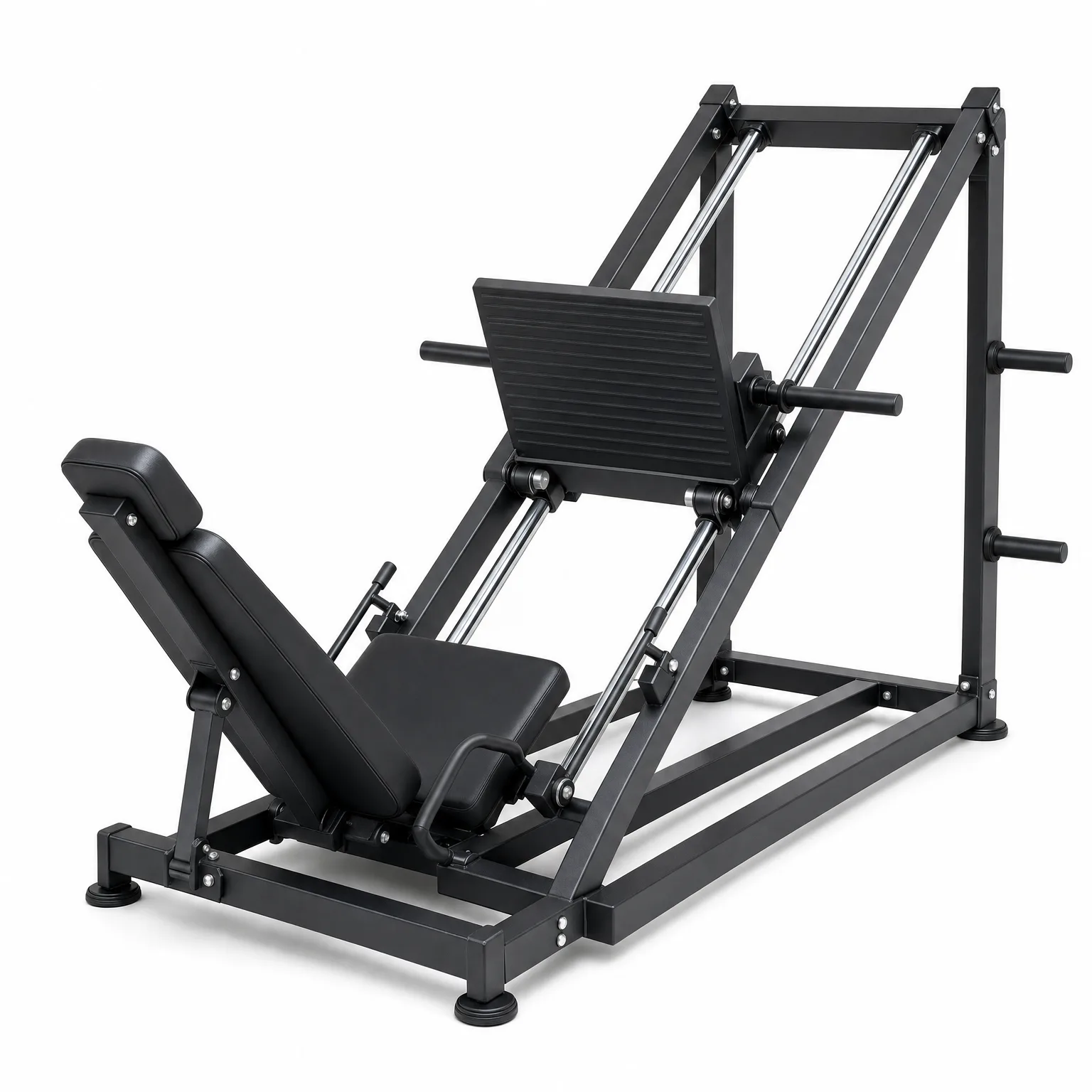
Leg press
A seat and a footplate you push away with both legs. It loads the quads and glutes heavily while the back rests on a pad. -
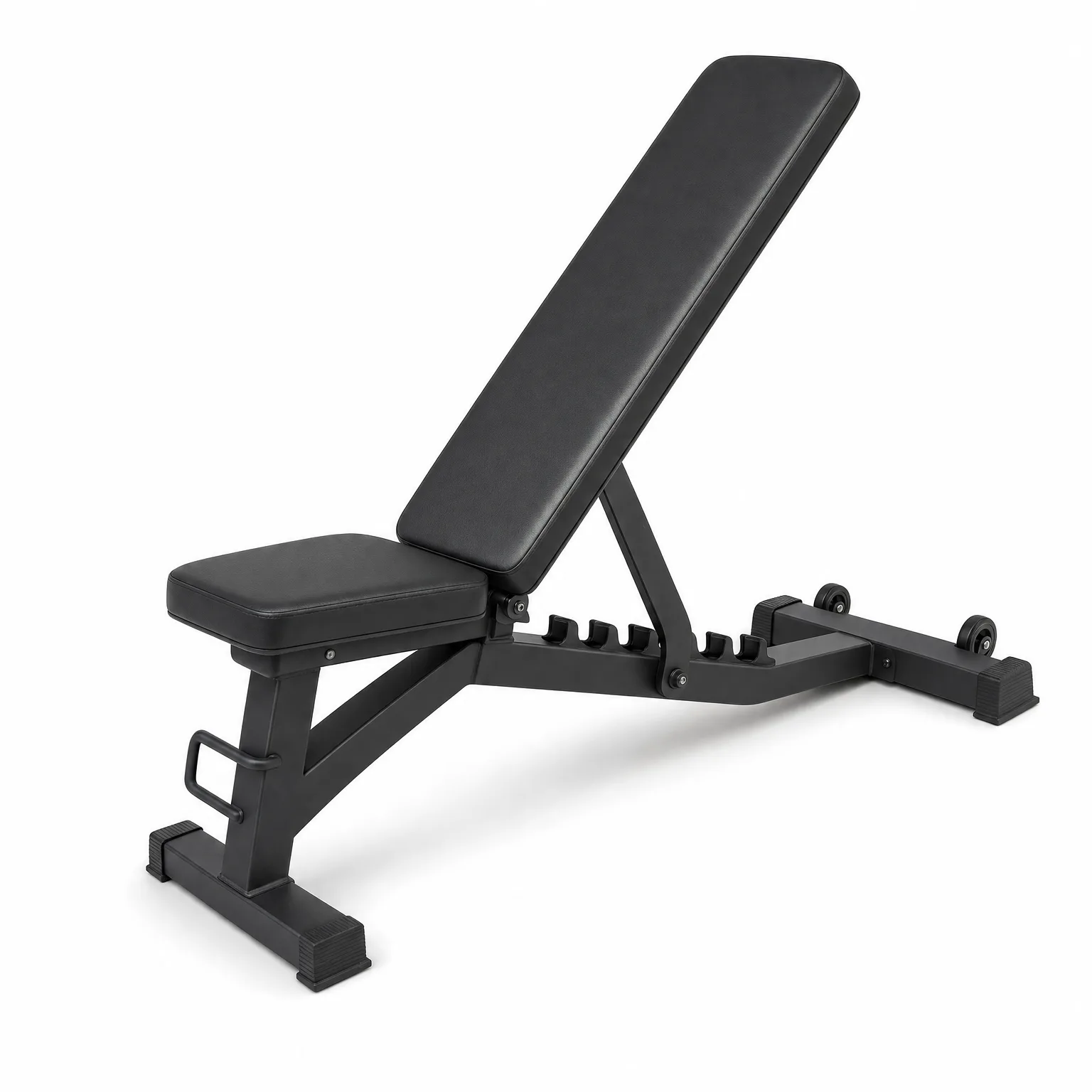
Weight bench
A padded bench you lie, sit or lean on while lifting. It supports the body for presses, rows, hip thrusts and seated work. -
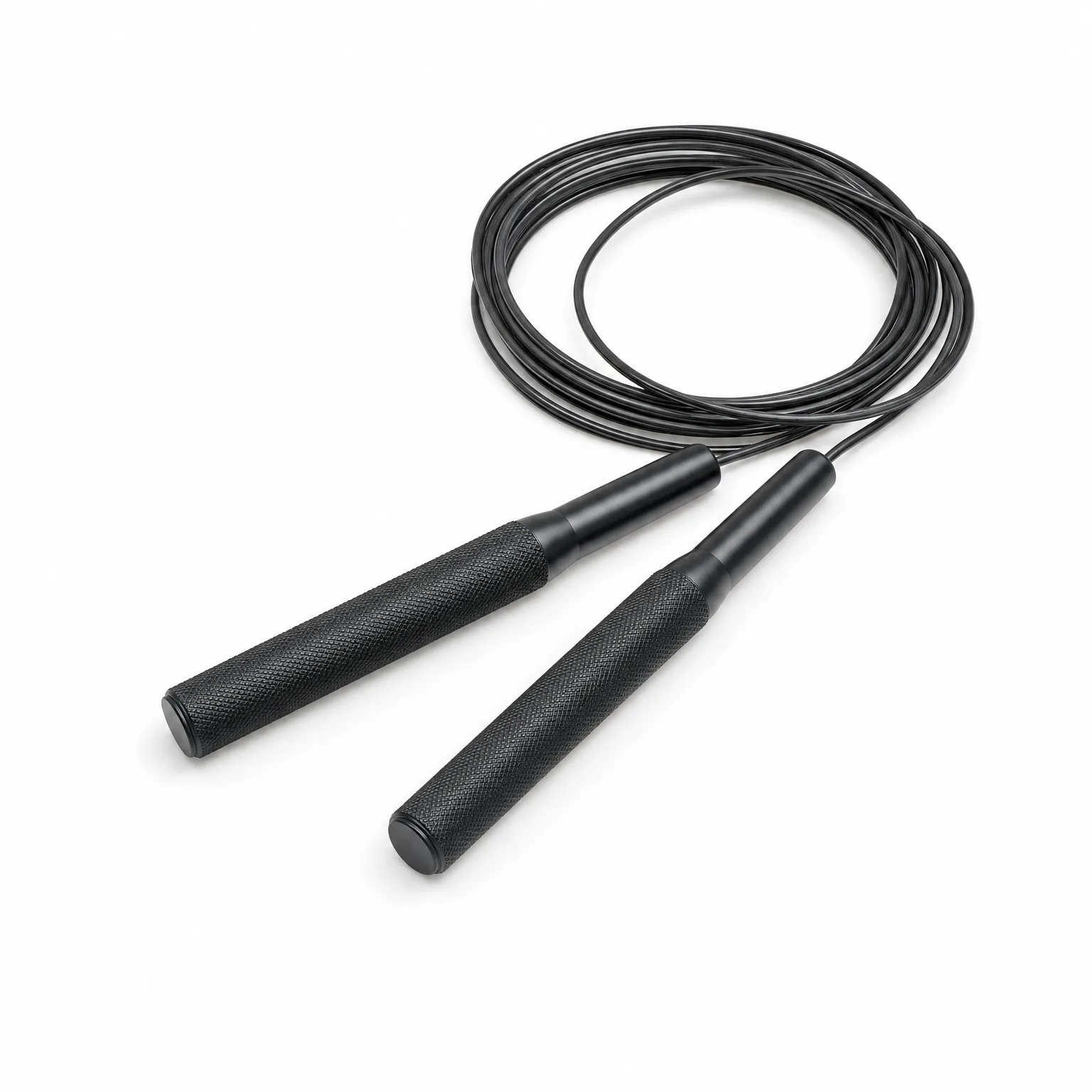
Jump rope
A rope with two handles that you swing over your head and jump. Hard cardio and footwork practice that fits in a pocket.
Related muscles
-
Tibialis anterior
The muscle on the front of the shin. It lifts the toes toward the shin and lowers the foot gently to the floor with each step. -
Hamstrings
Three muscles on the back of the thigh. They bend the knee and straighten the hip, so they work in leg curls, deadlifts and sprints. -
Quads
Four muscles on the front of the thigh. They straighten the knee in squats, lunges, jumps and stairs, and one of them also lifts the thigh.
Questions about training the calves
Why won't my calves grow?
Genetics plays a real part in calf size and shape, including how high the muscle sits on the shin. Many stubborn calves have also had few hard sets, a short range and lots of bouncing. Two to four sessions a week of full-range, paused raises taken close to failure is the usual approach.
What are the best calf exercises?
The standing calf raise for the gastrocnemius and the seated calf raise for the soleus. The leg press calf raise and the single-leg raise on a step are good swaps. The exercise matters less than a full range and enough load.
Can I train calves at home?
Yes. Single-leg calf raises on a stair edge are hard for most people, especially with a slow lowering and a pause at the bottom. Add a dumbbell or a loaded backpack once you pass about 20 reps, and do seated raises with weight on the knees for the soleus.
How often should I train calves?
Two to four times a week. They recover fast and handle frequent training, so a few sets at the end of leg or full-body workouts fit easily.
Should my toes point in or out on calf raises?
Turning the toes out may shift slightly more work to the inner head of the gastrocnemius, and turning them in to the outer head, but the difference is small. Use the position that feels natural and change it now and then.
Write programs your clients can follow
This guide comes from OnlineFitness.app, the app online coaches run their clients in.
Free for life for the first 100 coachesNo card