Lower back
The muscles along both sides of the lower spine. They hold the back straight under load and straighten it when you stand up from a bend.
In short
The lower back muscles are mainly the erector spinae, a thick column of muscle on each side of the spine that runs up from the pelvis and sacrum. In the lumbar region they extend the spine, straightening it from a forward bend or arching it back, and hold it still while you lift, carry or hinge at the hips.
They are trained mostly by keeping the spine straight under load: deadlifts, Romanian deadlifts, good mornings, squats and rows. Back extensions train them more directly, and bird dogs and supermans are lighter options. The quadratus lumborum lies deeper and to the side, bends the trunk sideways and works hard in one-arm carries. Many lower back exercises also train the glutes and hamstrings.
- Anatomical name
- Erector spinae (lumbar region) and quadratus lumborum
- Group
- Back
- Also called
- erector spinae, spinal erectors, erectors, lumbar muscles, lower back muscles
- Works with
- Glutes, Hamstrings, Abs, Obliques
What it does
- Extends the spine: straightening up from a bend, lifting the chest at the top of a back extension
- Holds the spine straight under load: a flat back through a deadlift, a squat or a bent-over row
- Bends the trunk to the side when one side works, together with the quadratus lumborum and obliques
- Resists leaning to one side when you carry a weight in one hand (mainly the quadratus lumborum and obliques)
Parts of the muscle
Iliocostalis. The outer column of the erector spinae, running from the pelvis to the ribs. It extends the spine and helps bend it to the side.
Longissimus. The middle and longest column, from the sacrum up toward the neck. It is a main extensor of the lower back in hinges, good mornings and back extensions.
Quadratus lumborum. A flat, deep muscle from the top of the pelvis to the lowest rib and the lumbar spine. It bends the trunk sideways and hitches the hip up; suitcase carries and side planks load it.
Exercises for the lower back
Ordered from the most useful. Equipment links open its page in the equipment guide.
-
Deadlift
Bar over the middle of the foot, shins close. Take the slack out of the bar, brace hard and push the floor away, keeping the back angle fixed until the bar passes the knees.
-
Romanian deadlift
Brace and keep the back flat as you push the hips back. The lower back works to stop the spine rounding, so stop the descent where you can no longer hold it flat.
-
Back extension
Pad just below the hip bones. Lift to a straight line, not above it. For more lower back, let the spine round slightly on the way down and straighten it on the way up, with a light load.
-
Good morning
Bar on the upper back, knees soft. Push the hips back with a flat back until the torso is near parallel or the hamstrings stop you, then stand up. Start light: the lever is long.
-
Bird dog
On hands and knees, reach one arm and the opposite leg out until level with the body. Keep the hips square and the lower back still, hold for a second and switch sides.
Bodyweight
-
Superman
Lie face down with the arms overhead. Lift the chest, arms and legs a few inches off the floor, hold for two to three seconds and lower. Keep the eyes on the floor.
Bodyweight
-
Suitcase carry
Hold a heavy dumbbell or kettlebell in one hand and walk tall. Do not lean toward or away from the weight, and switch hands each set.
How to train it
Count the work it gets from heavy lifts
Deadlifts, squats, rows and Romanian deadlifts already load the lower back hard, even though they are usually counted for other muscles. Most people who lift need only a few direct sets a week on top, such as 2 to 6 sets of back extensions. Add more if the lower back is what limits your hinges.
Train it mostly by holding the spine still
In lifting and sport the main job of the lower back is to keep the spine steady while the hips move. Hinges with a flat back, carries and bird dogs train exactly that. Exercises that bend and straighten the spine, like rounded back extensions, are useful with light loads.
Space out the heavy hinges
Heavy deadlifts and good mornings tire the lower back for longer than most lifts. Put them on different days with at least a day between them, and keep the hardest hinge session away from heavy squats when you can.
Use moderate reps and stop before form slips
Deadlifts suit 3 to 8 reps, Romanian deadlifts and good mornings 6 to 12, back extensions 10 to 20. End the set when the back starts to round on a lift meant to be done with a flat back.
Progress in small steps
Add small amounts of weight and leave a rep or two in reserve on heavy hinges. Form often slips before the set feels hard, so judge each rep by the back position, not only the effort.
Common mistakes
Arching past straight on back extensions
Lifting higher than a straight line turns the rep into bending the spine backward rather than holding it. Stop when the body forms a straight line from head to heels.
Letting the back round on heavy pulls
In a deadlift the lower back's job is to keep the spine still. If it rounds as the bar leaves the floor, the weight is too heavy for now. Reduce it and build back up.
Lifting without a brace
A loose midsection leaves the back muscles working alone. Take a breath into the belly and tighten the abs before each rep of a hinge or squat, then lift.
Piling direct work on top of heavy hinges
If the program already has heavy deadlifts and good mornings, extra lower back sets can slow recovery without adding much. Count the hinges first and add direct work only if needed.
Equipment for these exercises
-

Barbell
A long steel bar loaded with plates at both ends. The standard tool for squats, deadlifts, presses and rows with heavy weight. -
Weight plates
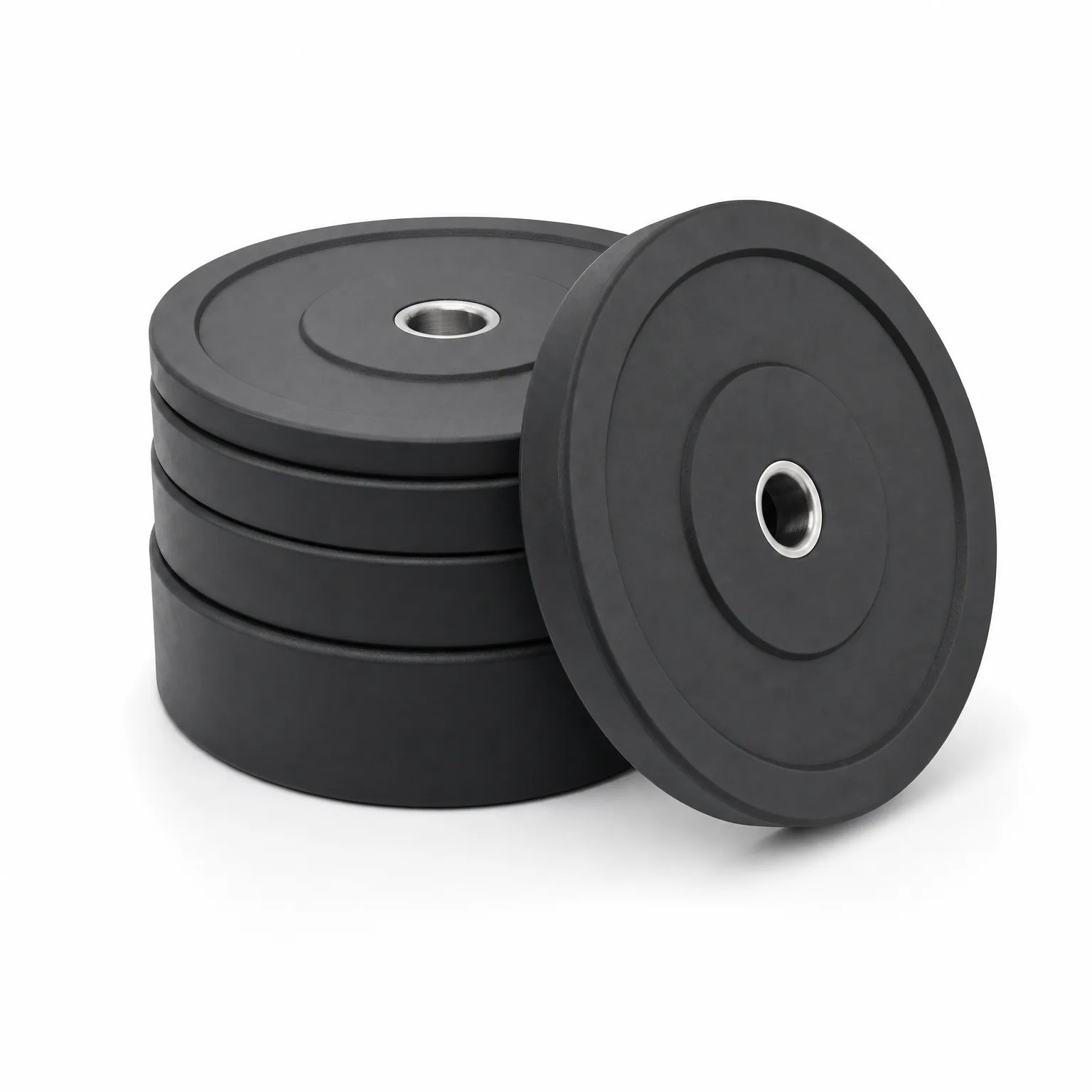
Flat discs that slide onto a barbell or machine to set the load. A single plate also works as a hand-held weight. -
Back extension bench
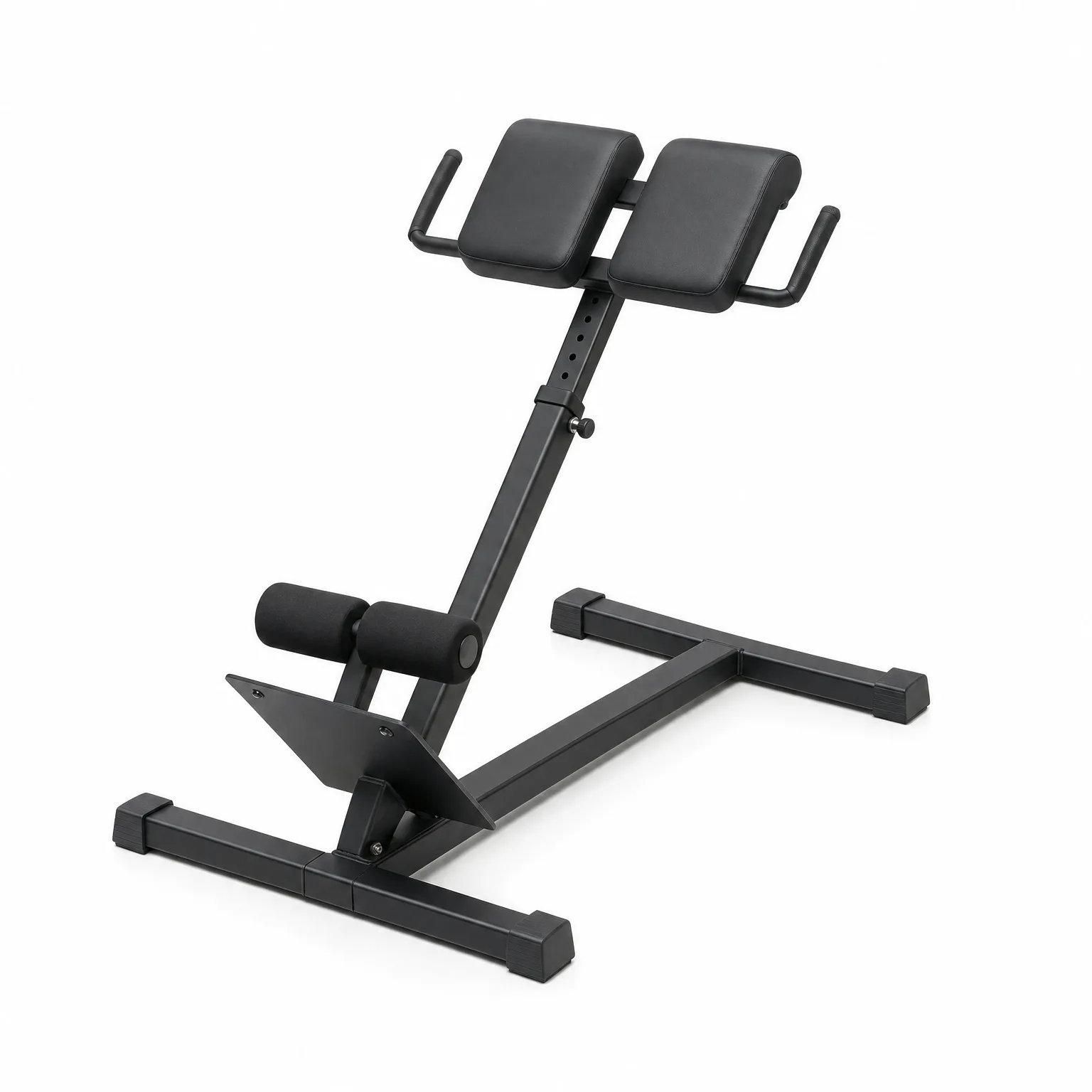
A padded hip support with ankle rollers. You hinge forward and lift the torso to train the lower back, glutes and hamstrings. -
Squat rack
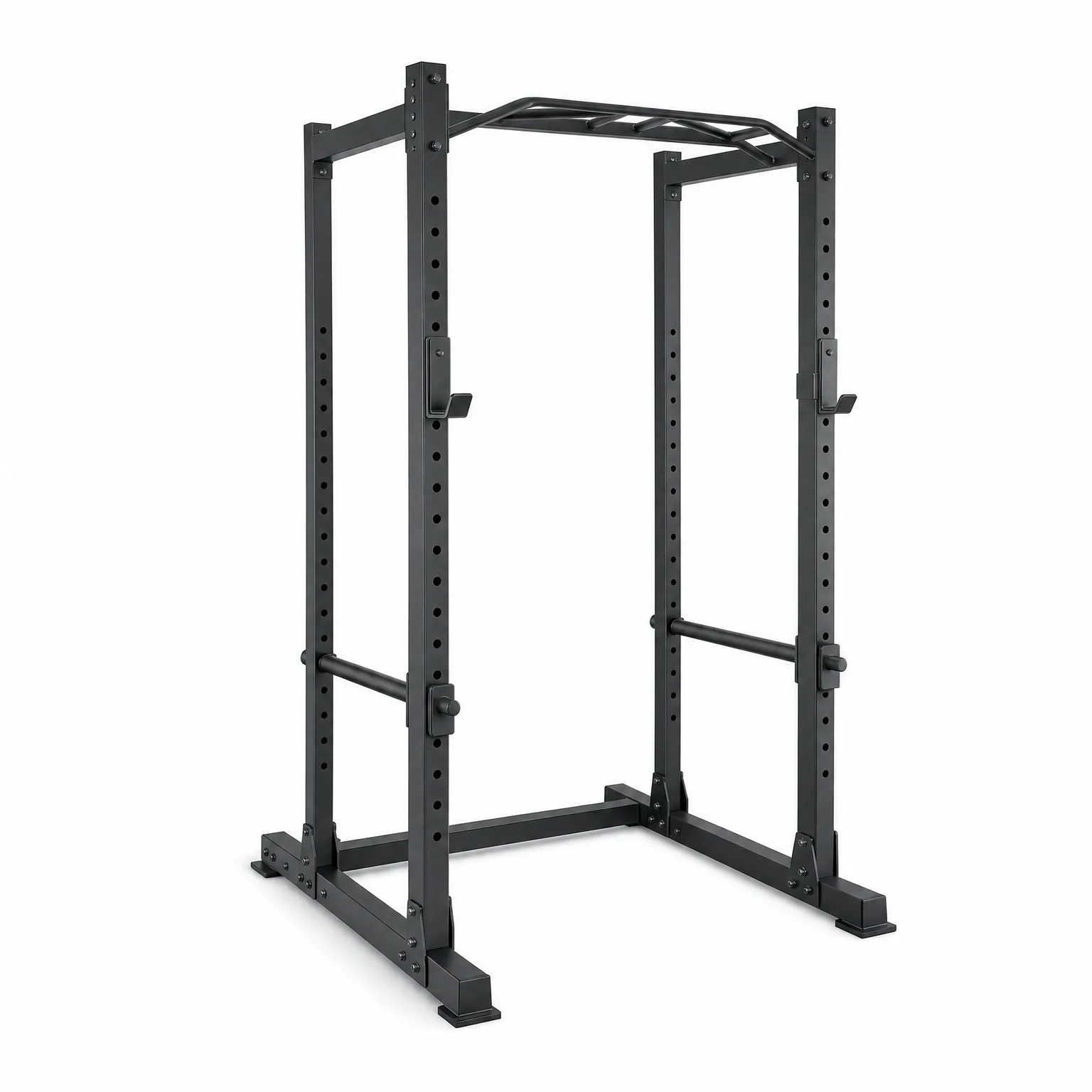
A steel frame that holds a barbell at the height you need and catches it if a rep fails. The base for squats and presses. -

Dumbbells
A pair of short handles with a weight at each end. One pair trains every major muscle group, at home or in a gym.
Related muscles
-
Glutes
The large muscle of the buttock. It straightens the hip in squats, deadlifts, hip thrusts, sprints and every step up a stair. -
Hamstrings
Three muscles on the back of the thigh. They bend the knee and straighten the hip, so they work in leg curls, deadlifts and sprints. -
Abs
The long, flat muscle down the front of the stomach. It curls the trunk forward and keeps the lower back from arching under load. -
Obliques
Two layers of muscle on the sides of the waist. They rotate and bend the torso and keep it from twisting or tipping under load.
Questions about training the lower back
What are the best lower back exercises?
Deadlifts and Romanian deadlifts are the main builders, because the lower back holds the spine flat under heavy load. Back extensions and good mornings train it more directly. Bird dogs, supermans and suitcase carries are simple options without a gym.
Can I train my lower back at home?
Yes. Romanian deadlifts with dumbbells or a loaded backpack, bird dogs, supermans and suitcase carries cover it. Make the hinges harder over time by adding weight, working one leg at a time or slowing the lowering phase.
How often should I train my lower back?
Most people get enough from two or three sessions a week that include squats or hinges. One or two direct exercises a week on top is plenty for most, and heavy hinge days should have some space between them.
Should I train my lower back if it hurts?
See a doctor or physical therapist first, because the right exercise depends on the cause, and this page covers training a healthy back.
Do back extensions work the lower back or the glutes?
Both, plus the hamstrings. With a flat back and the movement coming from the hips, the glutes and hamstrings do most of it. Letting the spine round and straighten with a light load shifts more of the work to the lower back.
Write programs your clients can follow
This guide comes from OnlineFitness.app, the app online coaches run their clients in.
Free for life for the first 100 coachesNo card