Equipment Benches, racks and bars
Squat rack
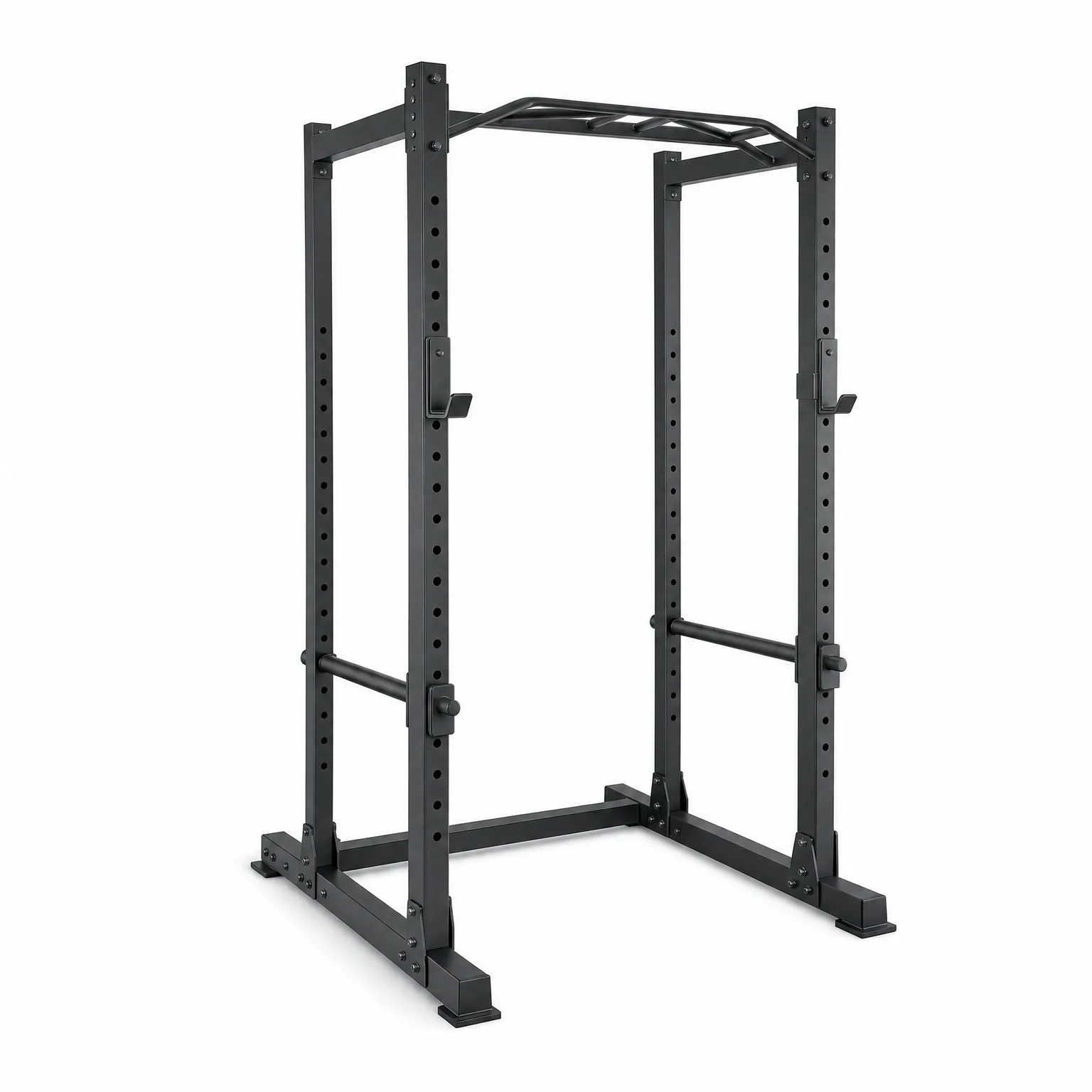
A steel frame that holds a barbell at the height you need and catches it if a rep fails. The base for squats and presses.
In short
A squat rack is a steel frame with adjustable hooks that hold a barbell at the height you set, so you can step under it for a squat or lie under it for a bench press without lifting the bar off the floor first. Most racks also have safety bars or straps that catch the bar if you cannot finish a rep.
It is the piece that makes heavy barbell training possible alone. Squats, bench presses, overhead presses and rack pulls all start from it, and many racks add a pull-up bar. It suits anyone who trains with a barbell, including beginners learning with an empty bar.
- Category
- Benches, racks and bars
- Where
- Home, Gym
- Level
- Beginner and up
- Space
- Needs a dedicated area
- Typical sizes
- About 200–240 cm (79–94 in) high and 120 cm (47 in) wide; allow 3 m (10 ft) of width for the bar and loading
- Also called
- power rack, power cage, squat cage, half rack, squat stands, barbell rack
Muscles it works
- Main
- Quads, Glutes, Chest, Hamstrings
- Also works
- Lower back, Triceps, Front delts, Traps
What it is used for
- Back and front squats taken from hooks just below shoulder height
- Bench press inside the rack with safeties set below the chest
- Standing overhead press from hooks at upper-chest height
- Rack pulls, pin presses and other partial lifts from the safeties
- Pull-ups and band work on the top crossbar
Types
Squat stands. Two uprights, joined or separate, with hooks. The smallest and lightest option. Many have short spotter arms or none, so they offer the least protection.
Half rack. Two or four uprights where you lift in front of the frame, with spotter arms sticking out. Smaller footprint than a cage and easy to walk in and out of.
Power rack (cage). Four or six uprights that you lift inside, with safety bars or straps running front to back. The most protection for training alone, and the most space.
Wall-mounted folding rack. Bolts to wall studs or masonry and swings flat when not in use. Saves floor space in a garage. Depends on a sound wall and correct fixing.
How to choose
Measure the room first
Check ceiling height, then floor space. A standard barbell is about 2.2 m long, and you need room on each side to slide plates on. If you plan to do pull-ups on the rack, leave space for your head above the bar.
Decide how much protection you need
If you train alone and plan to push heavy squats and bench presses, choose a cage or a half rack with long spotter arms. Stands without safeties only suit lifts you can always finish or safely drop.
Hole spacing around bench height
Closer hole spacing in the lower part of the uprights lets you set hooks and safeties precisely for the bench press, where a few centimeters decide whether the safeties work.
Stability and rating
Heavier steel and a wide base keep the rack still when you re-rack. Lighter racks should be bolted down or weighted. Load ratings differ between manufacturers, so check the figure for the rack, the hooks and the safeties.
How to start using it
- Set the hooks for squats. Put the hooks at about mid-chest height, a little below your shoulders. You should lift the bar out by straightening the knees slightly, not by rising on your toes. If in doubt, go one hole lower.
- Set the safeties before loading. For squats, place them just below where the bar sits at the bottom of your deepest rep. For bench press, just below chest height with your back arched as it is when pressing. Test the height with an empty bar.
- Walk out in a few steps. Stand up with the bar, take one step back with each foot and a small adjusting step. Stay close to the hooks. The further you walk, the further you have to return when tired.
- Re-rack by the uprights. After the last rep, walk forward until the bar touches both uprights, then lower it onto the hooks. Do not aim for the hooks themselves, and do not turn your head to look for one side.
- Load evenly. Alternate sides as you add or remove plates, so one end is never much heavier than the other, and use collars. A bar loaded heavily on one side can tip off the hooks.
Common mistakes
Hooks set too high
If you have to go up on your toes to unrack, you will also have to do it to re-rack at the end of a hard set. Lower the hooks one hole.
Lifting without safeties
Leaving the safety bars out or setting them too low means a failed rep ends with the bar on you. Set them every session, for every lift that puts you under the bar.
Facing away from the hooks
Facing away from the hooks means walking backward to re-rack without seeing them. Set up so that you face the hooks and walk forward to put the bar back.
Safeties too high
If the bar touches the safeties on every squat rep, you cut the range short without noticing. Check depth with an empty bar and drop them one hole if needed.
What to use instead
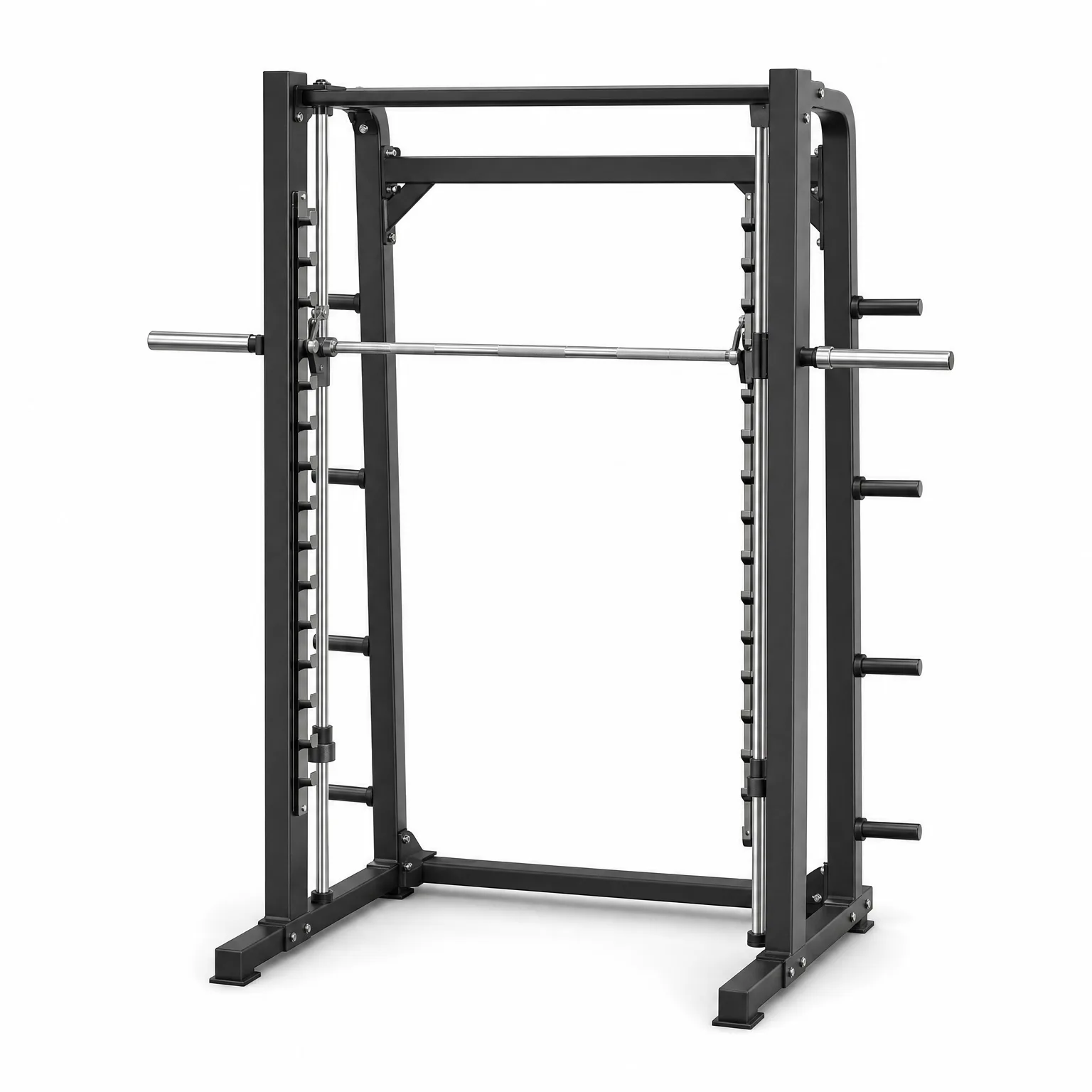
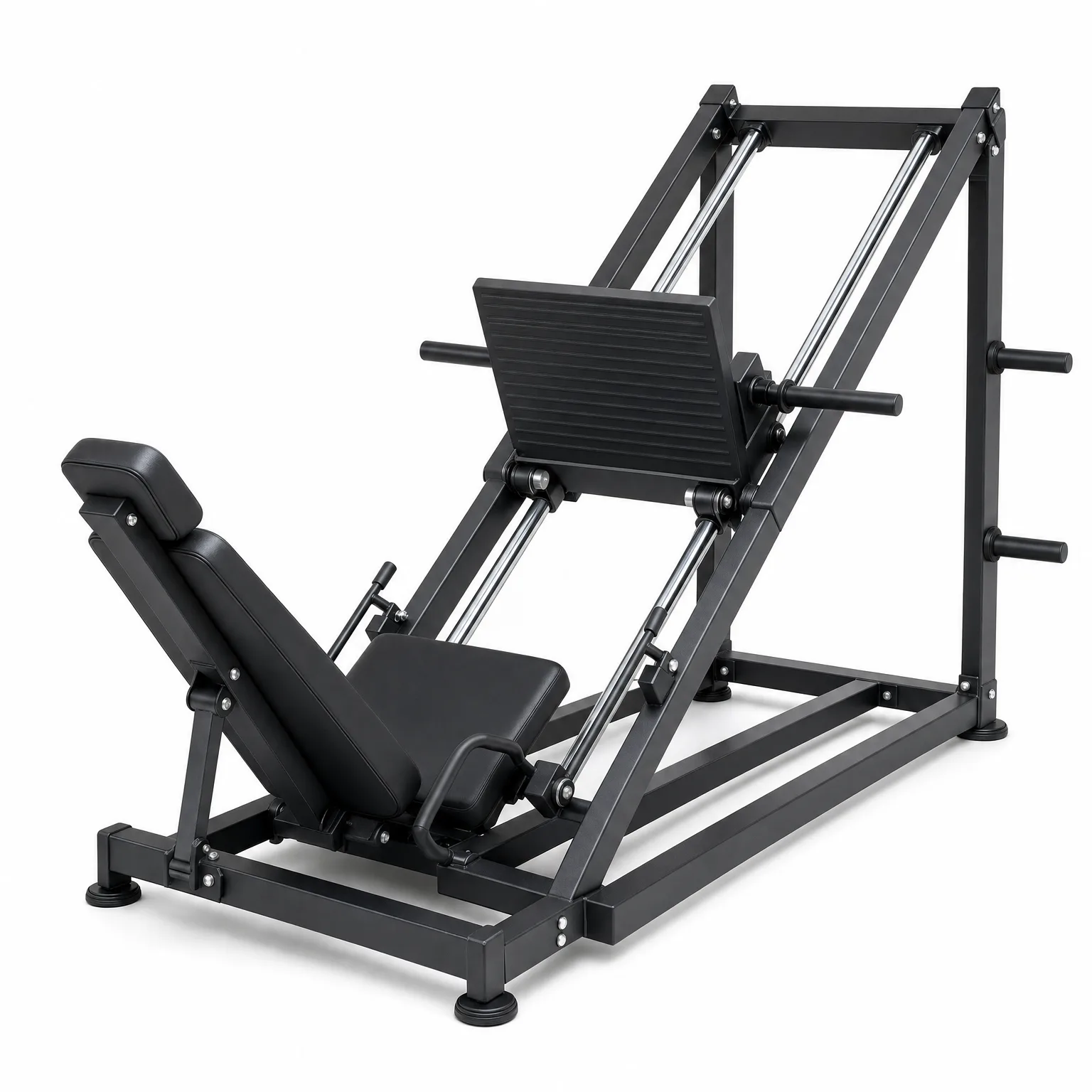
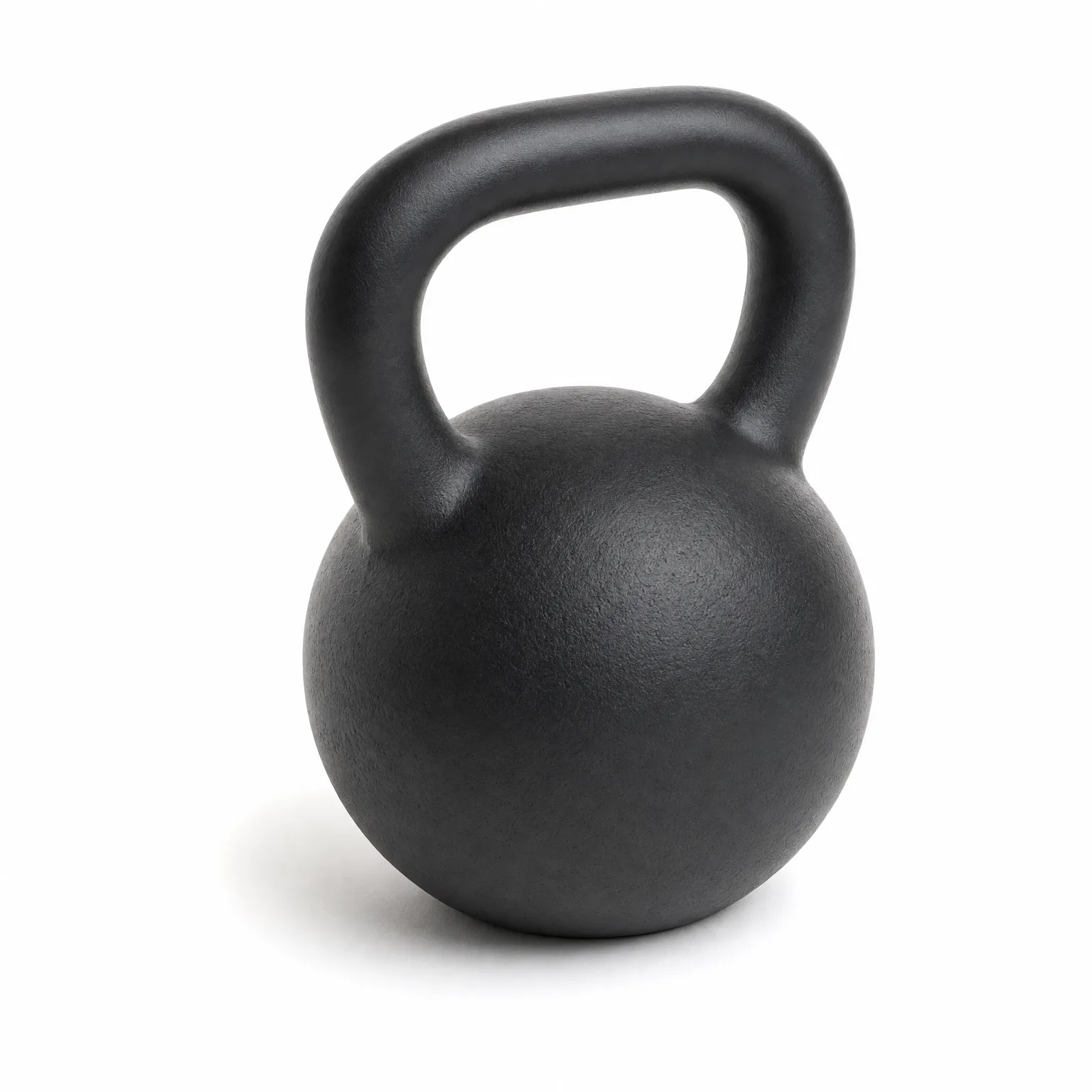
A Smith machine in a gym gives a guided bar with built-in catches, though the fixed path changes the lift. A leg press loads the legs heavily without a bar on your back. Without a rack at home, goblet squats and split squats with dumbbells or a kettlebell train the same muscles; the limit is how much weight you can hold, so one-leg variations keep the work hard.
-
Smith machine
A barbell that slides on fixed guide rails, with hooks that lock at many heights. Used for squats, presses and rows without a spotter. -
Leg press
A seat and a footplate you push away with both legs. It loads the quads and glutes heavily while the back rests on a pad. -

Dumbbells
A pair of short handles with a weight at each end. One pair trains every major muscle group, at home or in a gym. -
Kettlebell
A cast-iron or steel ball with a flat base and a handle on top. Built for swings, carries, squats and presses with one weight.
Often used with
-

Barbell
A long steel bar loaded with plates at both ends. The standard tool for squats, deadlifts, presses and rows with heavy weight. -
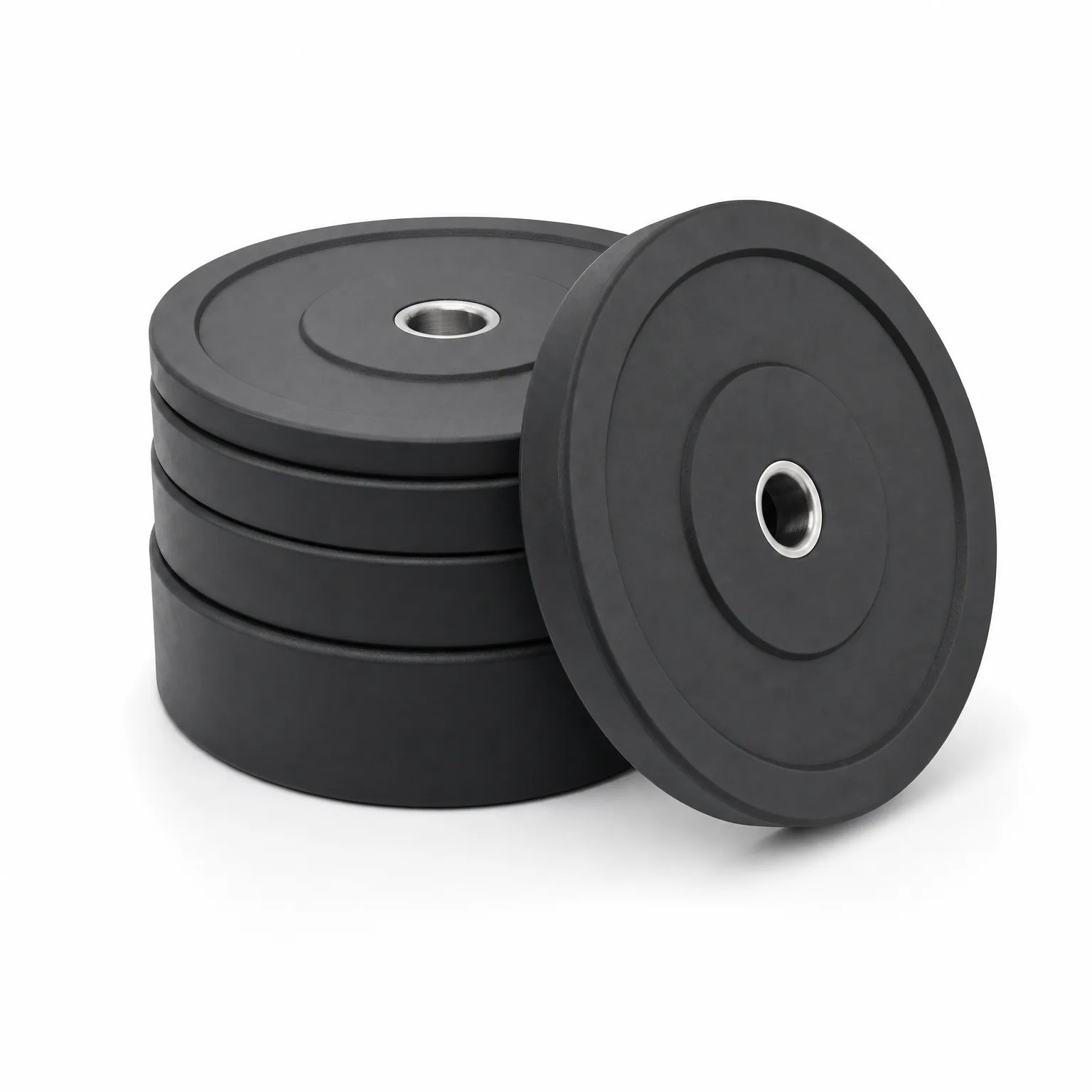
Weight plates
Flat discs that slide onto a barbell or machine to set the load. A single plate also works as a hand-held weight. -
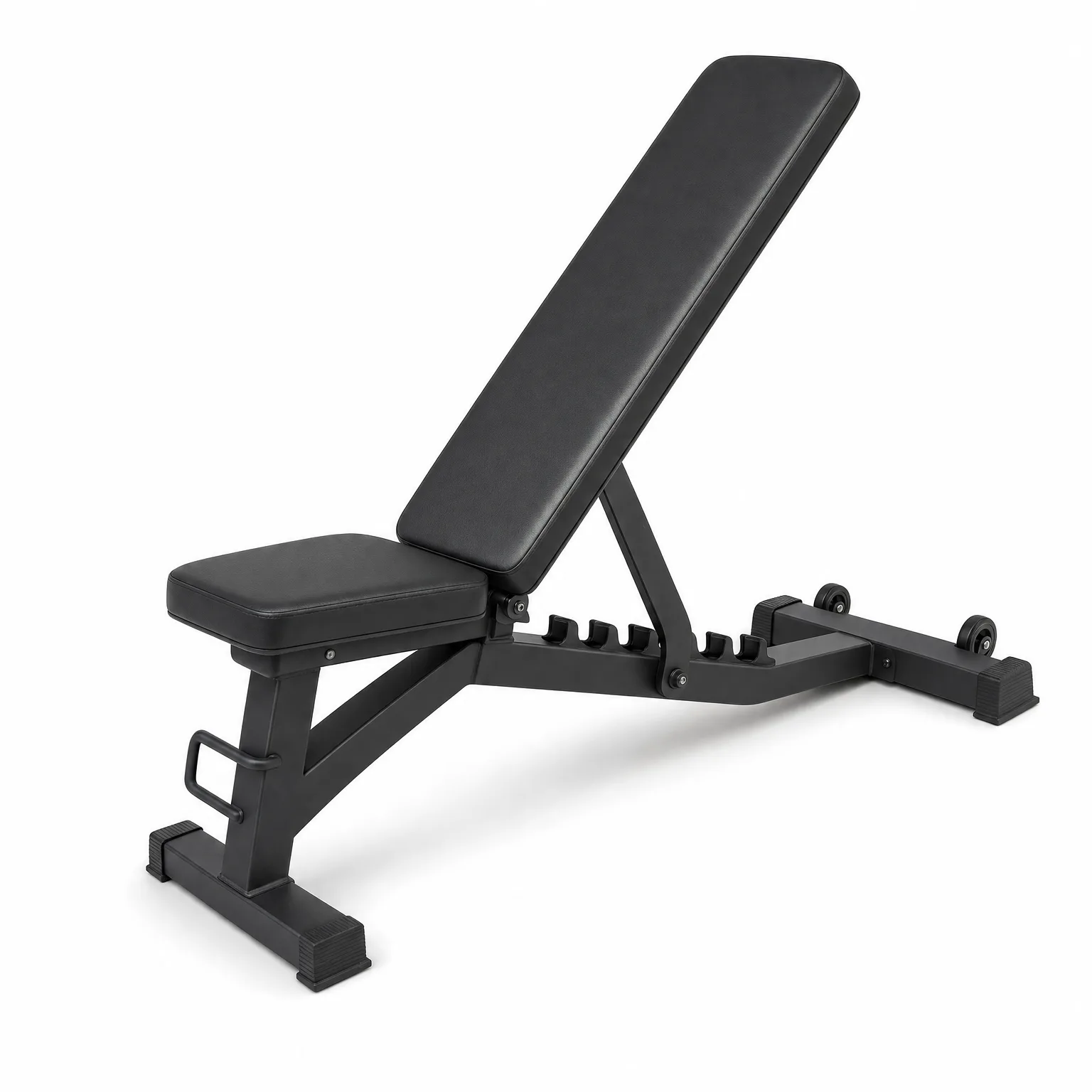
Weight bench
A padded bench you lie, sit or lean on while lifting. It supports the body for presses, rows, hip thrusts and seated work. -
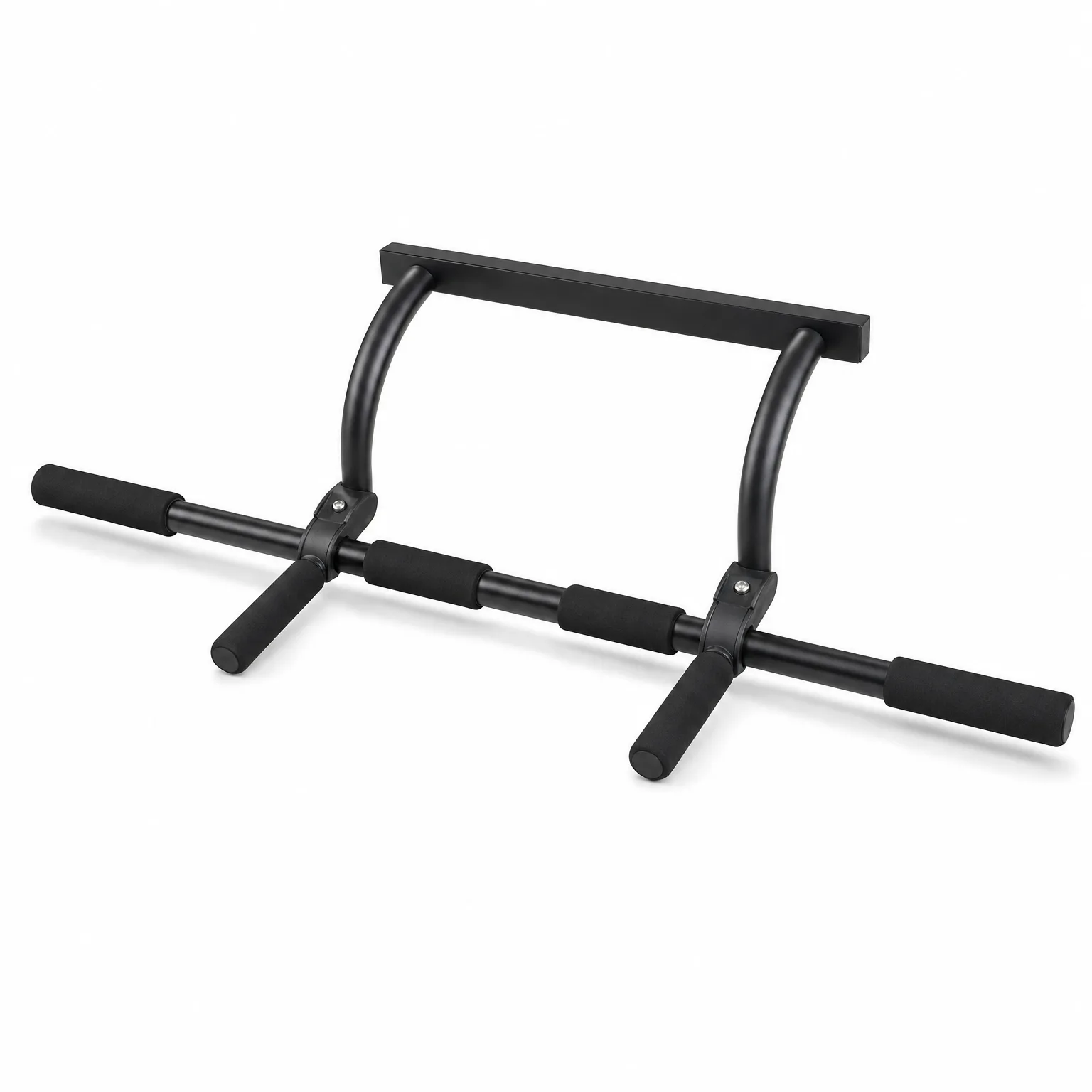
Pull-up bar
A fixed horizontal bar you hang from. Used for pull-ups, chin-ups, hangs and hanging leg raises, at home or outdoors.
Questions about squat rack
Squat rack vs power rack: what is the difference?
Squat rack is the general term for any frame that holds a bar for squatting. A power rack, or cage, is the four-post version you stand inside, with safety bars on both sides. Squat stands and half racks are smaller and more open, with shorter safeties or none.
Can I squat safely alone in a rack?
Yes, if the safeties are set correctly. Place them just below the bar's lowest point in your squat. If a rep fails, sit down under control and let the bar rest on them, then move out from under it.
How much space does a squat rack need?
Plan for about 3 m of width for the bar and plate loading, around 2 to 2.5 m of depth including a bench, and a ceiling higher than the rack. Short racks exist for low basements, but they limit pull-ups and overhead pressing inside the frame.
Do I need a rack to start barbell training?
For deadlifts, rows and other lifts from the floor, no. For squats and bench presses beyond light weights, yes, because you need to get the bar into position and have something to catch it.
Build programs around what your client has
This guide comes from OnlineFitness.app, the app online coaches run their clients in.
Free for life for the first 100 coachesNo card