Smith machine
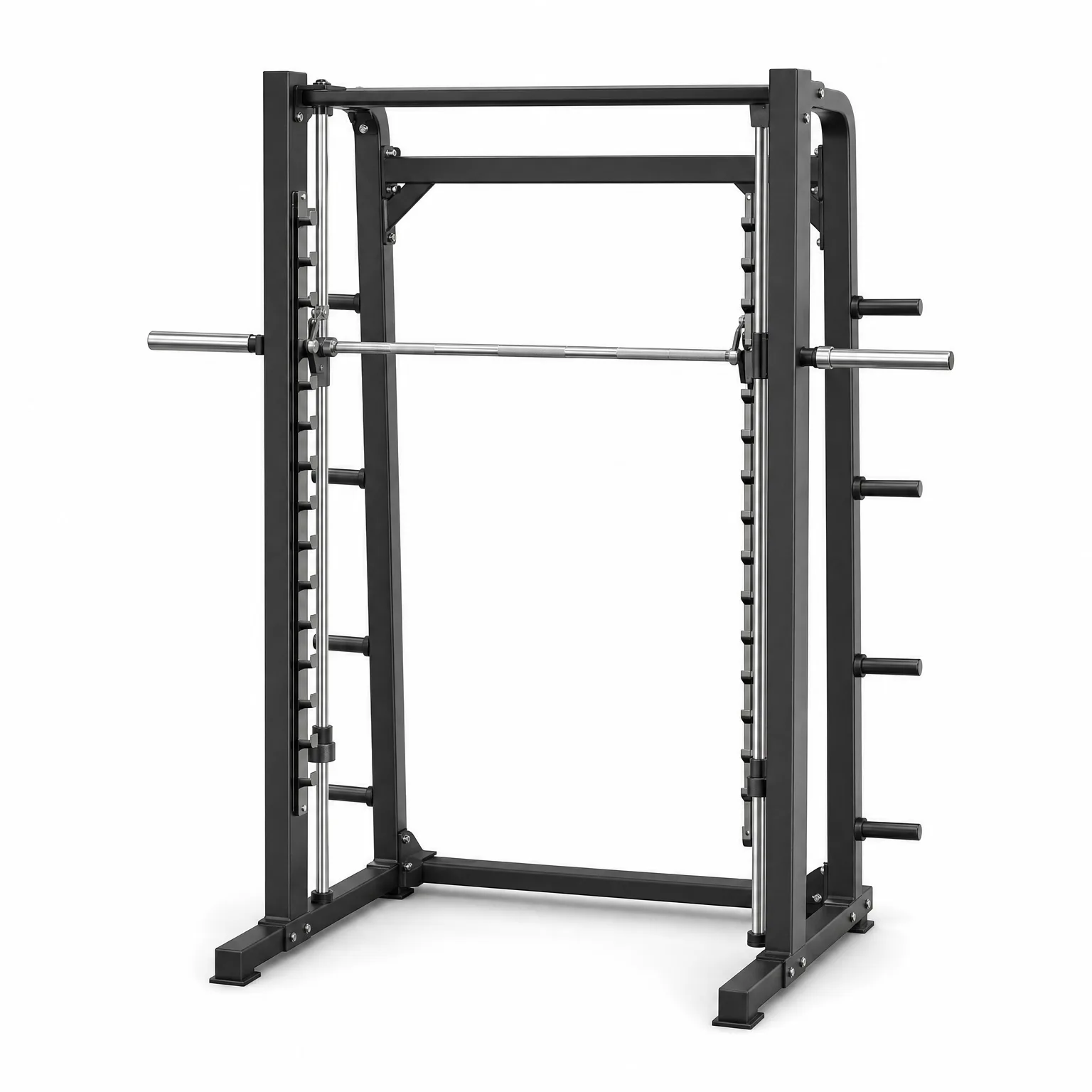
A barbell that slides on fixed guide rails, with hooks that lock at many heights. Used for squats, presses and rows without a spotter.
In short
A Smith machine is a barbell that slides up and down on steel rails inside a frame. The bar cannot tip or drift forward and back, and a turn of the wrists hooks it onto pegs spaced up the frame. That makes it a common choice for squats, lunges, bench and shoulder presses, rows and calf raises when you train alone.
Because the path is fixed, you balance the bar less than with a free barbell. It suits beginners learning to push hard, and experienced lifters who want to load one muscle group heavily near the end of a session.
- Category
- Gym machines
- Where
- Gym, Home
- Level
- Beginner and up
- Space
- Needs a dedicated area
- Typical sizes
- About 2.1–2.4 m (7–8 ft) tall and 2–2.2 m (6.5–7 ft) wide; the bar's starting weight varies widely, roughly 5–25 kg (10–55 lb)
- Also called
- smith rack, smith press, guided barbell, guided bar machine, smith machine rack
Muscles it works
- Main
- Quads, Glutes, Chest, Front delts, Triceps
- Also works
- Hamstrings, Calves, Mid back, Traps
What it is used for
- Squats, split squats and lunges with the feet placed where you want them
- Bench press, incline press and seated shoulder press without a spotter
- Bent-over rows, and inverted rows with the bar locked at about waist height
- Hip thrusts and calf raises
- Incline push-ups with the bar locked at hip or knee height
Types
Vertical rails. The bar travels straight up and down. Simple to set up for any exercise and facing either way.
Angled rails. The rails lean back a few degrees, commonly about 7. Which way you face changes how the path feels, so try both for squats and presses.
Counterbalanced. A hidden counterweight makes the empty bar feel very light, which helps beginners and makes small loads possible.
All-in-one rack. A Smith bar built into a frame with cable pulleys and a pull-up bar. Common in home gyms.
How to choose
Find out what the empty bar weighs
It is not a standard 20 kg (45 lb) bar. Depending on the build and counterbalance it can feel like almost nothing or like 25 kg (55 lb). Look for a label on the frame, or lift the empty bar first and count only the plates when you log your sets on that machine.
Set the safety stops
Most machines have adjustable stops under the bar. Set them just below the lowest point of your rep: slightly under chest level for a bench press, slightly under your squat depth for squats. Test with an empty bar before loading.
Decide which way to face on angled rails
For squats, many people face so the bar moves slightly back as they go down. For presses, lie so the bar moves slightly toward the head as it rises. If a direction feels awkward in the joints, turn around.
Position the bench exactly
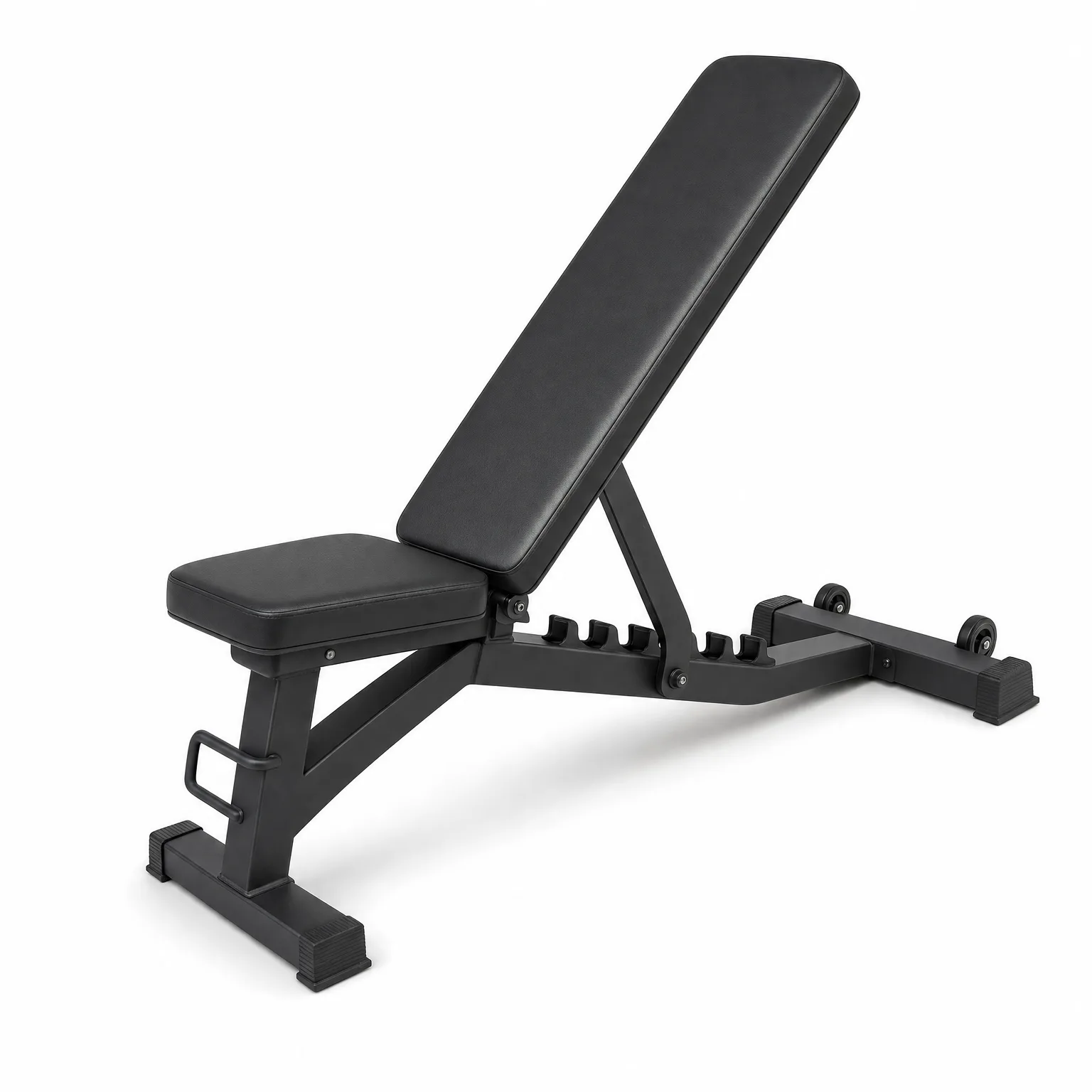
For presses, roll the bench in and lower the empty bar to check where it touches: mid to lower chest for a flat press, upper chest for an incline, in front of the face for a shoulder press. Move the bench until it does.
How to start using it
- Learn the hooks first. With an empty bar, lift it a little and roll your wrists to unhook it. Roll them the other way to hook it back onto the nearest peg. Repeat until you can re-rack at any height without looking.
- Place your feet for the fixed path. The bar will not move to suit you, so you move instead. For squats, stand with the bar over the upper back and the feet under or slightly in front of the bar, then adjust until your heels stay down and the knees track over the toes.
- Start with the empty bar. Do a set of 8–10 with no plates to check depth, bench position and stops. Add weight in small steps until the last two reps of a set are hard but look the same as the first.
- Load and unload evenly. Add and remove plates one side at a time in turn with the bar hooked. Use collars if the sleeves are smooth or angled.
- Finish every set on the hooks. Push the bar to a peg and roll the wrists until both hooks are seated. Check both sides before you let go or step out.
Common mistakes
Skipping the safety stops
The hooks only help if you can still rotate the bar. On a failed bench press you may not be able to. Stops set just below the bottom of the rep catch the bar for you.
Copying free-barbell foot position
With a free bar you shift your body and the bar to stay balanced, and the rails do not allow that. Standing exactly as you would with a barbell can feel cramped at the bottom. Move the feet a little forward and test again.
Assuming the bar weighs 20 kg (45 lb)
Counting the bar as a standard barbell makes your numbers wrong and makes loads hard to compare between gyms. Track plates per side on that specific machine.
Hooking only one side
A tired, uneven twist can seat one hook and miss the other. The bar then drops on the free side. Rack deliberately and look at both hooks.
What to use instead
A barbell in a squat rack with safety bars covers every Smith machine exercise and adds the balance work the rails remove. Dumbbells replace the presses, lunges and split squats and need no rack. For heavy leg work without balancing a bar, a leg press does a similar job.
-

Barbell
A long steel bar loaded with plates at both ends. The standard tool for squats, deadlifts, presses and rows with heavy weight. -
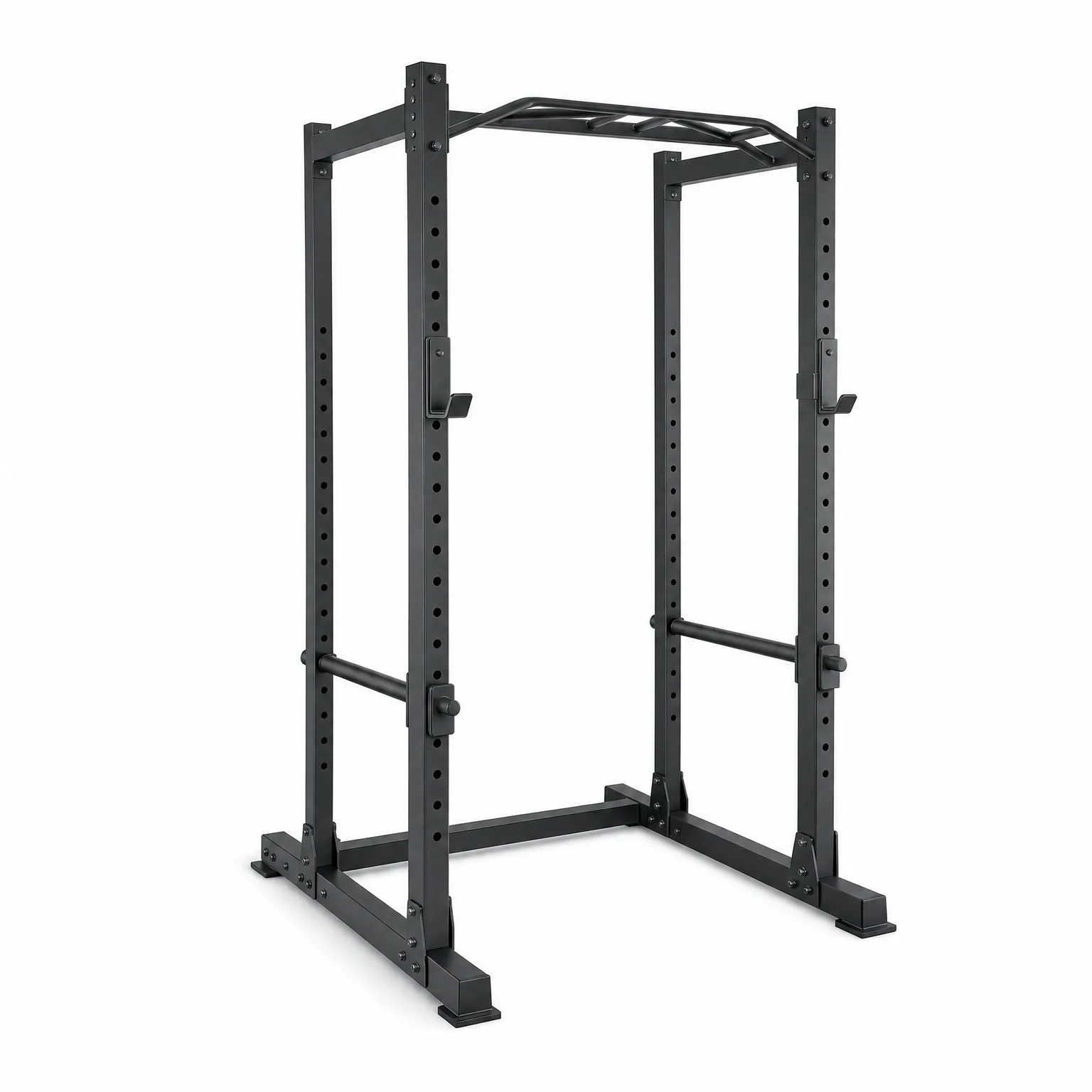
Squat rack
A steel frame that holds a barbell at the height you need and catches it if a rep fails. The base for squats and presses. -

Dumbbells
A pair of short handles with a weight at each end. One pair trains every major muscle group, at home or in a gym. -
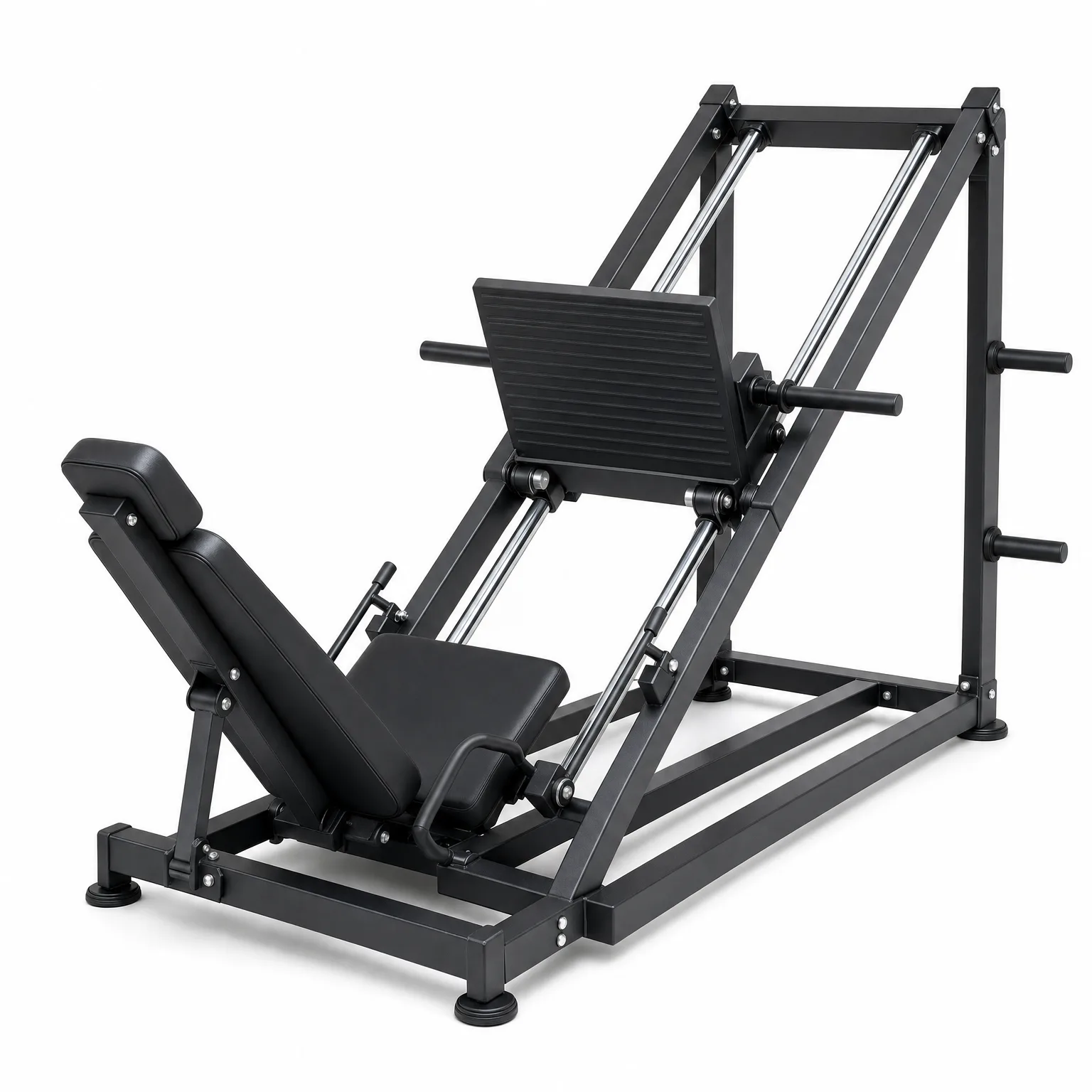
Leg press
A seat and a footplate you push away with both legs. It loads the quads and glutes heavily while the back rests on a pad.
Often used with
Questions about smith machine
How much does a Smith machine bar weigh?
There is no standard. Depending on the model and whether it is counterbalanced, the empty bar can feel like 5 to 25 kg (10 to 55 lb). Check the label on the frame or ask gym staff, and compare your lifts only on the same machine.
Smith machine vs free barbell: which is better?
A free barbell trains balance and coordination along with strength and carries over better to lifting sports. A Smith machine removes most of the balancing, so you can focus on pushing and train close to your limit without a spotter. Many programs use both: free weights for the main lifts and the Smith machine for extra volume.
Is a Smith machine good for squats?
It works well if you set your feet for the fixed path. Placing the feet slightly forward lets you sit back and keep the torso upright, which a free bar would not allow. It does not teach you to balance a free bar, so learn that separately if barbell squats are your goal.
Can you bench press alone on a Smith machine?
Yes, that is one of its main uses. Set the safety stops just below chest height with the empty bar before adding plates, so the bar cannot come to rest on you if you miss a rep.
Build programs around what your client has
This guide comes from OnlineFitness.app, the app online coaches run their clients in.
Free for life for the first 100 coachesNo card