Leg press
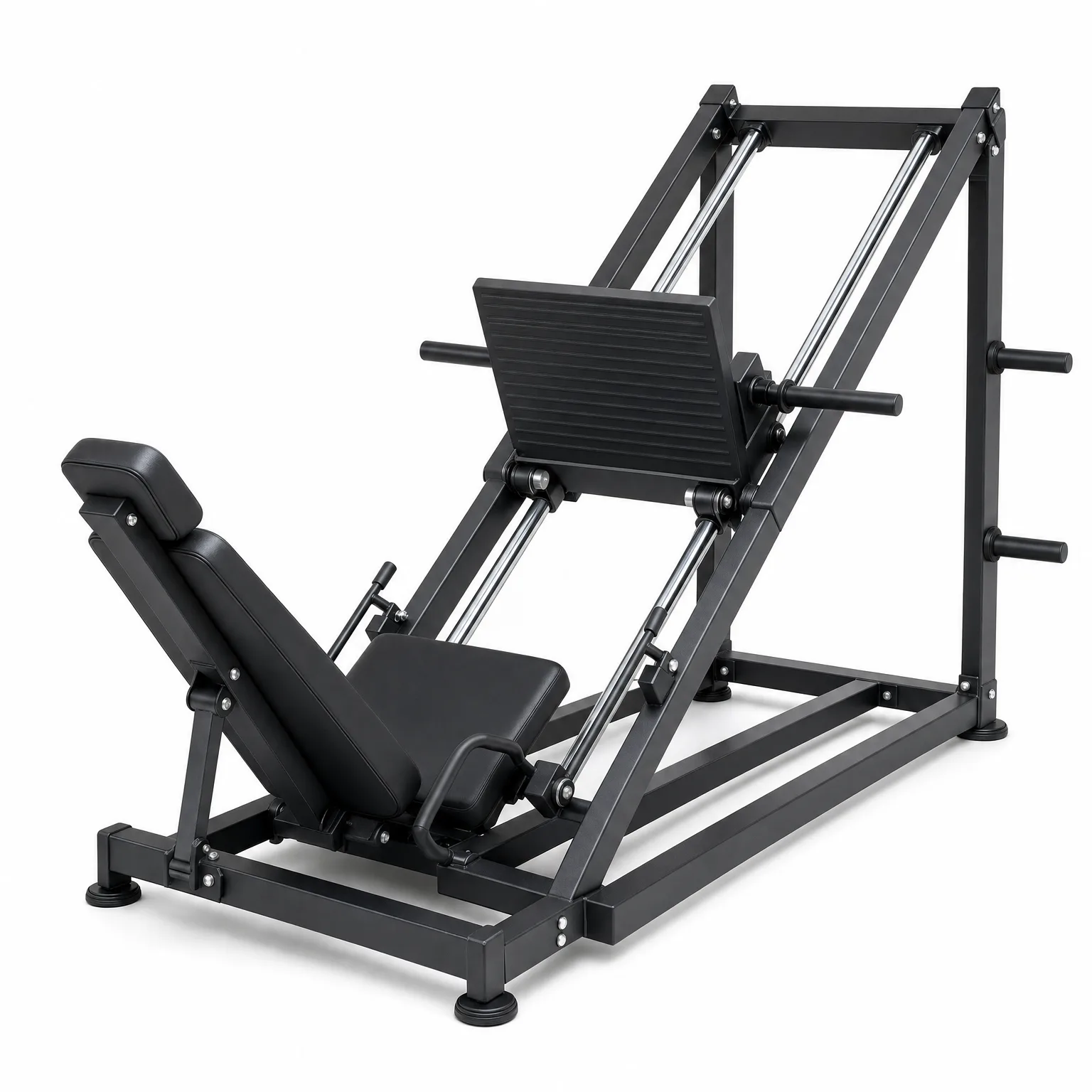
A seat and a footplate you push away with both legs. It loads the quads and glutes heavily while the back rests on a pad.
In short
A leg press is a machine where you sit or lie against a back pad and push a footplate away with your legs, or push yourself away from a fixed plate. It trains the quads and glutes, with help from the hamstrings and inner thighs. The back is supported, so you do not have to balance a bar or hold the load on your shoulders.
It suits beginners who are not ready for barbell squats and experienced lifters who want more leg volume after squats. It is also used for calf raises and single-leg work.
- Category
- Gym machines
- Where
- Gym
- Level
- Beginner and up
- Space
- Needs a dedicated area
- Typical sizes
- A 45° sled takes about 2.2 x 1.6 m (7 x 5 ft) of floor; the empty sled's weight varies by model, often 30–55 kg (65–120 lb)
- Also called
- leg press machine, 45 degree leg press, seated leg press, sled leg press, horizontal leg press, incline leg press
Muscles it works
- Also works
- Hamstrings, Adductors, Calves
What it is used for
- Two-leg presses for quad and glute strength and size
- Single-leg presses to work each side on its own
- Calf raises with the balls of the feet on the lower edge of the plate
- High-rep leg work late in a session when balance is tired
Types
45° sled. You lie back in a low seat and push a plate-loaded sled up angled rails. The most common type in gyms and the one that takes the most load.
Seated selectorized. A horizontal machine with a weight stack and pin. Either the plate or the seat moves. Quick to adjust and easy to learn.
Vertical. You lie on your back and press the plate straight up. Compact, but less common and harder to get into.
Unilateral. Two separate footplates that move on their own, so one leg cannot do the other's share.
How to choose
Set the seat for your depth
Adjust the back pad or the sled's start position so that at the bottom your knees bend to about 90 degrees or a little deeper while your hips and lower back stay flat on the pad. If the hips roll up at the bottom, reduce the depth or recline the seat more.
Choose a foot position
Start with the feet in the middle of the plate, about shoulder width, toes turned out slightly. Feet lower on the plate bend the knees more and shift work to the quads. Feet higher bend the hips more and shift it toward the glutes and hamstrings.
Set the safety stops
On a sled, the adjustable stops limit how far the plate can come down. Set them just below your deepest rep so the sled cannot travel past your range if a rep fails.
Start lighter than you expect
Leg press numbers run high because of the angle and the supported back, and the empty sled already has weight. Begin with the sled alone or one light plate per side and build up over a few sets.
How to start using it
- Sit all the way back. Put your hips and lower back flat against the pad and your head on the rest. Place the whole foot on the plate, heels included. Hold the side handles.
- Unlock the sled. Press the plate up until the legs are almost straight, then turn the safety handles outward to release the catches. Keep a hand on or near them during the set.
- Lower under control. Bend the knees and bring the plate down in two to three seconds. Let the knees travel in line with the toes. Stop when the hips are about to lift off the pad.
- Press through the whole foot. Push the plate away without letting the heels rise. Finish with the knees just short of fully locked, then start the next rep.
- Lock before you get out. At the top of the last rep, turn the handles back in and lower the sled onto the catches. Only then take your feet off the plate.
Common mistakes
Hips rolling off the pad
Going deeper than your hips allow tucks the pelvis under and rounds the lower back against the load. Stop the rep just before the hips lift. A slightly lower or wider foot position can also help, as long as the heels stay down.
Snapping the knees straight
Throwing the plate out and locking hard puts the load on the joint instead of the muscle. End each rep with a soft bend in the knees.
Tiny range with a full sled
Loading every plate in reach and moving the sled a few centimeters trains very little. Use a weight you can lower to at least a 90‑degree knee bend.
Knees caving in
Letting the knees fall toward each other as you push changes how the load is carried. Keep them pointing the same way as the toes for the whole rep.
Pushing on the knees with the hands
Helping the legs with your arms hides the fact that the load is too heavy. Keep the hands on the handles.
What to use instead
A hack squat machine trains the same muscles with the load on the shoulders. Squats in a Smith machine are the next closest option. Without machines, goblet squats and split squats with dumbbells cover the same pattern, and at home a loaded backpack worn on the front or back adds weight to squats and step-ups.
-
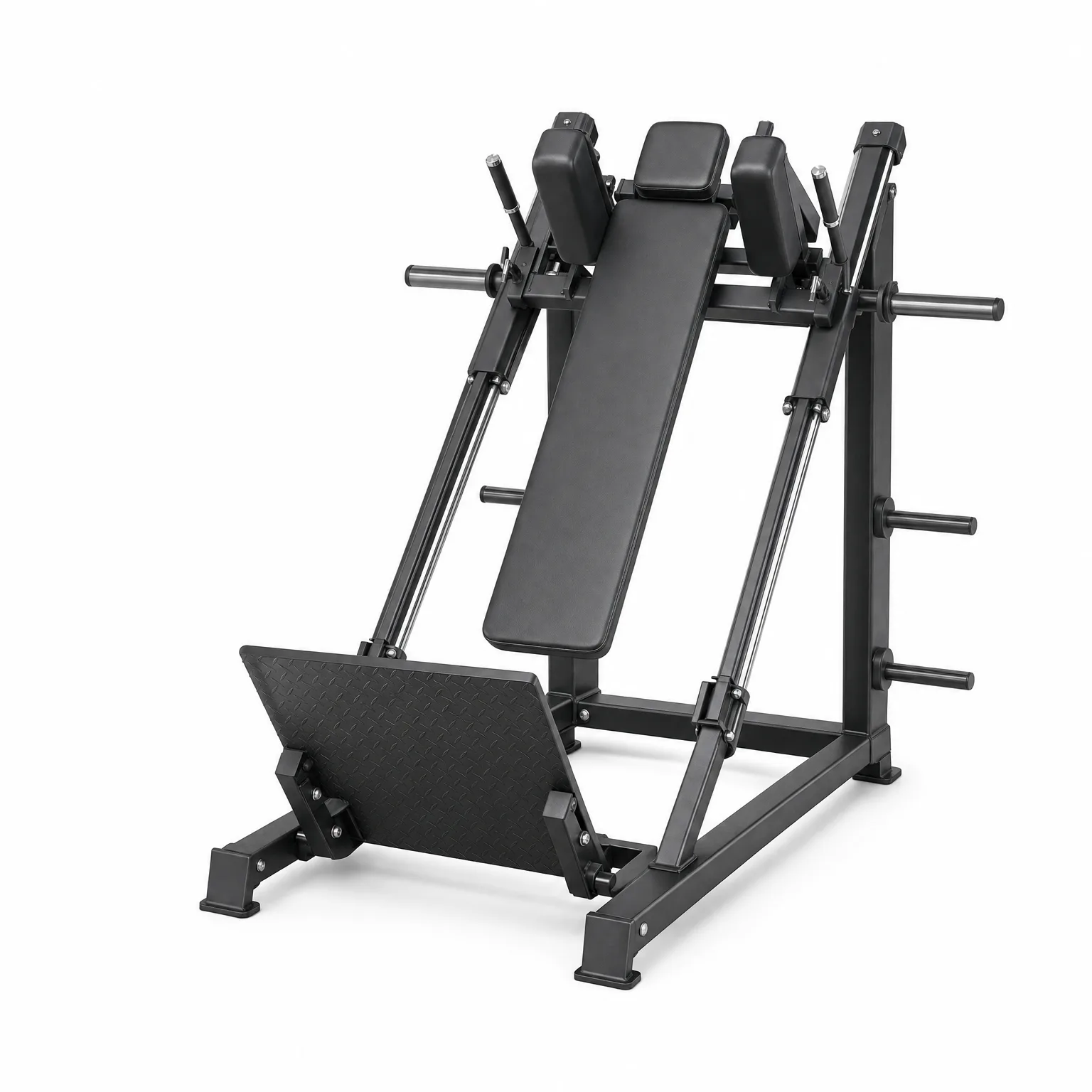
Hack squat machine
An angled sled with shoulder pads and a back pad. You squat along fixed rails, which puts most of the work on the quads. -
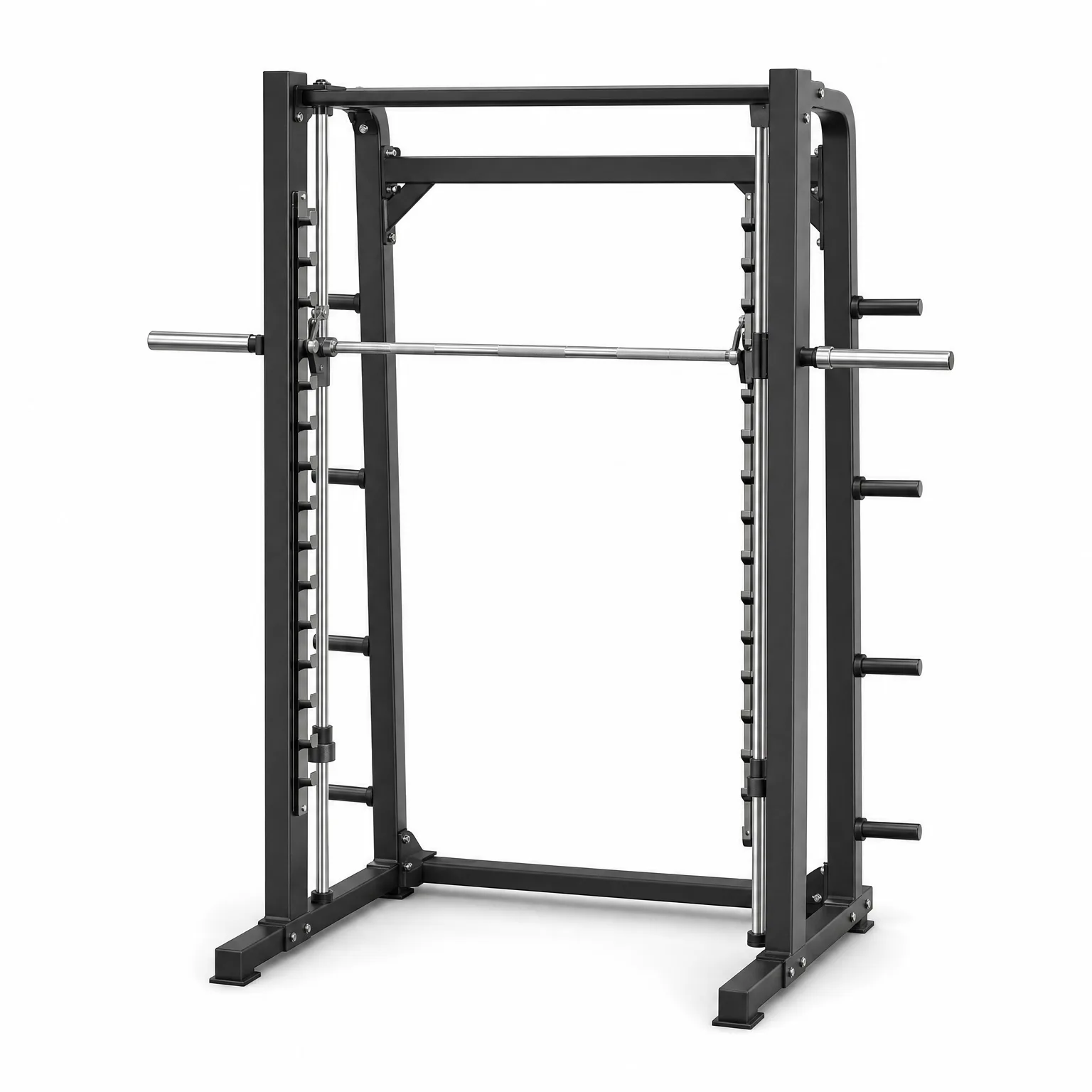
Smith machine
A barbell that slides on fixed guide rails, with hooks that lock at many heights. Used for squats, presses and rows without a spotter. -

Dumbbells
A pair of short handles with a weight at each end. One pair trains every major muscle group, at home or in a gym. -
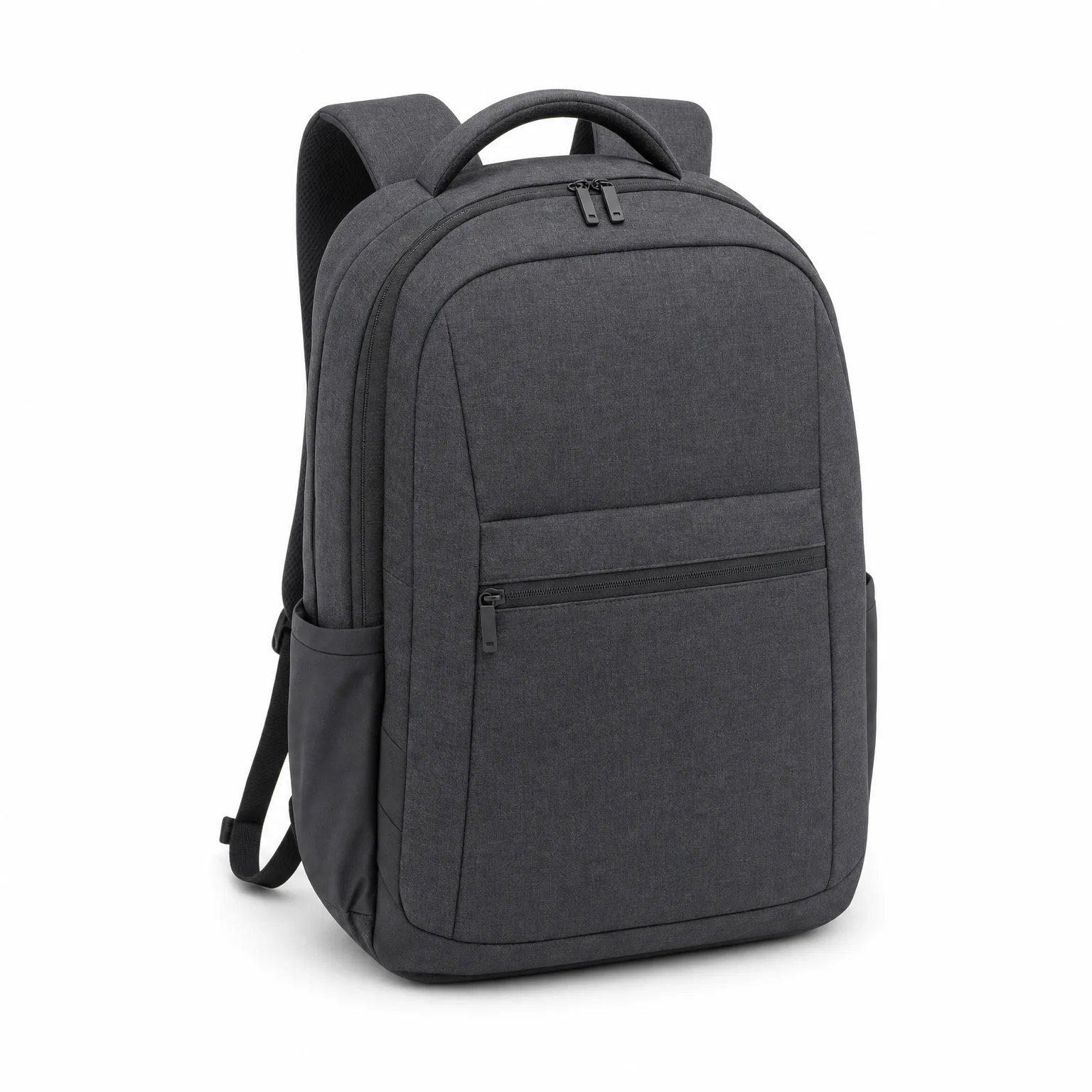
Loaded backpack
An ordinary backpack filled with books or water bottles works as an adjustable weight for squats, rows, push-ups and loaded walks.
Often used with
-
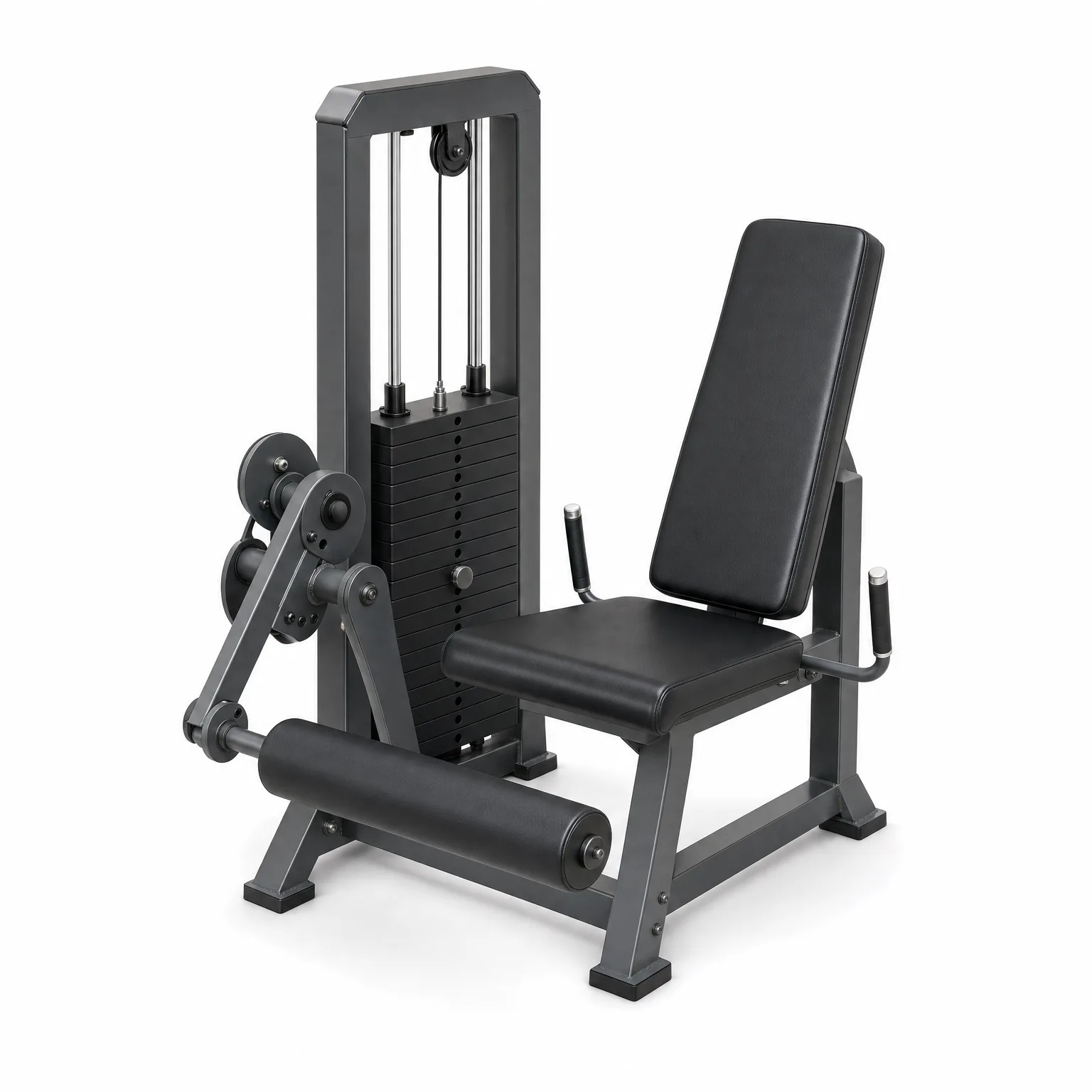
Leg extension machine
A seat with a padded roller in front of the shins. You straighten the knees against the load to isolate the quads. -
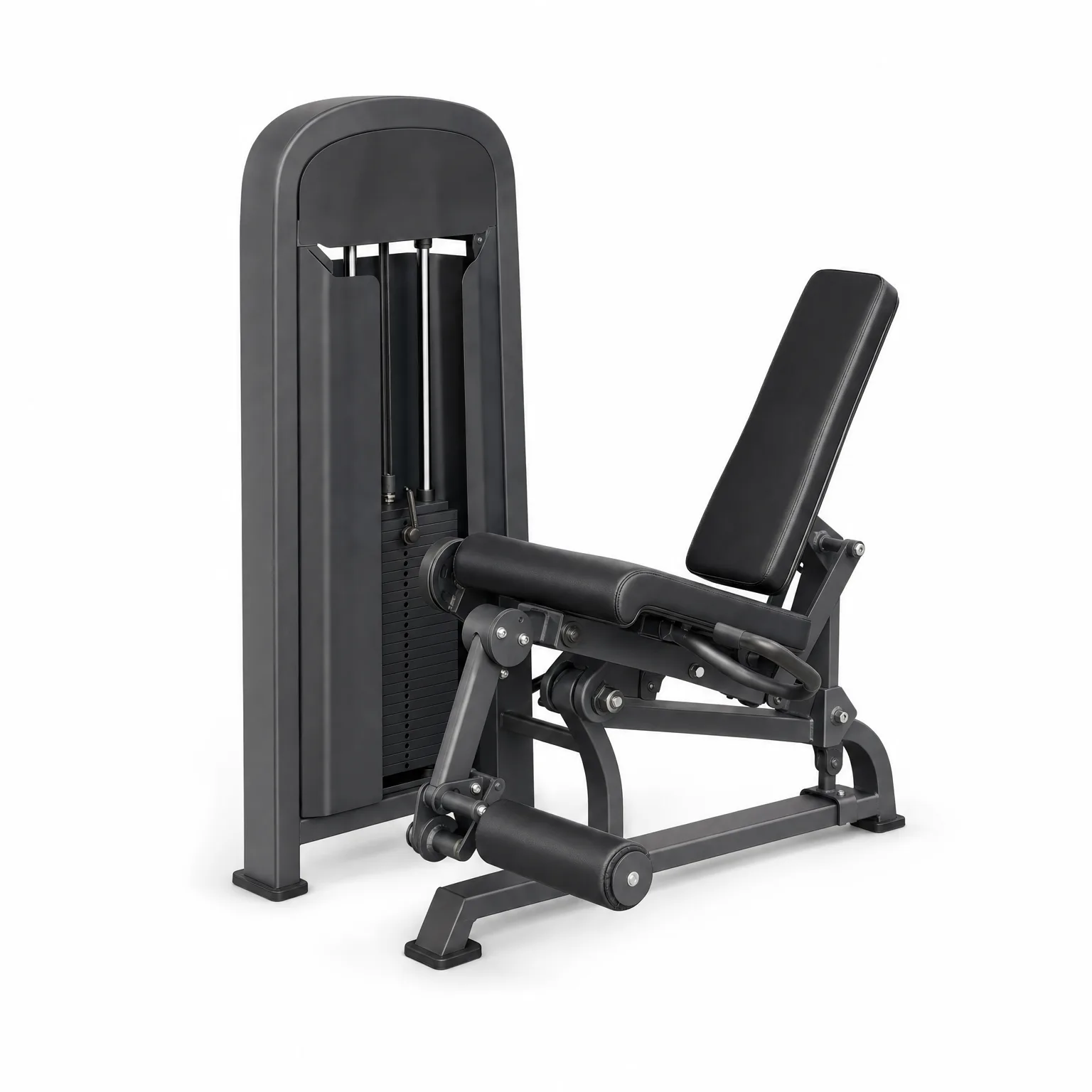
Leg curl machine
A machine with a padded roller behind the ankles. You bend the knees against the load to isolate the hamstrings. -
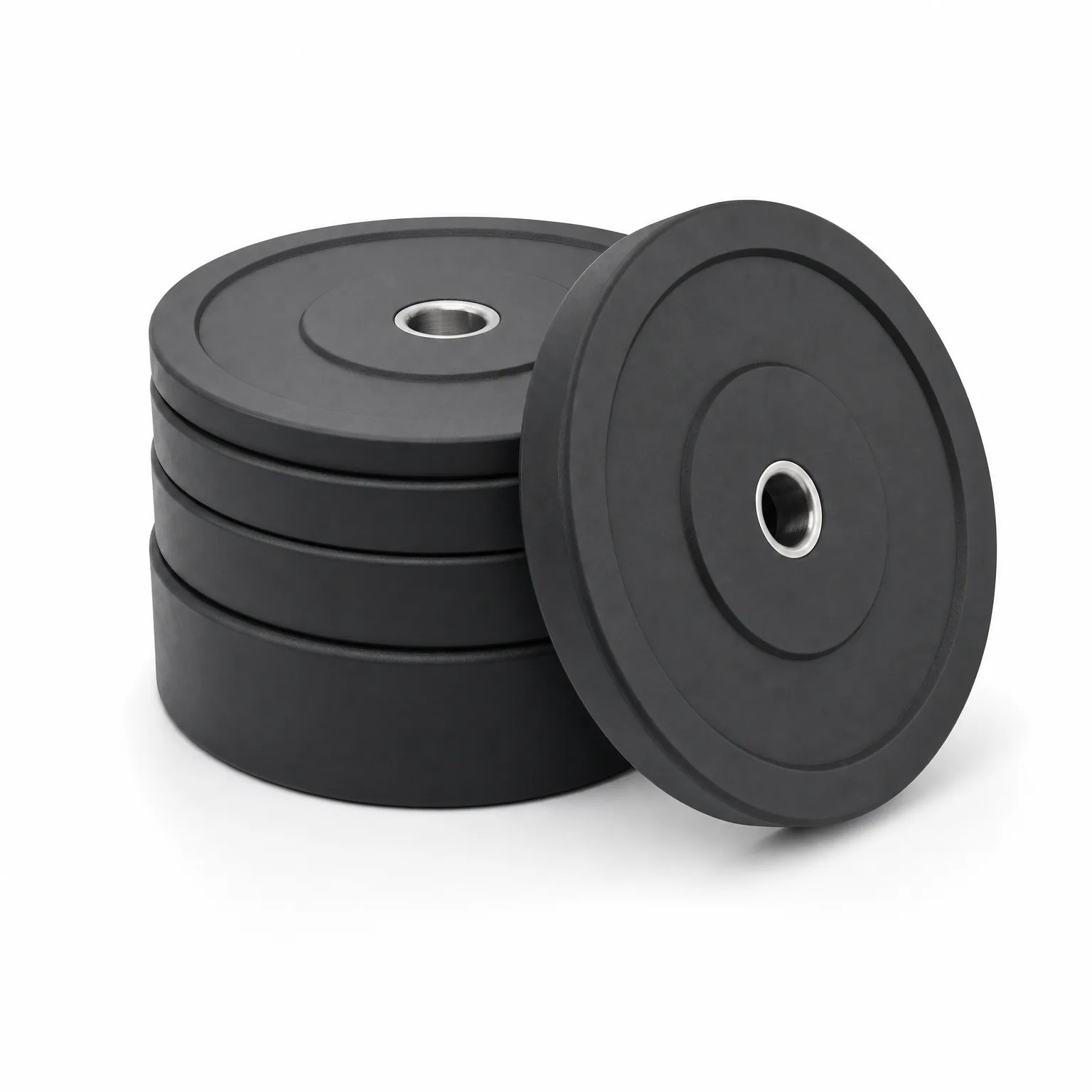
Weight plates
Flat discs that slide onto a barbell or machine to set the load. A single plate also works as a hand-held weight.
Questions about leg press
What muscles does the leg press work?
Mainly the quads and glutes. The hamstrings and inner thighs assist, and the calves hold the foot steady. A lower foot position puts more on the quads, a higher and wider one puts more on the glutes and inner thighs.
Where should you put your feet on a leg press?
Start in the middle of the plate, feet about shoulder width apart and toes slightly out, with the whole foot flat. From there, adjust by a few centimeters: lower for more knee bend, higher for more hip bend. Keep any position where the heels stay down and the hips stay on the pad.
Leg press vs squat: which is better?
Squats train the legs along with the trunk and the skill of balancing a load, and they need less equipment. The leg press supports the back and removes balance, so you can push the legs hard with less skill. They work well together: squats first, leg press after.
How much weight should a beginner use on the leg press?
Start with the empty sled or the lightest pin setting and do 10–12 reps to full depth. Add load in small steps until the last two reps are hard but look the same as the first. The number is not comparable between machines, because sled weight, angle and friction all differ.
Build programs around what your client has
This guide comes from OnlineFitness.app, the app online coaches run their clients in.
Free for life for the first 100 coachesNo card