Hack squat machine
An angled sled with shoulder pads and a back pad. You squat along fixed rails, which puts most of the work on the quads.
In short
A hack squat machine is a sled on angled rails with a back pad, shoulder pads and a footplate. You stand on the plate, lean back into the pad with your shoulders under the pads and squat down and up along the rails. It trains the quads first, with the glutes and inner thighs helping.
The back is supported and the path is fixed, so there is no bar to balance. It suits anyone who wants a deep, quad-focused squat, from beginners learning the pattern to lifters adding leg volume after barbell work.
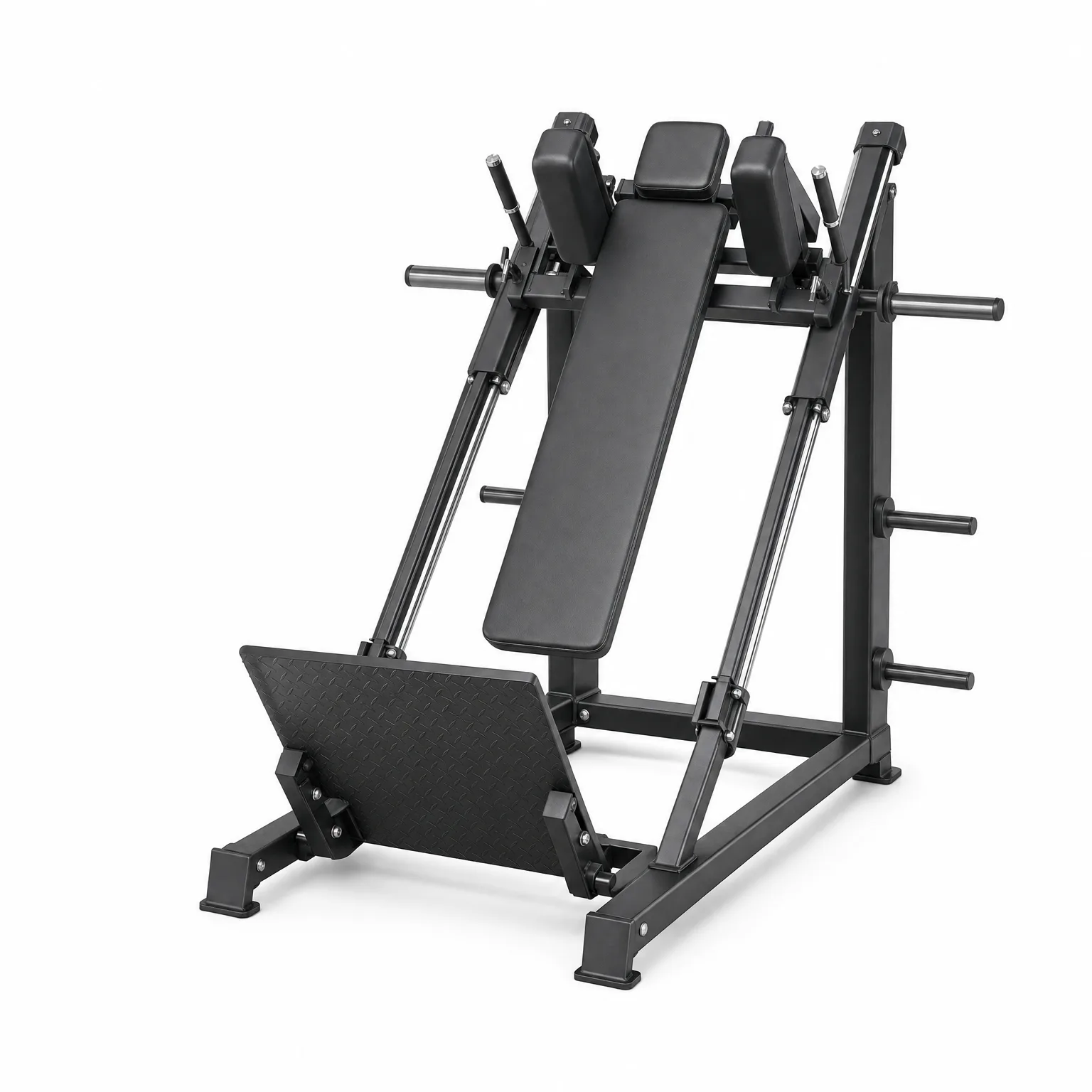
- Category
- Gym machines
- Where
- Gym
- Level
- Beginner and up
- Space
- Needs a dedicated area
- Typical sizes
- About 2.1 x 1.5 m (7 x 5 ft) of floor; the empty sled's weight varies by model, often 20–50 kg (45–110 lb)
- Also called
- hack squat, hack squat sled, machine hack squat, angled squat machine
Muscles it works
- Also works
- Adductors, Hamstrings, Calves
What it is used for
- Deep squats for the quads with the back supported
- Higher-rep leg sets taken close to failure without a spotter
- Reverse hack squats, facing the pad, for more glute and hamstring work
- Calf raises under the shoulder pads
Types
Plate-loaded sled. The standard gym version. Weight plates go on pegs on the sled, which rides on rollers or linear bearings.
Hack squat and leg press combo. One frame that converts between the two by flipping the back pad and footplate. Common where floor space is limited.
Selectorized. A weight stack and pin instead of plates. Quicker to adjust, usually with a lower top load.
Pendulum squat. A related machine where the pad swings on an arm in an arc instead of sliding on rails. Similar use, different feel at the bottom.
How to choose
Choose a foot position
Start with the feet in the middle of the plate, shoulder width apart, toes slightly out. Feet lower on the plate let the knees travel further forward and load the quads more. Feet higher bring in more glutes. Keep the heels flat in every position.
Set the depth stops
Most machines have stops that limit how low the sled can go. Set them just below the bottom of your squat so the sled rests on them if you cannot stand back up.
Check the shoulder pads
The pads should sit on the muscle between neck and shoulder, not on the neck or the point of the shoulder. If the pads are adjustable, set the height so you can get under them with the knees only slightly bent.
Start with the empty sled
The sled has its own weight and the angle makes it feel different from a barbell squat. Do a set with no plates to find your depth and stance before adding load.
How to start using it
- Get under the pads. Step onto the plate, press your back and hips flat against the pad and fit your shoulders under the shoulder pads. Hold the handles beside your head.
- Release the sled. Straighten the legs to lift the sled off its catches, then turn the handles to move the catches out of the way. Remember which way they turn so you can re-rack when tired.
- Squat down slowly. Bend the knees and hips and lower for two to three seconds. Let the knees move forward over the toes and in line with them. Go as deep as you can with the heels down and the lower back still on the pad.
- Stand up through the whole foot. Push the plate away and keep your back and head against the pad. Stop just short of locking the knees hard, then go into the next rep.
- Rack at the top. After the last rep, stand fully, turn the handles back and lower the sled a little until it sits on the catches. Step out only when it is held.
Common mistakes
Heels lifting
If the heels come up at the bottom, the feet are too low for your ankle mobility or the depth is too great. Move the feet slightly up the plate until the whole foot stays down.
Lower back peeling off the pad
Sinking past your range tucks the pelvis and rounds the lower back under load. Stop a little higher, where the hips and back stay flat against the pad.
Half reps with too much weight
A loaded sled moved through the top third of the range does little for the quads. Take plates off and squat to at least thighs parallel with the footplate.
Knees collapsing inward
Knees that fall toward each other on the way up usually mean the load is too heavy or the stance too narrow. Keep them pointing along the toes.
What to use instead
A leg press trains the same muscles with the back supported and is found in almost every gym. Squats in a Smith machine with the feet slightly forward feel close to a hack squat. With free weights, barbell front squats or heel-elevated goblet squats with a dumbbell put the same emphasis on the quads.
-
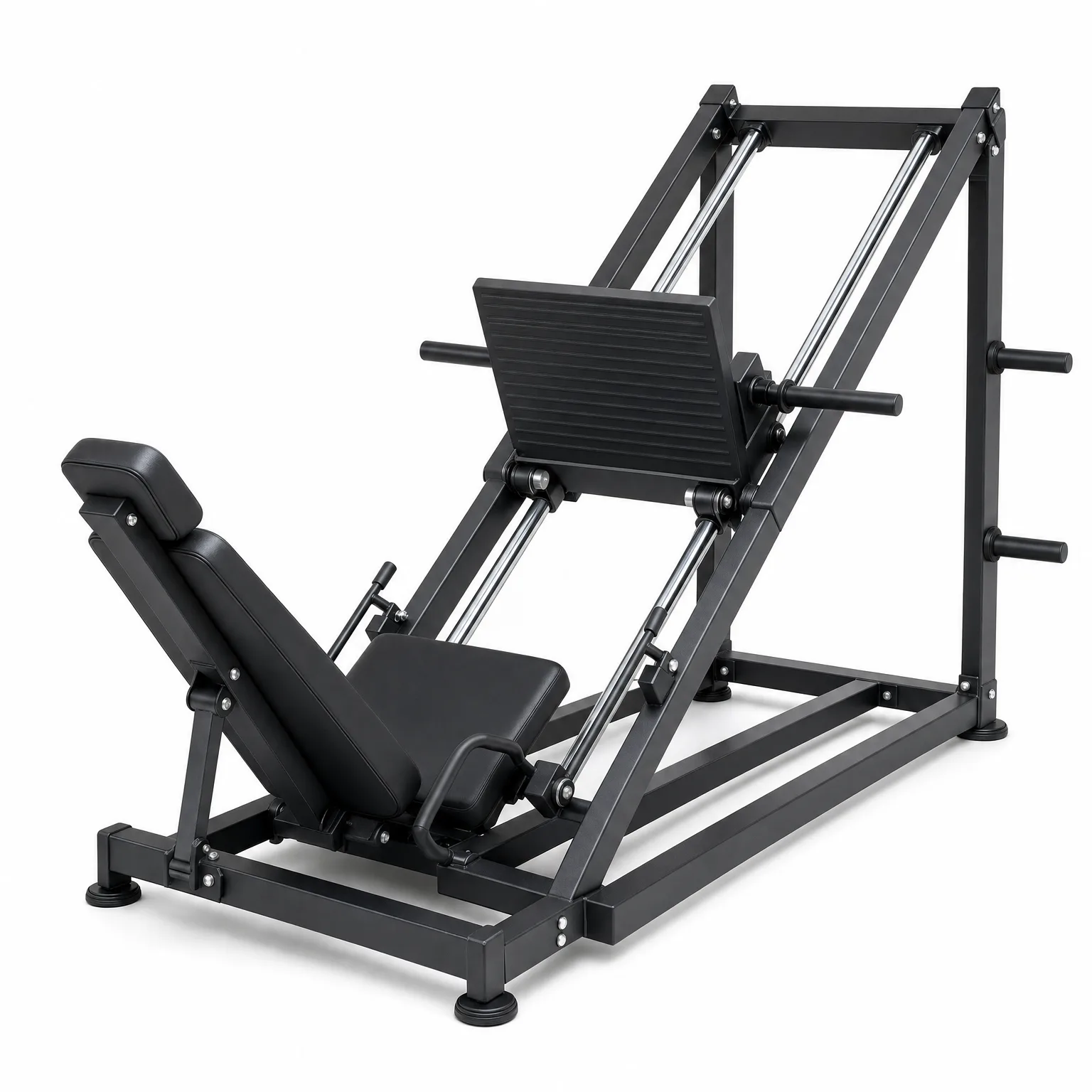
Leg press
A seat and a footplate you push away with both legs. It loads the quads and glutes heavily while the back rests on a pad. -
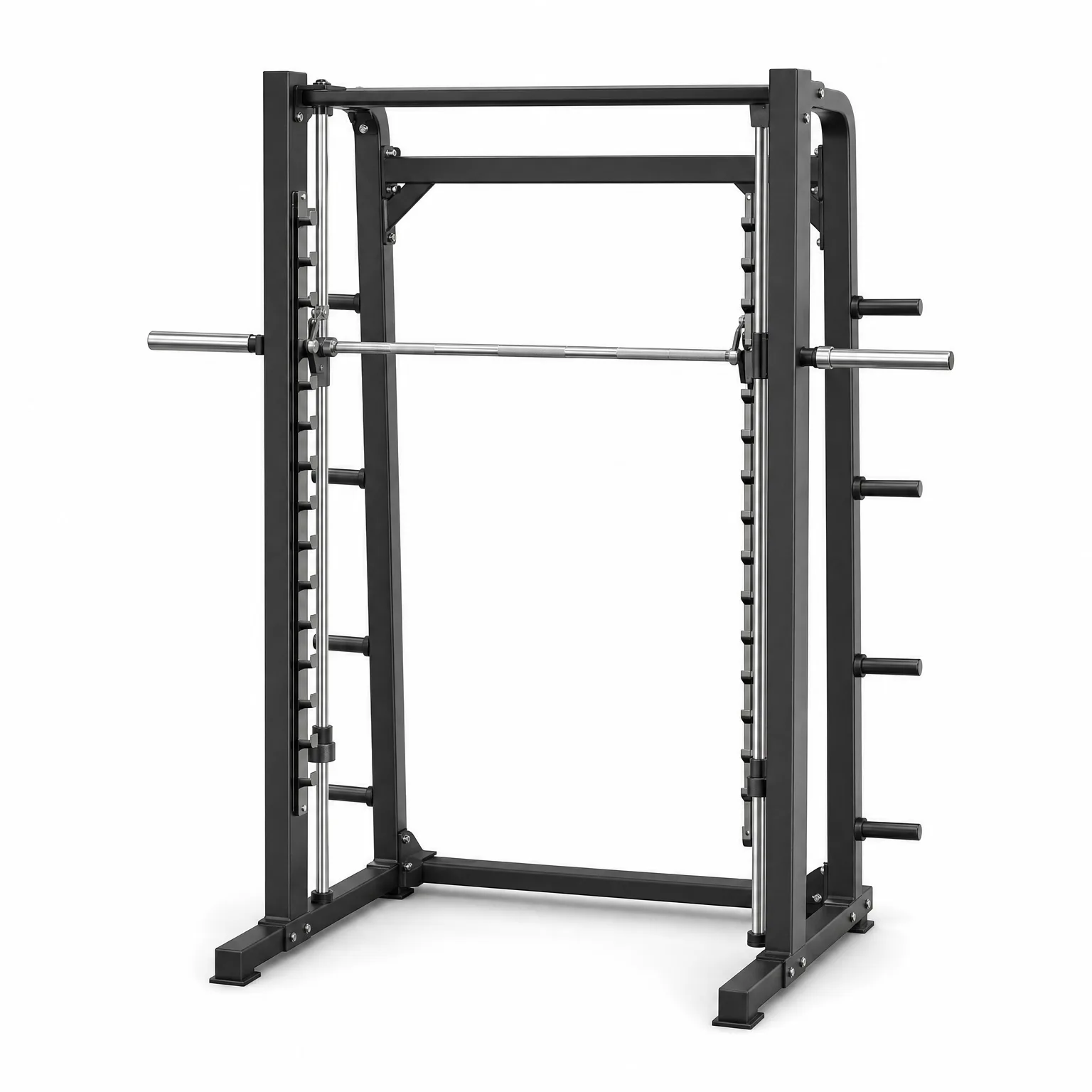
Smith machine
A barbell that slides on fixed guide rails, with hooks that lock at many heights. Used for squats, presses and rows without a spotter. -

Barbell
A long steel bar loaded with plates at both ends. The standard tool for squats, deadlifts, presses and rows with heavy weight. -

Dumbbells
A pair of short handles with a weight at each end. One pair trains every major muscle group, at home or in a gym.
Often used with
-
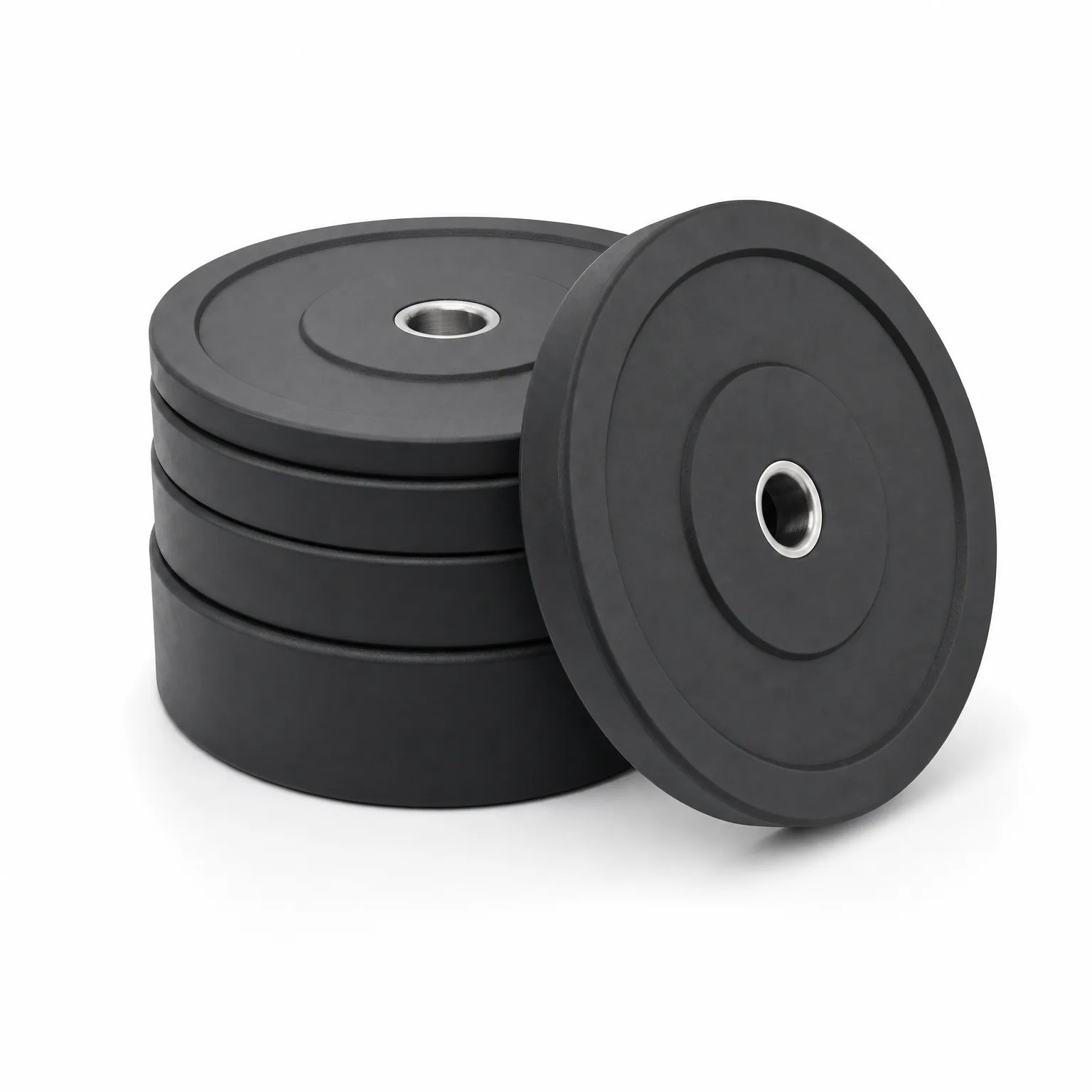
Weight plates
Flat discs that slide onto a barbell or machine to set the load. A single plate also works as a hand-held weight. -
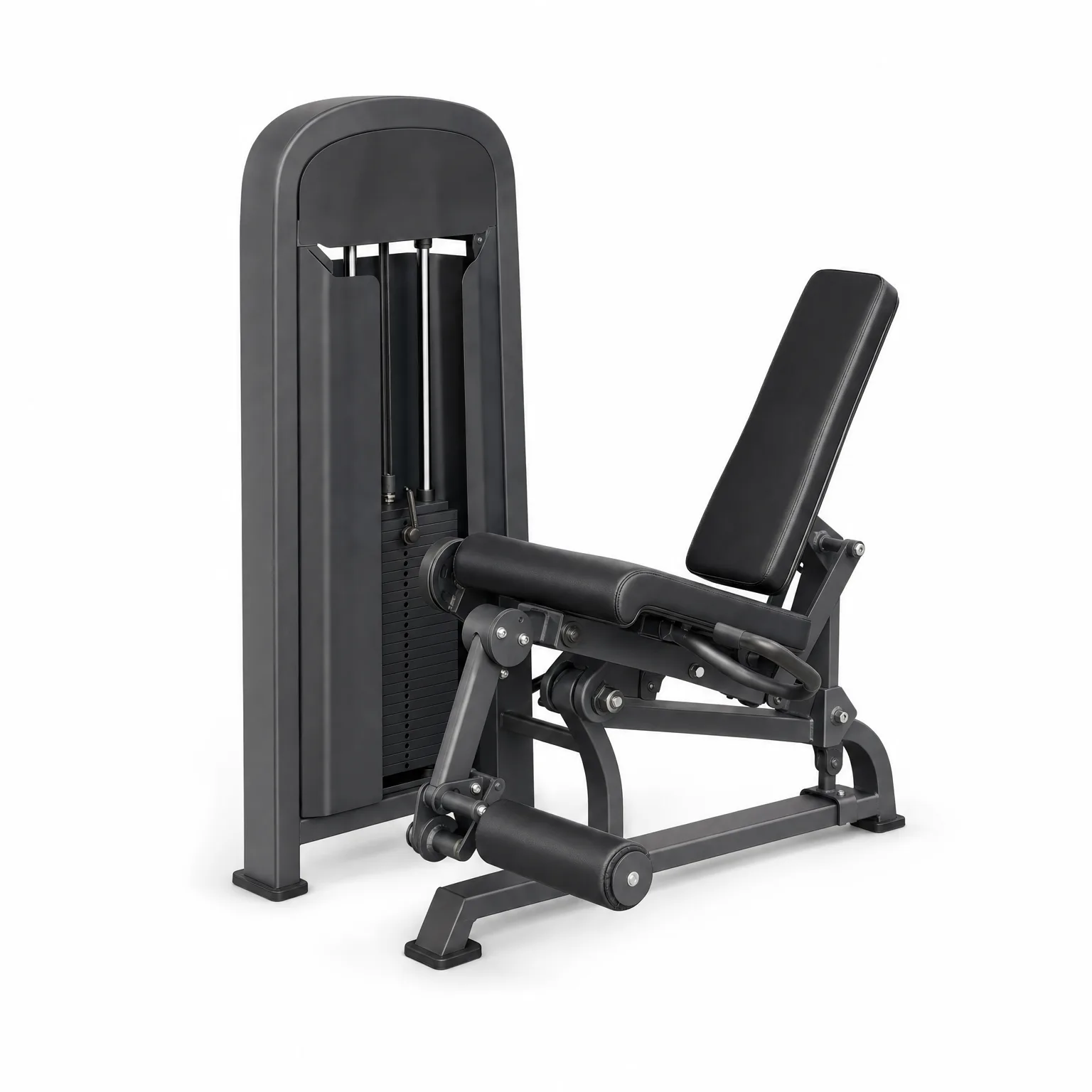
Leg curl machine
A machine with a padded roller behind the ankles. You bend the knees against the load to isolate the hamstrings. -
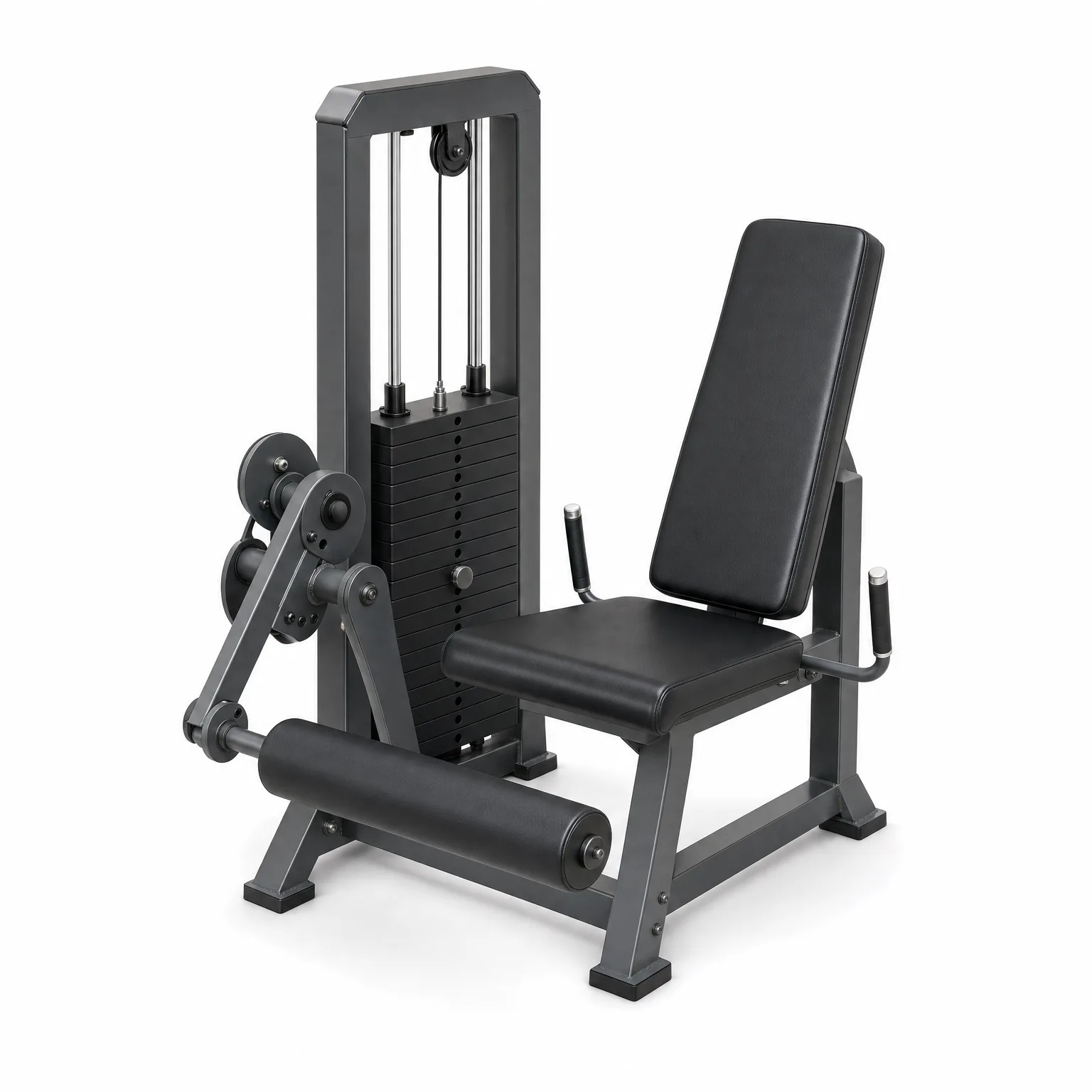
Leg extension machine
A seat with a padded roller in front of the shins. You straighten the knees against the load to isolate the quads.
Questions about hack squat machine
Hack squat vs leg press: what is the difference?
Both use an angled sled and train the quads and glutes. In a hack squat the load sits on your shoulders and your body moves, so the hips open more and the trunk works to stay against the pad. In a leg press you sit still and push the plate away. Hack squats usually feel harder at the same load.
What muscles does the hack squat work?
Mostly the quads, because the upright supported torso lets the knees bend deeply. The glutes and inner thighs help, more so with a higher or wider foot position. The hamstrings and calves play a small part.
Is the hack squat easier than a barbell squat?
It is easier to learn, because the rails remove balance and the pad supports the back. It is not easier on the legs. Many people find the quads work harder on a hack squat, since nothing else limits the set.
How much does the hack squat sled weigh?
It depends on the model. Empty sleds commonly feel like 20 to 50 kg (45 to 110 lb), and the rail angle and bearings change how that feels. Look for a label on the machine and compare your numbers only on the same one.
Build programs around what your client has
This guide comes from OnlineFitness.app, the app online coaches run their clients in.
Free for life for the first 100 coachesNo card