Kettlebell
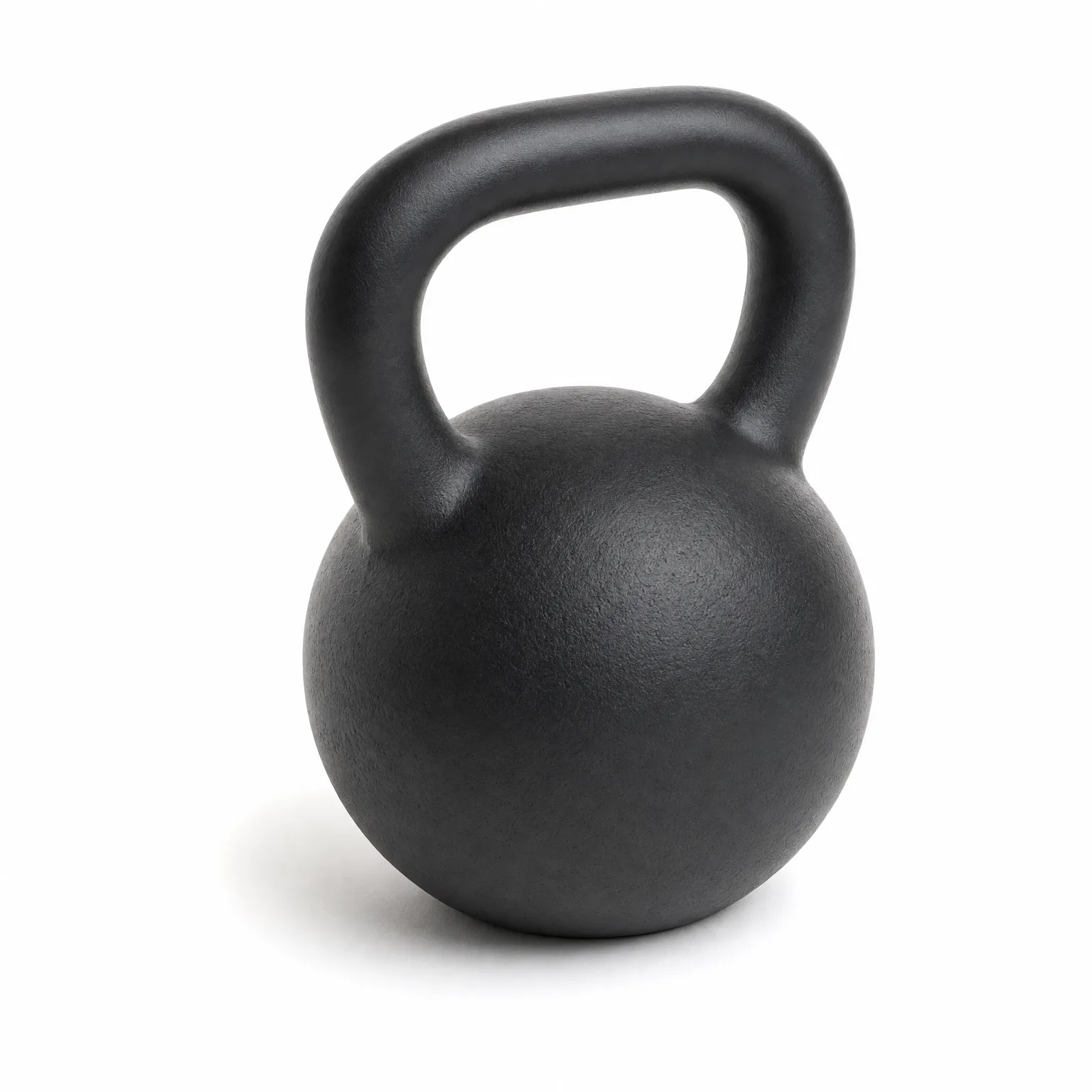
A cast-iron or steel ball with a flat base and a handle on top. Built for swings, carries, squats and presses with one weight.
In short
A kettlebell is a round weight with a flat base and a thick loop handle on top. The mass sits below the hand instead of on both sides of it, so the bell can swing between the legs and rest on the back of the forearm. That makes it suited to swings, cleans, snatches, goblet squats, presses and carries.
It suits people who want strength and conditioning from one compact tool. A single bell of the right weight is enough for a full home session. The fast lifts take some practice, so start with the deadlift, the goblet squat and the two-hand swing.
- Category
- Free weights
- Where
- Home, Gym, Outdoors
- Level
- Beginner and up
- Space
- Needs a corner of a room
- Typical sizes
- 4–48 kg (9–106 lb), usually in 4 kg steps; most home training uses 8–24 kg (18–53 lb)
- Also called
- kettlebells, kettle bell, girya, russian kettlebell, competition kettlebell, kb
Muscles it works
- Main
- Glutes, Hamstrings, Quads, Lower back, Front delts, Abs
What it is used for
- Swings, cleans and snatches that train a fast, powerful hip hinge
- Goblet squats and lunges with the bell held at the chest
- Overhead presses and Turkish get-ups for the shoulders and trunk
- Rows and deadlifts from the floor
- Farmer and rack carries for grip and trunk strength
Types
Cast iron. The common gym type. The bell gets bigger as the weight goes up, and the handle is wide enough for two hands on most sizes.
Competition. Steel, with the same shell size and a narrower handle at every weight. The bell sits on the forearm in the same place as you move up, which helps one-arm lifts.
Adjustable. A shell with removable plates or inserts. One unit covers several weights, with a bulkier shape and a slower change between sets.
Vinyl or neoprene coated. Light bells with a soft coating, kinder to floors. Mostly sold in the lighter weights.
How to choose
Choose the weight by the lift
Swings and deadlifts use the hips and need a heavier bell. Presses and get-ups need a lighter one. Many adults start swings and goblet squats with 8–16 kg (18–35 lb). If you buy one bell, pick it for the two-hand swing and goblet squat.
Check the handle
The handle should be smooth, without seams or flaking paint, and wide enough for both hands side by side if you plan to swing with two hands. A rough seam tears the skin of the palm quickly.
Look at the base
A flat, wide base keeps the bell stable on the floor for rows, push-ups on the handles and storage. A bell that rocks is a poor choice for any exercise where you lean on it.
Plan the next step
Kettlebells usually go up in 4 kg steps, which is a big jump. Expect to add reps and sets for a while before the next bell, or look for sizes in 2 kg steps.
How to start using it
- Learn the hinge first. Stand over the bell, push the hips back with a flat back and soft knees, and lift it as a deadlift. This is the position every swing passes through. Move to swings only when the hinge feels automatic.
- Swing from the hips. Hike the bell back between the thighs, then stand up fast and let the hips throw it forward to about chest height. The arms guide the bell, they do not lift it. Let it fall back and hinge again.
- Hold it at the chest for squats. For a goblet squat, grip the sides of the handle and keep the bell against the breastbone with elbows pointing down. Sit between the heels and stand back up.
- Keep the wrist straight in the rack. For presses, the bell rests on the back of the forearm with the handle running diagonally across the palm. The wrist stays straight, not bent back.
- Clear the space. Swing on a flat, non-slip floor with nothing and nobody in front of you. If a rep goes wrong, let the bell go down to the floor instead of trying to save it.
Common mistakes
Squatting the swing
Dropping straight down and lifting the bell with the arms turns the swing into a front raise with a squat. The knees bend only a little. The hips go back, then snap forward.
Lifting with the shoulders
If the shoulders burn before the glutes and hamstrings, the arms are doing the work. Use a heavier bell or think of the arms as ropes.
Leaning back at the top
Finishing a swing by arching backward shifts the load to the lower back. End each rep standing tall, with the glutes tight and ribs down.
Letting the bell bang the forearm
In cleans and snatches the bell should roll around the wrist, not flip over and hit it. Keep the elbow close and punch the hand through the handle at the top.
What to use instead
A dumbbell works for most slow kettlebell exercises: goblet squats, rows, presses and carries. You can swing a dumbbell held by one end, though it is less comfortable. A sandbag with handles covers swings, squats and carries with a softer load. At home, a loaded backpack held by the top handle or hugged to the chest stands in for deadlifts, squats and rows.
-

Dumbbells
A pair of short handles with a weight at each end. One pair trains every major muscle group, at home or in a gym. -
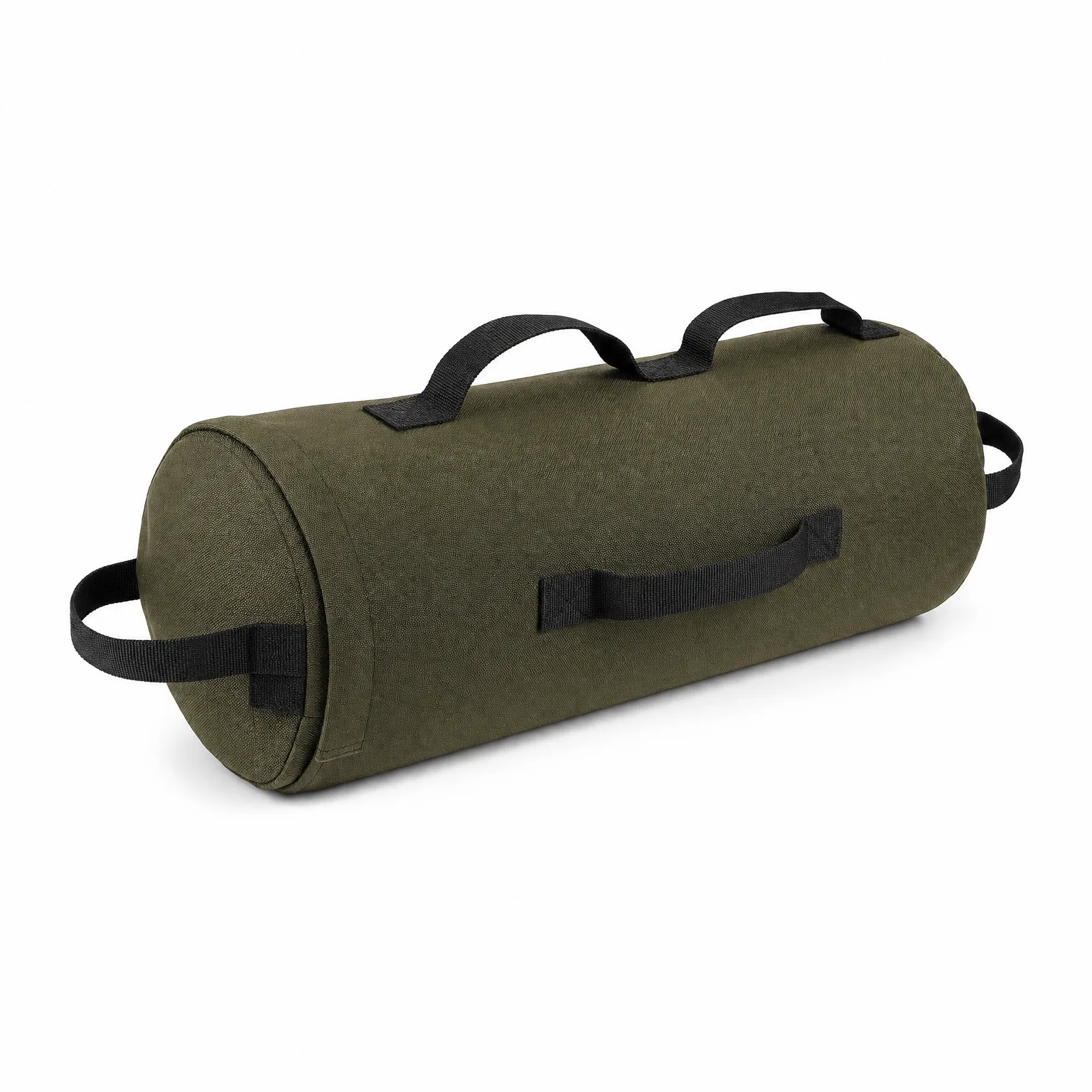
Sandbag
A tough fabric bag filled with sand, with or without handles. The load shifts as you lift, carry, squat and throw it. -
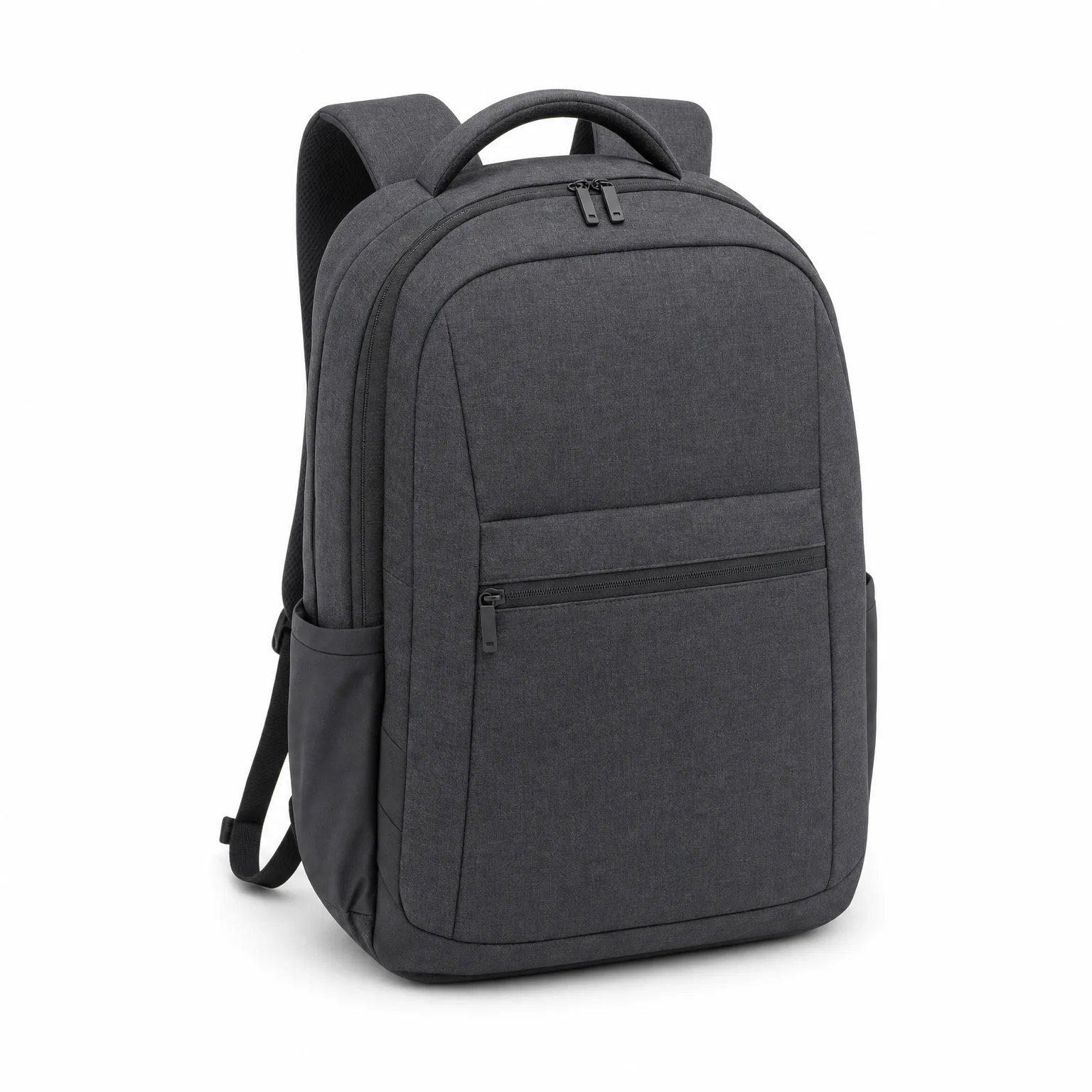
Loaded backpack
An ordinary backpack filled with books or water bottles works as an adjustable weight for squats, rows, push-ups and loaded walks.
Often used with

Questions about kettlebell
What weight kettlebell should a beginner start with?
It depends on the exercise. For two-hand swings and goblet squats, many adults start with 8–16 kg (18–35 lb): lighter if you are new to strength training, heavier if you already lift. For presses and get-ups, start lighter. The right bell lets you finish 10 clean swings with a clear effort from the hips.
Kettlebell or dumbbells?
Kettlebells suit swings, cleans, snatches and carries, where the offset weight helps. Dumbbells are easier to learn and better for presses, rows and curls with small weight jumps. If you want one tool for conditioning and hip power, take a kettlebell. For classic strength exercises, take dumbbells.
Can you build muscle with one kettlebell?
Yes, up to a point. A single bell gives hard sets for the legs, back and shoulders if you use one-arm and one-leg versions and add reps over time. Once sets of 15–20 feel easy, you need a heavier bell to keep progressing.
What is the difference between cast iron and competition kettlebells?
Cast-iron bells grow in size with the weight and have wider handles that fit two hands. Competition bells are steel, identical in size at every weight, with a narrower handle made for one-arm lifts. For general training either works. For two-hand swings, cast iron is more comfortable.
Build programs around what your client has
This guide comes from OnlineFitness.app, the app online coaches run their clients in.
Free for life for the first 100 coachesNo card