Calf raise machine
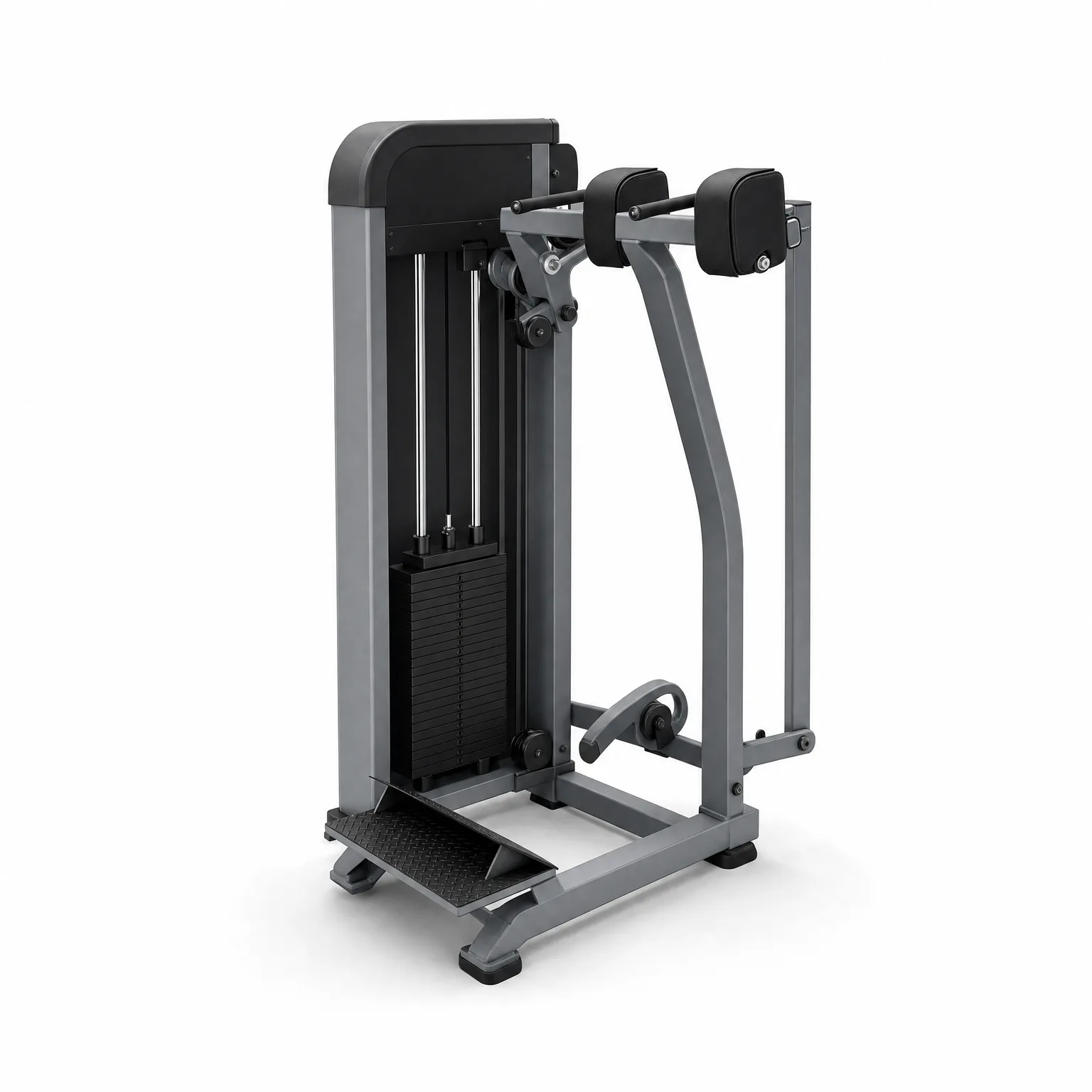
A machine that loads the shoulders or knees while you rise onto the balls of the feet on a raised step. Standing and seated types.
In short
A calf raise machine has a step for the balls of the feet and a pad that presses down on the shoulders or on the knees. You let the heels drop below the step, then rise as high as you can onto the toes. It trains the calves: the gastrocnemius, the visible muscle at the back of the lower leg, and the soleus underneath it.
There are two main types. On a standing machine the knees are straight, so the gastrocnemius works fully alongside the soleus. On a seated machine the knees are bent, which slackens the gastrocnemius and shifts the work to the soleus. Both are simple to learn and suit any level.
- Category
- Gym machines
- Where
- Gym
- Level
- Beginner and up
- Space
- Needs a dedicated area
- Typical sizes
- Standing: about 1.2 x 1.0 m (4 x 3.3 ft), around 2 m (6.5 ft) tall. Seated: about 1.4 x 0.7 m (4.6 x 2.3 ft)
- Also called
- calf machine, standing calf raise machine, seated calf raise machine, calf press, calf raise, donkey calf raise machine
Muscles it works
- Main
- Calves
What it is used for
- Standing raises with straight knees for the gastrocnemius
- Seated raises with bent knees for the soleus
- Single-leg raises to work each calf on its own
- Slow lowering and paused reps in the stretched position
Types
Standing. Shoulder pads on a lever or stack press down while you stand on a step. Trains the calf with the knee straight.
Seated. You sit with the knees under a pad and the feet on a bar, usually plate-loaded. Trains the calf with the knee bent.
Donkey calf raise. You bend forward at the hips with the load on the lower back or hips. Knees straight, with a strong stretch on the calf.
Calf press on a leg press. Some leg press machines have a narrow calf plate, or you use the lower edge of the main footplate.
Tilting footplate. A seated or standing unit where the plate itself rotates under the feet. Less common.
How to choose
Use both types across the week
The standing machine and the seated machine load different parts of the calf. If your gym has both, include both. If you have time for one, the standing version covers more of the muscle.
Set the shoulder pads on a standing machine
Adjust the pad height so you have to bend the knees slightly to get under them. When you stand up straight, the weight should lift off its rest and stay lifted even with the heels fully dropped.
Set the knee pad on a seated machine
Lower the pad until it sits firmly on the lower thighs just above the knees, with the balls of the feet on the bar and the shins vertical. A loose pad lets the load bounce on each rep.
Start lighter than the stack suggests
Calves handle a lot of load over a short range, which tempts people to pile it on. Choose a weight you can take through the full range with a pause at the top and at the bottom for 10–15 reps.
How to start using it
- Place the feet. Put the balls of the feet on the edge of the step, hip width apart, toes pointing forward. The arches and heels hang free. On a seated machine, lift the load with the calves and move the safety handle aside.
- Drop the heels. Lower the heels below the step over two to three seconds until you feel a clear stretch in the calves. Pause there for a full second. This kills the bounce from the tendon.
- Rise as high as you can. Push up through the base of the big toe until you are on the balls of the feet with the heels as high as they go. Hold for a second.
- Keep the knees fixed. On a standing machine, keep the knees straight but not jammed back, and do not bend and straighten them to help. On a seated machine, the thighs stay still under the pad.
- Re-rack before stepping off. On a seated machine, return the safety handle under the load at the top of the last rep. On a standing machine, bend the knees to lower the pads onto the rest.
Common mistakes
Bouncing out of the bottom
Fast, springy reps are driven by the elastic recoil of the Achilles tendon, and the muscle does less of the work. Pause at the bottom of every rep.
Half range
Moving a few centimeters in the middle with a heavy load skips the stretch and the top position. Go from heels below the step to as high as possible.
Using the knees and hips
Dipping at the knees and pushing with the legs turns the raise into a small squat. If the knees move, the load is too heavy.
Rolling to the outside of the feet
Letting the ankles roll outward at the top puts the weight on the little toes. Keep pressure on the base of the big toe.
Feet too far onto the step
Standing with the arch on the step blocks the heel from dropping. Only the balls of the feet go on the edge.
What to use instead
A leg press works for calf raises with straight knees: put the balls of the feet on the lower edge of the plate. A Smith machine with a step or a plate under the toes copies the standing machine. Without machines, single-leg raises on a stair with a dumbbell in one hand and the other hand on the rail are hard enough for most people. For the seated version, sit on a bench with a dumbbell or plate on the knees.
-
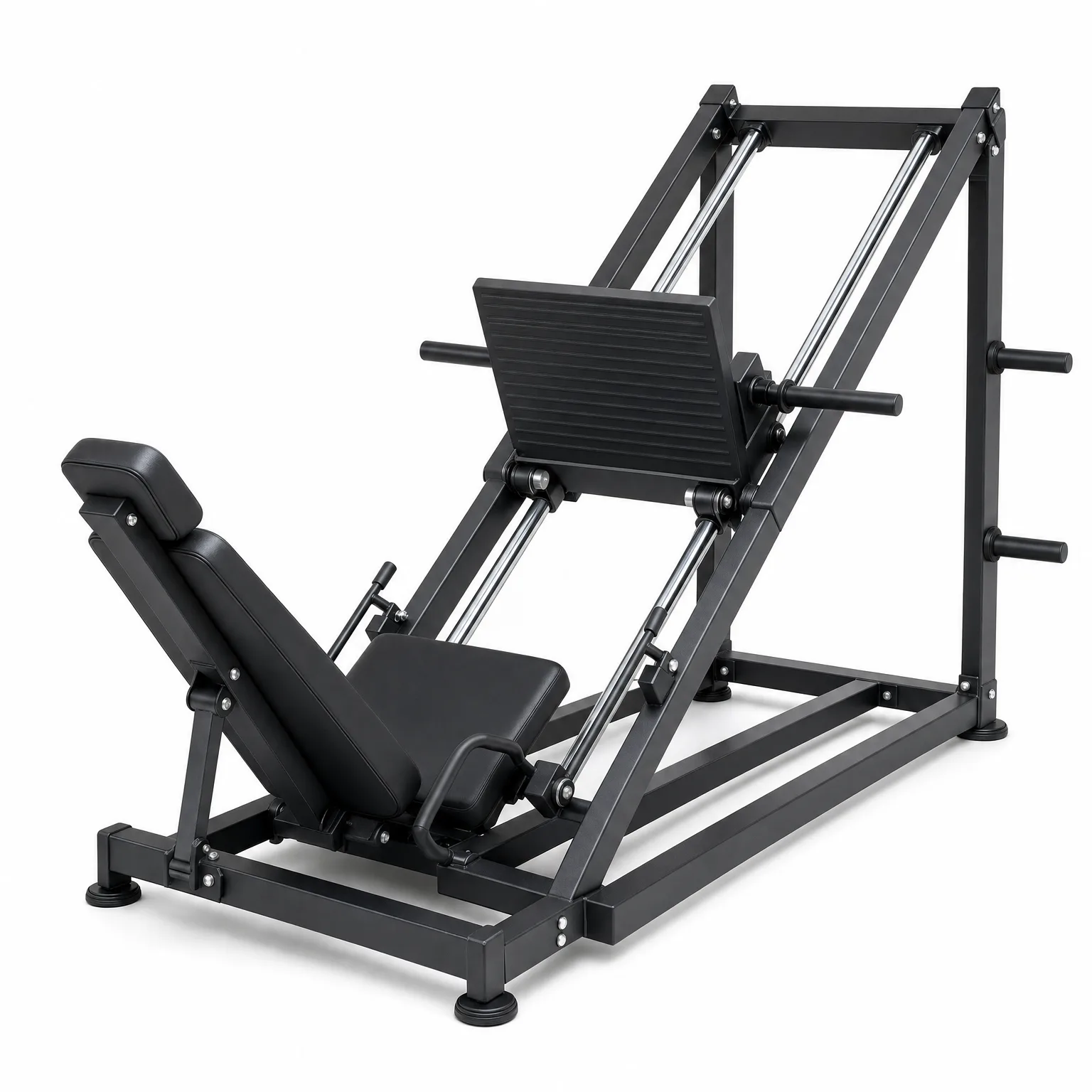
Leg press
A seat and a footplate you push away with both legs. It loads the quads and glutes heavily while the back rests on a pad. -
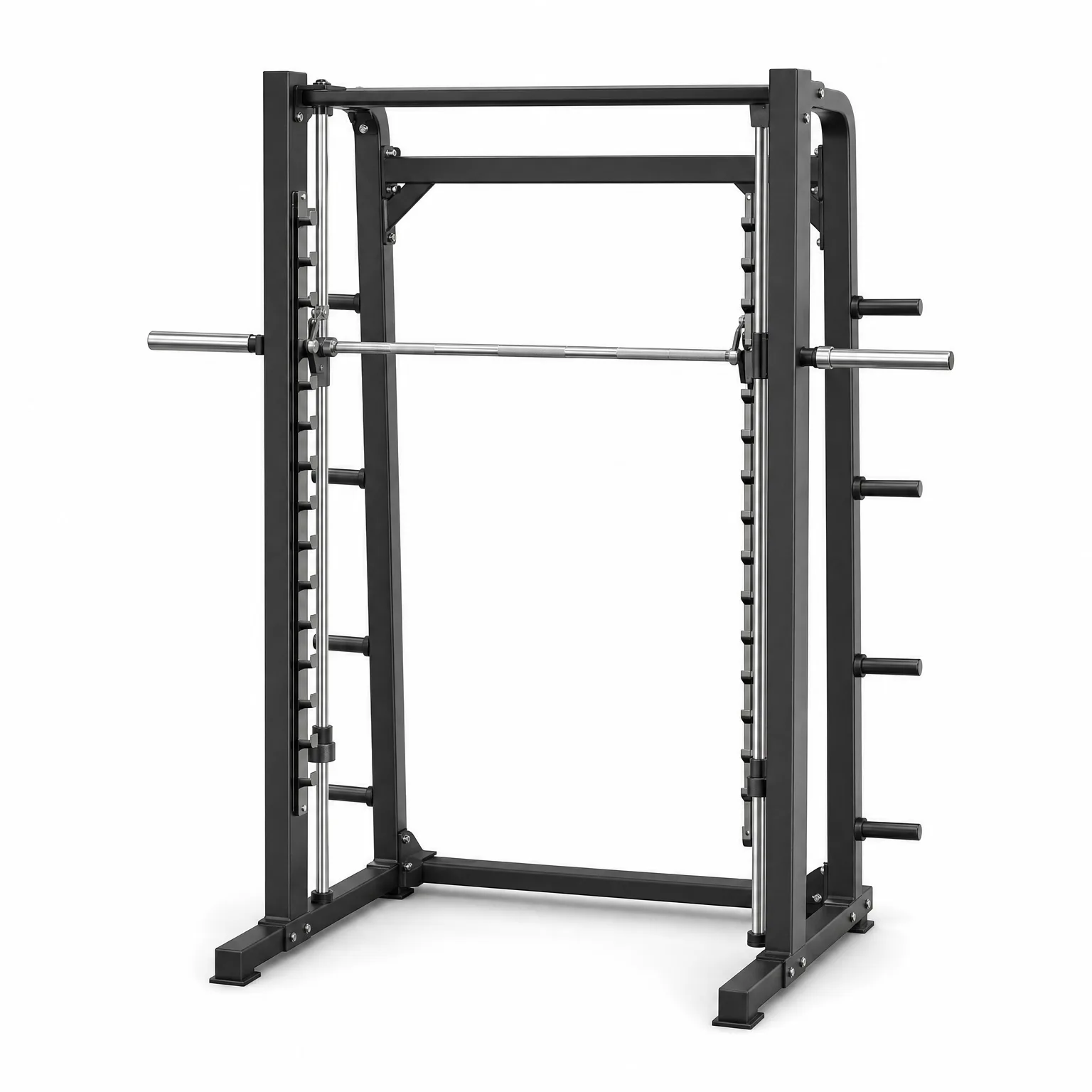
Smith machine
A barbell that slides on fixed guide rails, with hooks that lock at many heights. Used for squats, presses and rows without a spotter. -
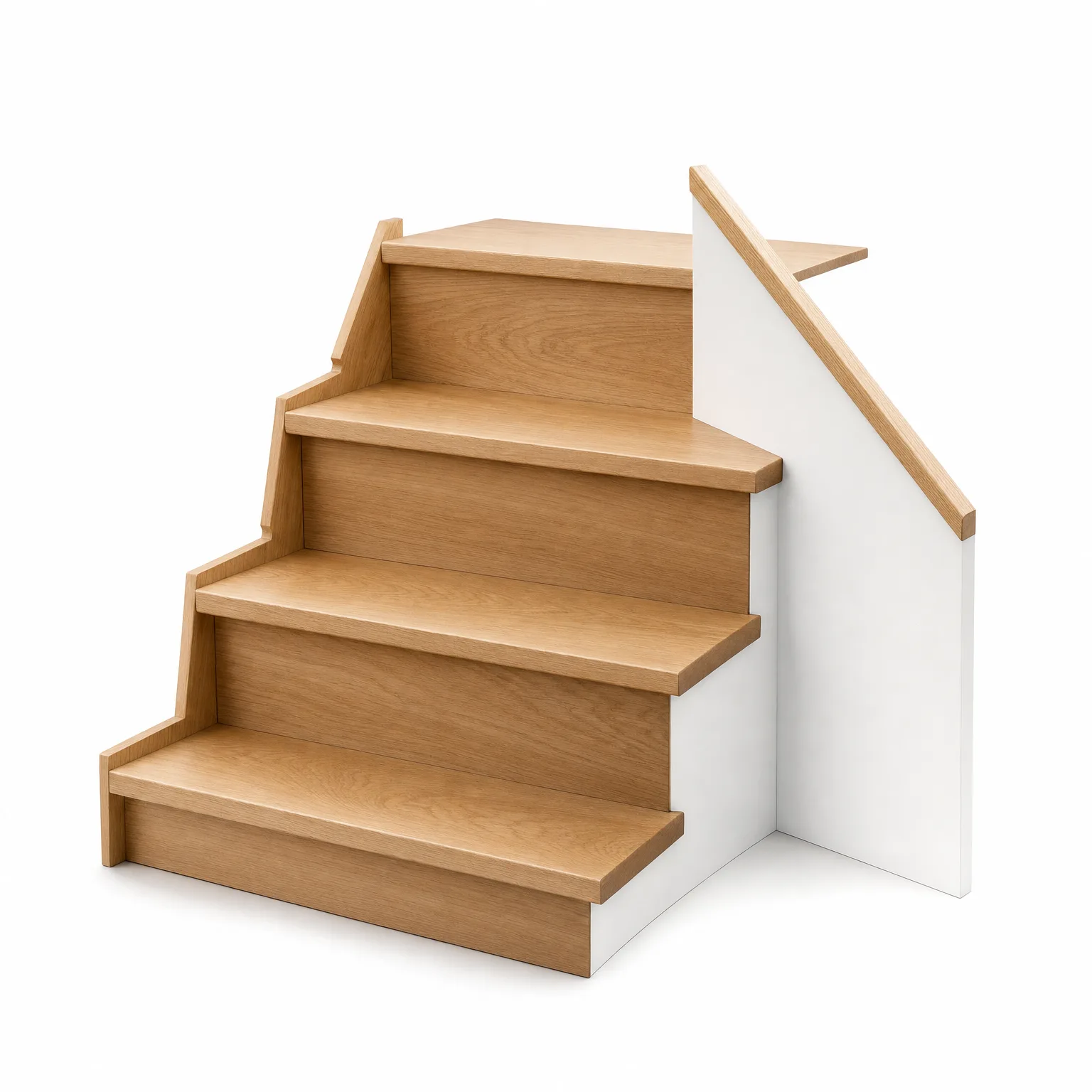
Stairs
A staircase or a single step replaces a step platform, a low plyo box and a stair climber: step-ups, calf raises and stair climbing. -

Dumbbells
A pair of short handles with a weight at each end. One pair trains every major muscle group, at home or in a gym.
Often used with
-
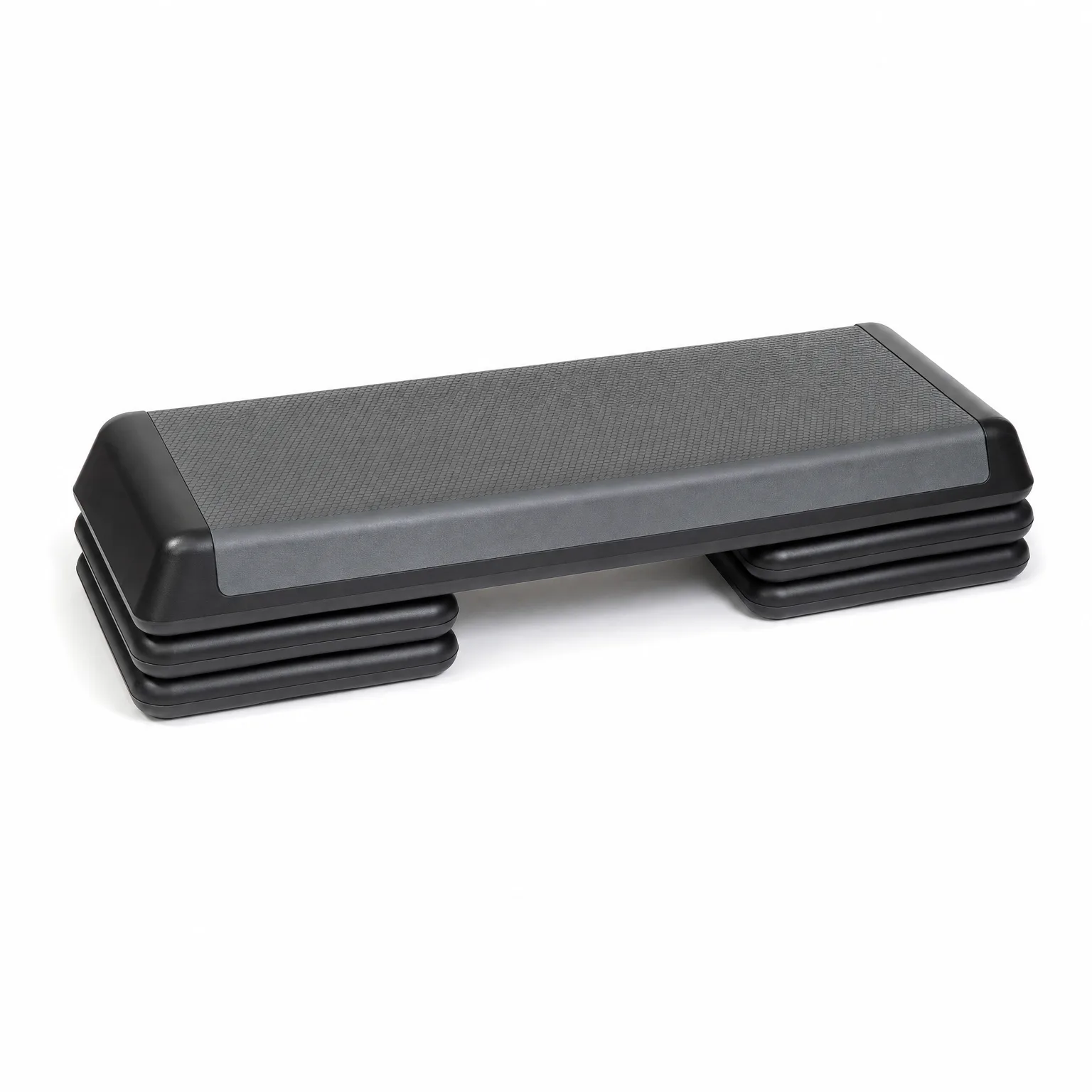
Step platform
A low, wide platform with removable risers. Used for step aerobics, step-ups, calf raises and as a low bench. -
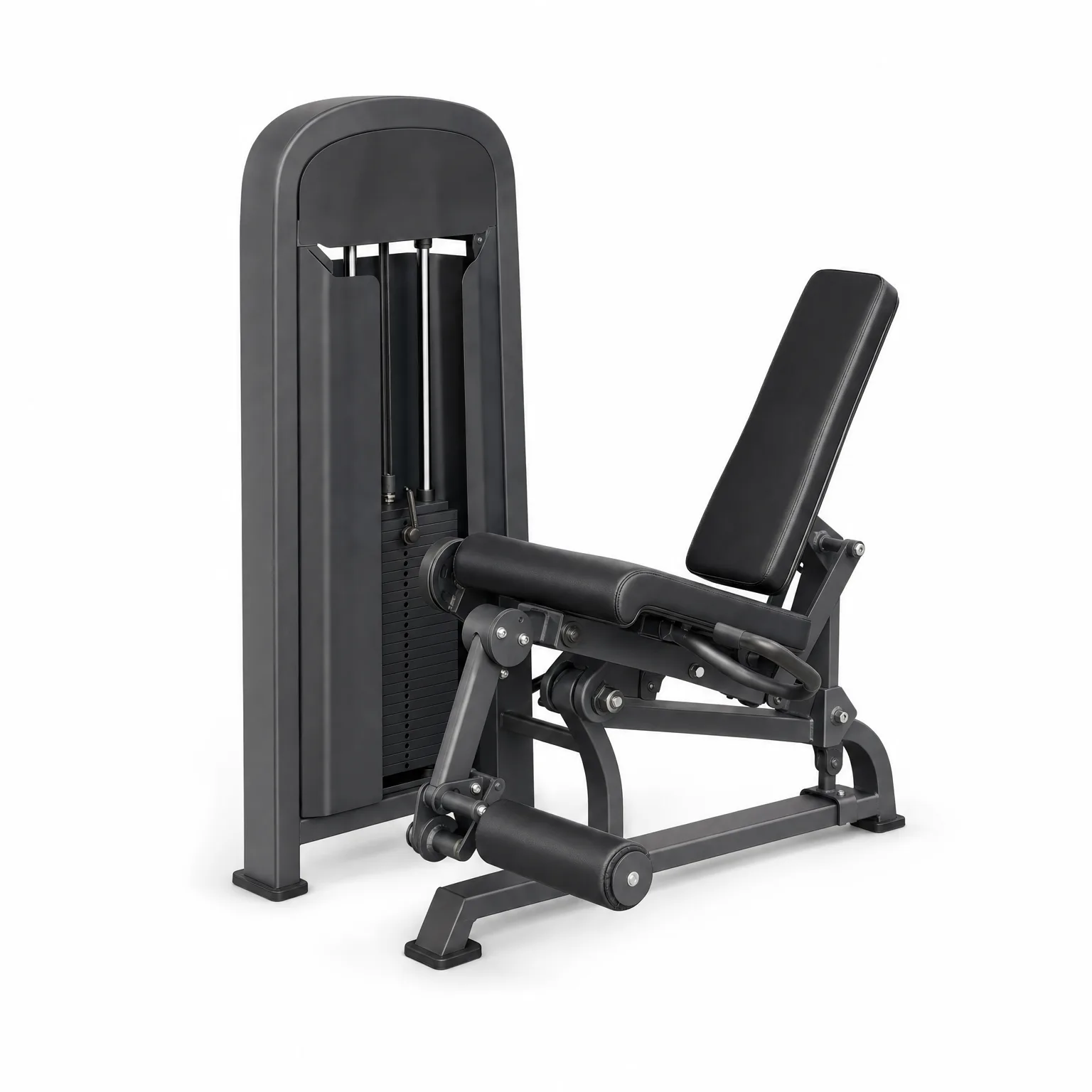
Leg curl machine
A machine with a padded roller behind the ankles. You bend the knees against the load to isolate the hamstrings. -
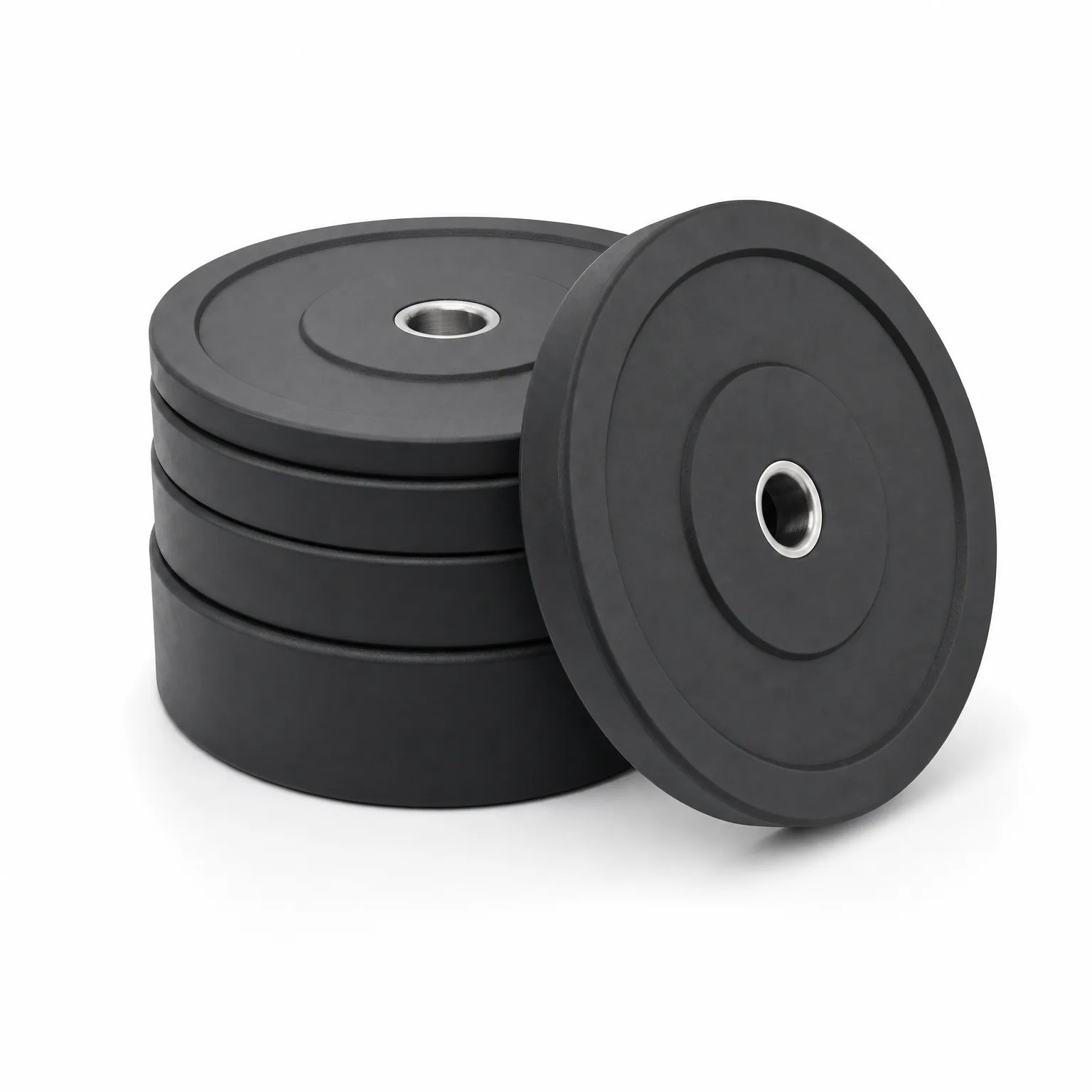
Weight plates
Flat discs that slide onto a barbell or machine to set the load. A single plate also works as a hand-held weight.
Questions about calf raise machine
Seated vs standing calf raise: what is the difference?
Standing raises are done with straight knees and work the gastrocnemius, the two-headed muscle that shapes the calf, along with the soleus. Seated raises bend the knee, which takes the gastrocnemius partly out and shifts the work to the soleus beneath it. A full calf program uses both.
What muscles does the calf raise machine work?
The gastrocnemius and the soleus, which together form the calf and attach to the heel through the Achilles tendon. Small muscles of the foot and lower leg help keep the ankle steady.
How many reps should I do for calves?
A common approach is 2–4 sets of 8–15 reps, two or three times a week, with a pause at the bottom and at the top of each rep. Range and control matter more than the exact number.
Does foot position matter on calf raises?
A little. Toes pointing straight ahead is the standard position and the one to learn first. Turning the toes slightly in or out shifts the emphasis somewhat between the inner and outer parts of the calf, but full range has a larger effect than foot angle.
Can I do calf raises without a machine?
Yes. Stand on the edge of a stair on one leg, hold the rail for balance, drop the heel and rise fully. When 15 reps become easy, hold a dumbbell or wear a loaded backpack.
Build programs around what your client has
This guide comes from OnlineFitness.app, the app online coaches run their clients in.
Free for life for the first 100 coachesNo card