Jump rope
A rope with two handles that you swing over your head and jump. Hard cardio and footwork practice that fits in a pocket.
In short
A jump rope is a length of cord, cable or beaded line with a handle at each end. You swing it around your body and hop over it on each turn. It is used for cardio, warm-ups, coordination and footwork, and it raises the heart rate within the first minute.
It suits anyone with enough space and ceiling height to swing it. The calves do most of the work, with the thighs, glutes, forearms and trunk helping. Timing takes a little practice, so the first sessions are short.
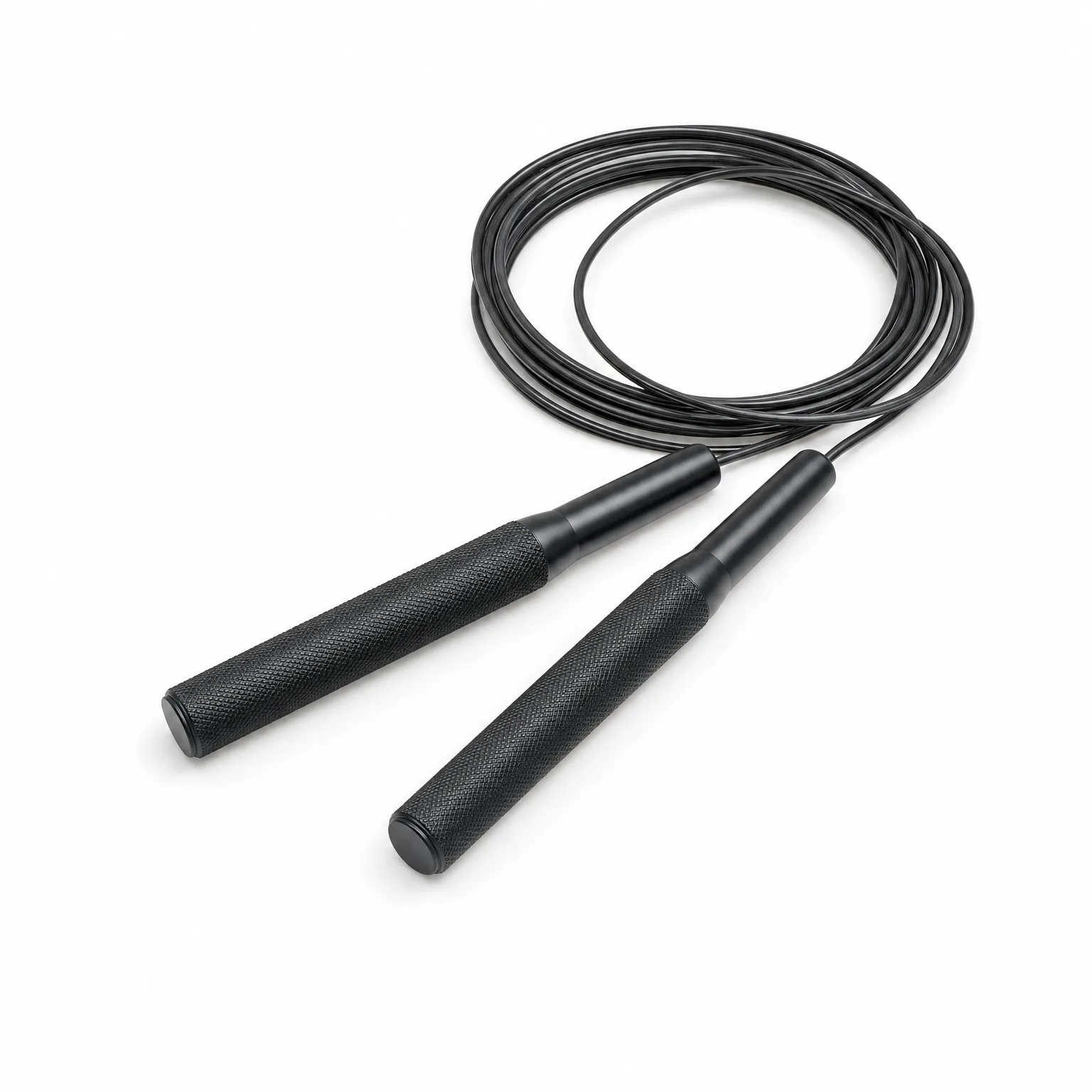
- Category
- Cardio
- Where
- Home, Gym, Outdoors, Travel
- Level
- Beginner and up
- Space
- Fits in a drawer or a bag
- Typical sizes
- Ropes are 2.4–3.0 m (8–10 ft) long and most are adjustable; handles are 12–20 cm (5–8 in)
- Also called
- skipping rope, speed rope, jumping rope, skip rope, weighted jump rope, beaded rope
What it is used for
- Warm-ups of 2–5 minutes before training
- Interval cardio: rounds of 30–60 seconds with rests
- Footwork and rhythm for boxing and other sports
- Skill practice such as double unders and crossovers
- Short conditioning blocks inside circuits
Types
PVC rope. A light plastic cord, the common all-round type. Fast enough for most skills and cheap to replace.
Beaded rope. Plastic beads on a cord. Heavier and slower, holds its arc well and gives clear feedback, which makes it the easiest for learning.
Wire speed rope. A thin steel cable with bearing handles, built for fast turns and double unders. Stings on a miss and wears quickly on rough ground.
Weighted rope. A thick, heavy rope or weighted handles. Slower turns that work the shoulders, forearms and grip harder.
Cordless rope. Two handles with short weighted cords and no rope between them. For low ceilings and tight rooms. You practice the rhythm without anything to trip on.
How to choose
Size the rope to your height
Stand on the middle of the rope with one foot and pull the handles straight up. For beginners the tops of the handles should reach the armpits. With experience, shorten it so they reach the lower chest. As a rough guide, total rope length is your height plus about 90 cm (3 ft).
Start with a slower rope
A beaded or 5 mm PVC rope turns slowly enough for you to feel where it is. Thin wire ropes are for people who already jump comfortably and want speed.
Make sure the length adjusts
Most ropes shorten with a screw or clamp in the handle. Leave a little spare length at first and trim only after a few sessions, when you know what suits you.
Check the handles
The rope should turn freely in the handle, on a swivel or bearing, without twisting. Handles should be long enough to hold comfortably and not slip in a sweaty hand.
How to start using it
- Pick the surface and the space. Jump on a surface with a little give: a rubber gym floor, a wooden floor or a jump rope mat. Avoid bare concrete for long sessions. You need about 30 cm (1 ft) of clearance above your head and clear space in front and behind.
- Set your posture. Stand tall, elbows close to the ribs, hands slightly in front of the hips and a little out to the sides. Look ahead, not at your feet.
- Turn with the wrists. Start with the rope behind your heels and swing it over. The turn comes from small circles of the wrists, while the upper arms stay nearly still.
- Jump low. Hop just 2–3 cm (about 1 in) off the floor, on the balls of the feet, with soft knees. One jump per turn, with no extra bounce in between.
- Build up in short rounds. Begin with 10 rounds of 20–30 seconds of jumping and 30–60 seconds of rest, two or three times a week. The calves and feet need a few weeks to adapt, so add time gradually.
Common mistakes
Jumping too high
Big jumps and kicking the heels back or tucking the knees waste energy and break the rhythm. The rope is a few millimeters thick, so a small hop clears it.
Swinging from the shoulders
Wide arm circles tire the shoulders and make the rope's path uneven. Keep the elbows in and let the wrists do the turning.
Hands drifting wide or high
As you tire, the hands move away from the body, which shortens the rope and causes trips. Keep them near hip height and just in front of you.
Rope too long or too short
A long rope slaps the floor in front of you and drags. A short one catches your feet or head. Re-check the length against your armpits or chest.
Doing too much in the first week
Jumping loads the calves and shins far more than it seems to in the moment. Long first sessions often lead to several days of soreness. Start with a few minutes in total.
What to use instead
Without a rope, mimic the movement: small hops on the spot while turning the wrists give most of the cardio effect. Fast step-ups on a stair or a step platform raise the heart rate with less bouncing. An agility ladder trains the quick footwork. At home with neighbors below, a mini stepper is a quieter way to get a short leg-driven cardio session.
-
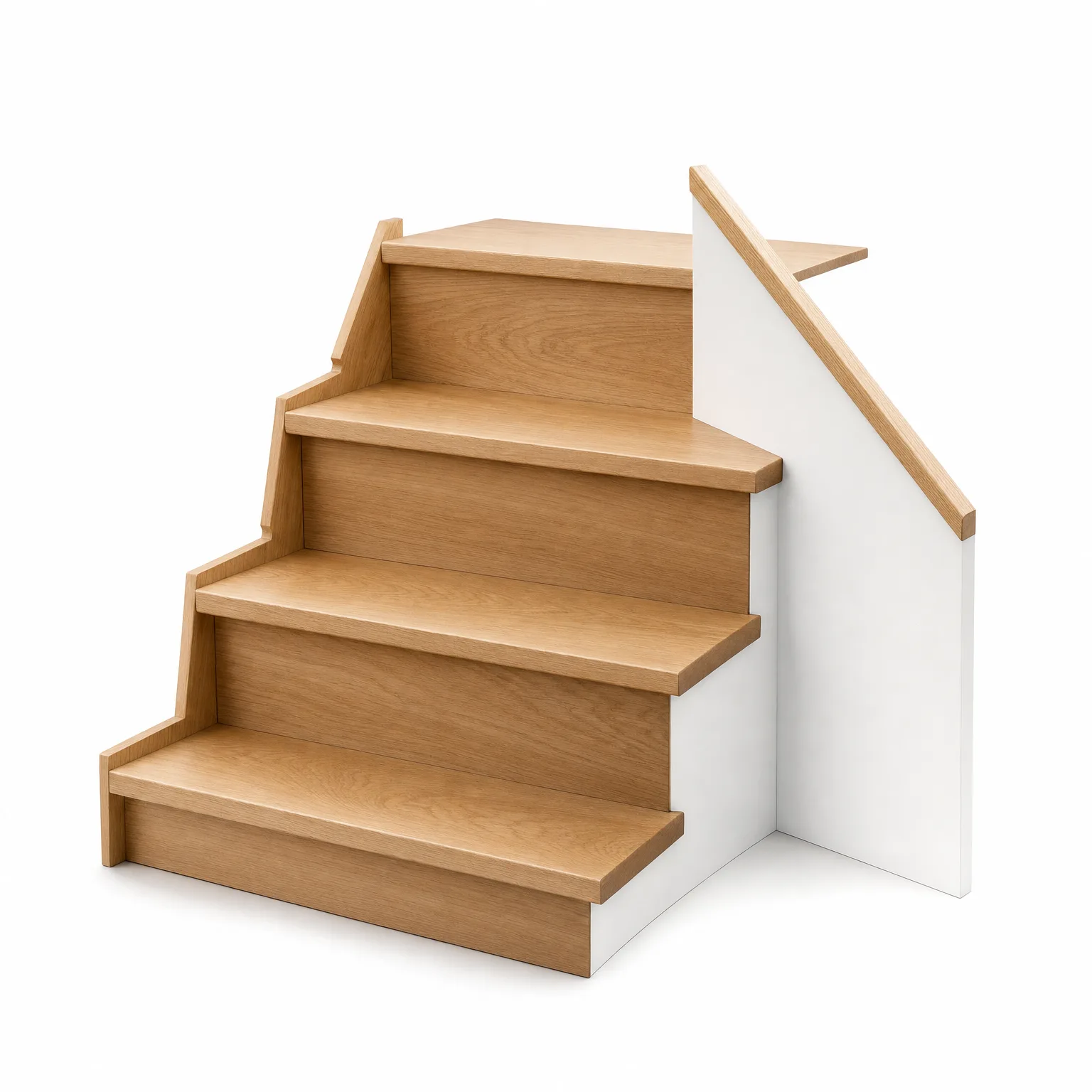
Stairs
A staircase or a single step replaces a step platform, a low plyo box and a stair climber: step-ups, calf raises and stair climbing. -
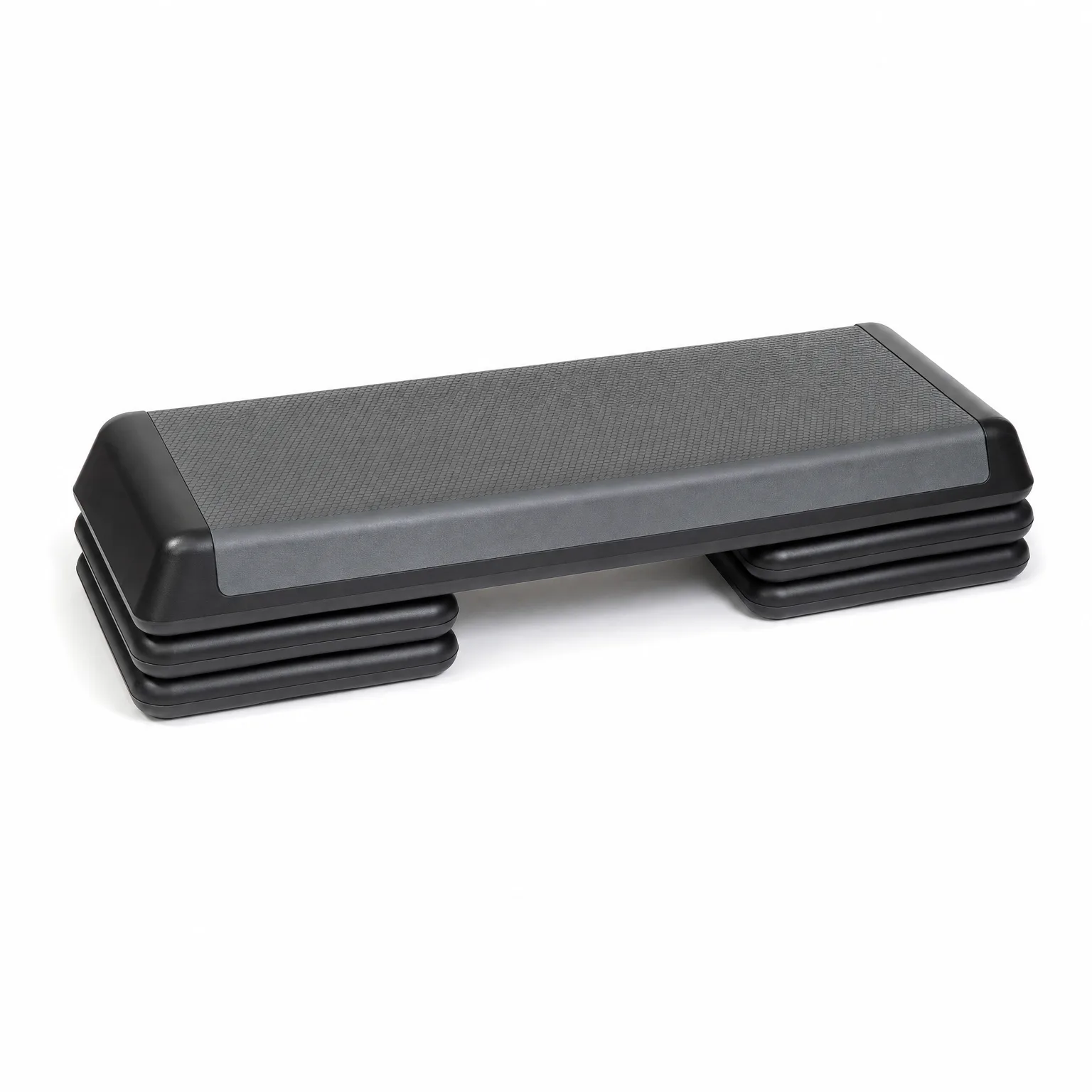
Step platform
A low, wide platform with removable risers. Used for step aerobics, step-ups, calf raises and as a low bench. -
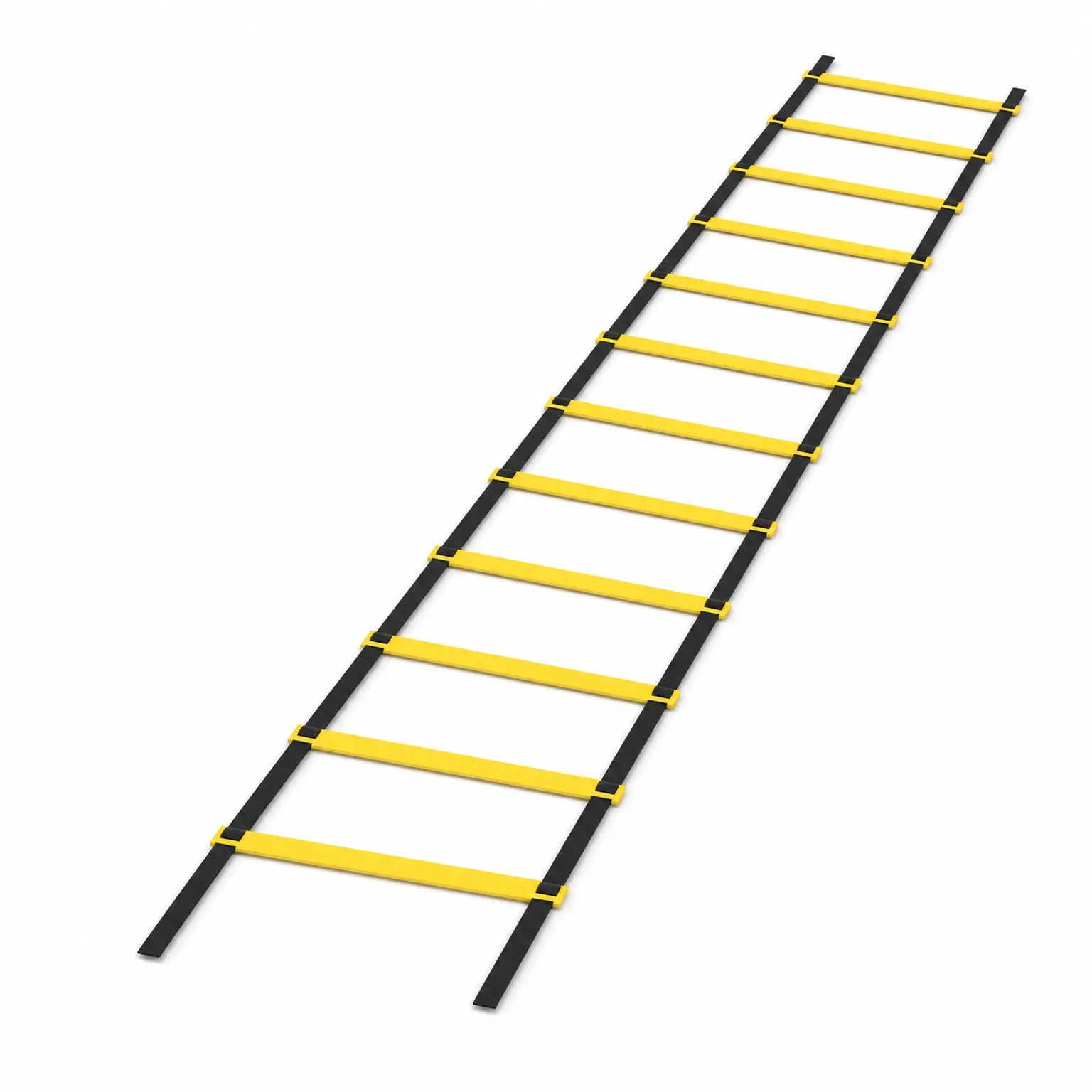
Agility ladder
A flat ladder of straps and rungs laid on the ground. You step through the squares in set patterns to train quick, coordinated footwork. -
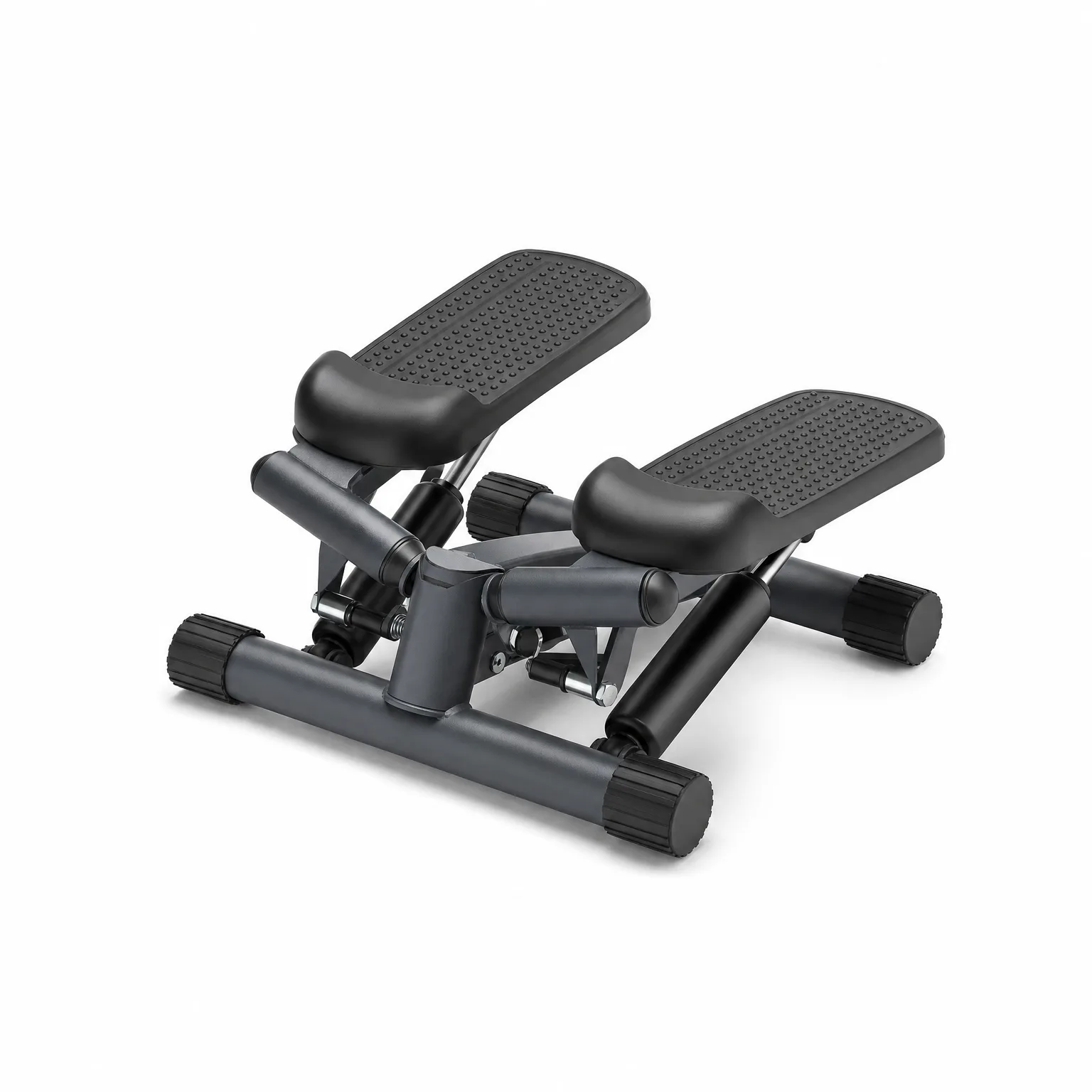
Mini stepper
A small home machine with two pedals on hydraulic cylinders. You step in place to train the legs and raise the heart rate.
Often used with
-

Exercise mat
A cushioned, non-slip surface for floor exercises, stretching and yoga. The first thing most people need to train at home. -
Agility ladder
A flat ladder of straps and rungs laid on the ground. You step through the squares in set patterns to train quick, coordinated footwork. -
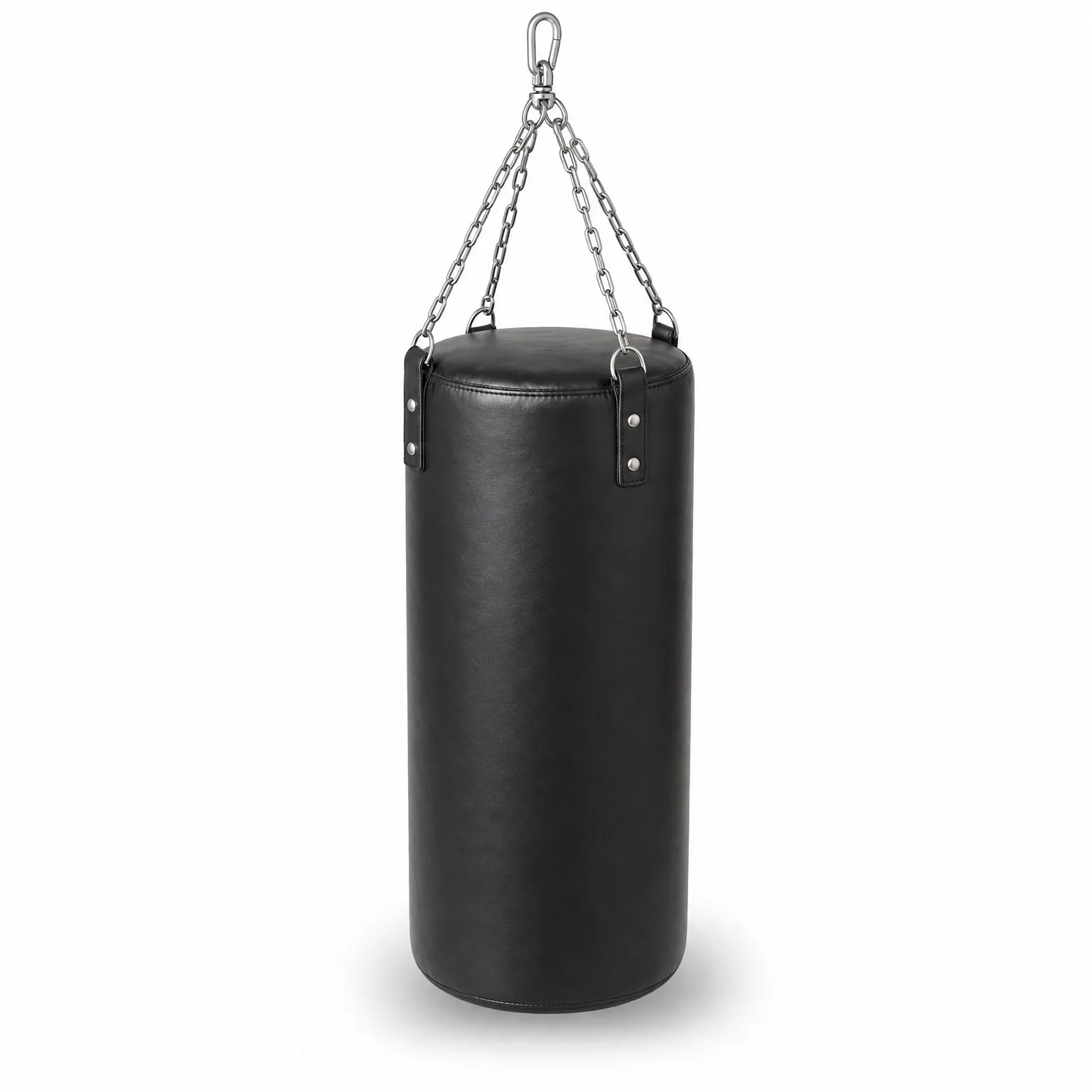
Punching bag
A heavy, padded bag that hangs from a ceiling mount, wall bracket or stand. Used for punches and kicks as boxing practice and hard conditioning.
Questions about jump rope
How long should a jump rope be for my height?
Stand on the middle of the rope with one foot and pull the handles up along your body. For a beginner the handle tops should reach the armpits, and for an experienced jumper the lower chest. As a rough figure, add about 90 cm (3 ft) to your height. Someone 170 cm (5 ft 7 in) tall starts at around 2.6 m (8 ft 6 in).
How long should a beginner jump rope?
Start with 5–10 minutes in total, broken into rounds of 20–30 seconds with rests between them, two or three times a week. Add a little each week. Ten to fifteen minutes of actual jumping is already a full session.
What type of jump rope is best for beginners?
A beaded rope or a medium-weight PVC rope. Both turn slowly enough to learn the timing and let you feel where the rope is. Leave thin wire speed ropes for later.
Is jumping rope better than running?
Neither is better. Both are effective cardio. Rope work needs very little space and time, trains timing and coordination and is easy to do in short rounds. Running is easier to sustain for long periods and needs no skill practice. Many people use the rope as a warm-up or on days when they cannot get out.
Can I jump rope on concrete?
Short sessions are possible, but concrete is hard on the legs and wears ropes quickly, especially wire and PVC ones. A rubber floor, a wooden floor or a jump rope mat is kinder to both. If concrete is all you have, use a mat and a beaded rope.
Build programs around what your client has
This guide comes from OnlineFitness.app, the app online coaches run their clients in.
Free for life for the first 100 coachesNo card