Equipment Functional and conditioning
Agility ladder
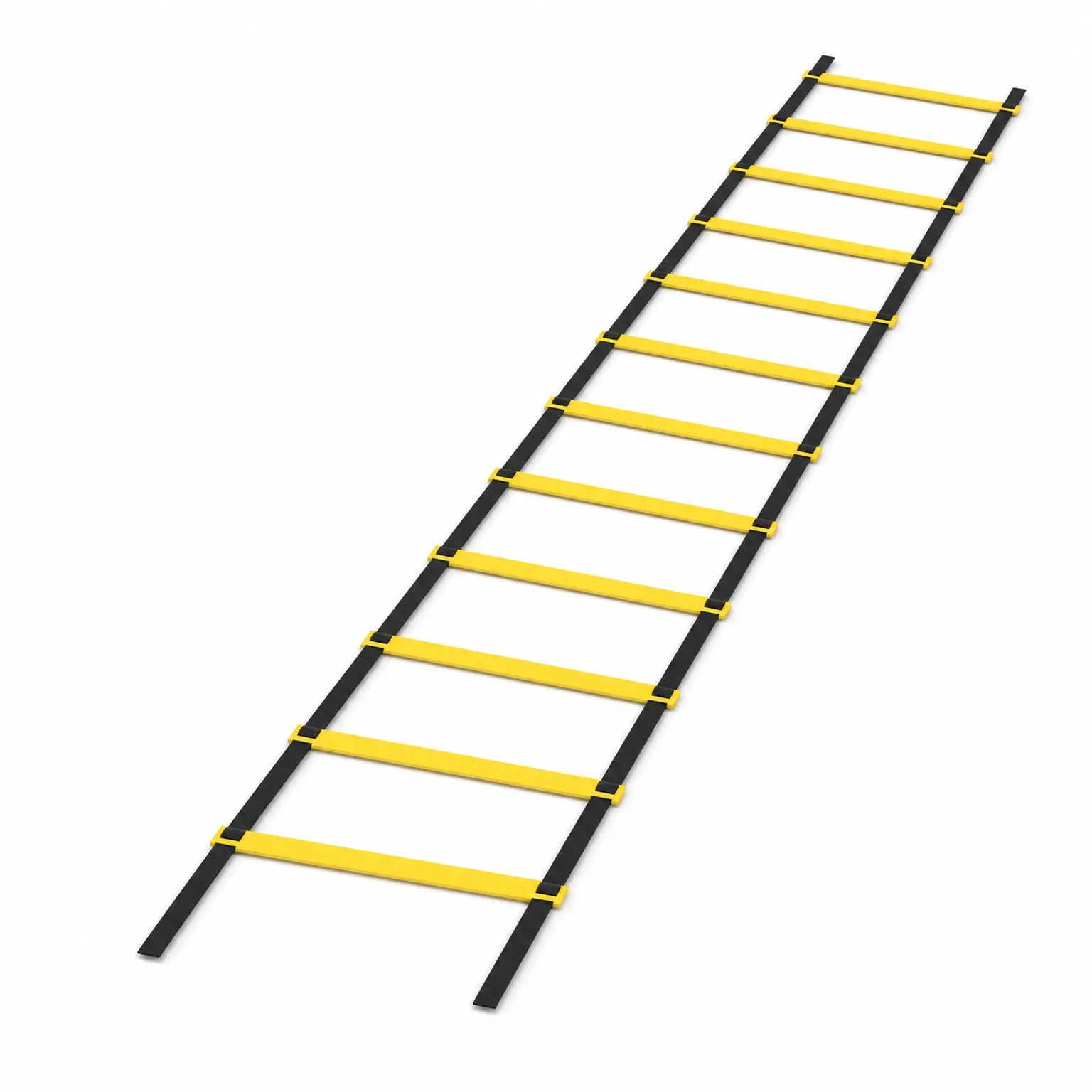
A flat ladder of straps and rungs laid on the ground. You step through the squares in set patterns to train quick, coordinated footwork.
In short
An agility ladder is a flat ladder made of two long straps joined by plastic rungs, laid on the ground. You move through the squares with quick steps, hops and shuffles in set patterns. It trains foot speed, rhythm and coordination, and it works well as a warm-up or as light, low-equipment cardio.
It rolls up into a small bag and works on any flat surface, indoors or out. The drills are easy to scale: walk through a pattern to learn it, then speed up. It is popular in team sports, with children's groups and in home workouts where space is limited.
- Category
- Functional and conditioning
- Where
- Home, Gym, Outdoors, Travel
- Level
- Beginner and up
- Space
- Fits in a drawer or a bag
- Typical sizes
- 4–9 m (13–30 ft) long with 8–20 rungs; squares about 40–50 cm (16–20 in) wide and 38–45 cm (15–18 in) long
- Also called
- speed ladder, footwork ladder, agility training ladder, speed and agility ladder, rope ladder, floor ladder
Muscles it works
- Also works
- Glutes, Hamstrings, Tibialis anterior, Adductors
What it is used for
- Footwork drills: one foot or two feet in each square, in-and-out steps, lateral shuffles
- Warm-ups that raise the heart rate and wake up the ankles and calves
- Low-height hops and jumps on one or two legs
- Coordination practice with patterns that cross the feet or change direction
- Light conditioning circuits, alone or between strength exercises
Types
Adjustable rungs. The rungs slide along the straps, so the squares can be made shorter or longer. The most common type.
Fixed rungs. Rungs sewn or riveted in place. The spacing never shifts during a session, but cannot be changed.
Flat rungs. Thin, flat plastic slats that lie close to the ground and are less likely to catch a foot than round ones.
Linkable sections. Short ladders with clips on the ends that join into a longer one, or lay out at an angle for change-of-direction drills.
How to choose
Length for your space
A 4 m ladder with about 8 rungs fits a living room or hallway and is enough for most drills. Choose 6–9 m if you train outdoors or want longer runs.
Flat rungs and wide straps
Flat rungs sit lower and move less when clipped by a foot. Wide nylon straps tangle less than thin cords when you roll the ladder up.
Adjustable or fixed
Adjustable rungs let you shorten the squares for children or lengthen them for bounding drills. Fixed rungs suit coaches who want the same layout every session.
Think about the surface
On grass or turf, a ladder with pegs or weighted ends stays in place. On smooth indoor floors, look for one that lies flat, and tape the ends down if it slides.
How to start using it
- Lay it flat and straight. Unroll the ladder on a level, non-slip surface with clear space at both ends. Pull it straight and even out the rung spacing to about 40–45 cm. Wear shoes with grip.
- Walk each pattern first. Learn the foot order at walking pace: for example, one foot in each square, then both feet in each square, then two steps in and two steps out to the side. Speed comes after the pattern is automatic.
- Stay light on the feet. Land on the balls of the feet with short ground contact, knees slightly bent, hips low and arms swinging as in running. Try to look ahead and not at the rungs once you know the pattern.
- Keep the runs short. Do 2–4 passes of a drill, walk back as rest, and move to the next one. Five to ten minutes covers four or five patterns. Stop when the footwork gets sloppy.
Common mistakes
Going fast before going right
Racing through a pattern you have not learned means kicking rungs and practicing mistakes. Slow down until every step lands clean, then add speed.
Staring at the feet
Looking straight down rounds the back and is the opposite of what most sports ask for. Use your eyes at first, then lift your gaze.
Flat, heavy steps
Stomping heel first is slow and noisy. Stay on the front of the foot and keep the steps quick and quiet.
Expecting it to build sprint speed
Ladder drills train rhythm and coordination in small steps. Straight-line speed and sharp cutting come mainly from sprinting, strength work and change-of-direction drills at full pace. Treat the ladder as a warm-up and a skill tool.
What to use instead
A ladder is easy to copy: chalk on pavement, tape on a floor or a row of sticks marks the same squares. A jump rope trains quick, light ground contacts and rhythm. Fast step-ups and toe taps on the bottom stair or on a low step platform cover the conditioning side of ladder drills in very little space.
-
Jump rope
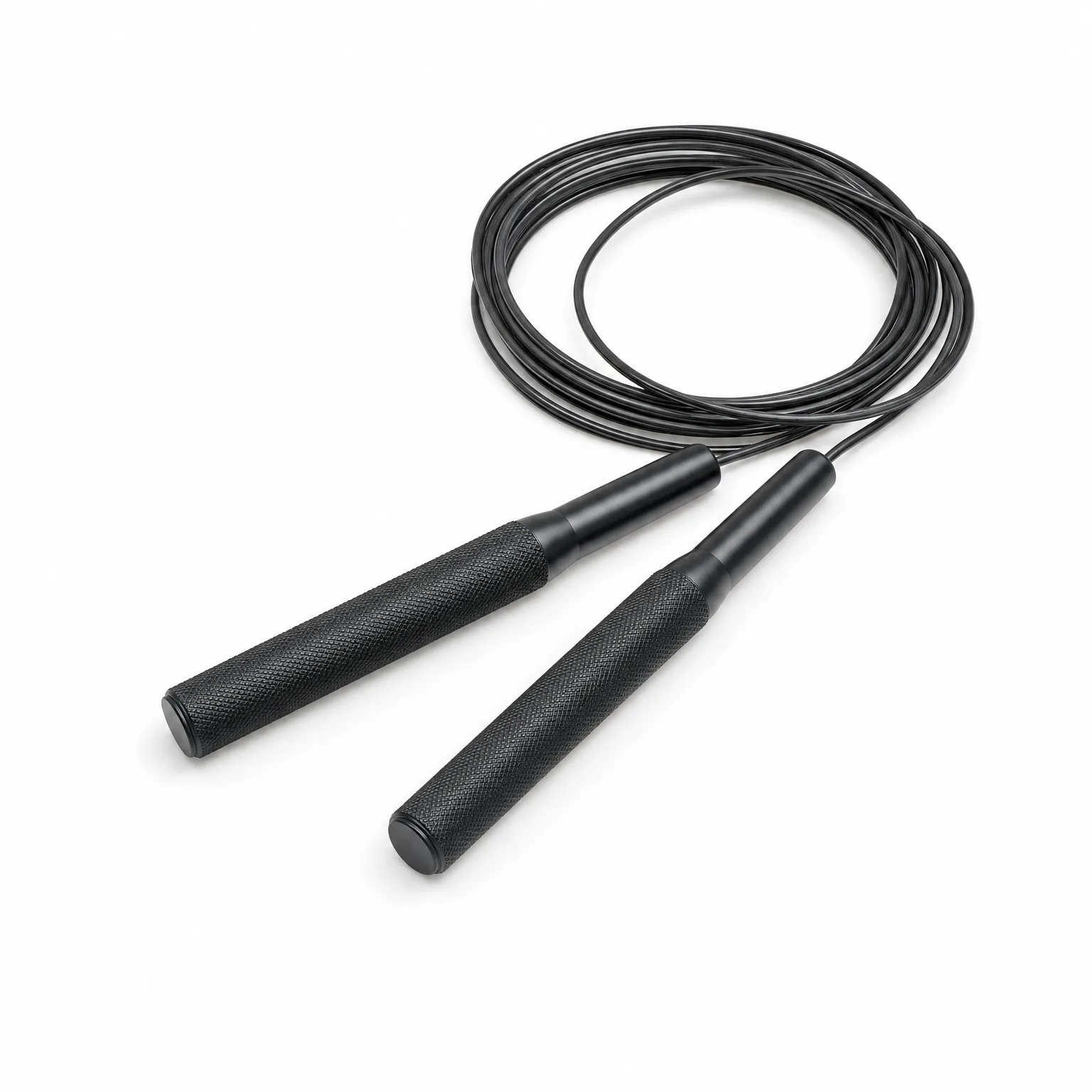
A rope with two handles that you swing over your head and jump. Hard cardio and footwork practice that fits in a pocket. -
Stairs
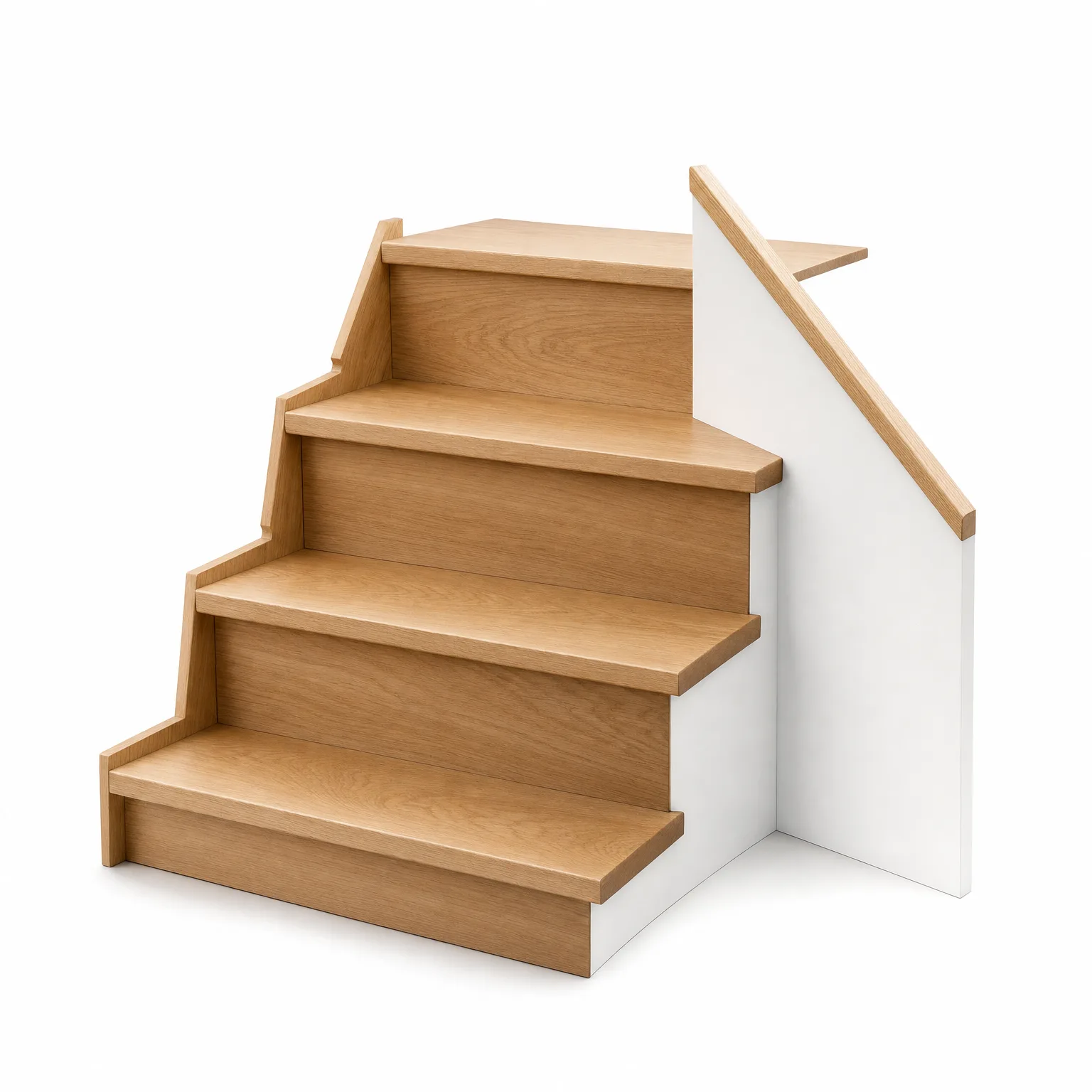
A staircase or a single step replaces a step platform, a low plyo box and a stair climber: step-ups, calf raises and stair climbing. -
Step platform
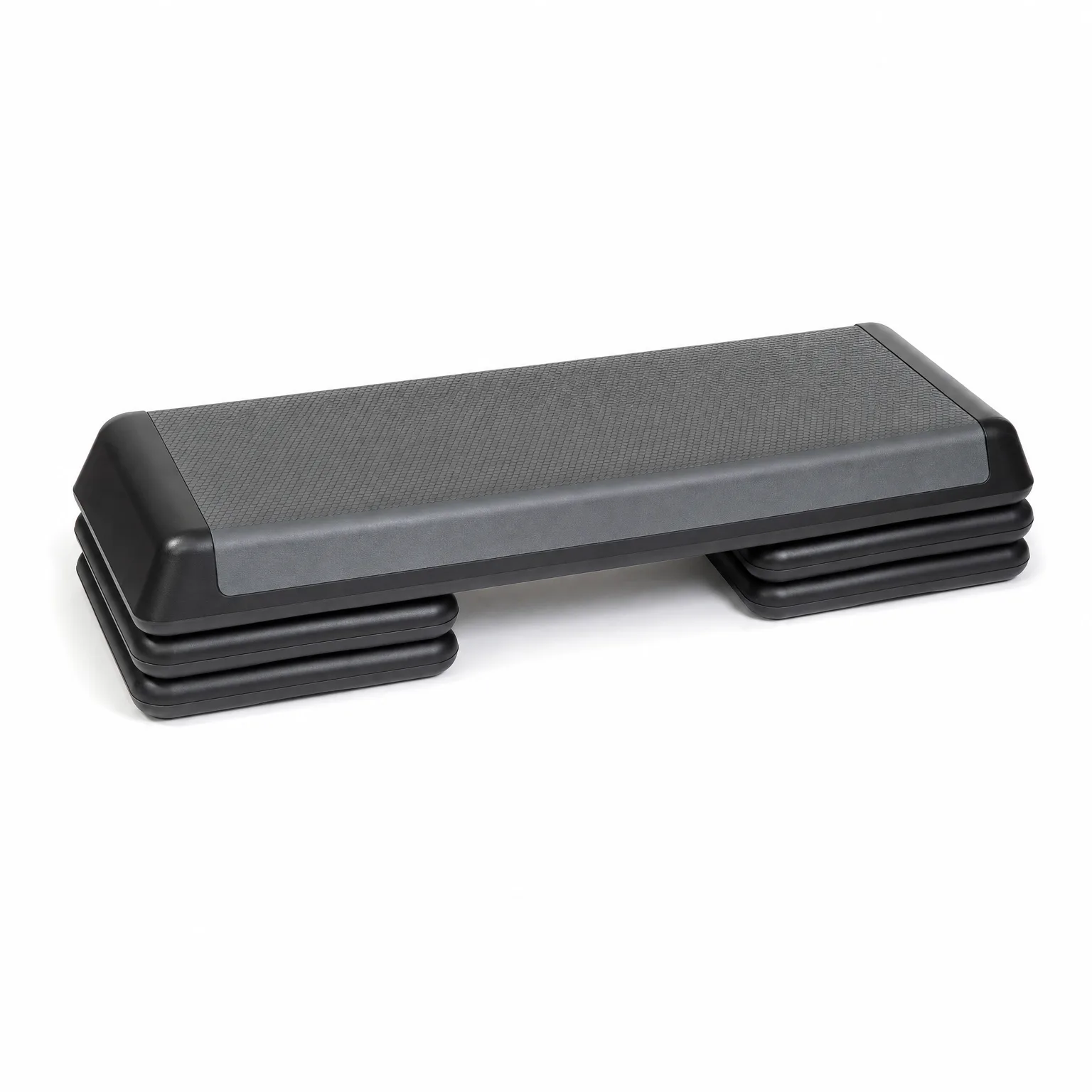
A low, wide platform with removable risers. Used for step aerobics, step-ups, calf raises and as a low bench.
Often used with
-
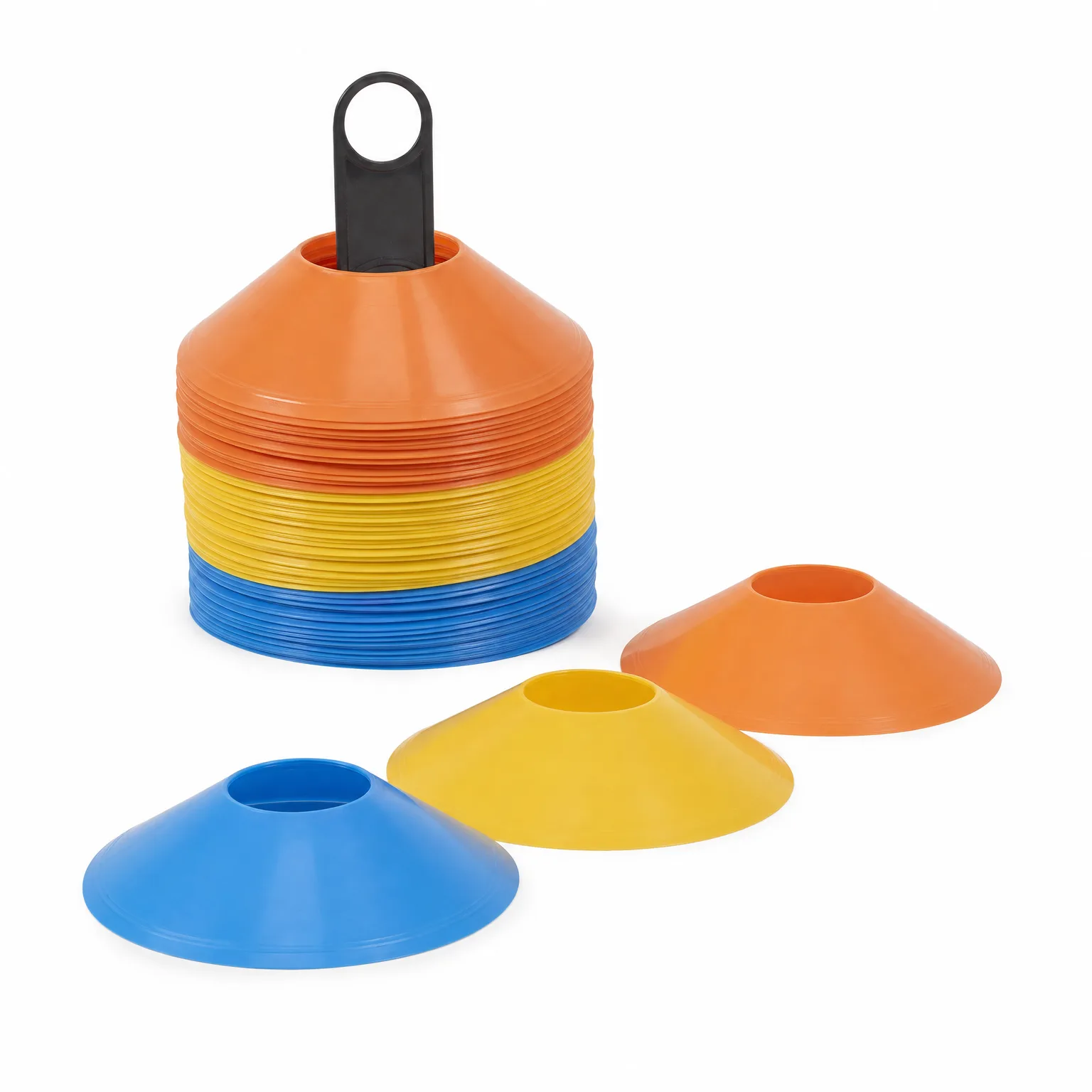
Training cones
Small plastic markers that set out distances, turning points and lanes for sprints, shuttles, agility drills and circuits. -
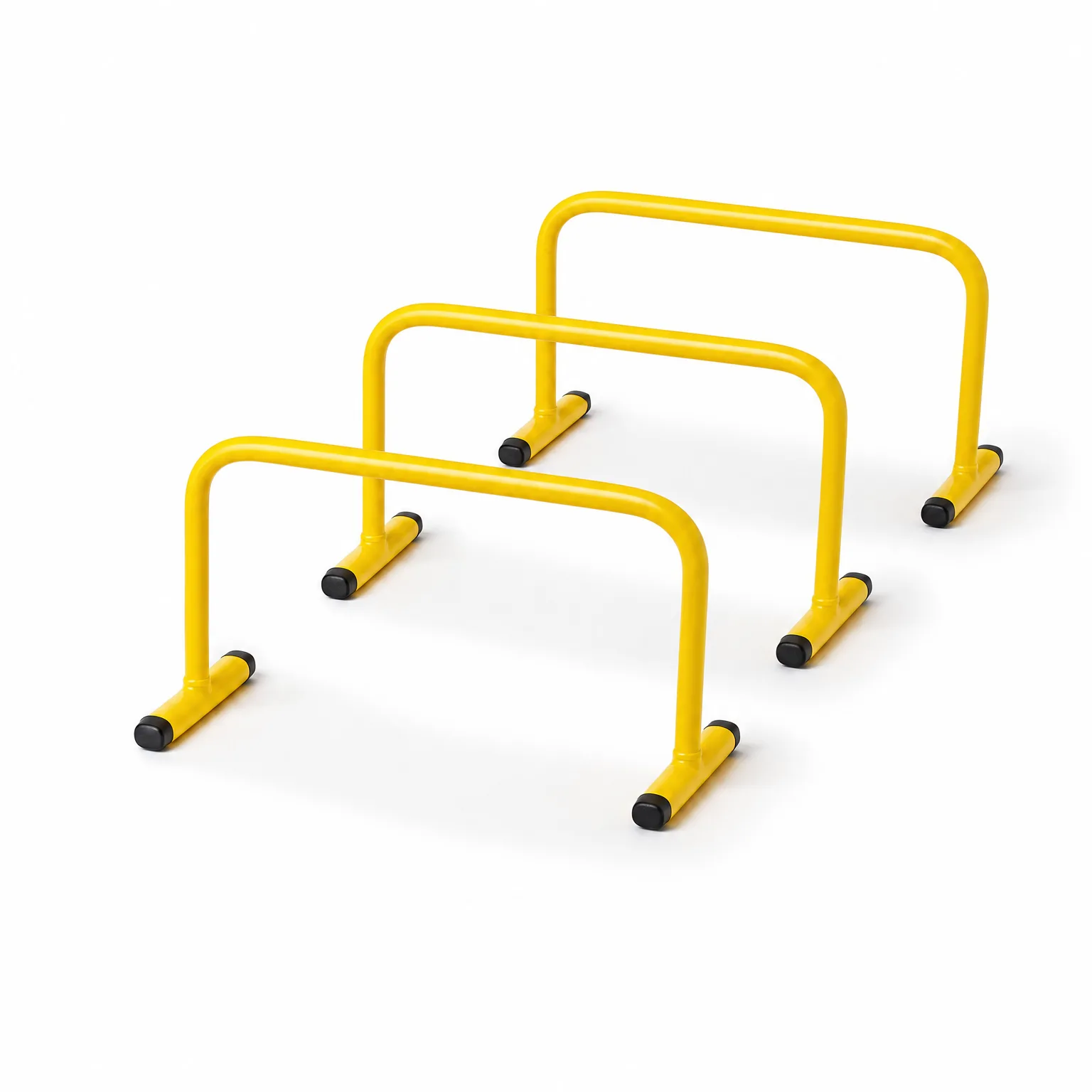
Agility hurdles
Low, light barriers set in a row for running, stepping and hopping drills that train quick ground contact, knee lift and jumping. -
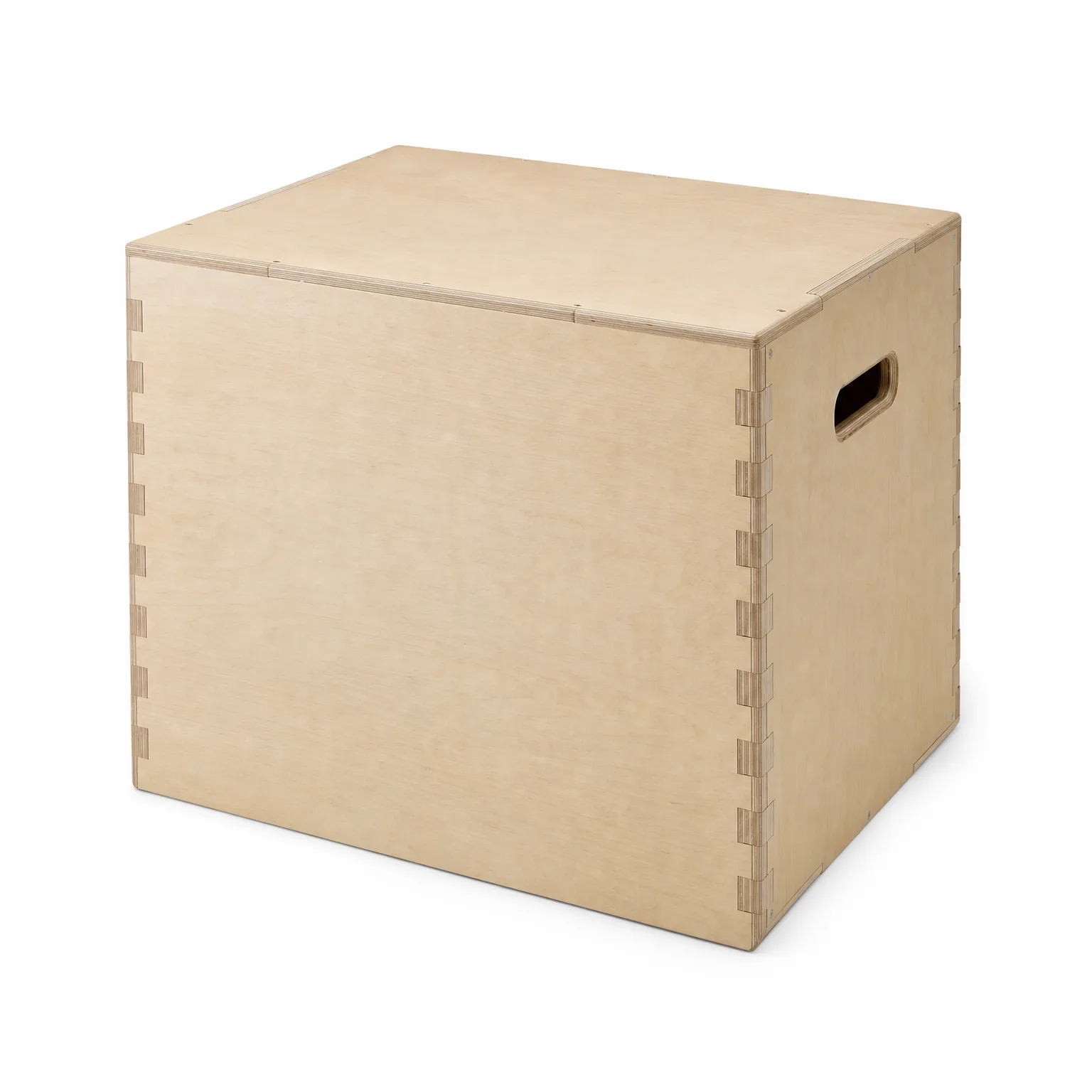
Plyo box
A sturdy box for jumping onto and stepping up on. Used for box jumps, step-ups, box squats and raised push-ups. -
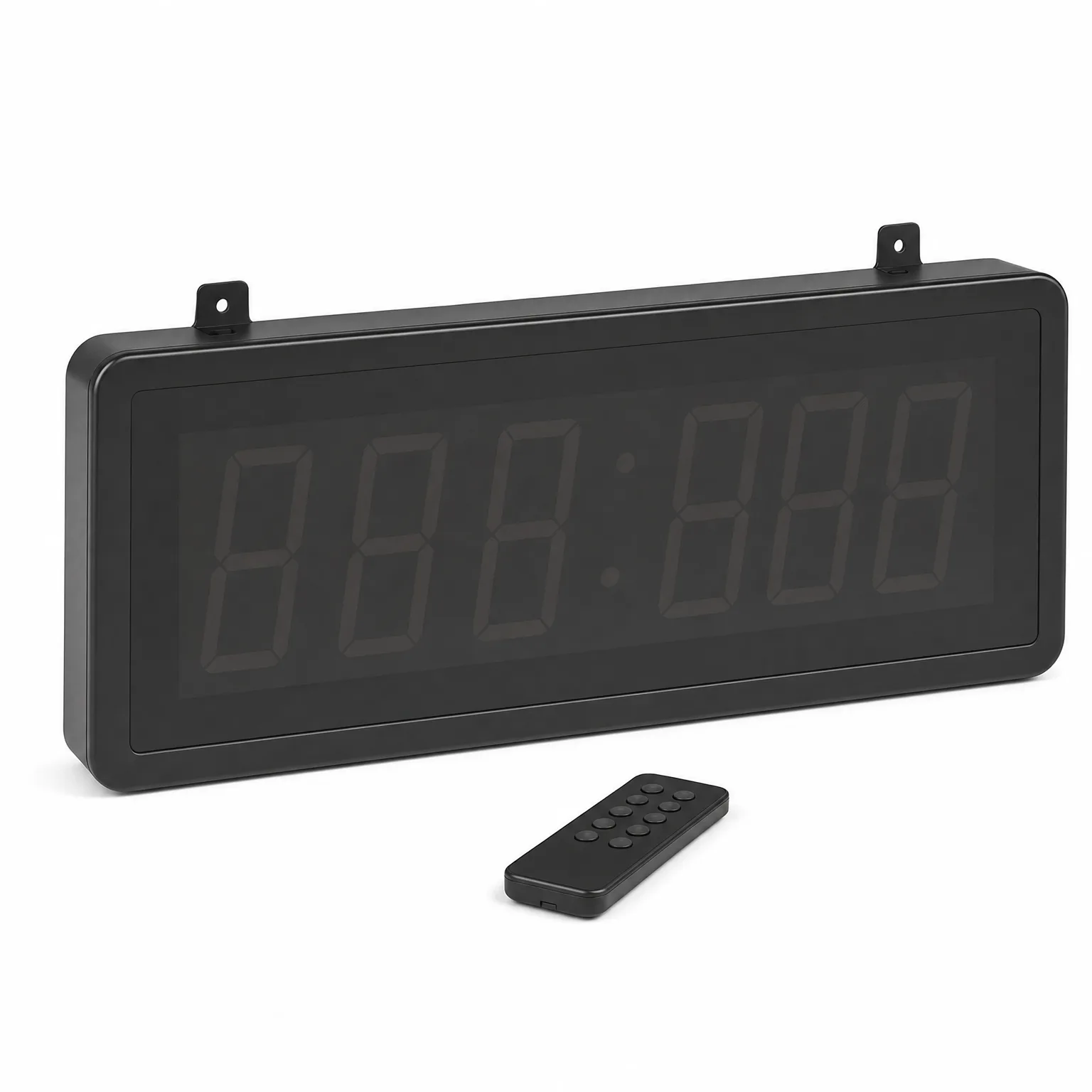
Interval timer
A wall clock or phone app that counts work and rest periods and signals each change, for tabata, EMOM, AMRAP, rounds and timed rests.
Questions about agility ladder
Do agility ladders really work?
They work for what they train: coordination, rhythm and quick, precise foot placement, plus a good warm-up. Evidence that ladder drills alone improve sprint speed or game agility is weak. Those qualities come more from sprinting, strength training and reactive change-of-direction practice.
What size agility ladder should I buy?
A 4 m (13 ft) ladder with around 8 rungs suits home use and most drills. Go for 6–9 m (20–30 ft) if you have outdoor space or coach a group. Squares are usually about 40–45 cm long, and adjustable rungs let you change that.
Is an agility ladder good cardio?
It can be. Continuous ladder drills raise the heart rate like light skipping or shuttle runs, especially if you jog back instead of walking. For harder conditioning, combine ladder passes with bodyweight exercises in a circuit.
How often should I do agility ladder drills?
Two or three short sessions a week is typical, often as 5–10 minutes at the start of a workout while you are fresh. Coordination improves with frequent short practice more than with long, tiring sessions.
Can I use an agility ladder indoors?
Yes. A 4 m ladder fits most hallways and living rooms. Use it on a surface where neither the ladder nor your shoes slide. Tape the ends on smooth floors, and keep jumps low if you have neighbors below.
Build programs around what your client has
This guide comes from OnlineFitness.app, the app online coaches run their clients in.
Free for life for the first 100 coachesNo card