Equipment Measuring and tracking
Interval timer
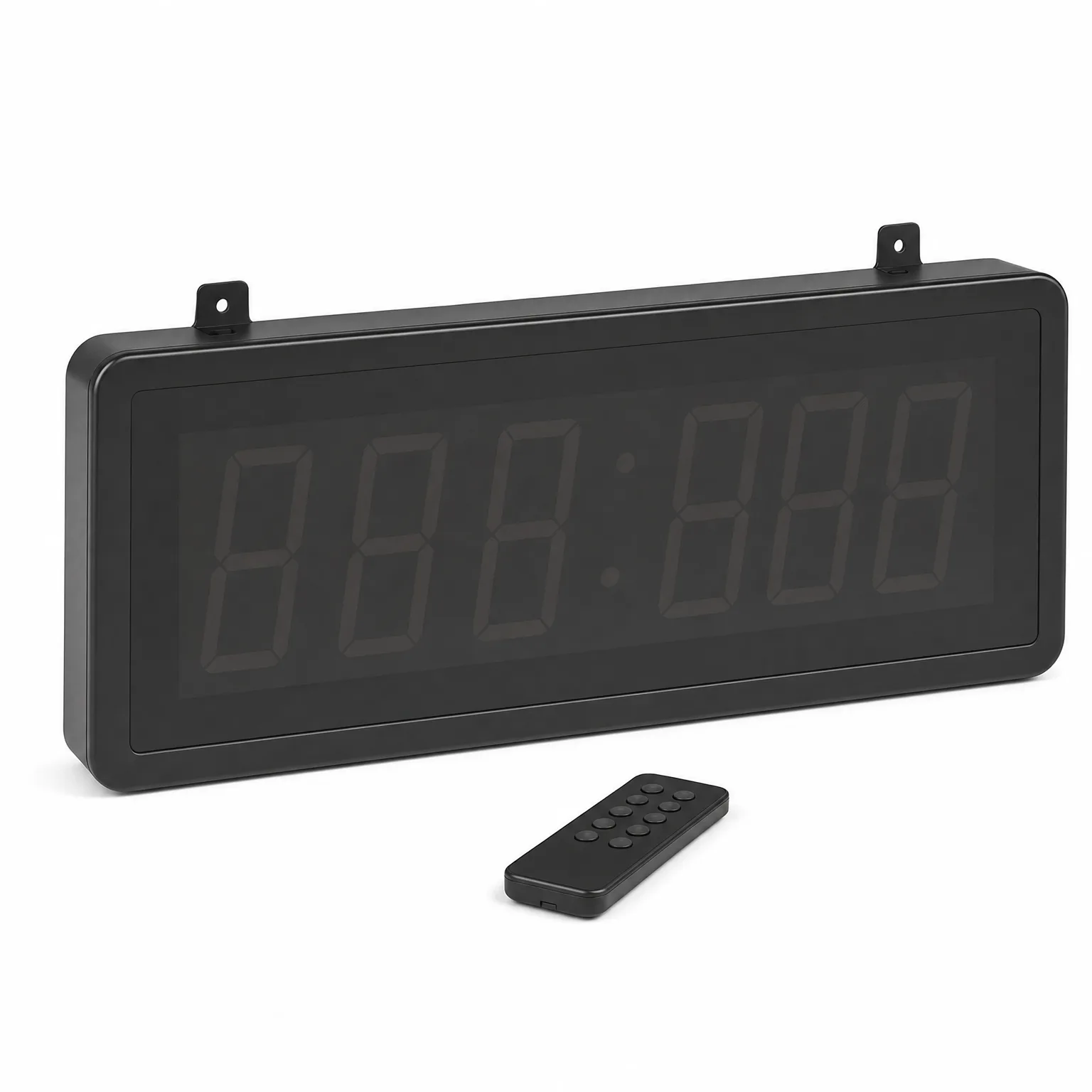
A wall clock or phone app that counts work and rest periods and signals each change, for tabata, EMOM, AMRAP, rounds and timed rests.
In short
An interval timer is a clock that counts repeating periods of work and rest and gives a signal at each change. In gyms it is usually a large LED display on the wall, visible from across the room and loud enough to hear over music. At home most people use a phone app or a watch that does the same thing.
It keeps a session honest. Rest periods stay the length you planned, intervals start on time, and you do not have to watch a clock or count seconds in your head mid-set. It is useful for any timed format, including interval training, circuits, boxing rounds and timed stretching, and equally for timing the rest between heavy sets.
- Category
- Measuring and tracking
- Where
- Home, Gym, Outdoors, Travel
- Level
- Beginner and up
- Space
- Fits in a drawer or a bag
- Typical sizes
- Wall timers are about 40–70 cm (16–28 in) wide with digits 4–10 cm (1.5–4 in) tall; pocket timers fit in a palm
- Also called
- gym timer, tabata timer, hiit timer, workout timer, emom timer, crossfit timer, gym clock, round timer
What it is used for
- Work and rest intervals for HIIT and tabata sessions
- EMOM and AMRAP workouts, circuits and stations in group classes
- Round and break timing for boxing, bag work and sparring
- Timing rest between sets in strength training
- Timed holds: planks, stretches, carries and hangs
Types
LED wall timer. A mains-powered display with a remote control and preset modes. The standard in gyms and garage setups, readable from a distance.
Phone app. A free or cheap app with custom intervals, voice or beep cues and saved workouts. Works over music and through headphones.
Pocket or clip-on timer. A small battery timer with a beep and vibration that clips to a waistband. Handy outdoors and where phones are not welcome.
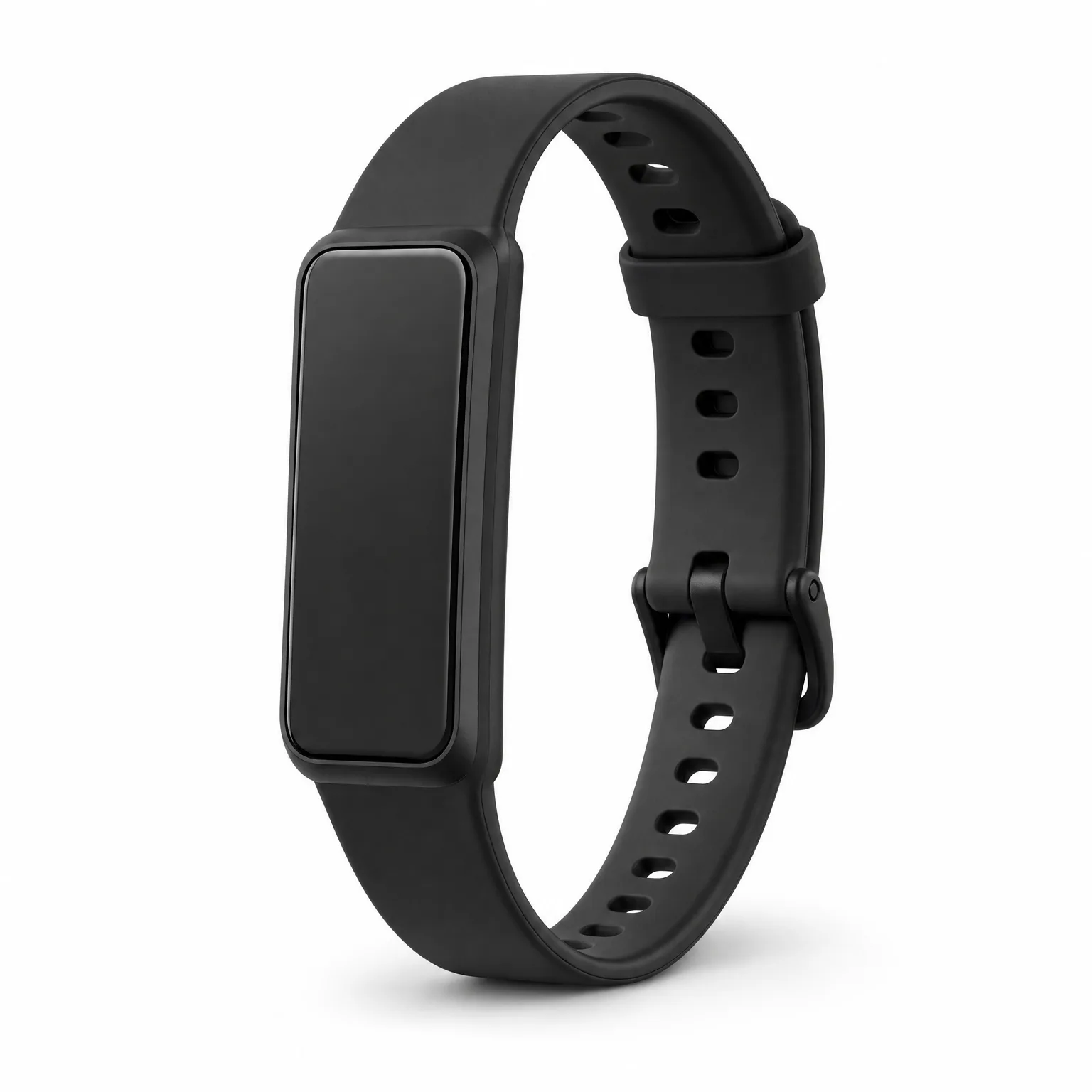
Watch timer. The interval function on a sports watch or fitness tracker. Vibrates on the wrist, so it works in noisy rooms.
Boxing round timer. A timer with a bell or lights for rounds and breaks, often with a warning signal shortly before the round ends.
How to choose
Phone app for training alone
For one person at home or in a commercial gym, an app does everything. Look for custom work and rest lengths, a set number of rounds, a countdown before the start, and audio cues that play over your music with the screen locked.
Wall timer for a shared space
For a garage gym, studio or class, a wall display lets everyone see the same clock. Check that the digits are readable from the far end of the room, that the buzzer is loud enough or can be turned down, and that the remote covers the modes you use.
The modes you need
Most training needs four: count up, count down, intervals with separate work and rest times, and a tabata preset. EMOM is a repeating one-minute countdown. Anything beyond that is optional.
Signals you will notice
Decide how the timer should reach you: a loud beep, a voice, a vibration or a color change. A three-second warning before each switch is worth having, because it lets you get into position.
How to start using it
- Learn the common formats. Tabata: 20 seconds of work, 10 seconds of rest, 8 rounds, 4 minutes in total. EMOM, every minute on the minute: start a set at the top of each minute and rest for whatever time is left. AMRAP, as many rounds or reps as possible: one countdown, and you repeat a circuit until it ends.
- Set work, rest and rounds. Enter the work time, the rest time and the number of rounds, and add a 10‑second lead-in so you can put the phone down and get ready. Save the setup if the app allows, so the next session starts with one tap.
- Pick ratios that suit your level. Beginners do well with rest equal to or longer than work, for example 30 seconds on and 30–60 seconds off. Shorter rests, such as 40 on and 20 off, are much harder. Choose the ratio that lets you keep the quality of the last round close to the first.
- Time your strength rests. Start a countdown when you finish a set: about 2–3 minutes for heavy compound lifts and 1–2 minutes for lighter accessory work. Timed rests make sessions comparable from week to week.
- Place it where you can see or hear it. Put the phone or timer at eye level in front of you, not on the floor behind. If you rely on sound, check the volume against your music before you start.
Common mistakes
Calling any 20/10 session a tabata
The original protocol was seven or eight all-out rounds on a stationary bike, taken to exhaustion. Twenty seconds of moderate squats with ten seconds of rest uses the same timing but is a different, easier workout. That is fine, as long as you know which one you are doing.
Letting the clock set the technique
Racing a timer pushes people to shorten the range and rush reps. In EMOM and AMRAP formats, pick exercises you can do cleanly when tired, and stop a set when the form goes.
An EMOM with no rest left
If the work fills the whole minute, there is no recovery and the format falls apart by minute four. Choose a rep count that takes roughly 20–40 seconds, leaving the rest of the minute to breathe.
Rests that are too short for strength work
Cutting rest to make a lifting session feel harder lowers the weight or reps you can manage in the next set. For strength and muscle gain, enough rest to repeat a good set matters more than a fast pace.
Handling the phone between rounds
Restarting a stopwatch by hand every round eats into rest and invites distraction. Program the whole sequence once and leave the screen alone.
What to use instead
A fitness tracker or sports watch has an interval function that vibrates on the wrist. The clock or stopwatch on any phone, or a wall clock with a second hand, handles simple formats such as EMOM and timed rests: start each set when the second hand passes twelve. A music playlist with tracks of known length can mark rounds. Counting breaths works for timed stretches and rests when you have nothing else.
Often used with
-
Jump rope
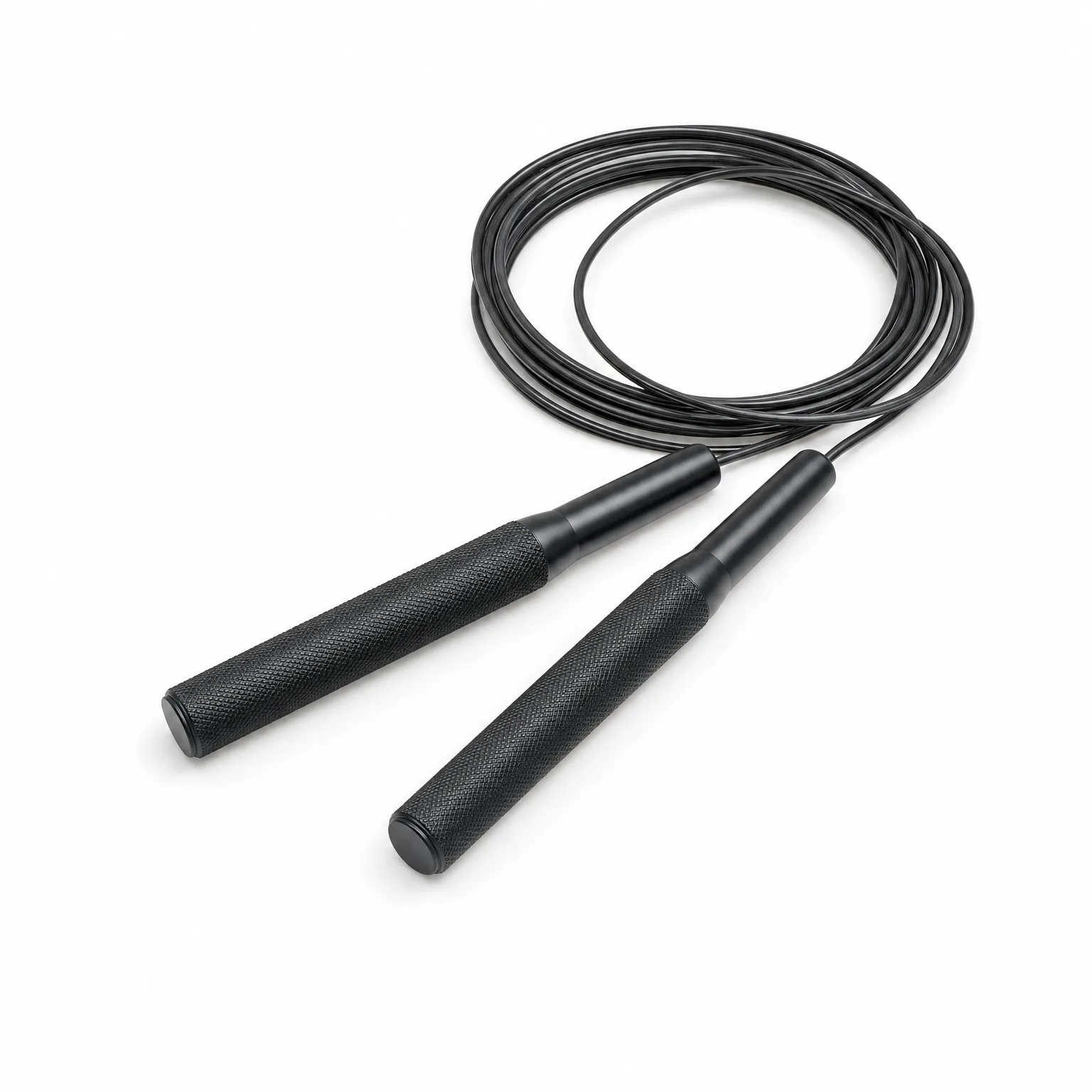
A rope with two handles that you swing over your head and jump. Hard cardio and footwork practice that fits in a pocket. -
Kettlebell
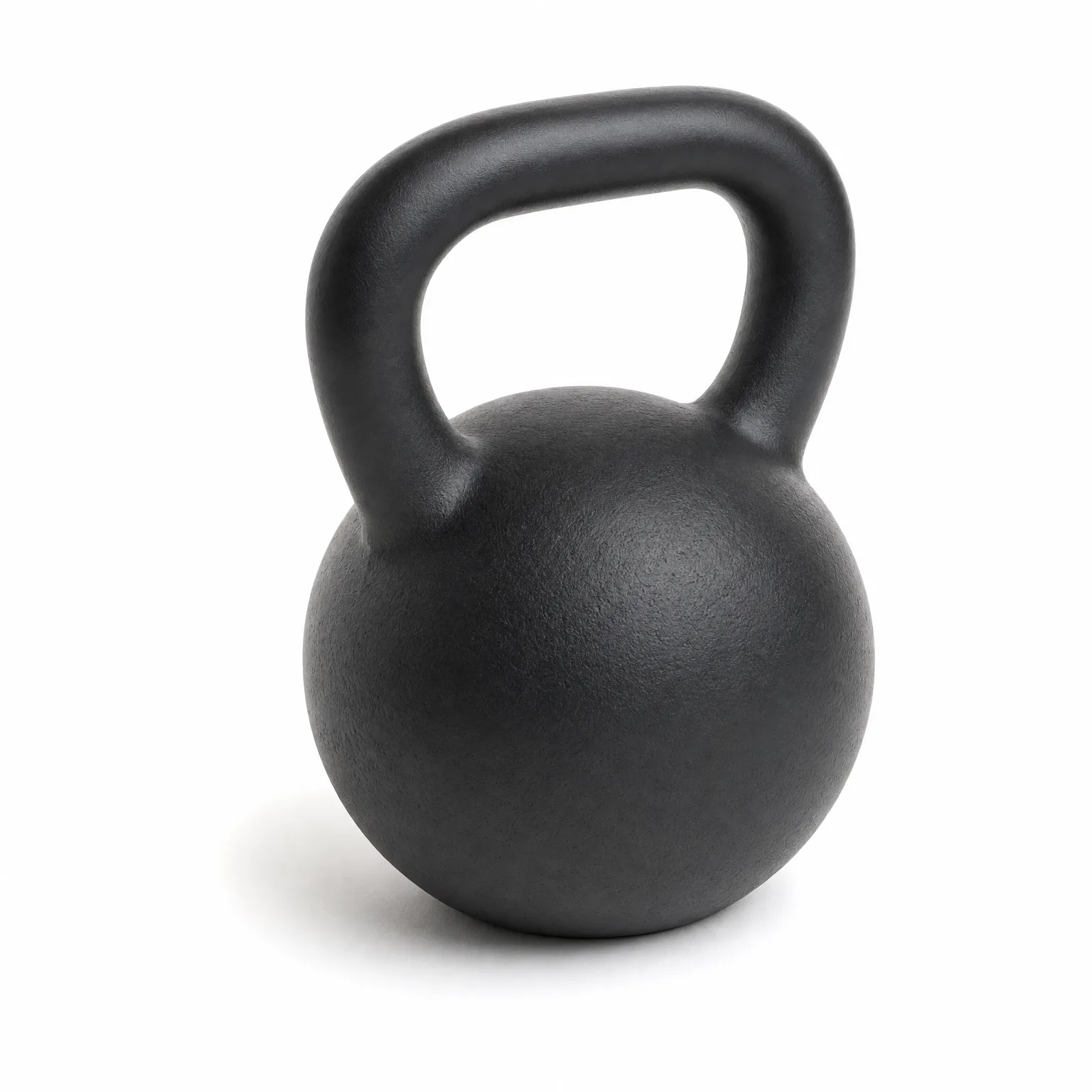
A cast-iron or steel ball with a flat base and a handle on top. Built for swings, carries, squats and presses with one weight. -
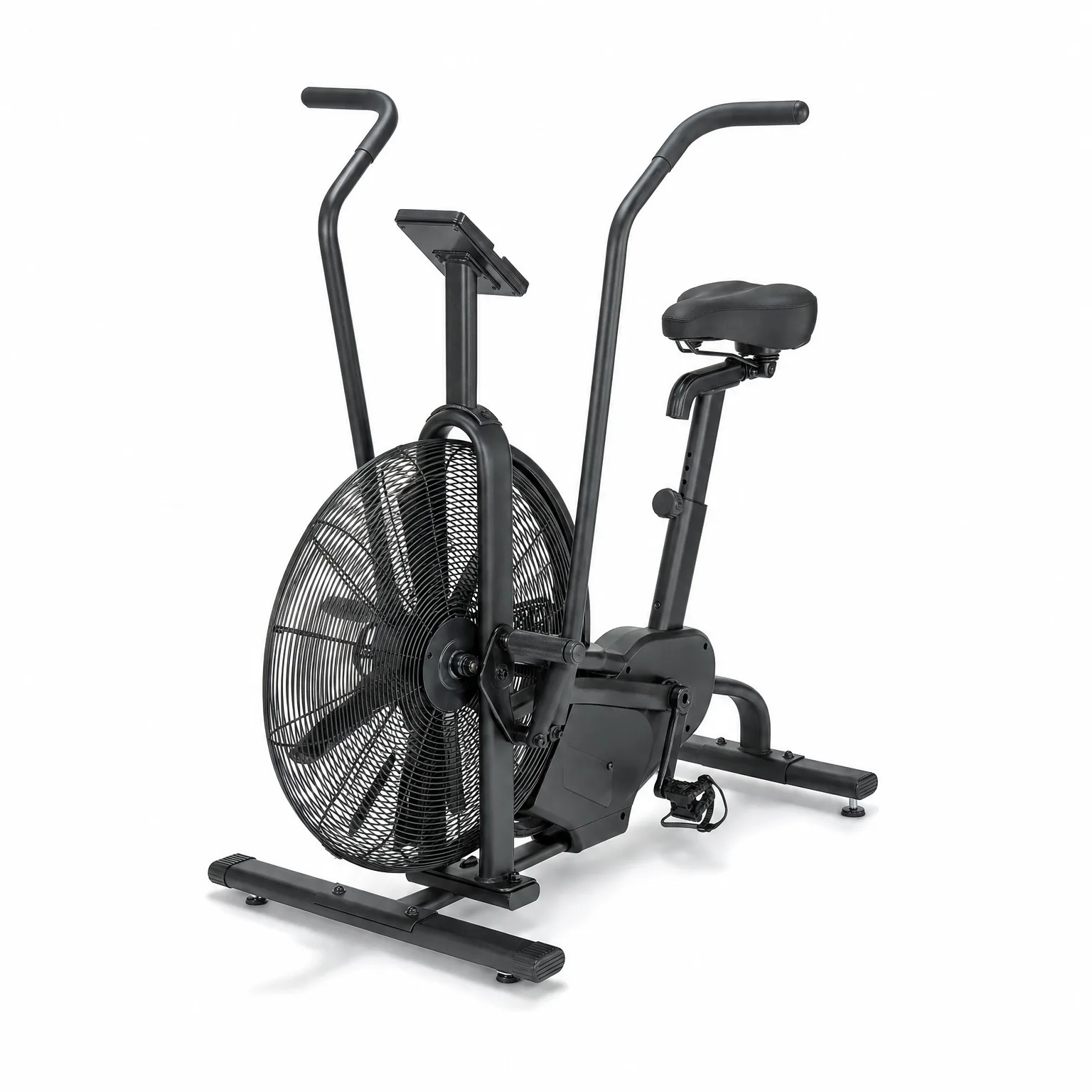
Air bike
A stationary bike with a large fan and moving handles. Arms and legs work together, and the harder you push, the harder it gets. -
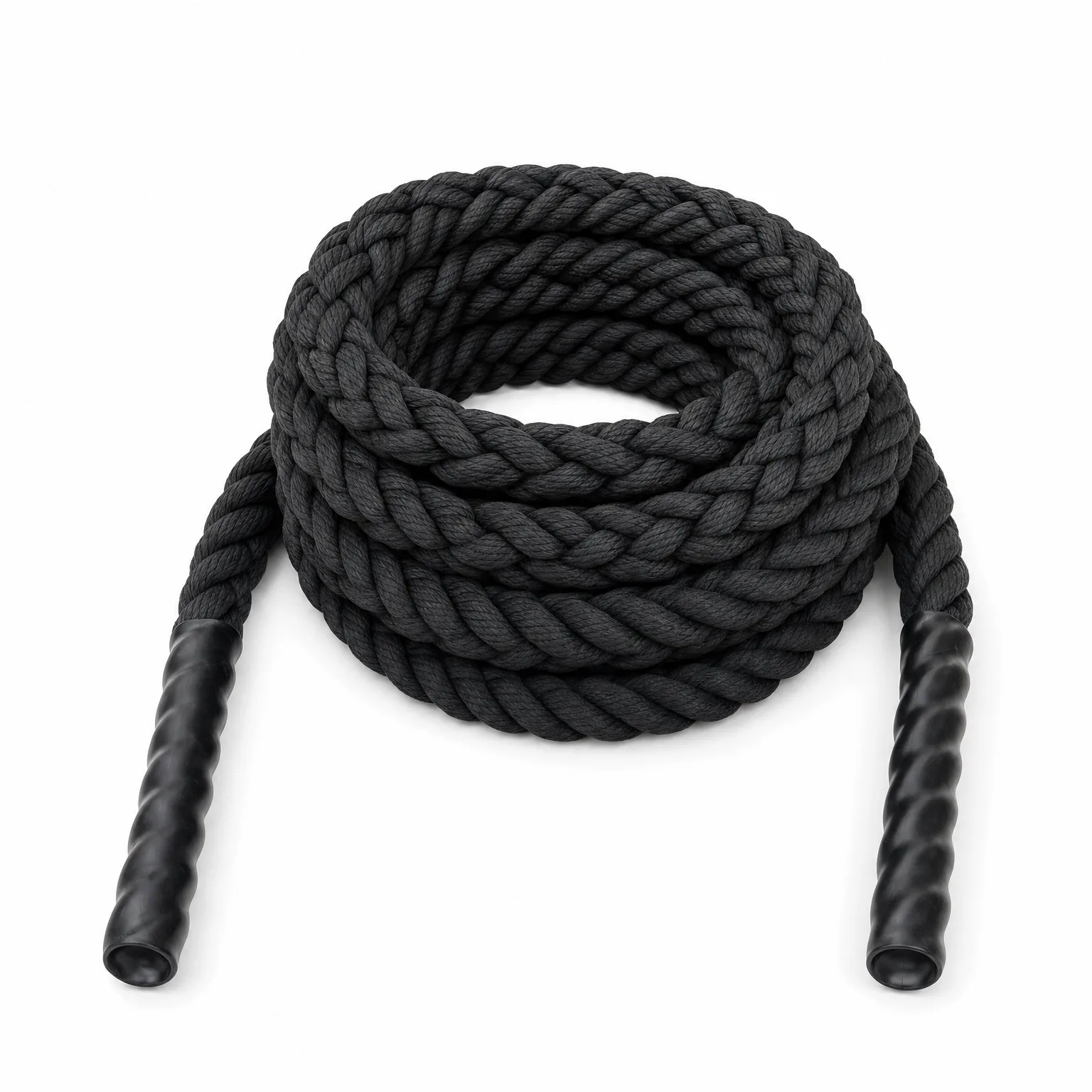
Battle ropes
A long, thick rope anchored in the middle. You hold both ends and make waves or slams for hard conditioning work with low impact on the legs.
Questions about interval timer
What is a tabata timer?
A timer set to 20 seconds of work and 10 seconds of rest for 8 rounds, 4 minutes in total. Most gym timers and apps have it as a preset. The format comes from a 1996 study led by Izumi Tabata, in which physically active young men did all-out efforts on a stationary bike.
What does EMOM mean?
Every minute on the minute. You start a set of a given exercise at the beginning of each minute and rest for the remainder. A 10‑minute EMOM of 10 kettlebell swings means 10 sets of 10, each starting as a new minute begins. The faster you finish, the more rest you get.
What does AMRAP mean?
As many rounds, or reps, as possible. You set one countdown, for example 12 minutes, and repeat a short circuit as many times as you can with good form before it ends. Your score is the number of rounds and extra reps, which makes it easy to compare with a later attempt.
What is a good work-to-rest ratio for HIIT?
It depends on how hard the work is. For beginners, 1:1 or 1:2, such as 30 seconds of work and 30–60 seconds of rest, keeps the quality up. Shorter rests like 2:1 are very demanding. True all-out sprints need much longer rests, often several times the work period.
Do I need a dedicated gym timer, or is a phone enough?
A phone app is enough for training alone. A wall timer earns its place when several people train together, when you want a clock you can read mid-set from anywhere in the room, or when you prefer to keep your phone out of the session.
Build programs around what your client has
This guide comes from OnlineFitness.app, the app online coaches run their clients in.
Free for life for the first 100 coachesNo card