Equipment Functional and conditioning
Battle ropes
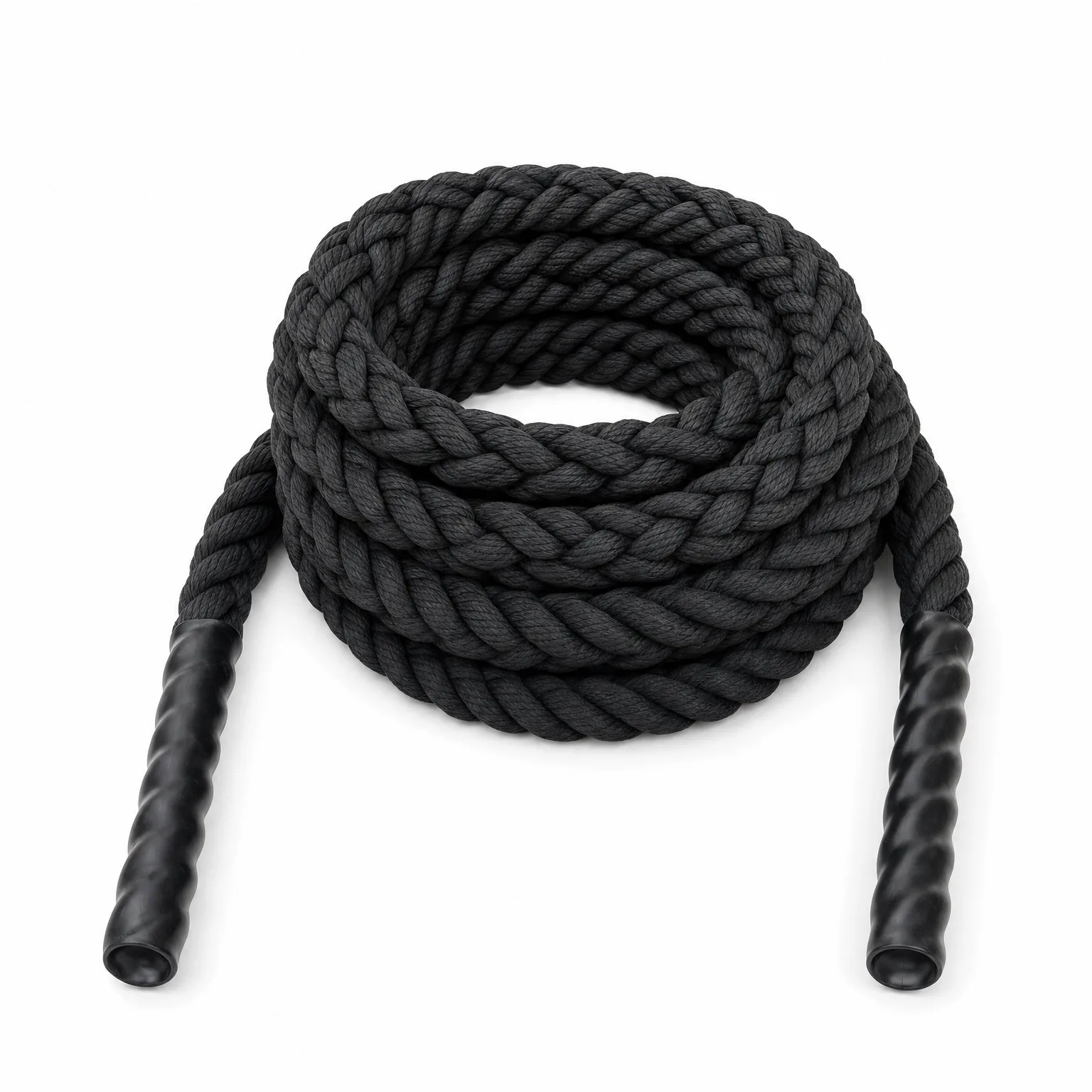
A long, thick rope anchored in the middle. You hold both ends and make waves or slams for hard conditioning work with low impact on the legs.
In short
A battle rope is a long, heavy rope looped around a fixed anchor so that you hold one end in each hand. You whip the ends up and down to send waves along the rope, or lift and slam them. The work is done in short, intense bursts and raises the heart rate fast while loading the shoulders, arms, grip and trunk.
The feet stay on the floor, so there is no pounding on the knees or ankles, and the effort scales by itself: smaller, slower waves are easier, bigger and faster ones are harder. The main requirement is space, since the rope needs a clear lane about half its length plus room for you to stand.
- Category
- Functional and conditioning
- Where
- Gym, Outdoors, Home
- Level
- Beginner and up
- Space
- Needs a dedicated area
- Typical sizes
- 9, 12 or 15 m (30, 40 or 50 ft) long; 38 or 50 mm (1.5 or 2 in) thick; roughly 7–13 kg (15–30 lb) for 38 mm ropes
- Also called
- battle rope, battling ropes, heavy ropes, training ropes, conditioning rope, power ropes
Muscles it works
- Main
- Front delts, Side delts, Forearms, Abs, Obliques
What it is used for
- Interval conditioning: alternating waves, double waves, slams
- Shoulder, arm and grip endurance
- Trunk work with side-to-side waves and rotational slams
- Whole-body drills that add squats, lunges or lateral steps to the waves
- Hand-over-hand pulls with the rope tied to a sled or weight
Types
Polyester blend (poly Dacron). The common gym rope. Durable, holds its shape, does not shed fibers and tolerates outdoor use.
Manila. Natural fiber. Rough grip and a classic feel, but it sheds, swells when wet and wears faster. Keep it dry.
Sleeved. A rope inside a nylon cover that protects it from abrasion on concrete or asphalt. Slightly heavier and slides more easily on the floor.
38 mm and 50 mm. The thinner rope suits most people and faster work. The thick one is much heavier and very demanding on the grip.
How to choose
Measure your space first
The rope is doubled around the anchor, so you need about half its length plus 1–2 m to stand: roughly 6 m (20 ft) for a 9 m rope, 7.5 m (25 ft) for 12 m, and 9 m (30 ft) for 15 m.
38 mm for almost everyone
A 38 mm (1.5 in) rope fits most hands and allows fast waves. Choose 50 mm (2 in) only if you have large hands and want a strong grip and strength emphasis.
Length sets the weight
A longer rope is heavier and the waves take more effort to carry to the anchor. 9 m suits small spaces and beginners, 12 m is the common all-round choice, 15 m is the standard in large gyms.
Ends and anchor
Look for heat-shrink handles on the ends, which stop fraying and give a firm grip. Check whether an anchor strap or wall mount is included, or plan what you will loop the rope around.
How to start using it
- Anchor it low and solid. Loop the rope around a rack upright, a pole, a heavy kettlebell or a purpose-made anchor near floor level, with both halves the same length. The anchor must not move when you pull. Avoid sharp edges that will cut the rope.
- Find the right distance. Walk back until the rope is almost straight, then take one step toward the anchor. The slight slack is what lets waves travel. Stand with the feet shoulder width apart, knees and hips bent, chest up.
- Learn the alternating wave. Hold the ends in a handshake grip, palms facing each other. Raise one arm to about chest height as the other drops, in a quick rhythm, with the elbows close to the ribs. Aim for even waves that reach the anchor.
- Work in intervals. Start with 15–20 seconds of work and 40–45 seconds of rest for 6–8 rounds. As you get fitter, lengthen the work or shorten the rest. Keep the quality of the waves, not just the time.
- Add variety. Double waves move both arms together. Slams lift the rope overhead and drive it into the floor. Side-to-side waves sweep the ends across the floor and work the trunk.
Common mistakes
Standing too far back
A rope pulled tight cannot carry a wave, so it just tugs on the shoulders. Step toward the anchor until there is a little slack.
Standing bolt upright
With straight legs the arms do everything and the lower back takes the jolts. Sit into a quarter squat and let the hips and legs help drive the movement.
Waves that die halfway
Tiny wrist flicks fade before the anchor. Use the whole arm and keep the rhythm steady so each wave travels the full length.
Shrugging and gripping too hard
Tense shoulders up by the ears and a crushing grip tire the neck and forearms long before the rest of you. Keep the shoulders down and hold the rope firmly but not at full squeeze.
Intervals that are too long
After about 30 seconds most people slow to a weak ripple. Shorter, sharper bouts with real rest train better than a long, sloppy minute.
What to use instead
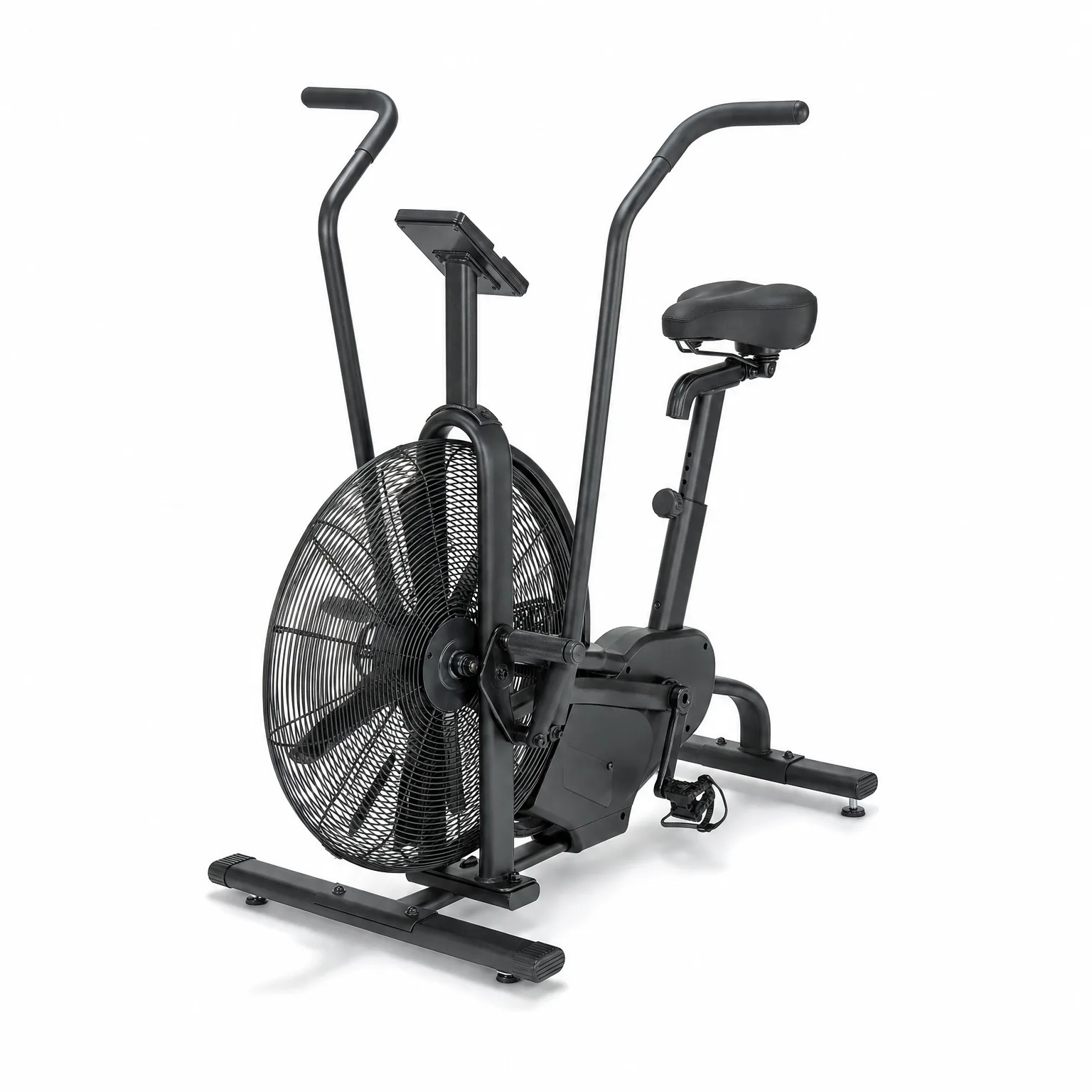
Slam ball or medicine ball slams give a similar short, explosive effort for the shoulders and trunk in far less space. A jump rope provides interval conditioning with the arms involved and almost no room needed. An air bike, which works the arms and legs together, is the closest machine for hard intervals without impact.
-
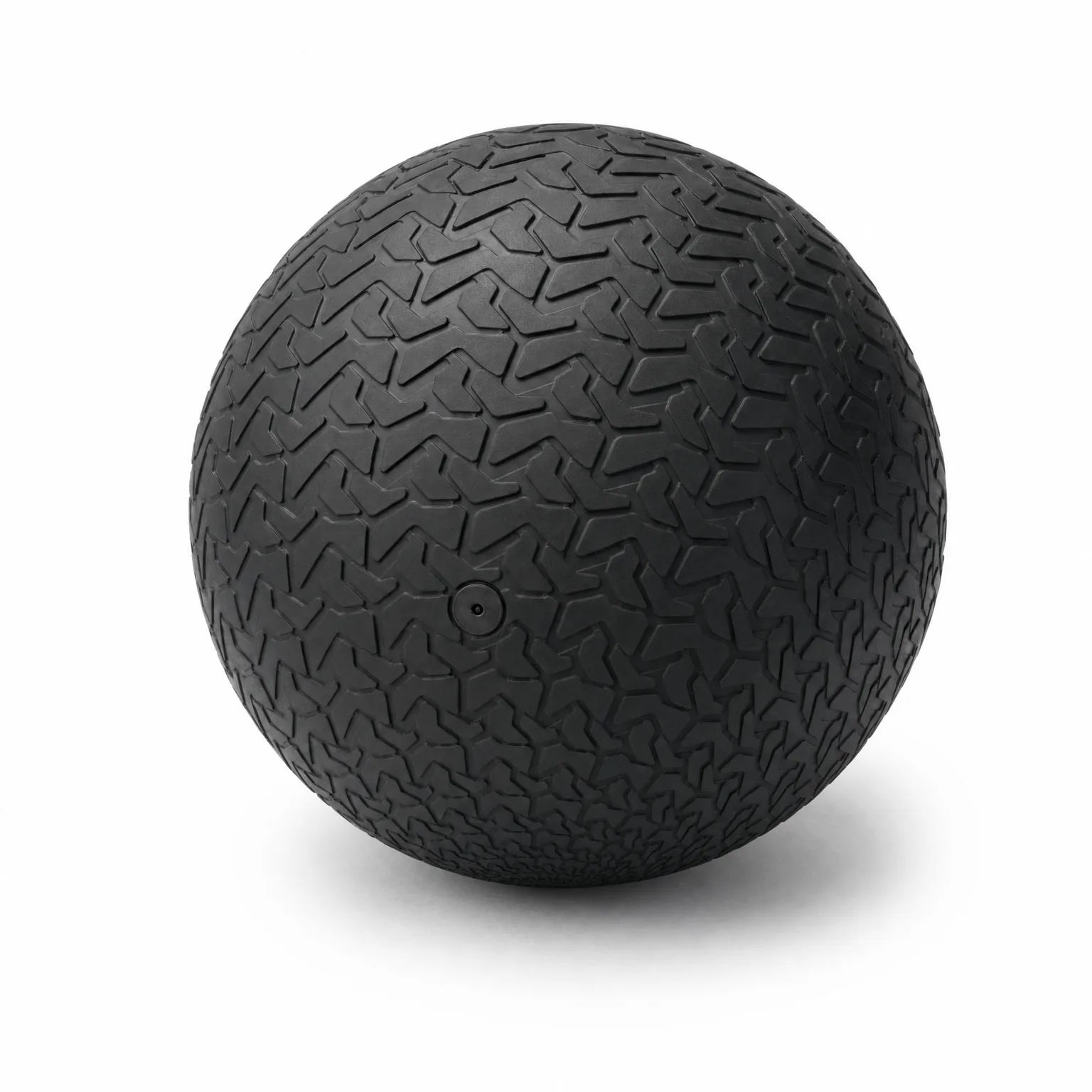
Slam ball
A sand-filled ball with a thick shell that does not bounce. Made to be lifted overhead and thrown at the floor at full force. -
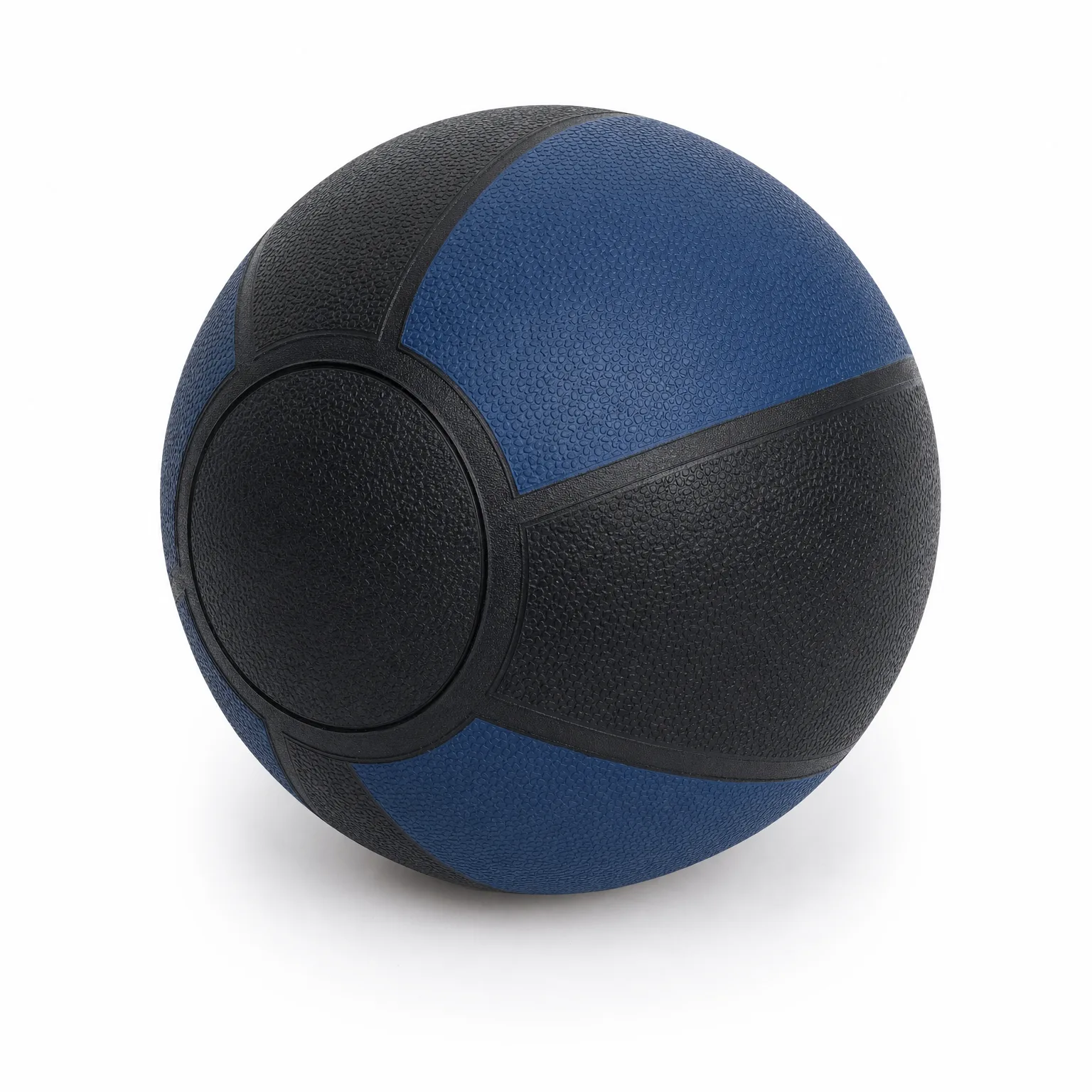
Medicine ball
A weighted ball you throw, catch and carry. Used for power throws, wall balls, partner drills and core exercises. -
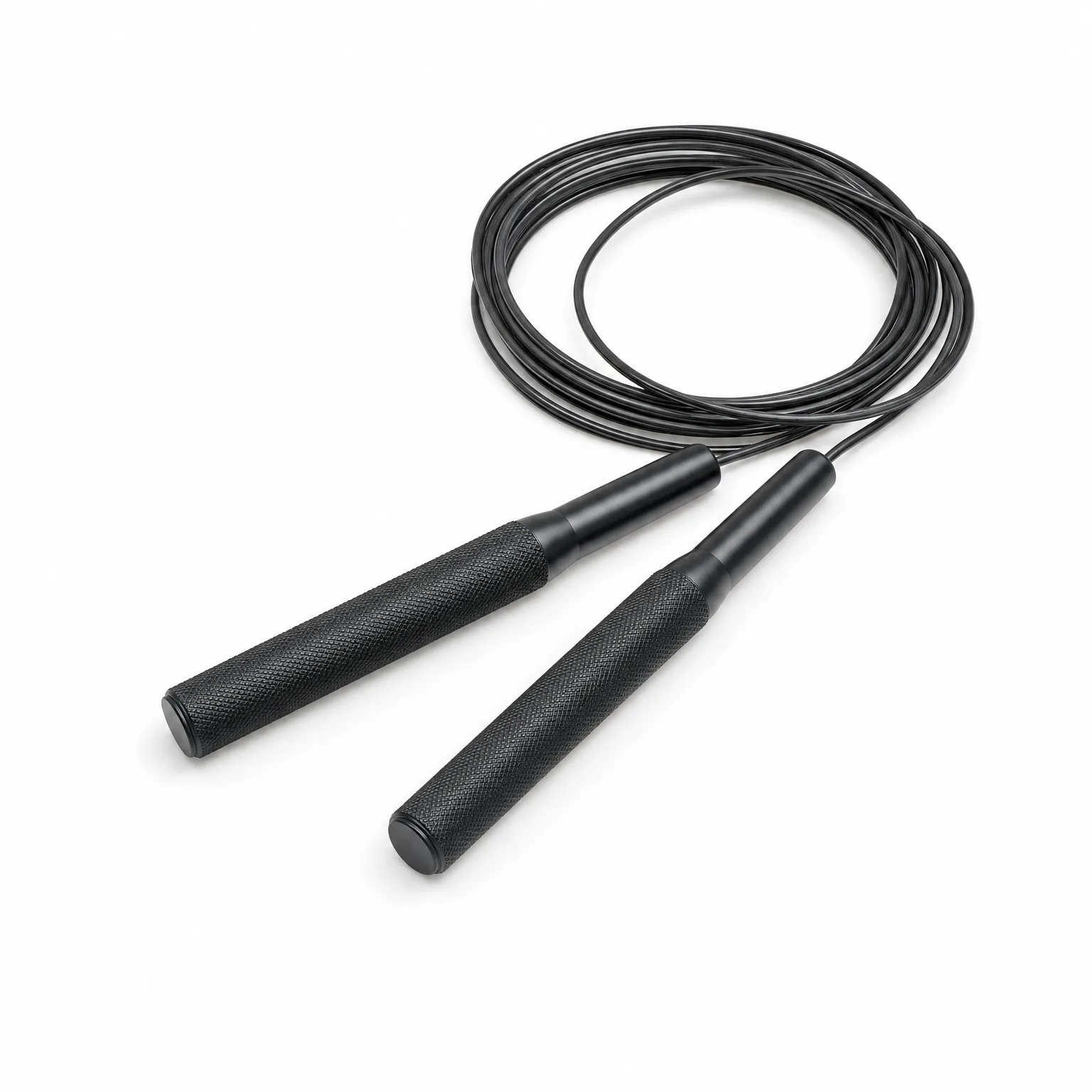
Jump rope
A rope with two handles that you swing over your head and jump. Hard cardio and footwork practice that fits in a pocket. -
Air bike
A stationary bike with a large fan and moving handles. Arms and legs work together, and the harder you push, the harder it gets.
Often used with
-
Squat rack
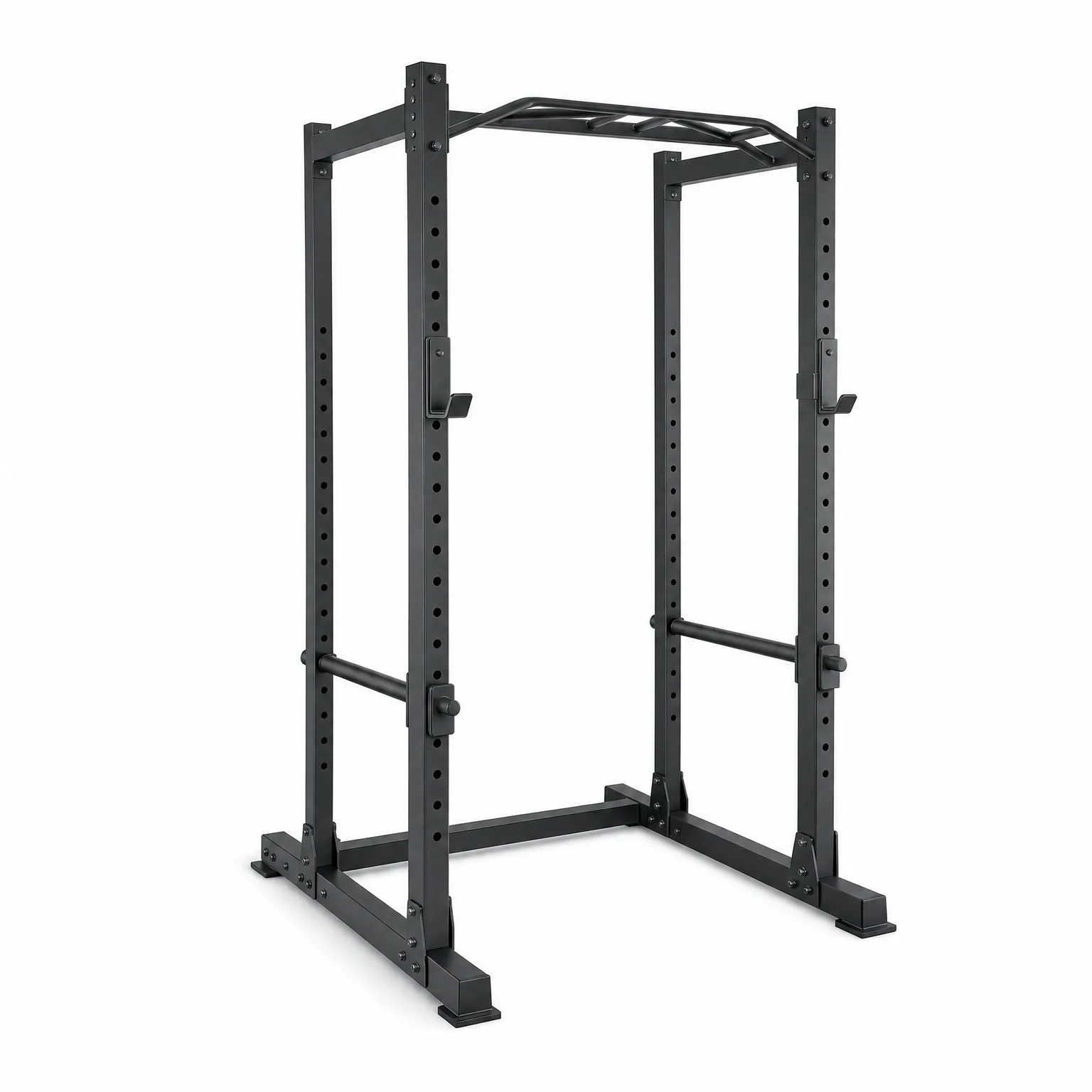
A steel frame that holds a barbell at the height you need and catches it if a rep fails. The base for squats and presses. -
Kettlebell
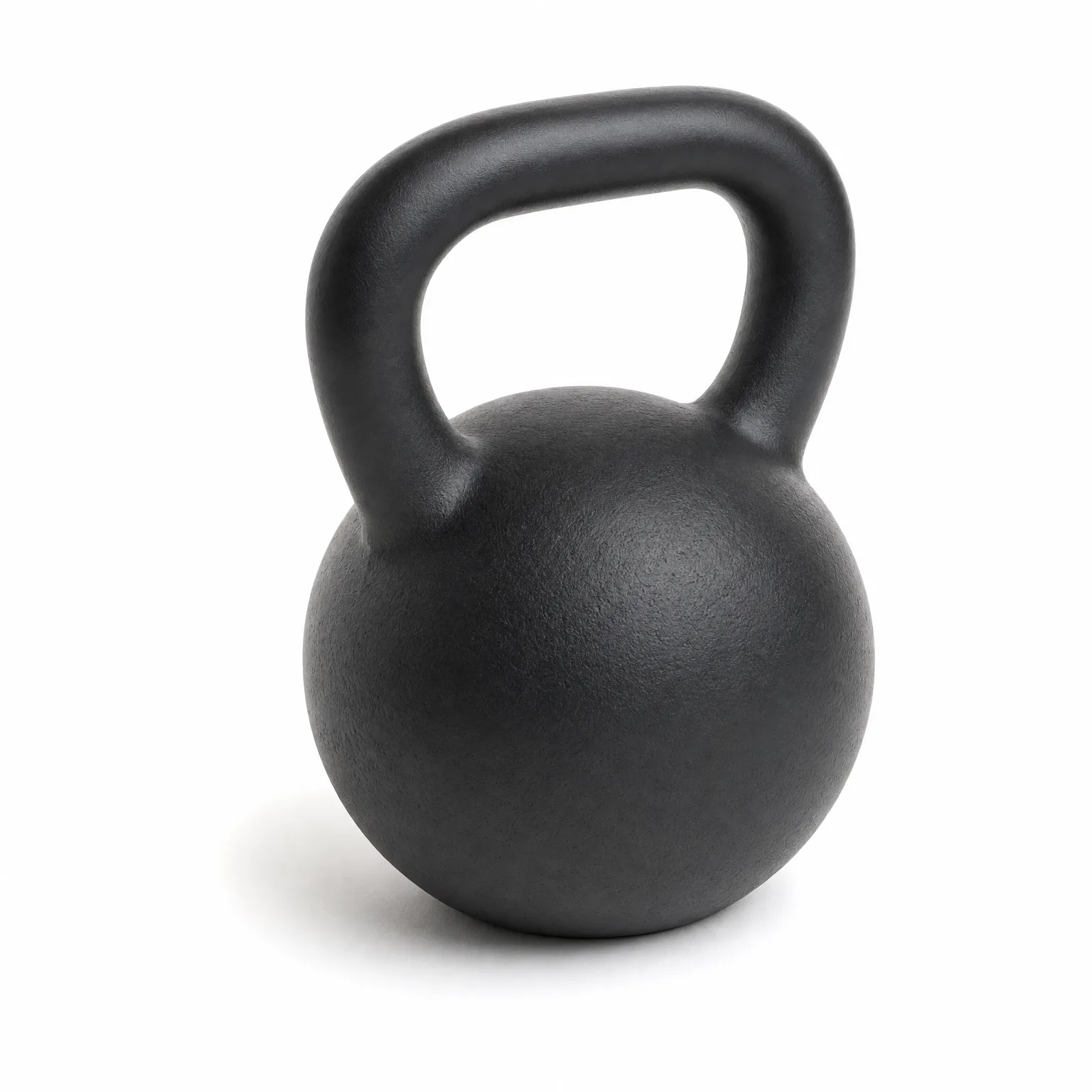
A cast-iron or steel ball with a flat base and a handle on top. Built for swings, carries, squats and presses with one weight. -
Weight sled
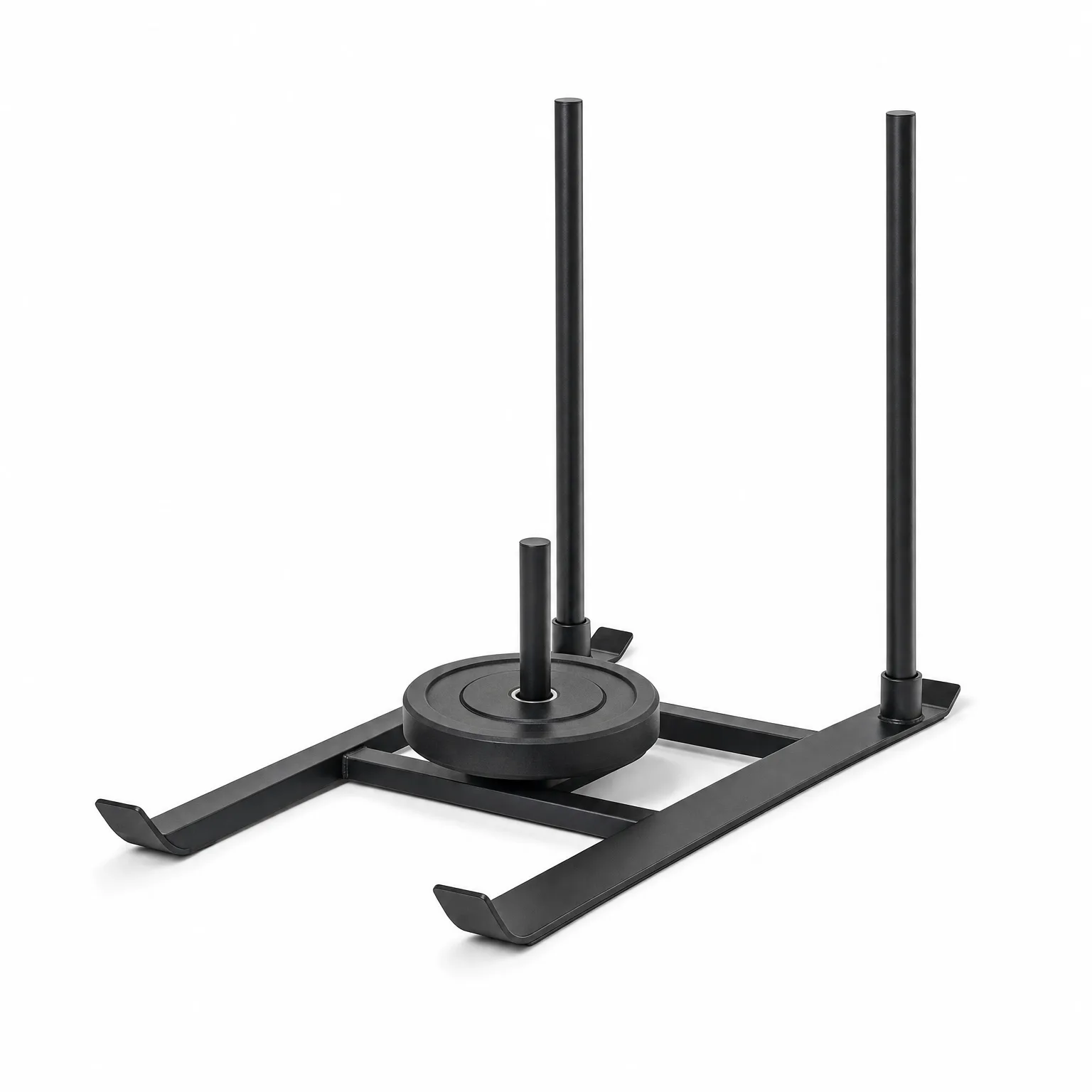
A low frame loaded with weight plates that you push or drag across turf or pavement. Trains the legs and conditioning with no lowering phase.
Questions about battle ropes
What size battle rope should I get?
For most people, 38 mm (1.5 in) thick and 9 or 12 m (30 or 40 ft) long. Choose 9 m if space is limited or you are starting out, 12 m for general use, and 15 m if you have a long lane and want a heavier rope. The 50 mm thickness is mainly for large hands and grip work.
How much space do you need for battle ropes?
About half the rope's length plus 1–2 m (3–6 ft) for you to stand, and roughly 2 m (6 ft) of width. That is about 6 m for a 9 m rope and 9 m for a 15 m rope. A driveway, garden or garage usually works when a room does not.
What muscles do battle ropes work?
Mostly the shoulders, forearms and grip, upper back and arms, with the abs and obliques holding the trunk steady. The legs and glutes work to keep the squat position, and more so when you add lunges, jumps or lateral steps.
Are battle ropes good cardio?
Yes. Short intervals of waves or slams push the heart rate up quickly, and because the feet stay planted the impact on the leg joints is low. They suit interval training better than long steady sessions, since the shoulders and grip tire first.
How long should a battle rope workout be?
Around 10 minutes of intervals is plenty, either on its own or at the end of a strength session. A typical format is 20 seconds of work and 40 seconds of rest for 8–10 rounds, changing the wave pattern between rounds.
Build programs around what your client has
This guide comes from OnlineFitness.app, the app online coaches run their clients in.
Free for life for the first 100 coachesNo card