Equipment Functional and conditioning
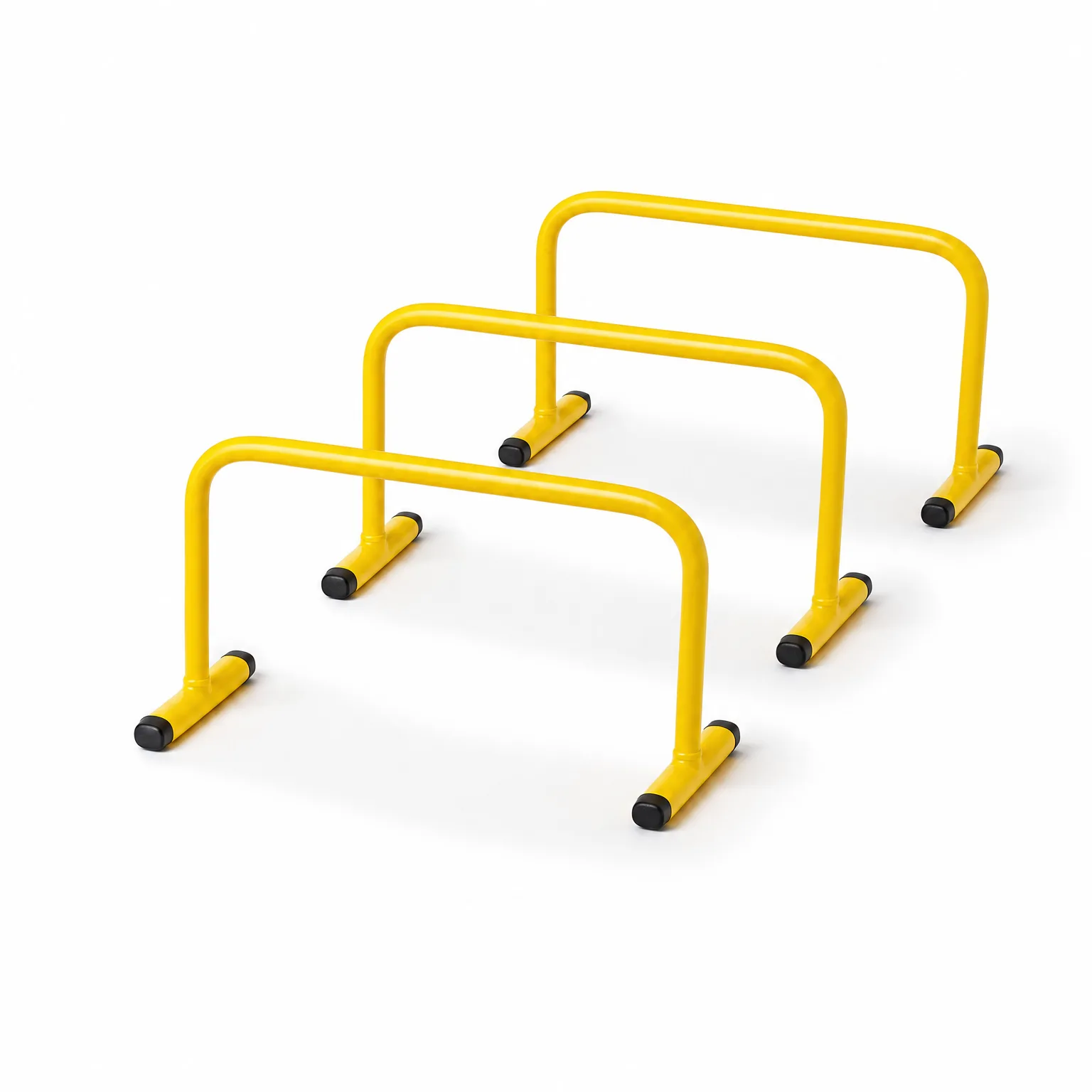
Agility hurdles
Low, light barriers set in a row for running, stepping and hopping drills that train quick ground contact, knee lift and jumping.
In short
Agility hurdles are low, lightweight plastic barriers, usually 15–30 cm (6–12 in) high, set out in a row. You run, step or hop over them. They force a clear knee lift and a quick, springy foot contact between each one, and higher hurdles turn the row into a series of repeated jumps.
They are used in athletics, team sports and general conditioning for running mechanics, footwork and plyometrics. They are not the tall, heavy hurdles of track races: these tip over or flatten when clipped, which makes them suitable for beginners at the lowest height.
- Category
- Functional and conditioning
- Where
- Home, Gym, Outdoors
- Level
- Beginner and up
- Space
- Needs a corner of a room
- Typical sizes
- Fixed heights of 15, 23 and 30 cm (6, 9 and 12 in), about 45 cm (18 in) wide; adjustable models go higher
- Also called
- speed hurdles, mini hurdles, training hurdles, plyometric hurdles, step hurdles, adjustable hurdles, micro hurdles
Muscles it works
- Also works
- Hamstrings, Tibialis anterior, Adductors, Abs
What it is used for
- Running drills with one or two steps between hurdles for knee lift and rhythm
- Sideways stepping and shuffling over a row
- Two-foot and one-foot hops for short, springy ground contact
- Repeated jumps over higher hurdles for plyometric training
- Slow step-overs, forward and sideways, as a hip mobility warm-up
Types
Fixed mini hurdles. One-piece plastic arches in a set height. Light, cheap and stackable. Most tip over when hit.
Adjustable hurdles. Legs fold or click to several heights, often 15–30 cm or higher. One set covers footwork and jumps.
Collapsible hurdles. Flat, flexible strips that spring into an arch and flatten if stepped on. The most forgiving and the easiest to pack.
Cone and pole hurdles. A pole resting in slots on two cones. Height changes by slot, and the pole falls off when touched.
How to choose
Pick the height for the drill
For running and footwork drills use 15 cm (6 in). For hops and low jumps, 23–30 cm (9–12 in). Higher than that is for trained athletes doing plyometrics. An adjustable set saves buying several.
Make sure they give way
A training hurdle should tip, collapse or drop its bar when you clip it. Avoid anything rigid, heavy or weighted to the ground.
Get enough for a row
Rhythm drills need at least 5–6 hurdles. Sets of 6 are the common minimum. Fewer than four does not give enough repeats to settle into a pattern.
Check the base on your surface
Flat feet sit well on grass and turf. On a smooth indoor floor look for rubber feet, or the hurdles will slide when nudged.
How to start using it
- Set the spacing. On firm, level, non-slip ground, place 5–6 low hurdles in a straight line. For a one-step run, start with about three foot lengths between them, roughly 60–90 cm (2–3 ft), and widen the gaps as the speed goes up. For two-foot hops, use a similar or slightly wider gap. Adjust until the rhythm feels even.
- Warm up, then walk it. After a general warm-up, walk over the row lifting each knee to hip height with the toes pulled up. Then march, then skip. This sets the pattern before you add speed.
- Run with one foot between. Run through with one foot landing in each gap. Stay tall, land on the ball of the foot under the hips and drive the arms. Lead with the other leg on the next pass.
- Add hops when running is clean. Hop over each hurdle on two feet, landing softly and leaving the ground again as quickly as you can. Keep the knees in line with the toes. Start with 3–4 passes of 5–6 hurdles.
- Keep the volume low. These are quality drills. Take 30–60 seconds or more between passes and stop when contacts get heavy or you start clipping hurdles.
Common mistakes
Starting too high
Tall hurdles make people tuck the knees and land heavily to get over. Height comes last. Fast, light contacts over low hurdles are the point of the drill.
Looking down
Watching each hurdle rounds the back and breaks the rhythm. Look a few hurdles ahead and trust the spacing.
Landing flat and sinking
Long, deep landings turn a springy drill into a series of small squats. Land on the front of the foot with the knees slightly bent and get off the ground fast.
Doing them tired
Hurdle jumps at the end of a hard session are when feet catch and ankles roll. Put them early, after the warm-up.
Uneven spacing
Random gaps force a stutter step every time. Measure with your feet and keep the gaps equal unless the drill calls for a change.
What to use instead
A line of disc cones or the rungs of an agility ladder gives the same footwork patterns without the height. Rolled towels laid across your path make soft, low obstacles to step and hop over at home. A plyo box covers the jumping side: jump up onto it and step down. Lines on the ground work for the simplest hops and side steps.
-
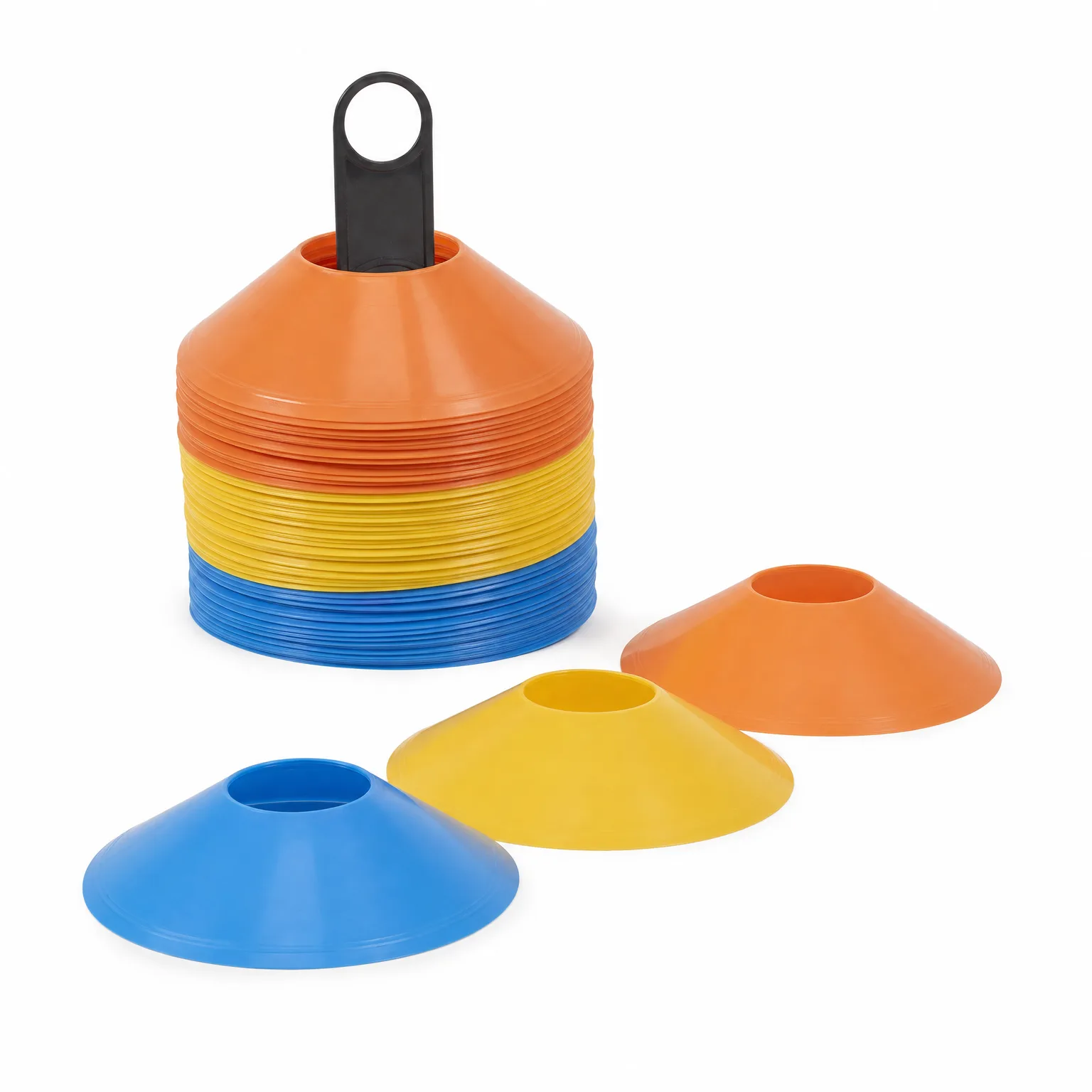
Training cones
Small plastic markers that set out distances, turning points and lanes for sprints, shuttles, agility drills and circuits. -
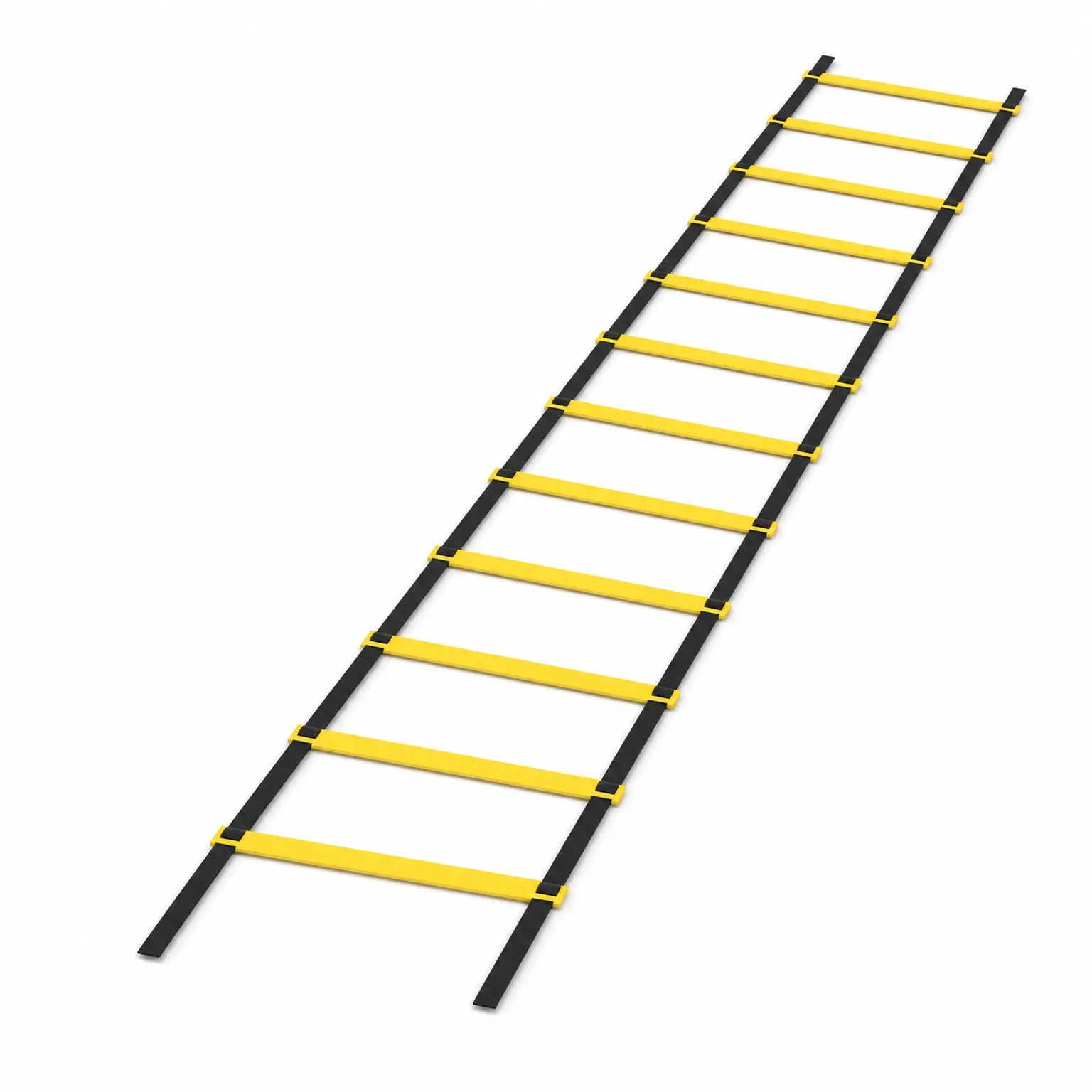
Agility ladder
A flat ladder of straps and rungs laid on the ground. You step through the squares in set patterns to train quick, coordinated footwork. -
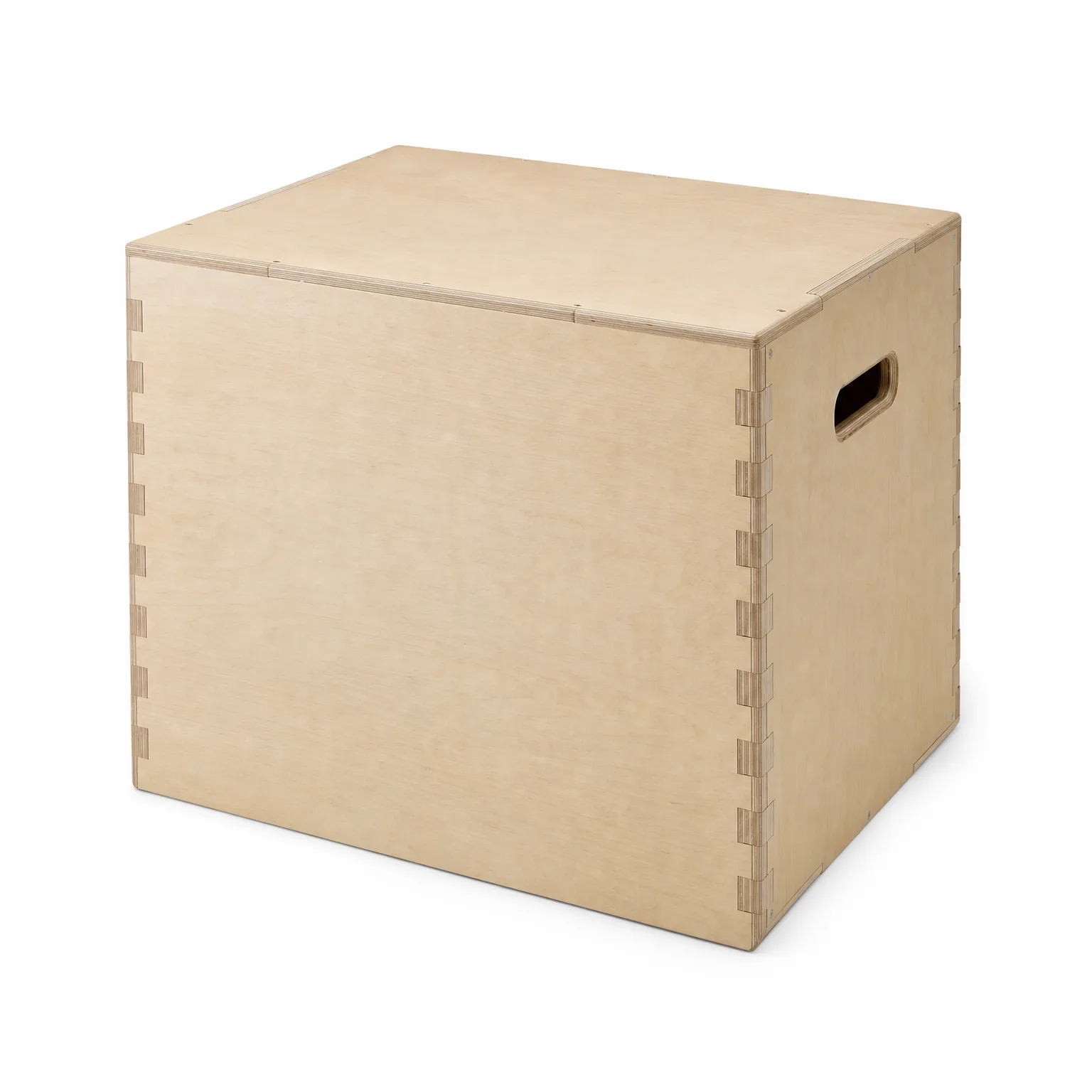
Plyo box
A sturdy box for jumping onto and stepping up on. Used for box jumps, step-ups, box squats and raised push-ups. -
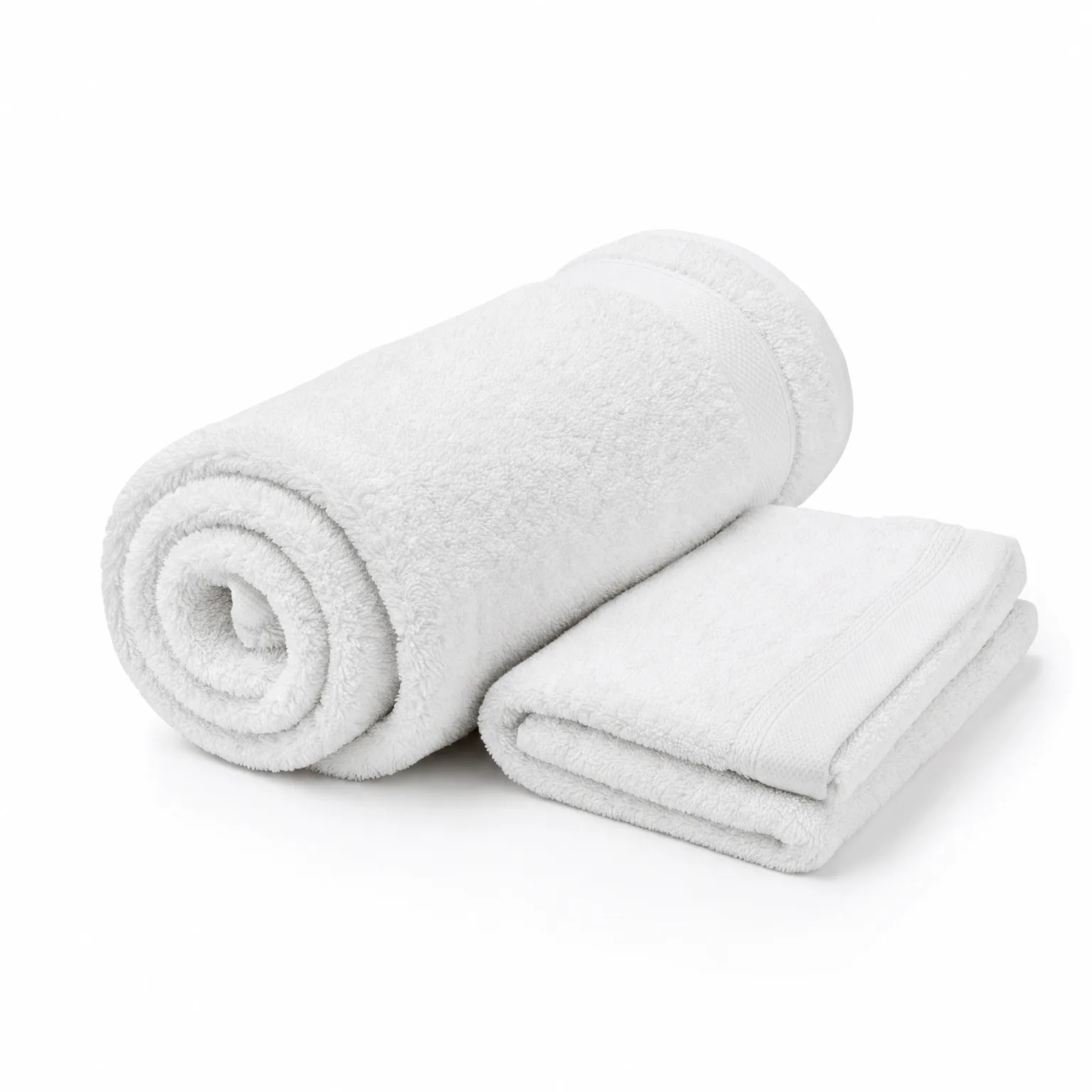
Towel
A towel doubles as sliders on a smooth floor, a stretching strap, a pulling tool for isometric exercises and padding for the knees.
Often used with
-
Training cones
Small plastic markers that set out distances, turning points and lanes for sprints, shuttles, agility drills and circuits. -
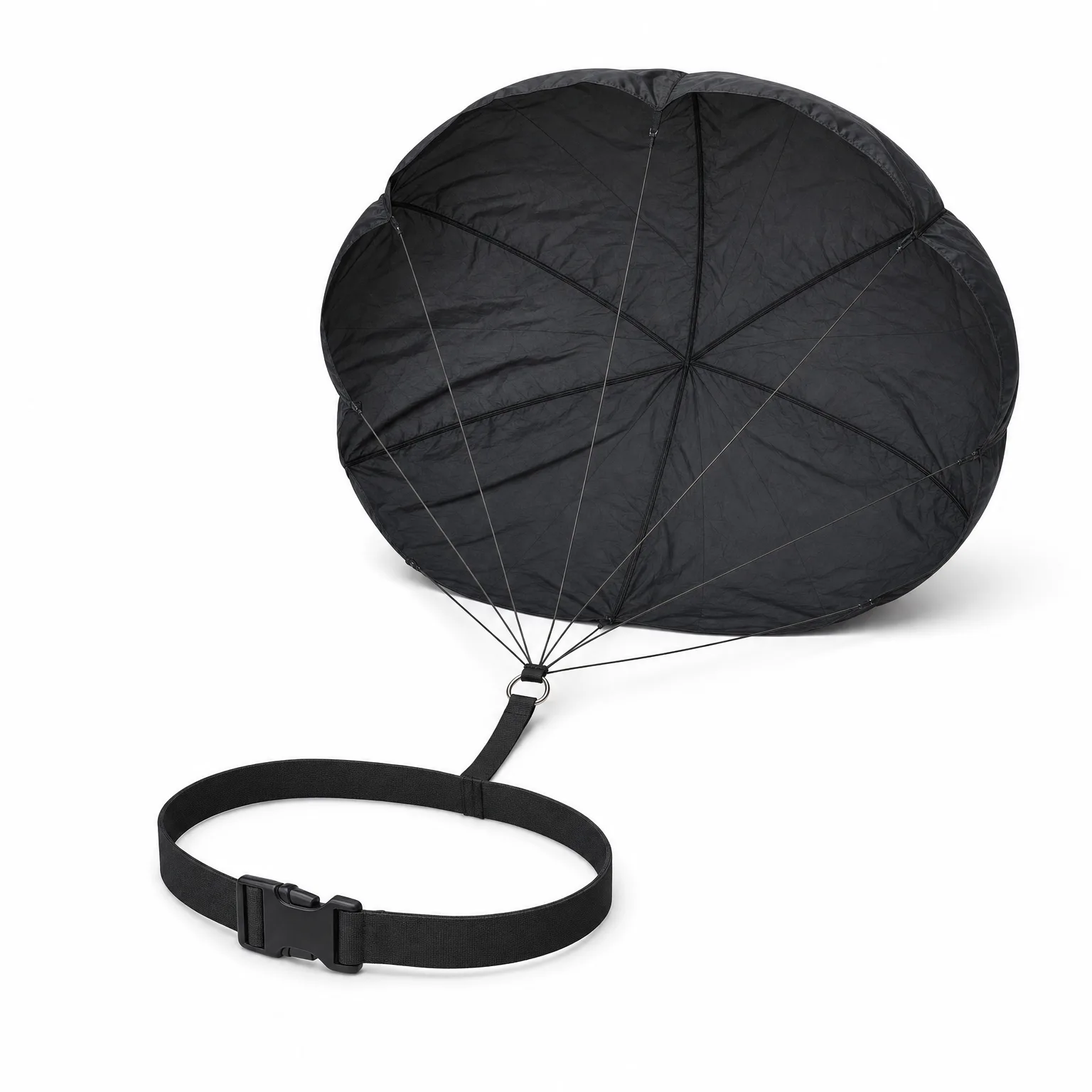
Speed parachute
A small parachute on a waist belt that opens behind you as you sprint and adds air drag. Used for resisted sprint training outdoors. -
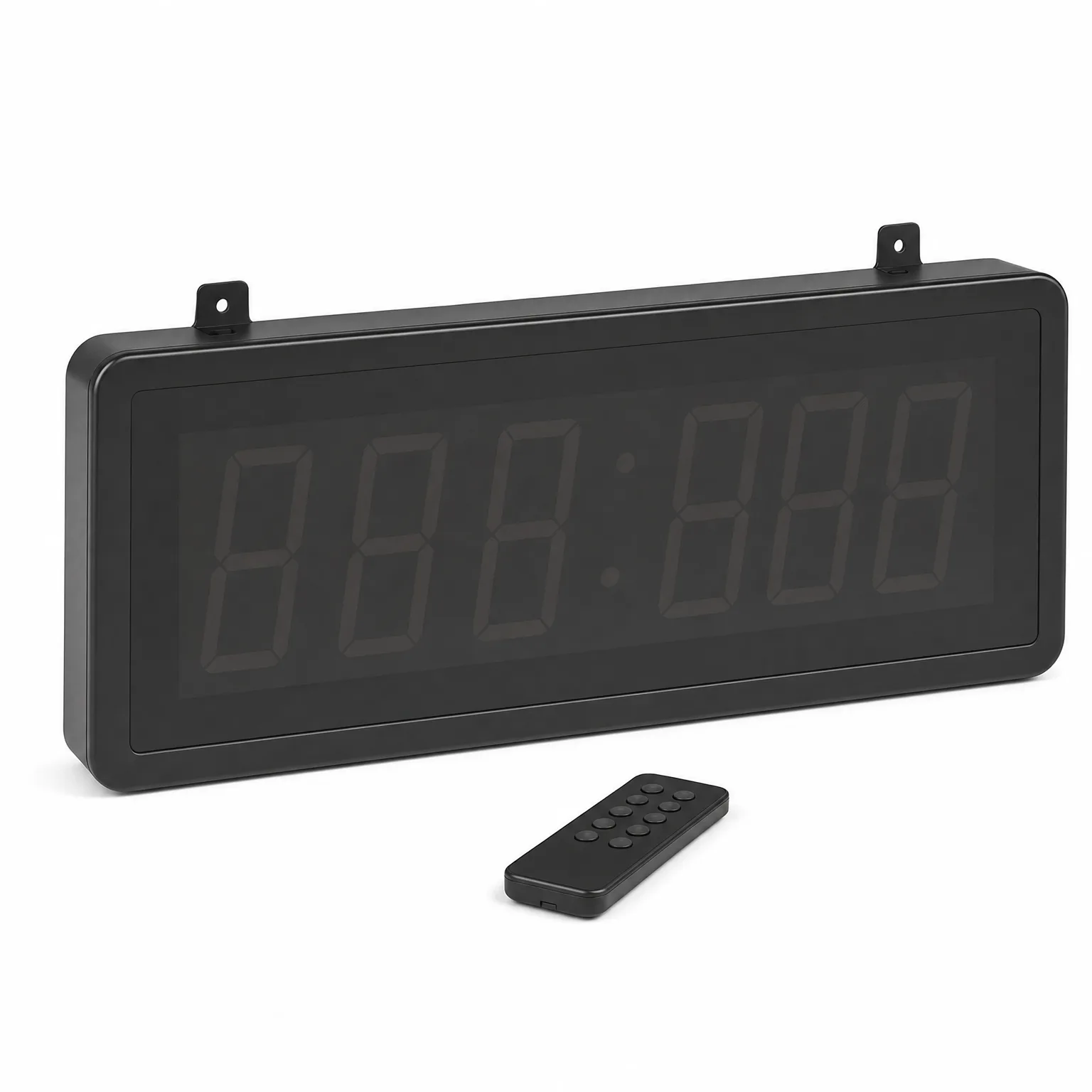
Interval timer
A wall clock or phone app that counts work and rest periods and signals each change, for tabata, EMOM, AMRAP, rounds and timed rests.
Questions about agility hurdles
What are agility hurdles used for?
For drills that train how you run and jump: lifting the knees, landing under the hips, and getting off the ground quickly. Coaches use rows of low hurdles for sprint mechanics, footwork and low-level plyometrics, and as part of warm-ups.
What height agility hurdles should I buy?
15 cm (6 in) covers running and footwork and is the best single height. Add 23–30 cm (9–12 in) for hops and jumps, or buy an adjustable set. Young children and beginners should stay at the lowest height.
How far apart should agility hurdles be?
For a one-step running drill, roughly 60–90 cm (2–3 ft), about three of your foot lengths. Taller and faster athletes spread them more. For two steps between hurdles, use about 1.5 m (5 ft). Adjust until you can keep an even rhythm without reaching or chopping.
Agility hurdles or agility ladder?
A ladder lies flat and trains fast, precise foot placement with little impact. Hurdles add height, so they demand a knee lift and a more elastic push off the ground. They complement each other. If you want only one for general footwork, the ladder is easier to carry and use anywhere.
Build programs around what your client has
This guide comes from OnlineFitness.app, the app online coaches run their clients in.
Free for life for the first 100 coachesNo card