Equipment Bands and bodyweight tools
Resistance tubes with handles
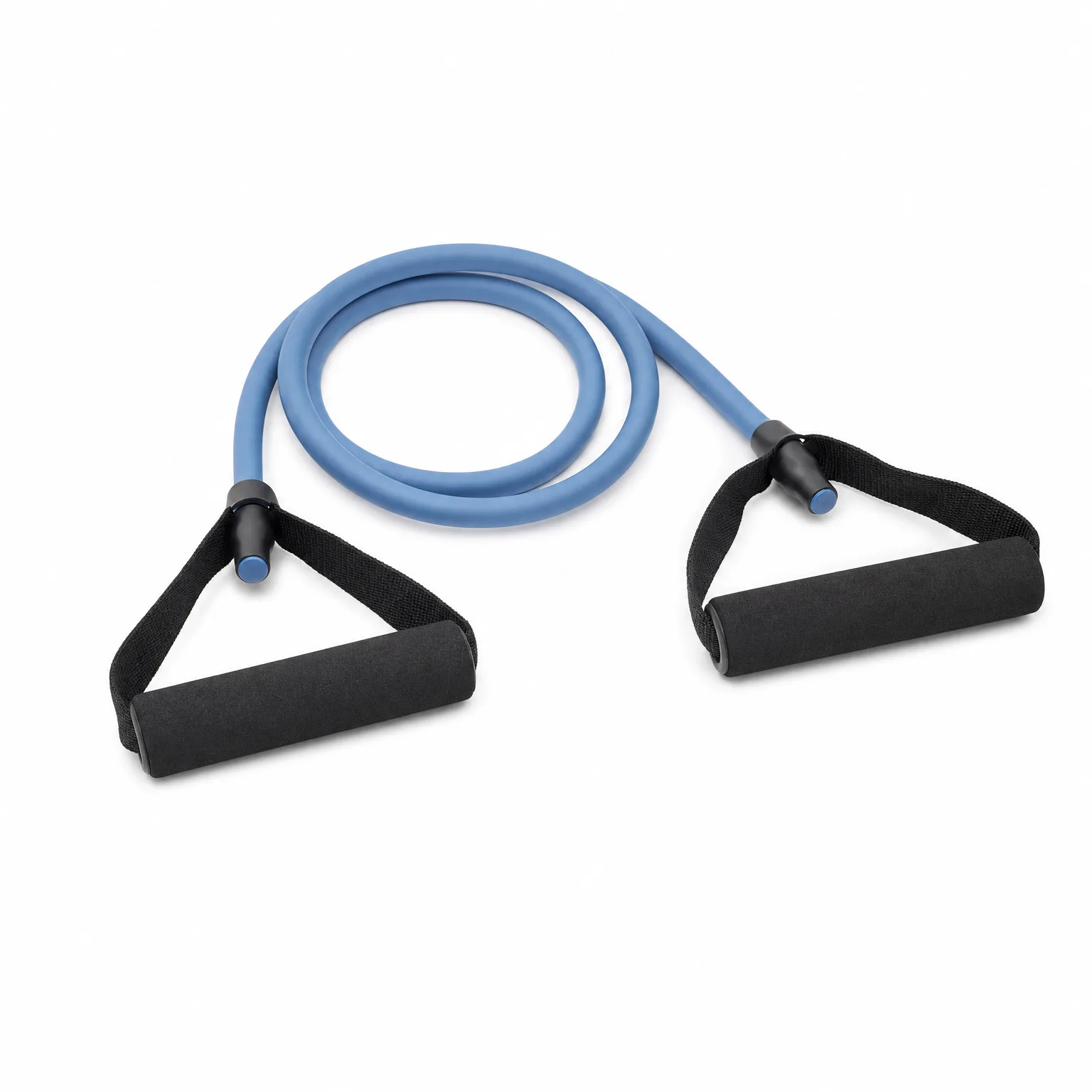
Elastic tubes with a handle at each end, often with a door anchor. A portable way to do rows, presses, curls and pulldowns.
In short
A tube band is a length of hollow elastic tubing with a handle at each end. You stand on the middle, or fix it to a door with an anchor strap, and pull or push the handles. The tube pulls harder the more it stretches. The handles make it feel close to a cable machine or a pair of dumbbells.
It is used for rows, chest presses, shoulder presses, curls, triceps extensions, pulldowns and, with ankle straps, leg exercises. A set with a few tubes and a door anchor gives a full upper-body workout in a small bag, which suits beginners, home training and travel.
- Category
- Bands and bodyweight tools
- Where
- Home, Outdoors, Travel
- Level
- Beginner and up
- Space
- Fits in a drawer or a bag
- Typical sizes
- About 100–140 cm (40–55 in) long, usually around 120 cm (48 in); sets include three to five resistance levels
- Also called
- tube bands, resistance tubes, resistance bands with handles, exercise tubes, handle bands, resistance cords, toning tubes
Muscles it works
- Also works
- Rear delts, Front delts, Glutes, Quads
What it is used for
- Rows and face pulls with the tube fixed to a door at chest height
- Chest presses and flyes with the anchor behind you
- Biceps curls, lateral raises and shoulder presses standing on the tube
- Pulldowns and triceps pushdowns from the top of a door
- Kickbacks and leg raises with ankle straps
Types
Fixed-handle tube. One tube with handles permanently attached. Simple and quick to pick up. To change resistance you switch to a different tube.
Stackable clip set. Several tubes with clips that attach to one pair of handles, alone or together. Comes with a door anchor and ankle straps. The most flexible kit.
Figure-8 and short tubes. A short tube shaped like an 8 or with close handles, for pull-aparts, chest and arm work at short range. Not long enough to stand on.
Fabric-sleeved tube. A tube inside a woven cover that limits how far it can stretch and contains it if the rubber fails. Slightly heavier and stiffer.
How to choose
Choose a stackable set
A set where tubes clip onto shared handles lets you move up in small steps and use a light tube for raises and a heavy combination for rows. A single fixed tube is outgrown quickly.
Treat the numbers as a guide
The resistance printed on a tube is usually the pull at a set stretch, and each maker measures it differently. Colors are not standard either. Compare tubes within one set, not across brands.
Look at the joints
Tubes fail most often where the rubber meets the handle or clip. Check for solid metal clips, a firm plug inside the tube end and stitching on the handle straps.
Get a proper door anchor
A strap with a thick stopper that sits behind the closed door opens up rows, presses and pulldowns. Without it you are limited to exercises standing on the tube.
Length and your height
A tube around 120 cm suits most people. Taller users or those who want overhead presses standing on the tube may need a longer one. A tube can be shortened by wrapping it around the hand or foot.
How to start using it
- Set the door anchor. Put the stopper on the far side of a door that closes toward you, on the hinge side or over the top, and shut the door fully. Lock it if you can. Tug hard on the tube before the first rep.
- Choose the anchor height. Chest height for rows and presses, the top of the door for pulldowns and pushdowns, the bottom for curls and upright pulls. For standing exercises, step on the middle of the tube with one or both feet.
- Find the right distance. Step away from the anchor until the tube is lightly stretched in the start position. One more step makes it harder. With feet on the tube, a wider stance does the same.
- Move slowly both ways. Pull or press for about a second, pause, and return in two to three seconds while resisting the tube. Keep the wrists straight and the shoulders down.
Common mistakes
Anchoring on the wrong side of the door
If the door opens toward you, pulling on the tube can pull it open and release the anchor. Use the side where your pull holds the door shut.
Not checking for wear
Tubes crack near the handles and where they rub on the anchor. A tube that snaps under tension whips back. Inspect it before each session and replace it if you see cracks or thinning.
Letting it snap back
Releasing the tension quickly throws away half of each rep and jerks the joints. Control the return on every repetition.
Standing on the tube in socks or bare feet
The tube can roll out from under a bare or socked foot and fly upward. Wear shoes and place the tube under the arch.
Overstretching a short tube
Stretching a tube past the limit its maker gives, often two to three times the resting length, wears it fast and can break it. Add a second tube or use a stronger one.
What to use instead
Long loop resistance bands cover the same exercises and can be looped around a post or a bar, though without handles they are less comfortable to grip. A flat therapy band works for lighter versions of curls, rows and presses. Dumbbells replace tubes for most standing and lying exercises. In a gym, a cable machine gives the same movements with adjustable weight.
-
Resistance bands
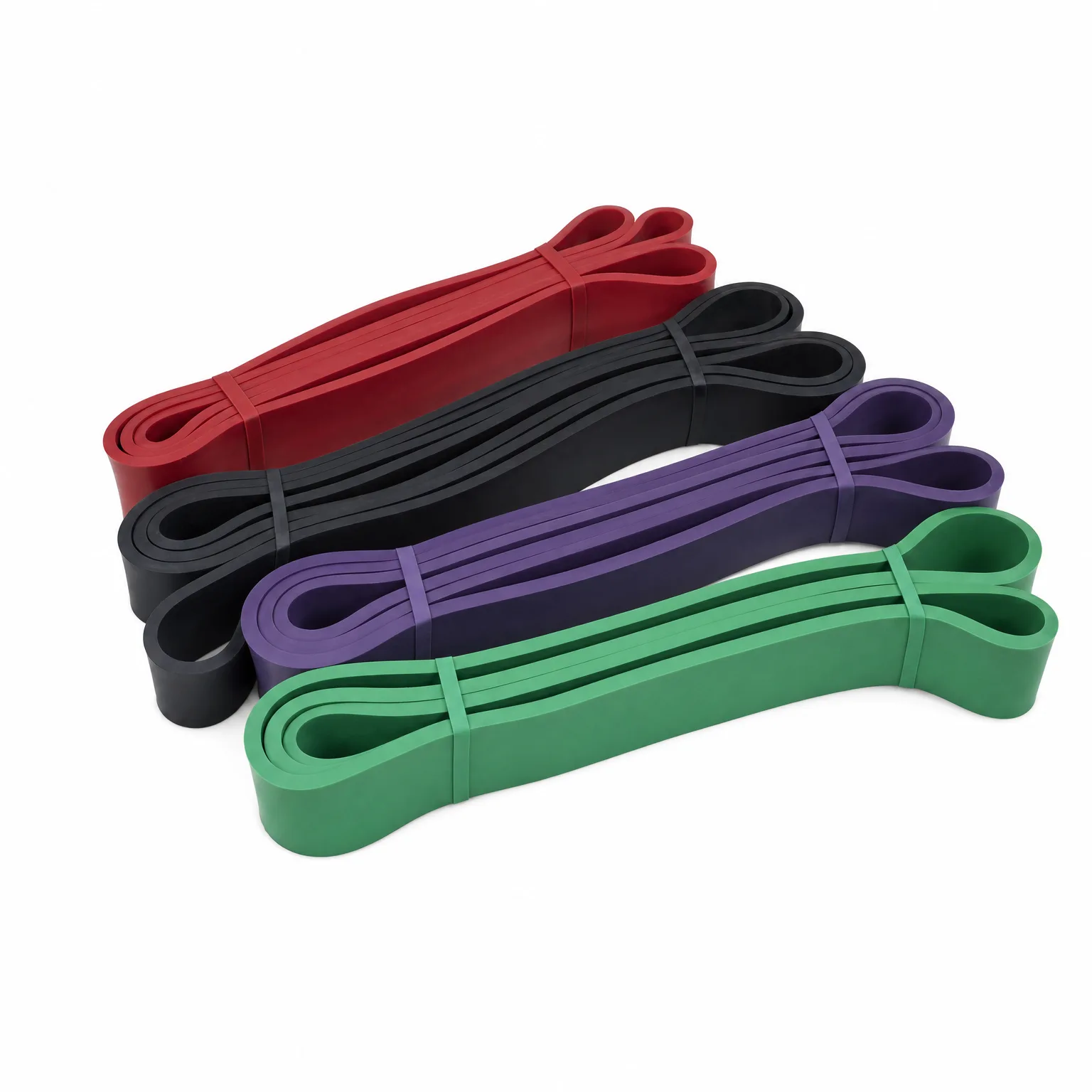
Long closed loops of thick rubber. They add resistance to rows, presses and squats, or take weight off in pull-ups and dips. -
Flat resistance band
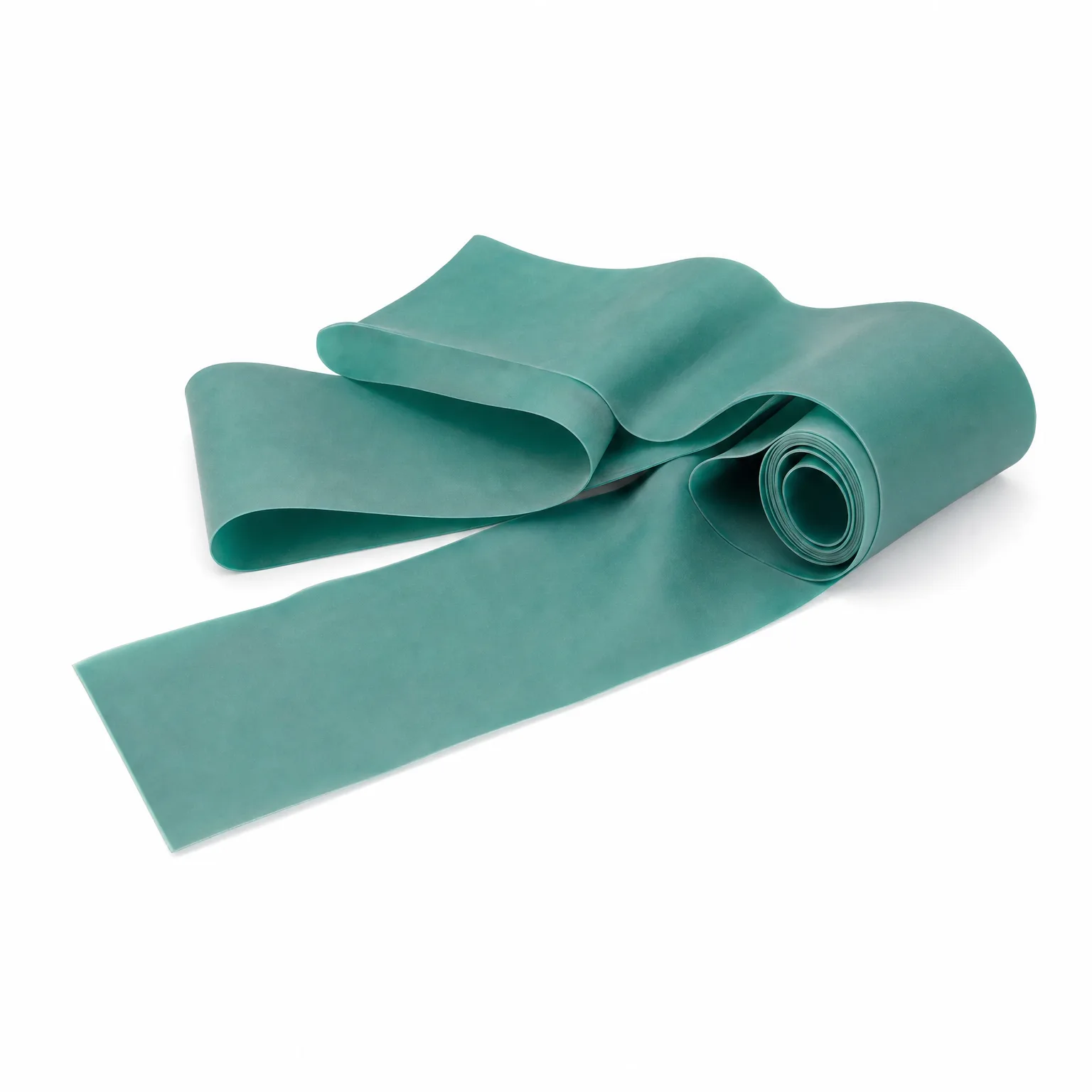
A long, thin, flat strip of elastic with open ends. Used for light strength exercises, Pilates, warm-ups and stretching. -

Dumbbells
A pair of short handles with a weight at each end. One pair trains every major muscle group, at home or in a gym. -
Cable machine
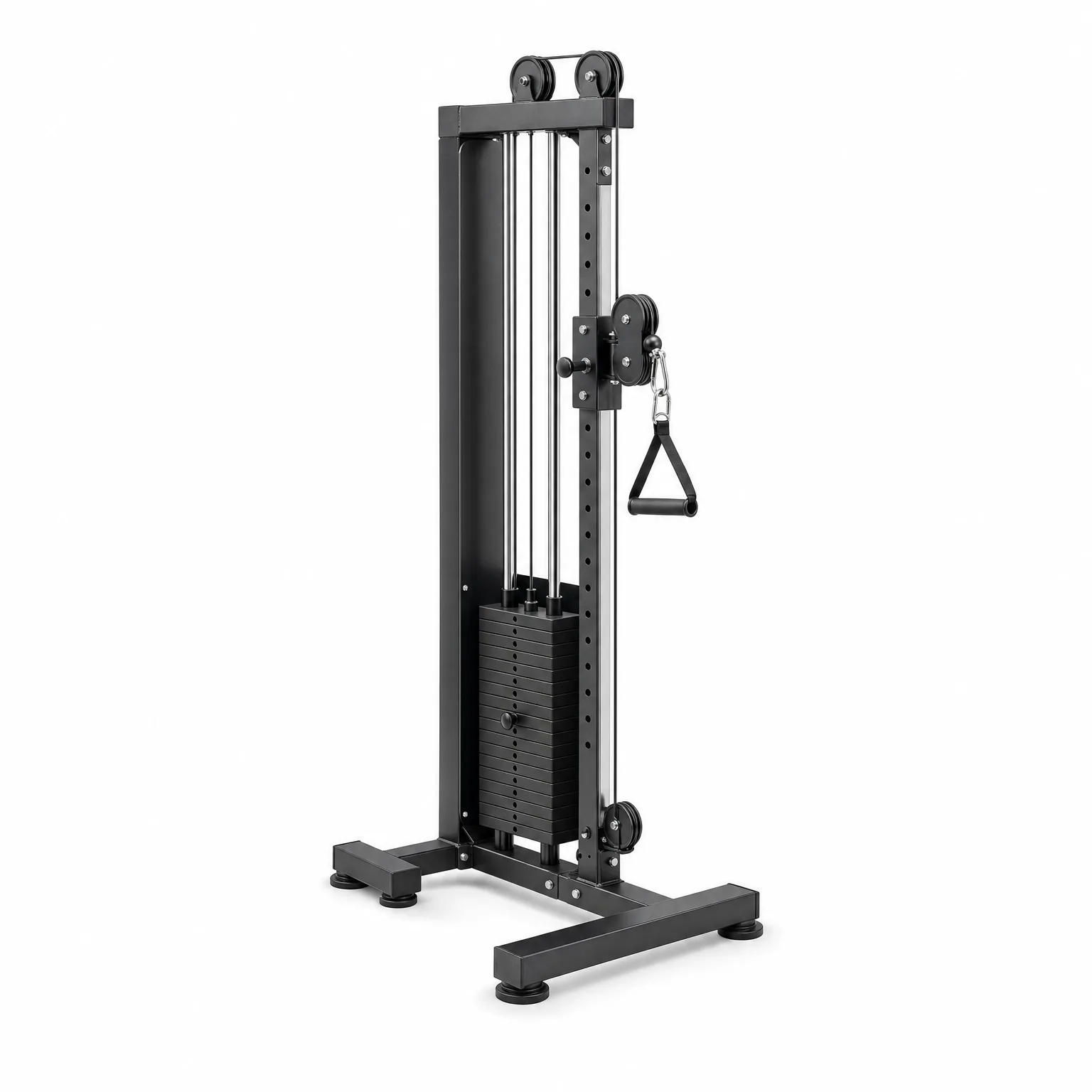
A weight stack on a pulley with a handle you can set at any height. It keeps tension on the muscle through the whole movement.
Often used with
-

Exercise mat
A cushioned, non-slip surface for floor exercises, stretching and yoga. The first thing most people need to train at home. -
Mini bands
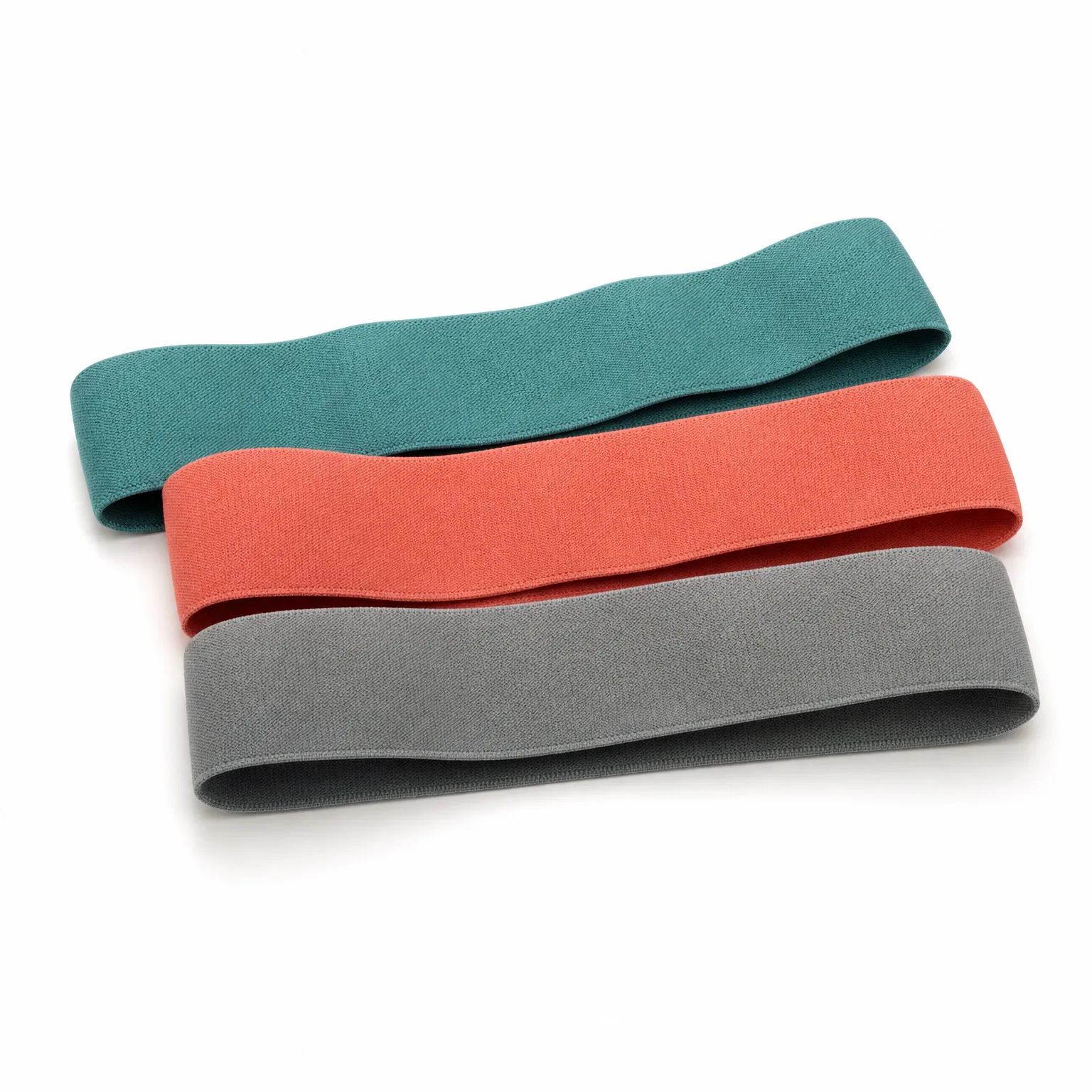
Short elastic loops worn around the thighs, knees or ankles. Used for glute and hip exercises and for warm-ups. -

Weight bench
A padded bench you lie, sit or lean on while lifting. It supports the body for presses, rows, hip thrusts and seated work.
Questions about resistance tubes with handles
Tube bands or loop bands?
Tube bands have handles and a door anchor, which makes them comfortable for upper-body exercises that copy cable or dumbbell work. Loop bands are stronger and simpler, and they are the ones used for pull-up assistance, heavy leg work and adding load to a barbell. Choose by what you plan to do.
Can resistance tubes replace dumbbells?
For beginners and for most arm, shoulder, chest and back exercises, largely yes. The resistance rises as the tube stretches, so reps feel easier at the start and harder at the end. Heavy leg training is where tubes fall short.
How do I make a tube band harder?
Stand further from the anchor, take a wider stance on the tube, shorten it by wrapping it once around your hand, slow the reps, or clip on a second tube. When none of that is enough for 12–15 reps, move to a stronger tube.
Is a door anchor safe to use?
It holds well on a solid door that is fully closed, when the stopper is on the far side and you pull in the direction that keeps the door shut. Avoid glass doors and loose frames, lock the door if possible, and test with a firm tug first.
Build programs around what your client has
This guide comes from OnlineFitness.app, the app online coaches run their clients in.
Free for life for the first 100 coachesNo card