Equipment Mobility and recovery
Yoga strap
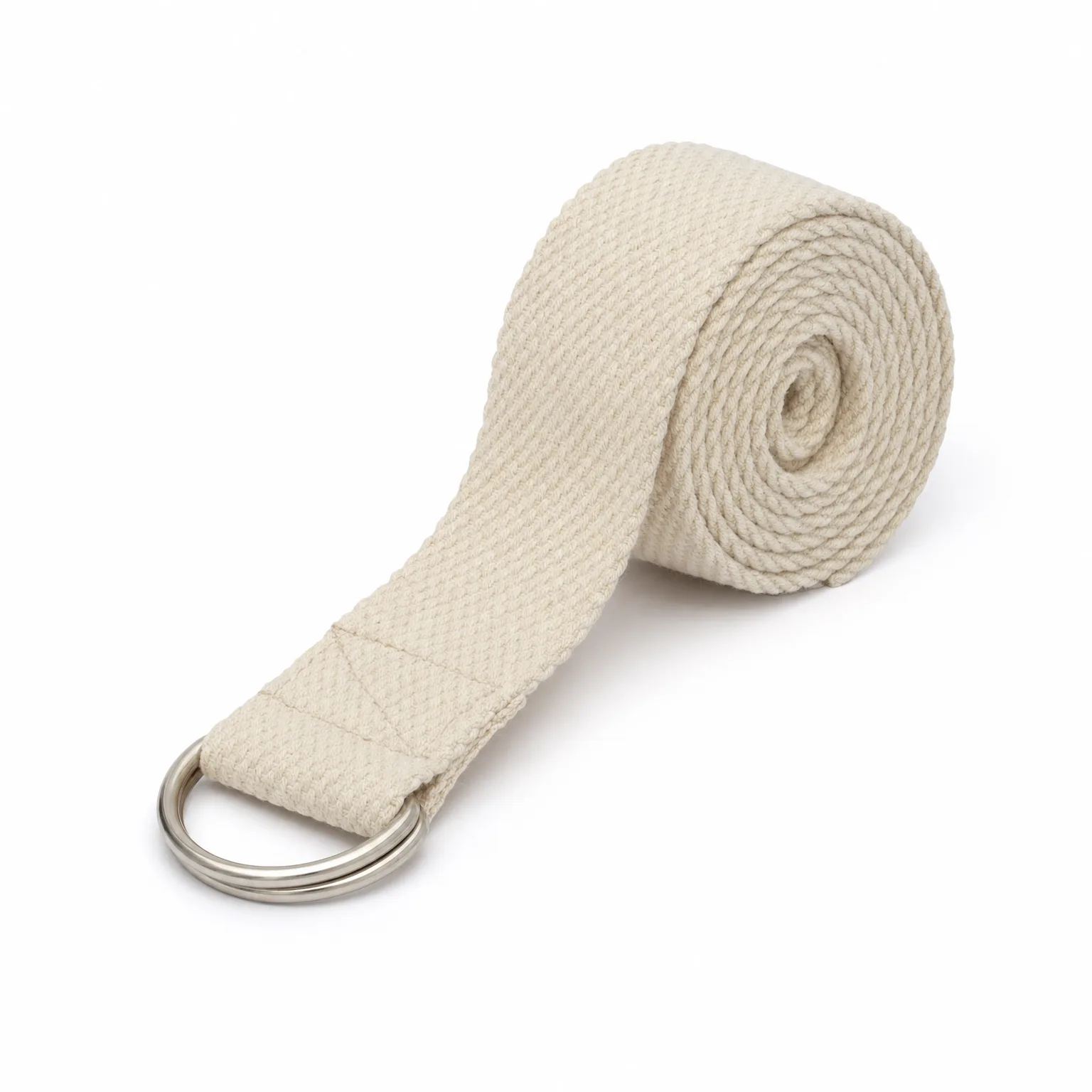
A long, non-stretch cotton or nylon strap with a buckle that extends your reach in stretches, most often for the hamstrings.
In short
A yoga strap is a flat woven belt, usually cotton or nylon, about two to three meters long with a buckle at one end. It does not stretch. You loop it around a foot, a leg or your hands so you can hold a stretch that your arms cannot reach on their own, without rounding the back or straining the shoulders.
It is used in yoga, in general flexibility work and after training, most often for the hamstrings, calves, hips and shoulders. It suits beginners with limited flexibility and experienced people who want to hold a position longer with less effort.
- Category
- Mobility and recovery
- Where
- Home, Gym, Travel
- Level
- Beginner and up
- Space
- Fits in a drawer or a bag
- Typical sizes
- 1.8, 2.4 or 3 m long (6, 8 or 10 ft), about 3.8 cm (1.5 in) wide
- Also called
- yoga belt, stretching strap, stretch strap, stretching strap with loops, yoga stretching belt
Muscles it works
- Main
- Hamstrings, Calves
- Also works
- Adductors, Quads, Chest, Front delts
What it is used for
- Lying hamstring and calf stretches with the strap around the foot
- Reaching the feet in seated forward folds while keeping the back long
- Shoulder stretches with the strap held wide between the hands
- Quad and hip flexor stretches, holding the back foot through the strap
- A loop around the arms or thighs to keep them from splaying in a pose
Types
D-ring strap. Two metal or plastic rings. Thread the strap through to make a loop of any size. Simple and secure, slightly fiddly to release.
Cinch buckle strap. A flat sliding buckle that grips the strap. Faster to adjust and release than D-rings.
Multi-loop stretching strap. A strap sewn into a row of loops with no buckle. You slip a foot or hand into whichever loop gives the right length. Popular outside yoga for general stretching.
How to choose
Pick the length by your height
A 1.8 m (6 ft) strap is enough for most stretches if you are of average height or shorter. Taller people, and anyone who wants to make large loops around the body, will find 2.4 m (8 ft) or 3 m (10 ft) more useful.
Choose a non-stretch material
The point of a strap is a fixed length you can relax against. Thick cotton is soft in the hands and grips well. Nylon is smoother and more durable but can slip in sweaty hands.
Buckle or loops
A buckle lets you make a closed loop of any size, which yoga poses often need. A multi-loop strap is quicker for plain leg and shoulder stretches and needs no adjusting.
Check the width
A strap about 3.8 cm (1.5 in) wide spreads the pressure across the foot and is comfortable to hold. Narrow straps dig into the hands and feet.
How to start using it
- Start with the lying hamstring stretch. Lie on your back, loop the strap over the ball of one foot and hold an end in each hand. Straighten the leg toward the ceiling as far as is comfortable, keeping the other leg and both hips on the floor. Hold 20–30 seconds and switch sides.
- Keep the arms and shoulders relaxed. Walk your hands up the strap until your elbows can stay slightly bent and your shoulders rest down. The strap holds the leg in place. You should not be hauling on it.
- Ease in on the exhale. Move into the stretch slowly, stop at a firm but comfortable pull, and breathe normally. If the stretch eases after a few breaths, take up a little more strap. Come out as slowly as you went in.
- Make a loop for hands-free holds. Thread the end through the buckle to form a loop, place it around the feet or thighs and tighten it to length. A loop holds the position for you so the hands and upper body can relax.
Common mistakes
Pulling as hard as you can
Yanking the leg toward you with the arms makes the muscle tighten against the stretch. Use the strap to hold a position you can relax in.
Bouncing
Jerking in and out of the end position works against the stretch. Move in steadily, hold still, and breathe.
Letting the back round or the hips lift
In a seated forward fold, pulling yourself down with a rounded back shifts the stretch away from the hamstrings. In the lying stretch, a lifting hip does the same. Keep a long spine and both hips level, even if the leg ends up lower.
Using a stretchy band as a strap
An elastic band keeps pulling back and changes length as you move, so it is hard to settle into a fixed position. For held stretches a non-stretch strap is easier to control.
What to use instead
A bath towel, a belt, a bathrobe tie or a dog lead does the same job for most stretches: loop it around the foot and hold the ends. A long loop resistance band can stand in too, though it stretches, so the position is less fixed. The only thing these lack is an adjustable buckle for making closed loops.
-
Towel
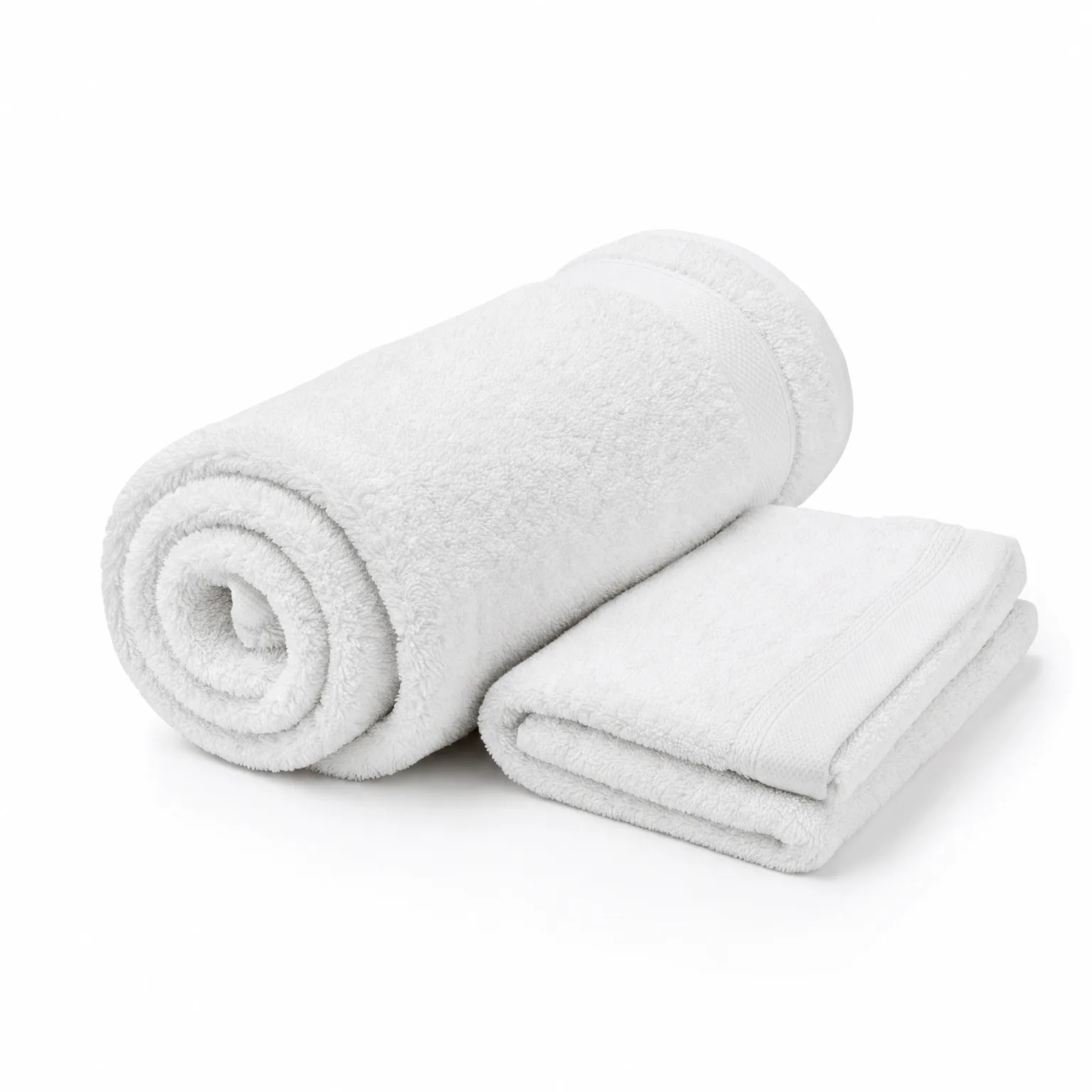
A towel doubles as sliders on a smooth floor, a stretching strap, a pulling tool for isometric exercises and padding for the knees. -
Flat resistance band
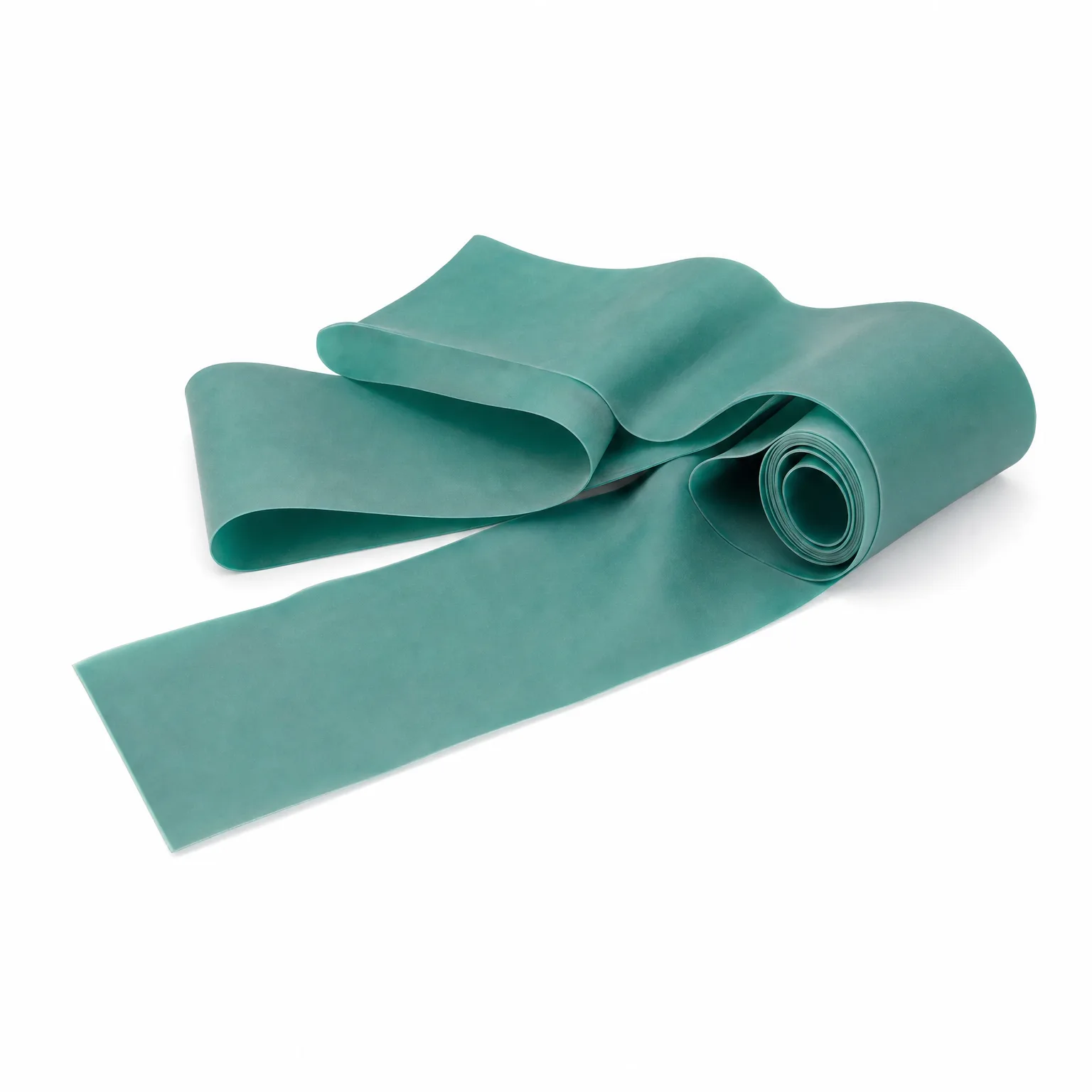
A long, thin, flat strip of elastic with open ends. Used for light strength exercises, Pilates, warm-ups and stretching.
Often used with

Questions about yoga strap
What is a yoga strap used for?
To extend your reach. If you cannot comfortably hold your foot in a hamstring stretch or clasp your hands behind your back, the strap bridges the gap so you can hold the position with a long spine and relaxed shoulders. It is also looped around the arms or legs to keep them in line in certain poses.
What length yoga strap do I need?
1.8 m (6 ft) suits most people under about 170 cm (5 ft 7 in) and covers basic leg and shoulder stretches. Choose 2.4 m (8 ft) if you are taller or less flexible, and 3 m (10 ft) if you are very tall or want large loops around the body.
Yoga strap or resistance band for stretching?
A strap does not stretch, so it holds you at a fixed position that you can relax into. That makes it better for long, held stretches. A band gives and pulls back, which suits active mobility drills and strength work. For plain flexibility work, the strap is the simpler tool.
Can I use a belt or towel instead of a yoga strap?
Yes, for most stretches. A towel or belt looped around the foot works well for hamstring and calf stretches. A real strap is longer, easier to grip and has a buckle for closed loops, which matters mainly in yoga practice.
Build programs around what your client has
This guide comes from OnlineFitness.app, the app online coaches run their clients in.
Free for life for the first 100 coachesNo card