Equipment Functional and conditioning
Stability ball
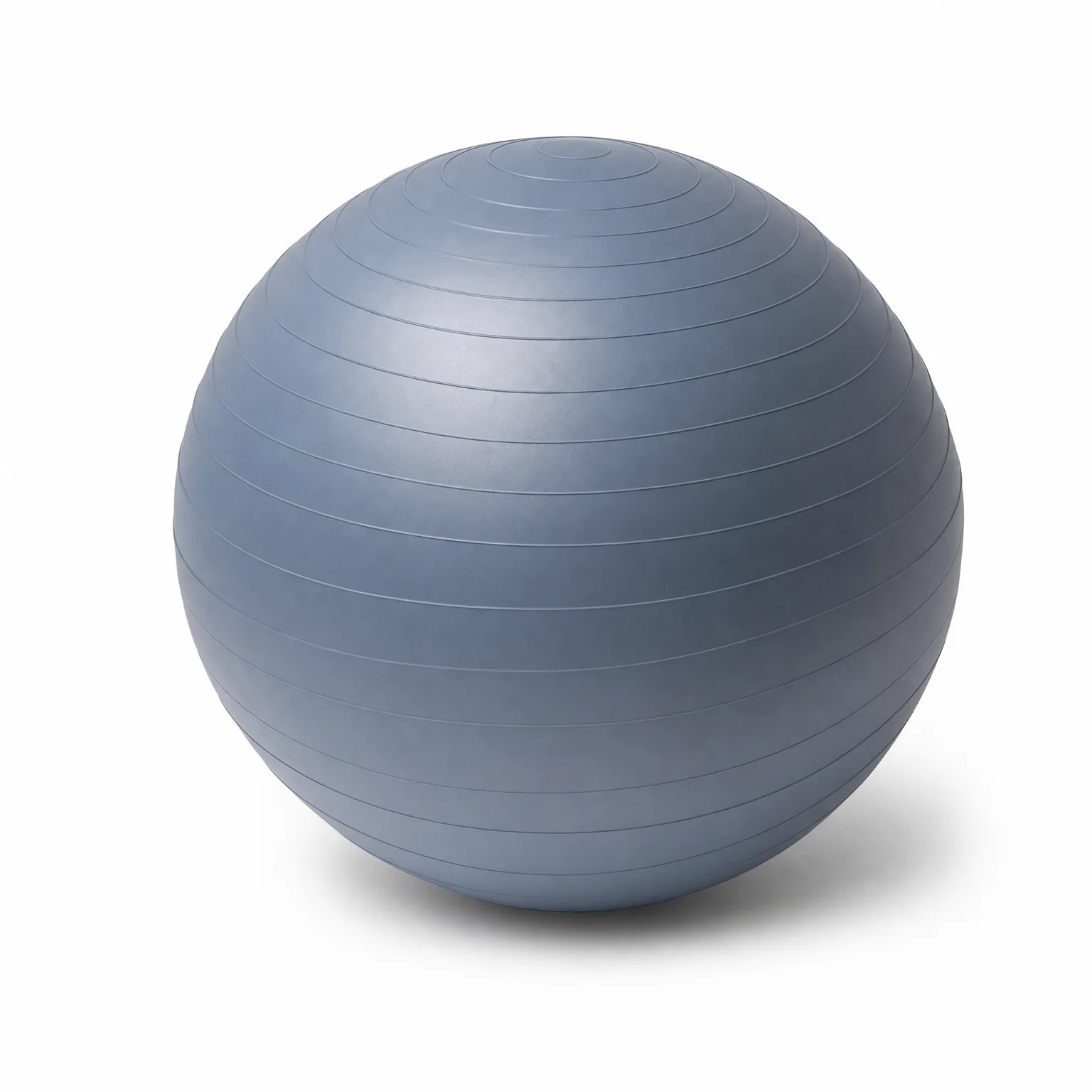
A large inflatable ball you sit, lie or lean on. The unstable surface is used for core exercises, hamstring curls and supported stretches.
In short
A stability ball is a large, air-filled ball made of thick PVC, usually 55–75 cm across. You sit on it, lie over it or rest your feet or forearms on it. Because the ball rolls, the trunk and hip muscles have to hold you steady, which is why it is used mainly for core training, hamstring curls and bridges.
It is light, inexpensive and suitable from the first week of training. It also works as a support for wall squats, as a soft surface for crunches and back extensions, and as a rounded surface for stretching. It takes up a corner of a room when inflated.
- Category
- Functional and conditioning
- Where
- Home, Gym
- Level
- Beginner and up
- Space
- Needs a corner of a room
- Typical sizes
- Diameters of 45, 55, 65, 75 and 85 cm (18, 22, 26, 30 and 34 in)
- Also called
- swiss ball, exercise ball, fitball, gym ball, yoga ball, balance ball, physio ball
Muscles it works
- Main
- Abs, Obliques, Lower back, Hamstrings, Glutes
- Also works
- Chest, Front delts, Quads, Adductors
What it is used for
- Core work: crunches over the ball, planks with forearms or feet on the ball, rollouts, pikes
- Hamstring curls and hip bridges with the heels on the ball
- Back extensions lying face down over the ball
- Wall squats with the ball rolling behind the back
- Supported stretches for the chest, abs and back
Types
Anti-burst. Made so that a puncture lets the air out slowly instead of the ball popping. The standard to look for in any ball you will put your weight on.
With a base or legs. A ring stand or small molded feet stop the ball rolling away when not in use, or when used as a seat.
Peanut ball. Two lobes joined in the middle. It rolls only forward and back, so it is steadier for people who find a round ball too wobbly.
Mini ball. A soft 20–25 cm (8–10 in) ball used in Pilates behind the back or between the knees. A different tool despite the similar name.
How to choose
Choose the diameter by your height
As a rough guide: 55 cm for people under about 165 cm (5 ft 5 in), 65 cm for 165–185 cm (5 ft 5 in to 6 ft 1 in), 75 cm for taller people. Size charts differ a little between makers, so check the one for your ball.
Do the sitting test
Sit on the inflated ball with your feet flat. Your hips should be level with your knees or slightly higher, with the thighs about parallel to the floor. If the knees are well above the hips, the ball is too small or too soft.
Look for anti-burst material
Choose a ball labeled anti-burst or burst-resistant, with thick walls. The load it can take depends on the manufacturer's rating, which matters most if you plan to lift weights while on the ball.
A textured surface
A slightly matte or ribbed surface grips clothing and the floor better than a glossy one, which gets slippery with sweat.
How to start using it
- Inflate it to the stated diameter. Pump the ball to about 80 percent, leave it for a day so the material stretches, then top it up to the diameter printed on it. Measure the height against a mark on a wall. Do not judge by firmness alone.
- Clear the space. Use the ball on a non-slip floor or a mat, away from furniture corners and anything sharp. Check the surface for cuts or scuffs from time to time.
- Start seated and supported. Sit on the ball with the feet wide and practice small hip shifts and lifting one foot. Then try bridges with the shoulders on the ball, and wall squats. A wider foot stance makes every exercise steadier.
- Progress to feet-on-ball work. Hamstring curls, planks with the shins on the ball and knee tucks come next. Move slowly and keep the hips level. Narrowing the base or moving the ball farther from the body makes each one harder.
Common mistakes
Wrong size or an underinflated ball
A soft ball sinks, sits too low and barely rolls, which changes every exercise. Inflate it to the stated diameter and check it every few weeks, since balls lose air slowly.
Heavy lifting on the ball
Pressing heavy dumbbells while lying on a ball limits the load your muscles can handle and adds a real risk if the ball slips or fails. Use a bench for heavy work and keep the ball for bodyweight and light loads.
Standing or kneeling tricks too early
Kneeling and especially standing on a ball look impressive and add little training value for most people. Falls from a ball are awkward. Stick with exercises where hands or feet stay on the floor.
Rushing through reps
Bouncing through crunches or curls lets the ball's spring do the work. Slow down and pause for a second at the hardest point.
What to use instead
A half-dome balance trainer gives a similar unstable surface for crunches, bridges and planks, and stays in place. Core sliders under the heels or feet replace hamstring curls, knee tucks and pikes. A bench is the better base for presses and for back extensions with the feet anchored. For sitting and for supported squats, a chair does the job without the instability.
-
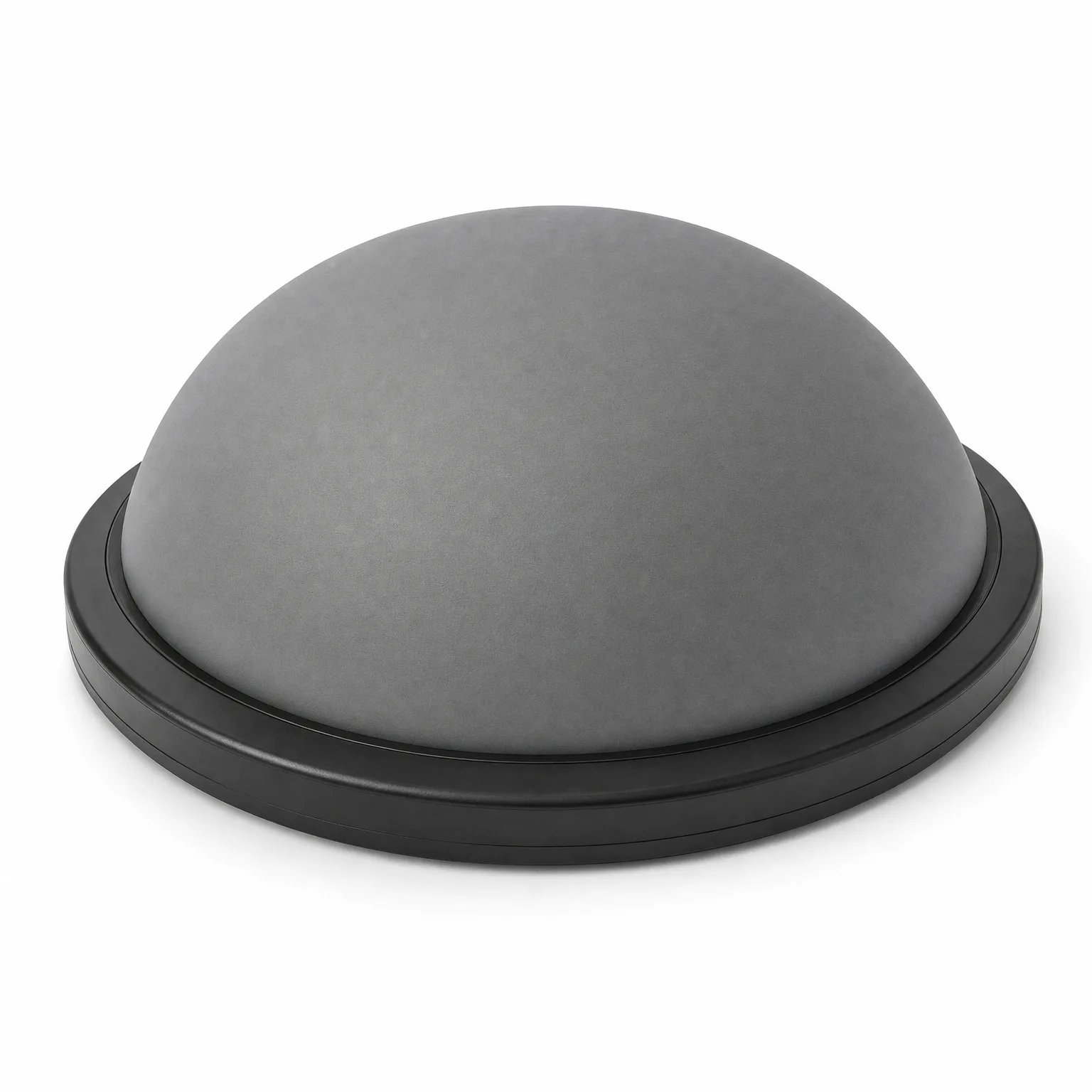
Balance trainer
An inflated rubber dome on a flat rigid base. You stand, kneel or lie on it to make balance, core and leg exercises less stable. -
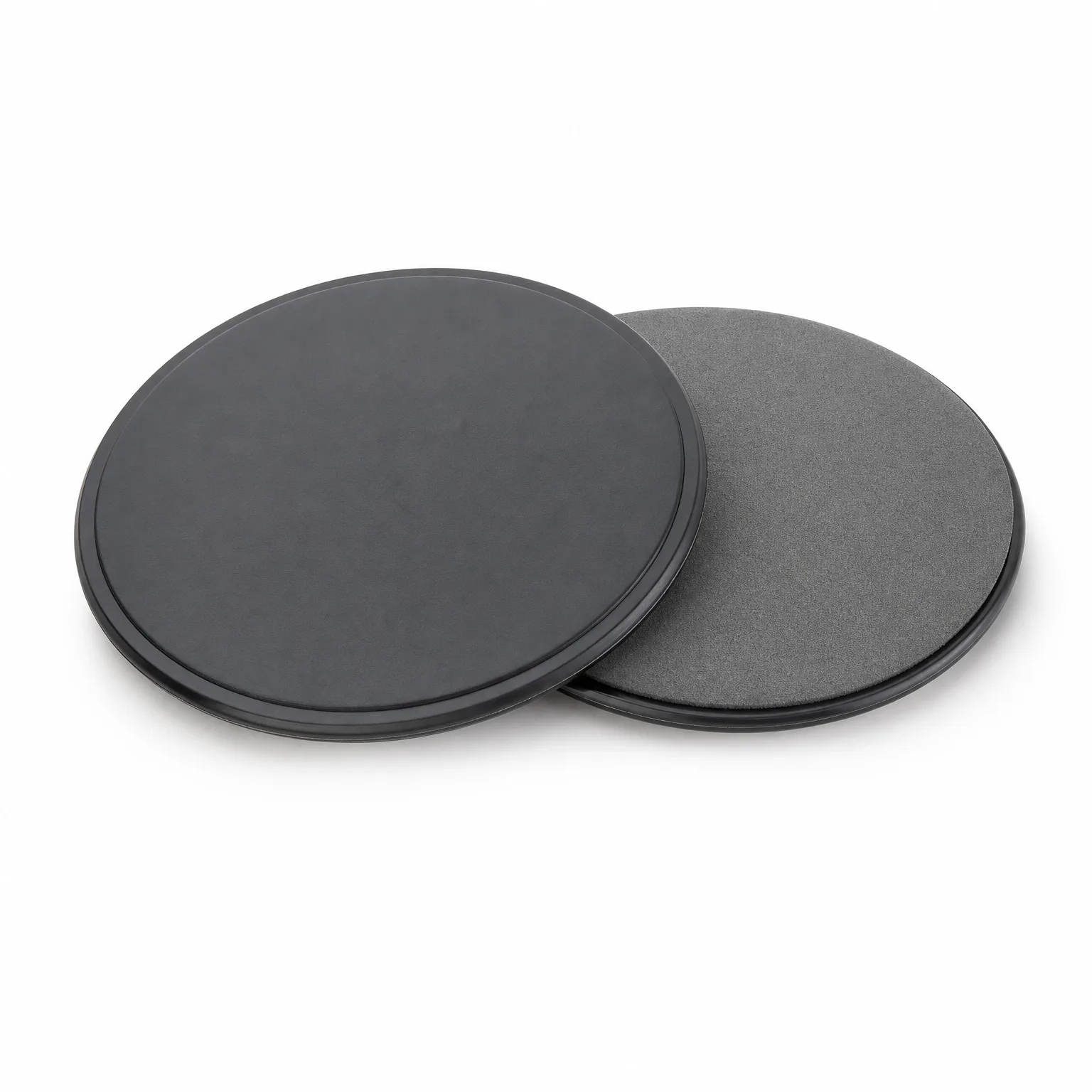
Core sliders
Two flat discs that slide under your hands or feet. They add a gliding element to lunges, planks and hamstring curls on any floor. -
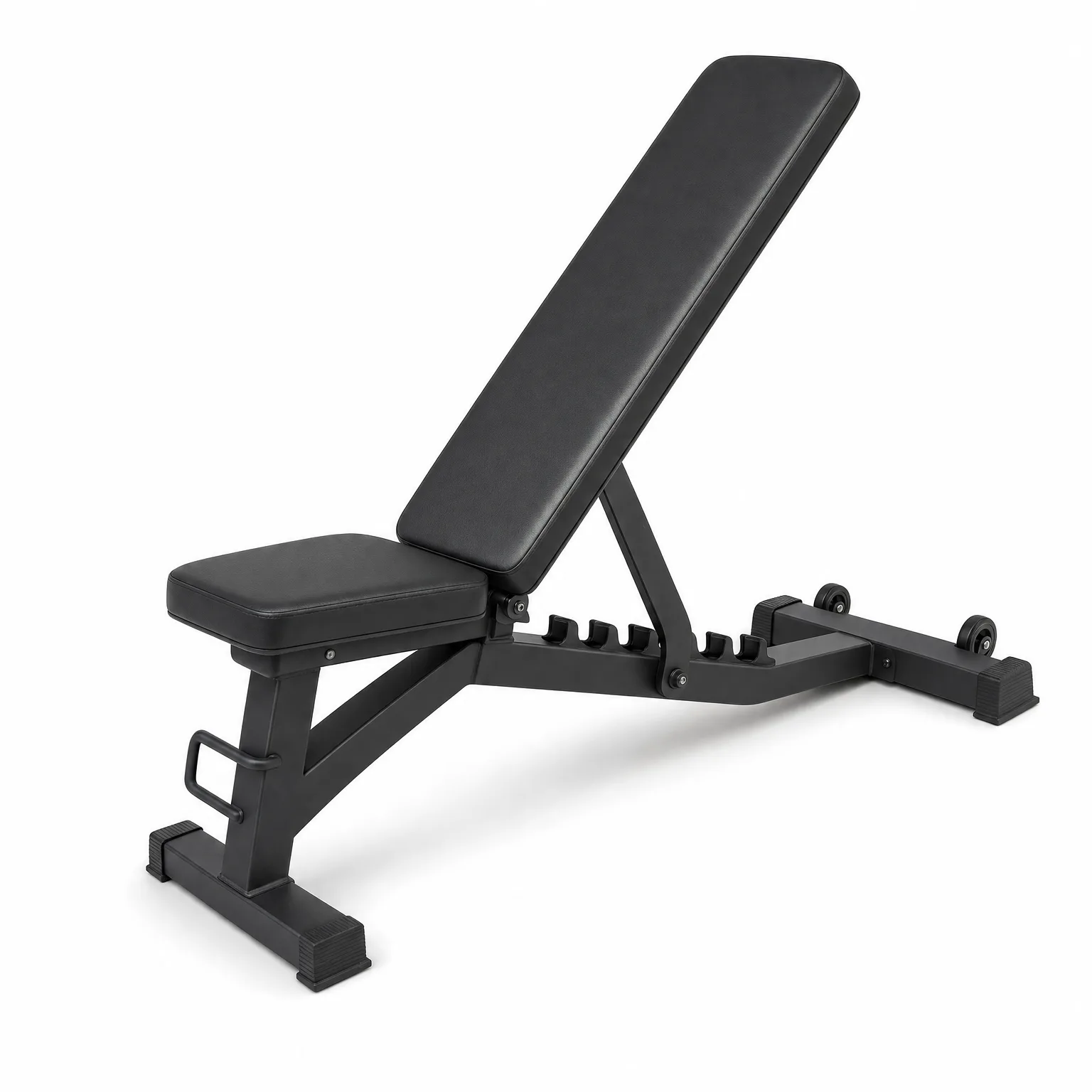
Weight bench
A padded bench you lie, sit or lean on while lifting. It supports the body for presses, rows, hip thrusts and seated work. -
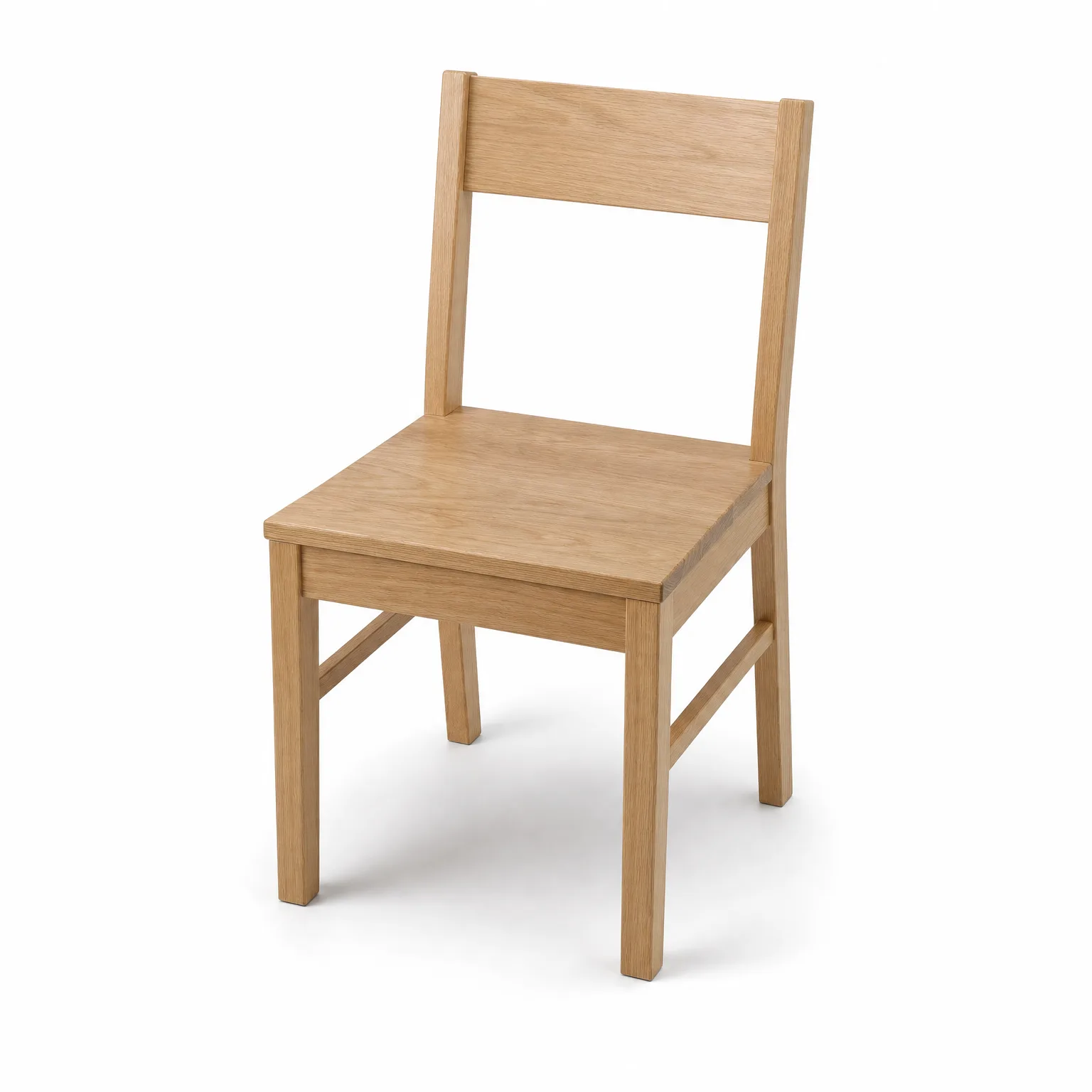
Chair
A sturdy household chair stands in for a bench, a low box or dip bars: sit-to-stands, step-ups, dips, split squats and incline push-ups.
Often used with
-

Exercise mat
A cushioned, non-slip surface for floor exercises, stretching and yoga. The first thing most people need to train at home. -

Dumbbells
A pair of short handles with a weight at each end. One pair trains every major muscle group, at home or in a gym. -
Wall
A clear stretch of solid wall works as support, a balance aid and a fixed surface to push against: wall sits, wall push-ups, stretches.
Questions about stability ball
What size stability ball do I need?
Most sizing charts suggest 55 cm for people under about 165 cm (5 ft 5 in), 65 cm for 165–185 cm, and 75 cm for taller people. Confirm it by sitting on the inflated ball: your thighs should be about parallel to the floor, with the hips level with or slightly above the knees.
How much should I inflate a stability ball?
To the diameter printed on the ball, not until it feels hard. Inflate to about 80 percent, wait a day, then top up and measure the height against a wall. When you sit on it, it should give a few centimeters without sinking.
Is sitting on a stability ball better than a chair?
It is different, not clearly better. A ball has no back support, so most people tire and start to slouch after a while. Short spells of sitting on it add some movement to a desk day, but it is not a replacement for a chair during long work sessions.
Is a stability ball good for abs?
Yes. Crunches over the ball allow a longer range than on the floor, and rollouts, pikes and planks on the ball are demanding core exercises. Start with crunches and forearm planks on the ball, then add the moving variations.
Stability ball or half-dome balance trainer?
The ball is better for exercises you lie over or put your feet on: crunches, hamstring curls, pikes, back extensions. A half-dome trainer has a flat base, so it is better for standing balance work, step-ups and squats. The ball is cheaper; the dome is easier to store.
Build programs around what your client has
This guide comes from OnlineFitness.app, the app online coaches run their clients in.
Free for life for the first 100 coachesNo card