Lat pulldown machine
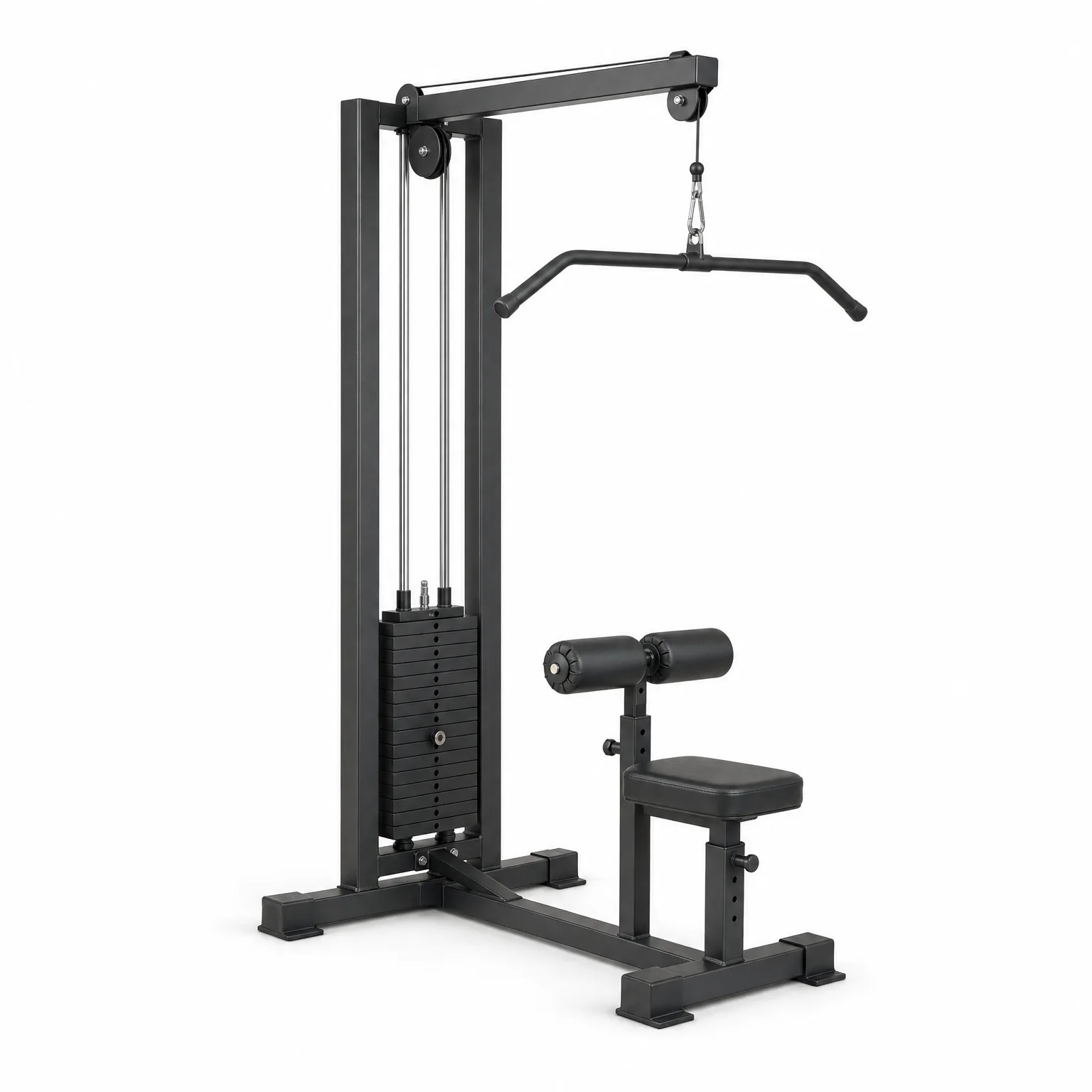
A seat with thigh pads under a high pulley and a wide bar. You pull the bar to your chest to train the lats and upper back.
In short
A lat pulldown machine is a seat with thigh pads under a high pulley. You hold a bar attached to the cable and pull it down to your upper chest while the pads keep you in the seat. It trains the lats, the large muscles on the sides of the back, with the mid back, rear shoulders and biceps helping.
It is the same movement as a pull-up with an adjustable load, so it suits people who cannot yet do pull-ups and anyone who wants more back work at a chosen weight.
- Category
- Gym machines
- Where
- Gym
- Level
- Beginner and up
- Space
- Needs a dedicated area
- Typical sizes
- Stacks are commonly 70–135 kg (150–300 lb); the standard wide bar is about 100–120 cm (40–48 in) long
- Also called
- lat pulldown, lat pull down machine, pulldown machine, lat machine, cable pulldown, lat pull
What it is used for
- Wide-grip pulldowns to the chest for the lats
- Close-grip and neutral-grip pulldowns with a V-handle or parallel bar
- Underhand pulldowns that bring in more biceps
- Building toward a first pull-up
- Straight-arm pulldowns done standing in front of the machine
Types
Selectorized cable. A weight stack, a pin and a swappable bar. The standard version in most gyms.
Plate-loaded lever. Two independent arms that pull down on a fixed arc, loaded with plates. Each side works on its own.
Dual pulldown and low row. One stack with a high pulley and a low pulley with a footplate. Common in small gyms and home setups.
Rack attachment. A plate-loaded high pulley bolted to a power rack, used with a bench or the floor instead of a fixed seat.
How to choose
Set the thigh pads
Sit down and lower the pads until they press lightly on the tops of your thighs with your feet flat on the floor. You should not be able to lift off the seat, and the pads should not dig in.
Pick a grip
An overhand grip a little wider than the shoulders is the standard start. A neutral grip with palms facing each other is often the most comfortable for the shoulders and elbows. An underhand shoulder-width grip adds biceps. Very wide grips shorten the range.
Choose a starting load
Pick a weight you can pull to the upper chest for 10–12 reps without leaning far back or jerking. On most cable machines the selected weight is close to what you pull, but ratios differ, so test each machine.
Change the bar when it helps
Most machines take any clip-on handle. A V-handle, a parallel-grip bar or single handles change which position feels strongest. The basic movement stays the same.
How to start using it
- Grip the bar before you sit. Stand up, take your grip with the thumbs wrapped around the bar, then sit down and slide your thighs under the pads while holding the bar. The arms should be straight overhead with the stack slightly lifted.
- Set the chest and shoulders. Lean back a little, about 10–20 degrees, and lift the chest. Start each rep by pulling the shoulder blades down, away from the ears.
- Pull the elbows down. Drive the elbows down and slightly back until the bar reaches the upper chest or just under the chin. Think of the hands as hooks and the elbows as the part that moves.
- Let the bar rise slowly. Return in about two seconds until the arms are straight and you feel a stretch along the sides of the back. Keep the torso angle the same from the first rep to the last.
- Stand up to finish. After the last rep, stand with the bar and let the stack come down under control before you let go.
Common mistakes
Swinging the torso
Throwing the body back to start each rep turns the pulldown into a row with momentum. Lower the weight until the lean stays constant.
Pulling behind the neck
Bringing the bar behind the head pushes the head forward and puts the shoulders at the edge of their range, with no extra work for the lats. Pull to the front.
Stopping short at the top
Keeping the elbows bent between reps skips the stretched part of the range. Let the arms straighten fully each time.
Pulling with the arms only
If the shoulders stay shrugged and the biceps tire first, the back is not doing its share. Begin each rep with the shoulder blades and lead with the elbows.
Bar pulled to the stomach
Dragging the bar far below the chest rolls the shoulders forward and bends the wrists. The rep ends when the bar reaches the upper chest.
What to use instead
Pull-ups on a bar are the same movement with body weight. If full pull-ups are too hard, use an assisted pull-up machine or loop a long band over the bar and stand or kneel in it. A cable machine with the pulley set high works for kneeling pulldowns. A long band anchored above a door covers the movement at home.
-
Pull-up bar
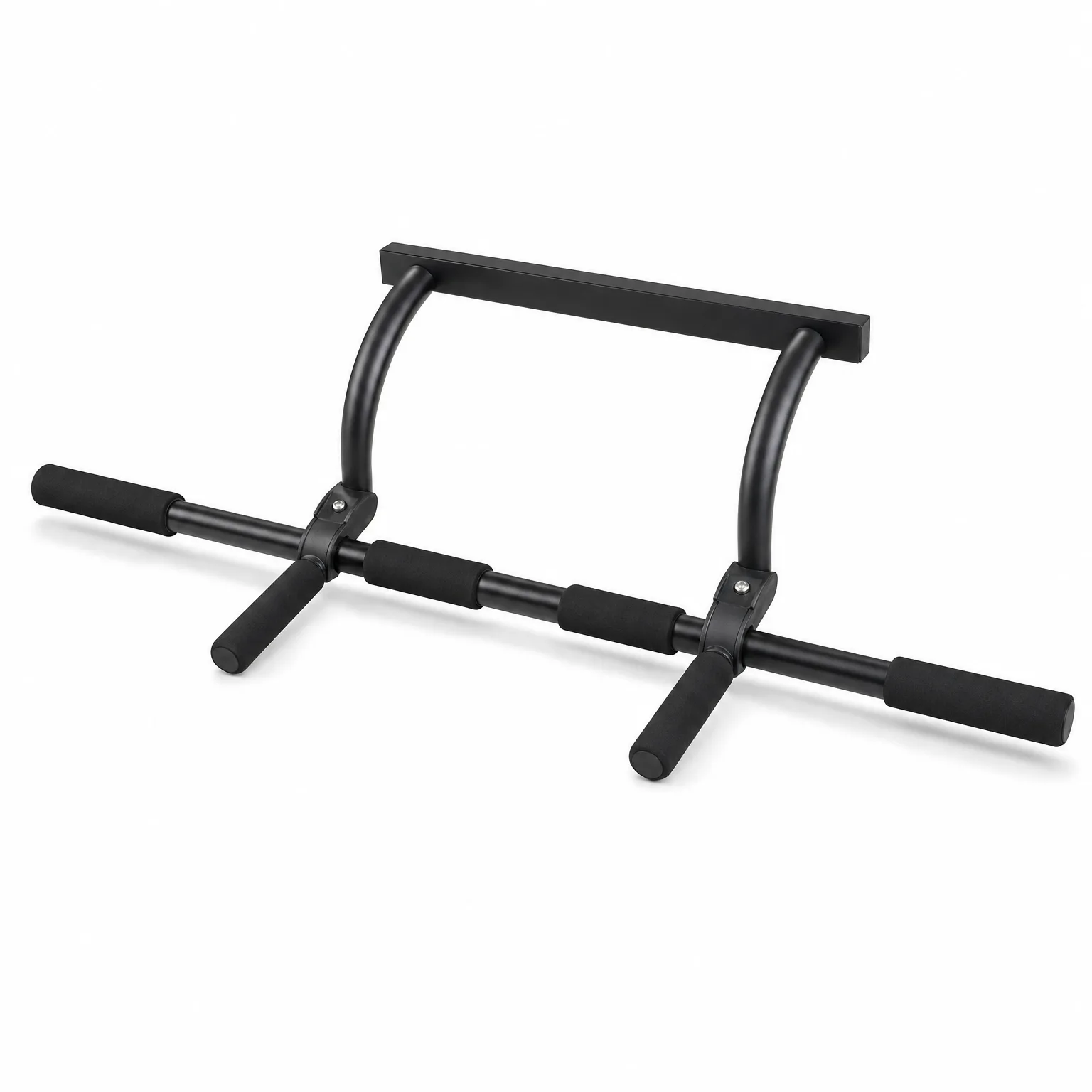
A fixed horizontal bar you hang from. Used for pull-ups, chin-ups, hangs and hanging leg raises, at home or outdoors. -
Assisted pull-up machine
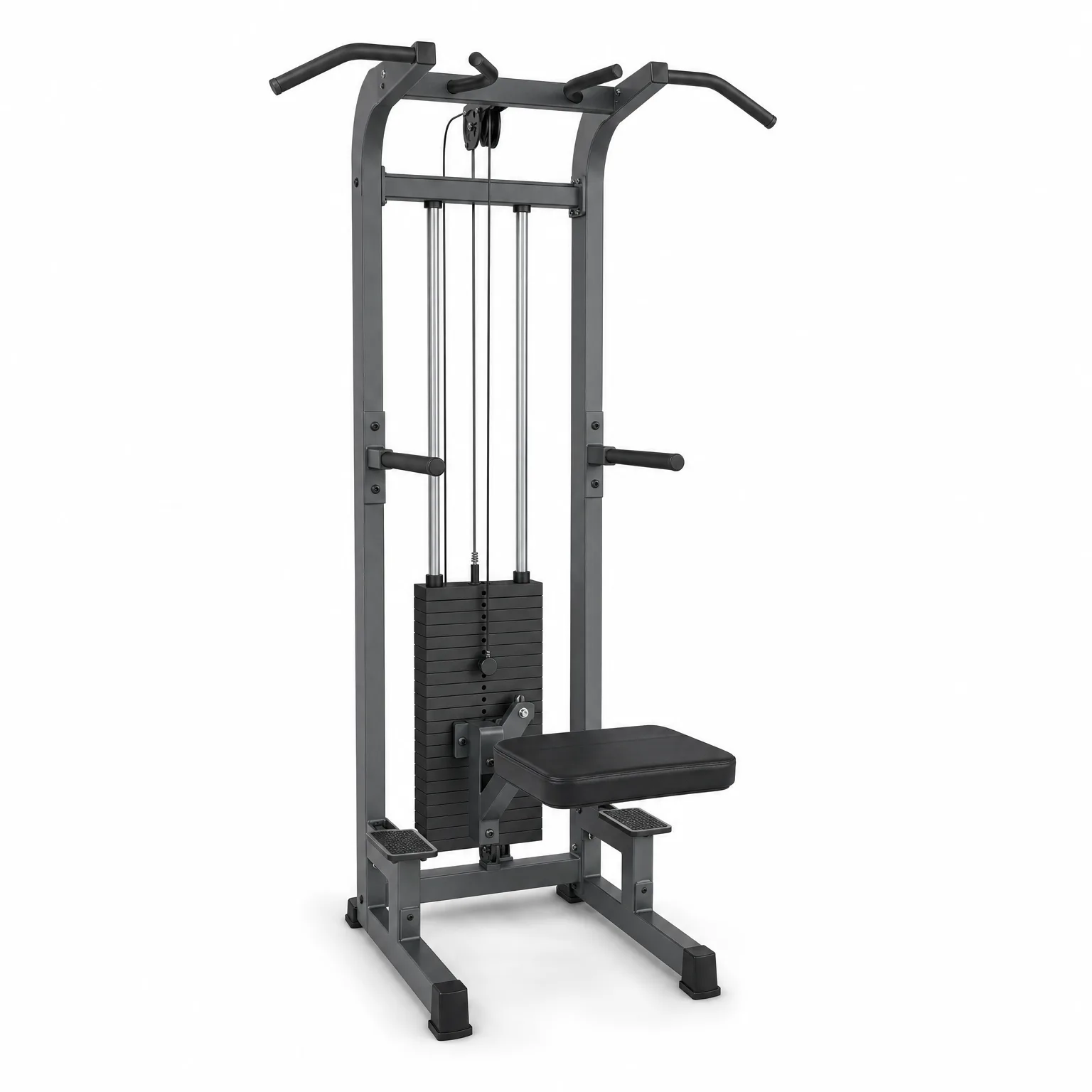
A pull-up and dip station with a counterweighted pad that carries part of your body weight, so you can do full reps sooner. -
Cable machine
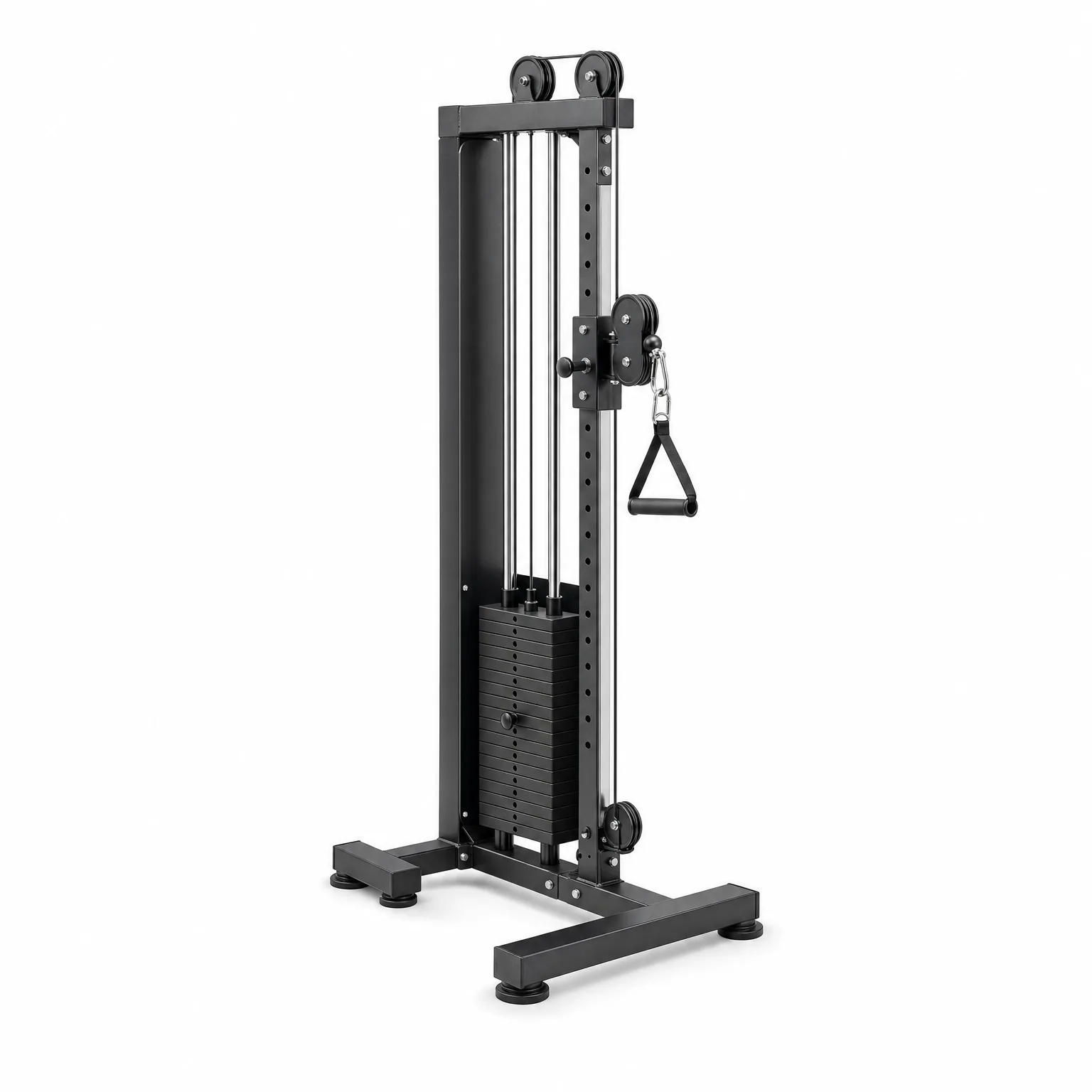
A weight stack on a pulley with a handle you can set at any height. It keeps tension on the muscle through the whole movement. -
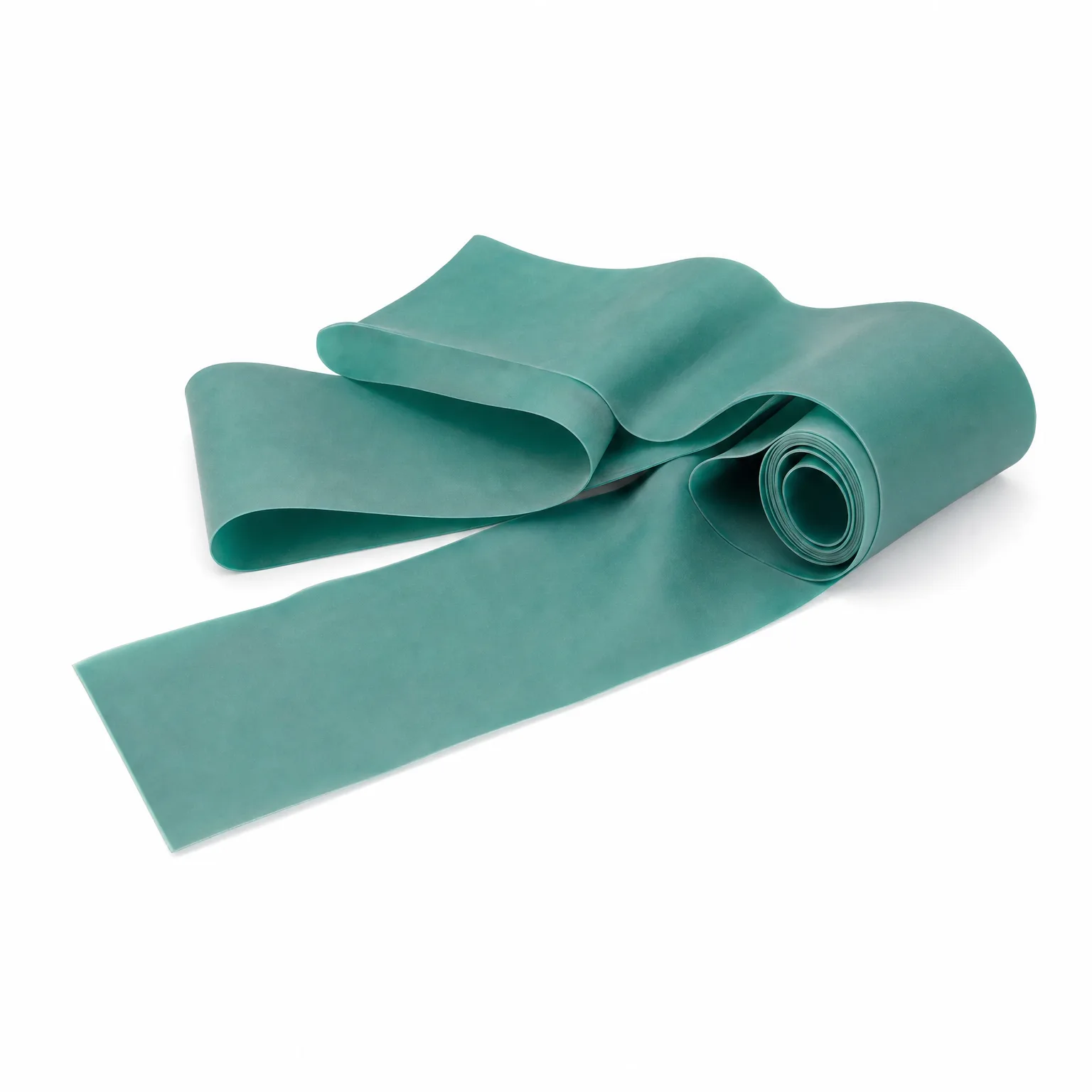
Flat resistance band
A long, thin, flat strip of elastic with open ends. Used for light strength exercises, Pilates, warm-ups and stretching.
Often used with
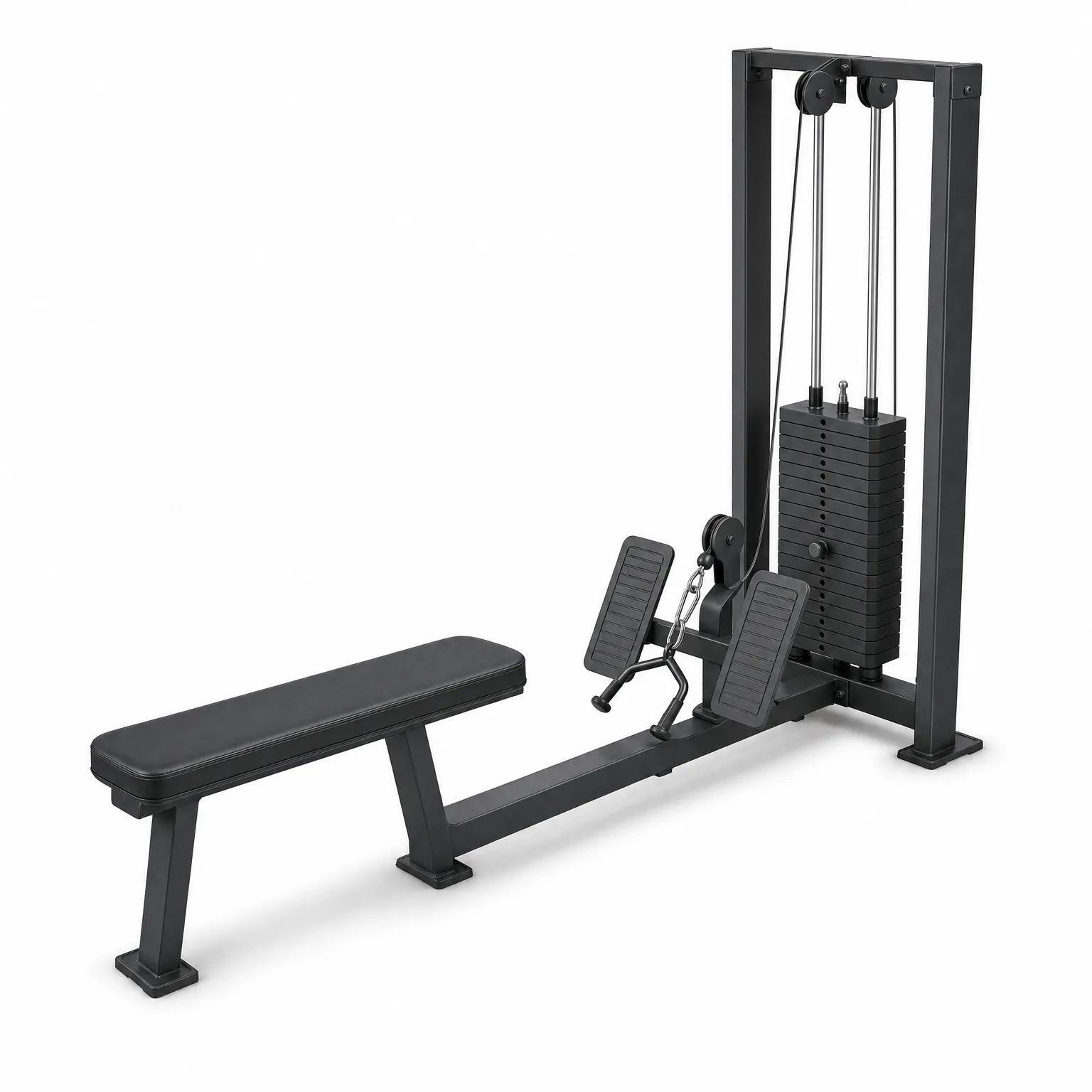
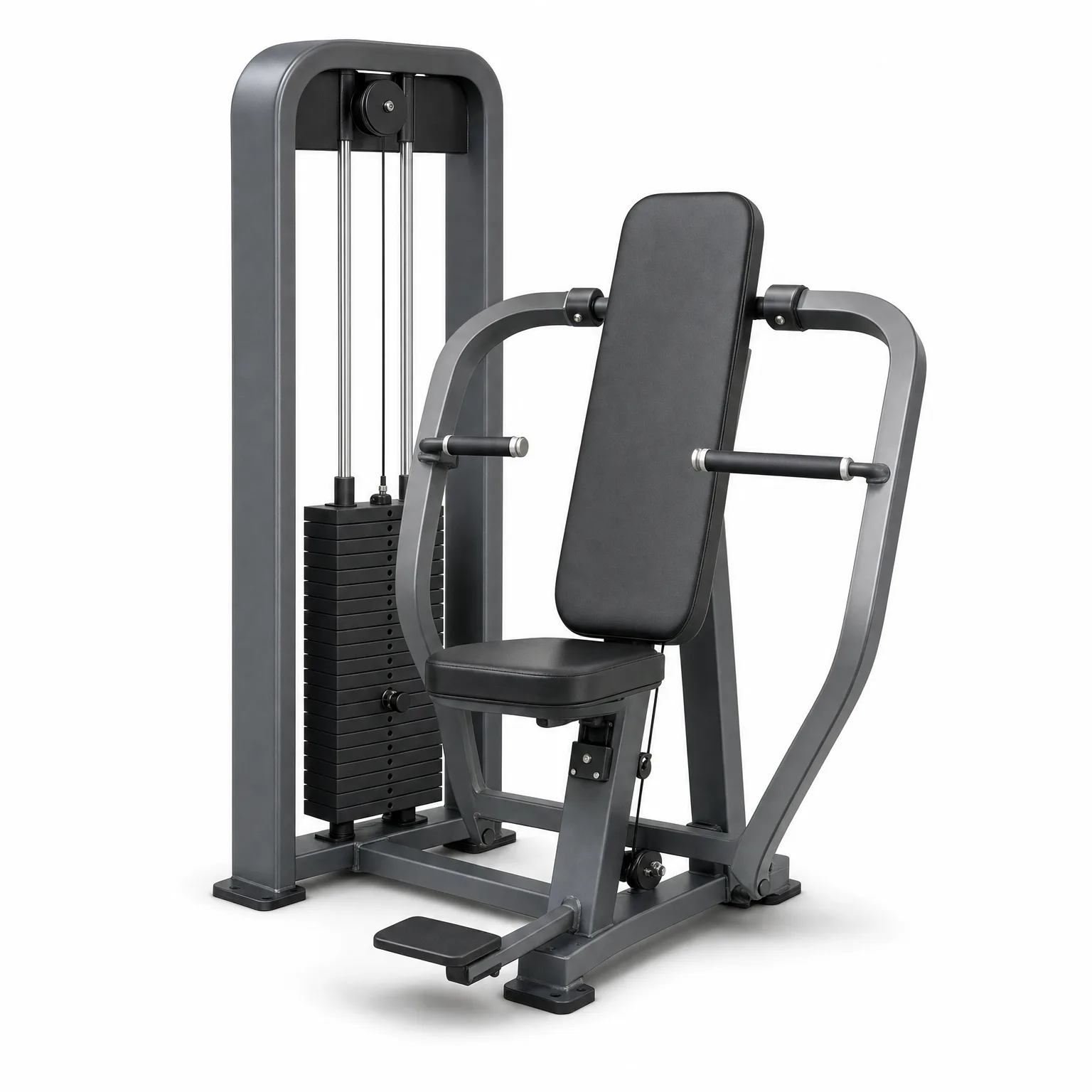
Questions about lat pulldown machine
What muscles does the lat pulldown work?
The lats do most of the work. The mid back, lower traps and rear shoulders help pull the shoulder blades down and back, and the biceps and forearms bend the elbows and hold the bar.
Lat pulldown vs pull-up: which is better?
They train the same muscles. Pull-ups need no machine and also challenge the trunk and grip, but the load is your body weight, which is too much for many people and too fixed for others. Pulldowns let you pick any load and rep range. Use pulldowns to build up, and both once you can do pull-ups.
What grip is best for the lat pulldown?
There is no single best grip. Overhand a little wider than the shoulders is the standard. Neutral and underhand grips let many people use slightly more weight and involve the biceps more. Choose the one that lets you feel the back working through a full range without joint discomfort.
Will lat pulldowns help me do a pull-up?
They build the same muscles, so yes, especially when some of your sets are heavy, around 5–8 reps. Add some practice on the bar itself, such as assisted pull-ups, hangs and slow lowering, because the pull-up also needs grip and body control.
Build programs around what your client has
This guide comes from OnlineFitness.app, the app online coaches run their clients in.
Free for life for the first 100 coachesNo card