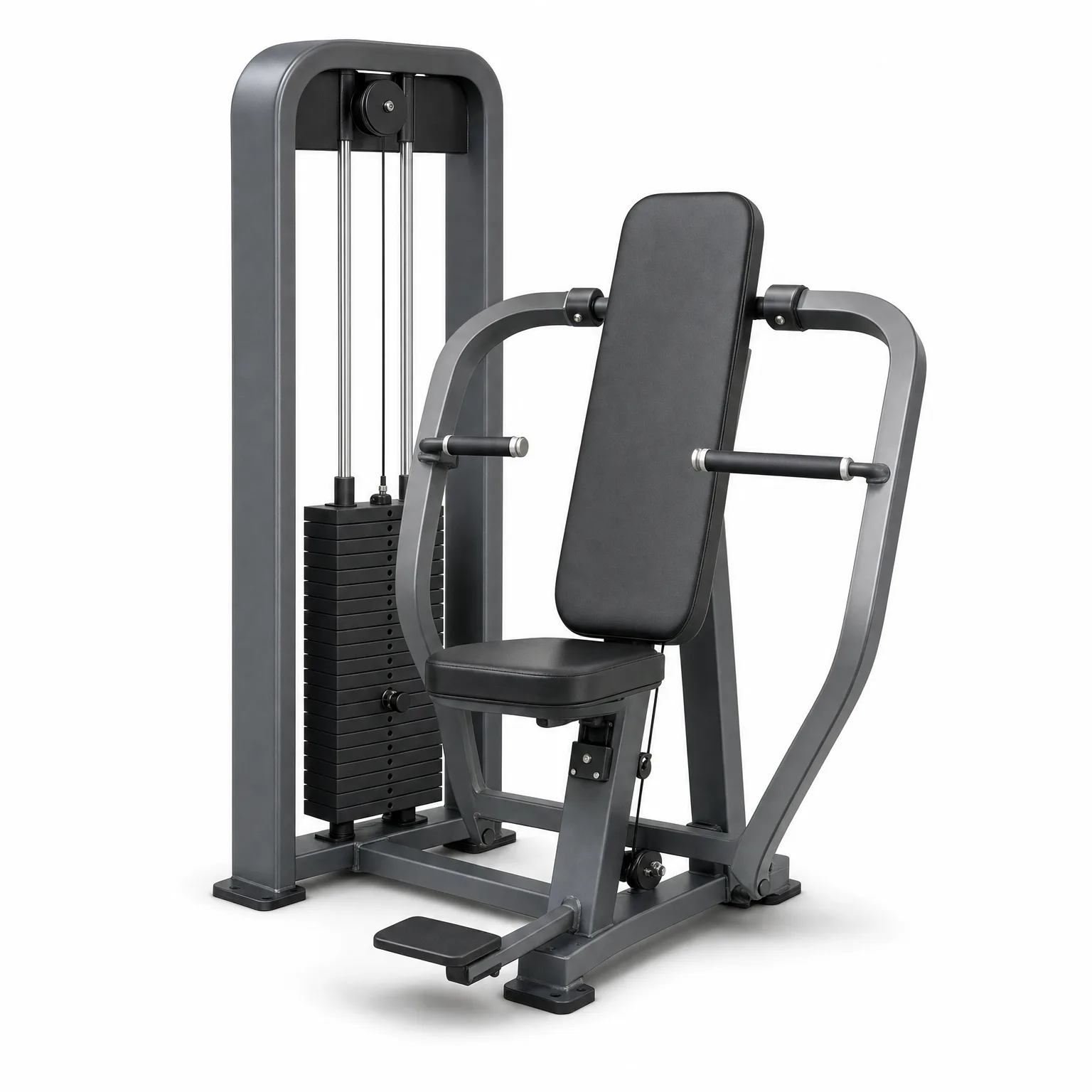
Chest press machine
A seat with handles you push forward against a weight stack or plates. It trains the chest, front shoulders and triceps.
In short
A chest press machine is a seat with a back pad and two handles that you push away from the chest along a fixed path. It is the machine version of the bench press and trains the chest, with the front shoulders and triceps helping.
There is no bar to balance and nothing above you to drop, so it suits beginners and anyone training alone. Experienced lifters use it to push the chest close to failure after free-weight presses.
- Category
- Gym machines
- Where
- Gym
- Level
- Beginner and up
- Space
- Needs a dedicated area
- Typical sizes
- Stacks are commonly 70–135 kg (150–300 lb); footprint about 1.3 x 1.5 m (4.5 x 5 ft)
- Also called
- seated chest press, machine chest press, machine bench press, vertical chest press, incline chest press machine, chest machine
Muscles it works
- Main
- Chest
- Also works
- Front delts, Triceps
What it is used for
- Learning the pressing movement before the bench press
- Chest sets taken close to failure without a spotter
- Incline or decline pressing on machines built at those angles
- One-arm presses on machines with independent arms
Types
Seated selectorized. Upright seat, weight stack and pin. Often has a foot lever that brings the handles forward so you can start the first rep easily.
Plate-loaded lever. Each arm pivots on its own and takes weight plates. The arms usually move slightly inward as you press.
Incline press. The seat reclines or the arms travel upward, which shifts work toward the upper chest and front shoulders.
Lying or decline press. You lie back and press as on a bench, or press slightly downward. Less common than the seated type.
How to choose
Set the seat height
Sit with your back on the pad and adjust the seat until the handles line up with the middle of your chest. If the handles are level with the shoulders or higher, the seat is too low. Feet stay flat on the floor or on the footrests.
Set the start position
If the machine has a range adjuster, set the handles so that at the start your hands are beside the chest with a light stretch, not far behind the body. If it has a foot lever, use it to bring the handles forward before the first rep.
Choose the grip
Most machines offer a horizontal and a vertical handle. Use the one that lets the wrists stay straight and the elbows travel a little below shoulder height. A neutral grip is often easier on the shoulders.
Choose a starting load
Pick a weight you can press for 10–12 reps with the last two hard. Stack numbers do not match your bench press, because levers and pulleys differ on every machine.
How to start using it
- Sit back and set the shoulders. Press your head, upper back and hips into the pad. Pull the shoulder blades back and down and keep them there. The chest stays lifted.
- Line up the arms. Grip the handles with the wrists straight. The elbows sit slightly below the shoulders, at roughly 45–70 degrees from the body, and directly behind the hands.
- Press without rounding forward. Push the handles away until the arms are almost straight. Keep the shoulder blades on the pad. If the shoulders roll forward to finish the rep, the rep has gone too far.
- Return slowly. Bring the handles back in about two seconds until the hands are level with the chest. Stop just before the plates touch the stack and press again.
Common mistakes
Seat too low
With the handles at shoulder height the elbows flare up and the shoulders take over. Raise the seat until the handles are at mid chest.
Shoulders rolling forward
Reaching at the end of each rep lifts the shoulder blades off the pad and shifts the work from the chest to the front of the shoulders. Keep the upper back pinned.
Starting too deep
A start position with the hands far behind the body puts the shoulders at the end of their range under load. Use the range adjuster or the foot lever.
Bouncing the stack
Letting the plates drop and rebound takes the tension off between reps. Stop each rep just above the stack.
Arching off the pad
Lifting the hips or pushing the head forward to move more weight changes the angle and removes the back support. Keep three points on the pad: head, upper back, hips.
What to use instead
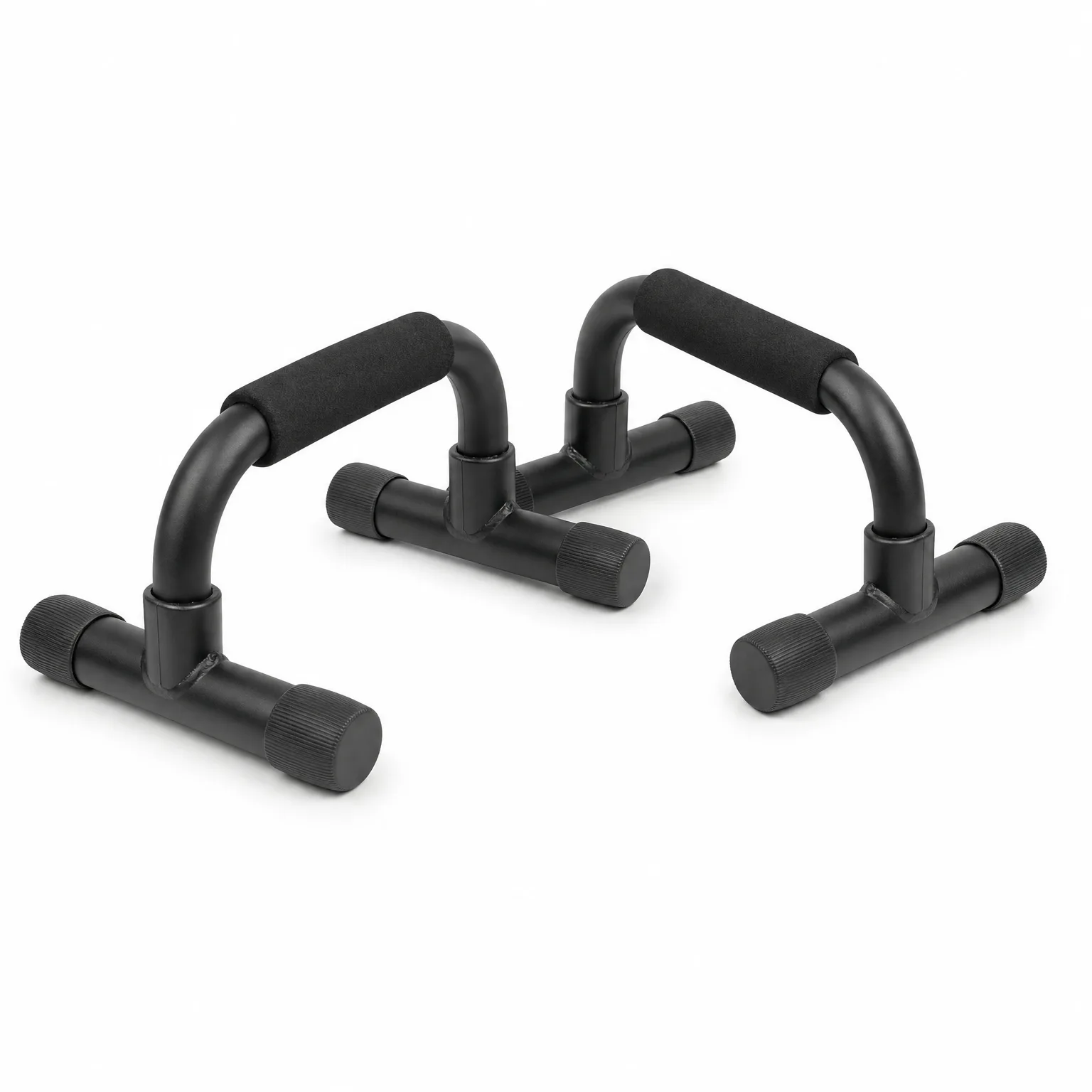
Dumbbell presses on a bench or on the floor train the same muscles and let each arm find its own path. A barbell bench press is the classic heavy option and needs a rack or a spotter. With no weights, push-ups cover the movement: on push-up bars for more depth, on the floor, or with the hands on a wall for the easiest version.
-

Dumbbells
A pair of short handles with a weight at each end. One pair trains every major muscle group, at home or in a gym. -

Barbell
A long steel bar loaded with plates at both ends. The standard tool for squats, deadlifts, presses and rows with heavy weight. -
Push-up bars
A pair of low handles for the floor. They keep the wrists straight in push-ups and let the chest go lower than the hands. -
Wall
A clear stretch of solid wall works as support, a balance aid and a fixed surface to push against: wall sits, wall push-ups, stretches.
Often used with
-
Pec deck machine
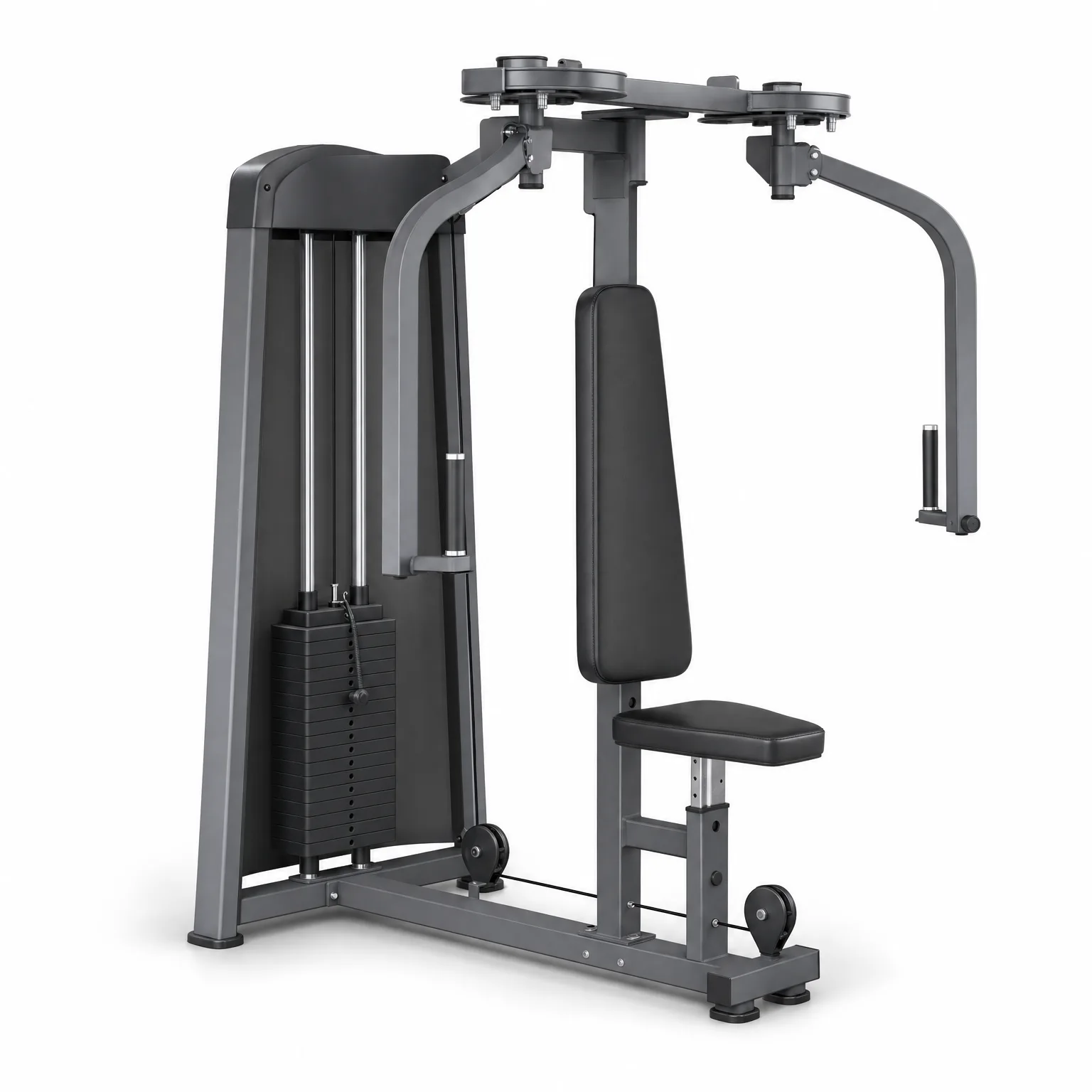
A seat with two arms that swing together in front of the chest. It isolates the chest, and facing the pad trains the rear delts. -
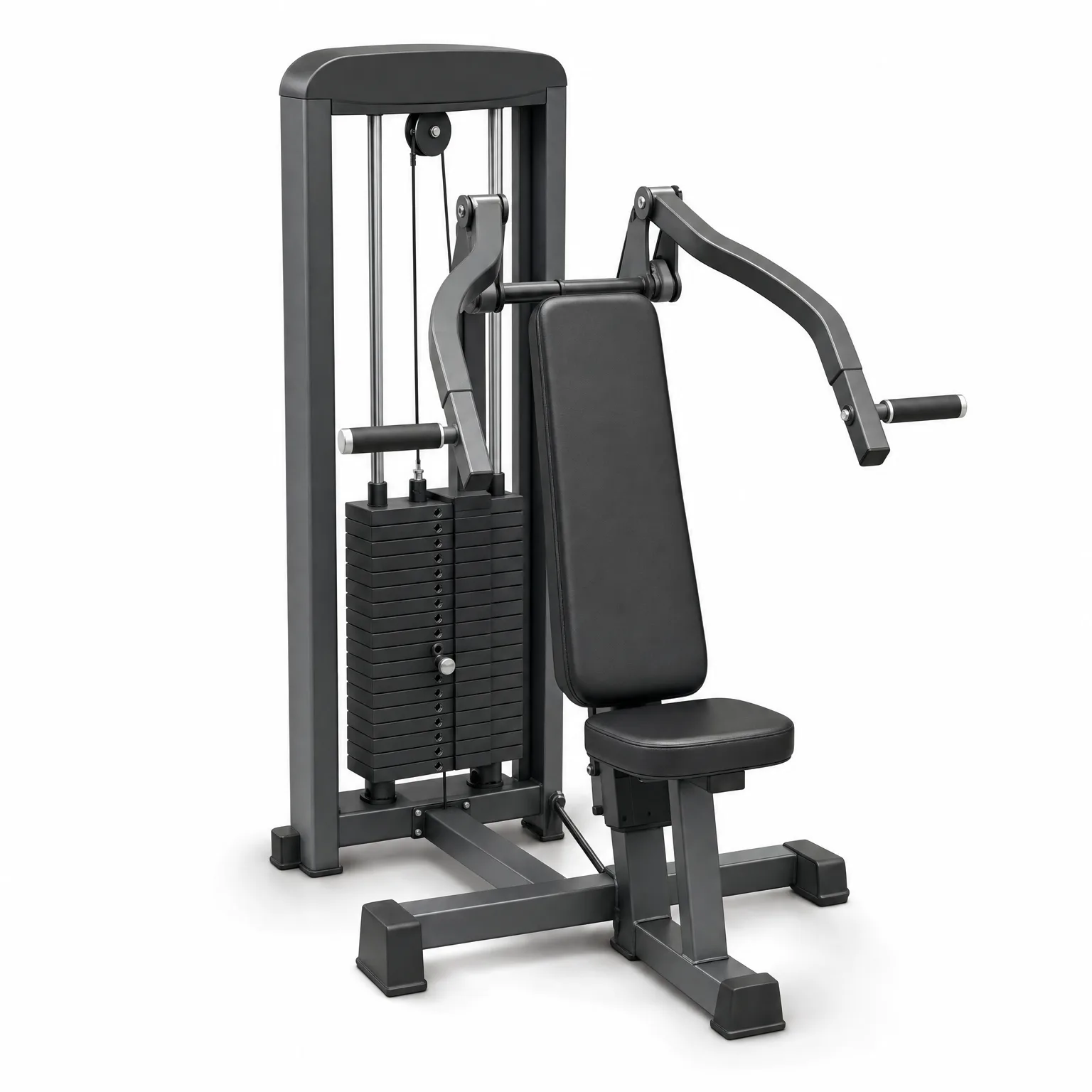
Shoulder press machine
A seat with handles you press overhead along a fixed path. It trains the front and side of the shoulders and the triceps. -
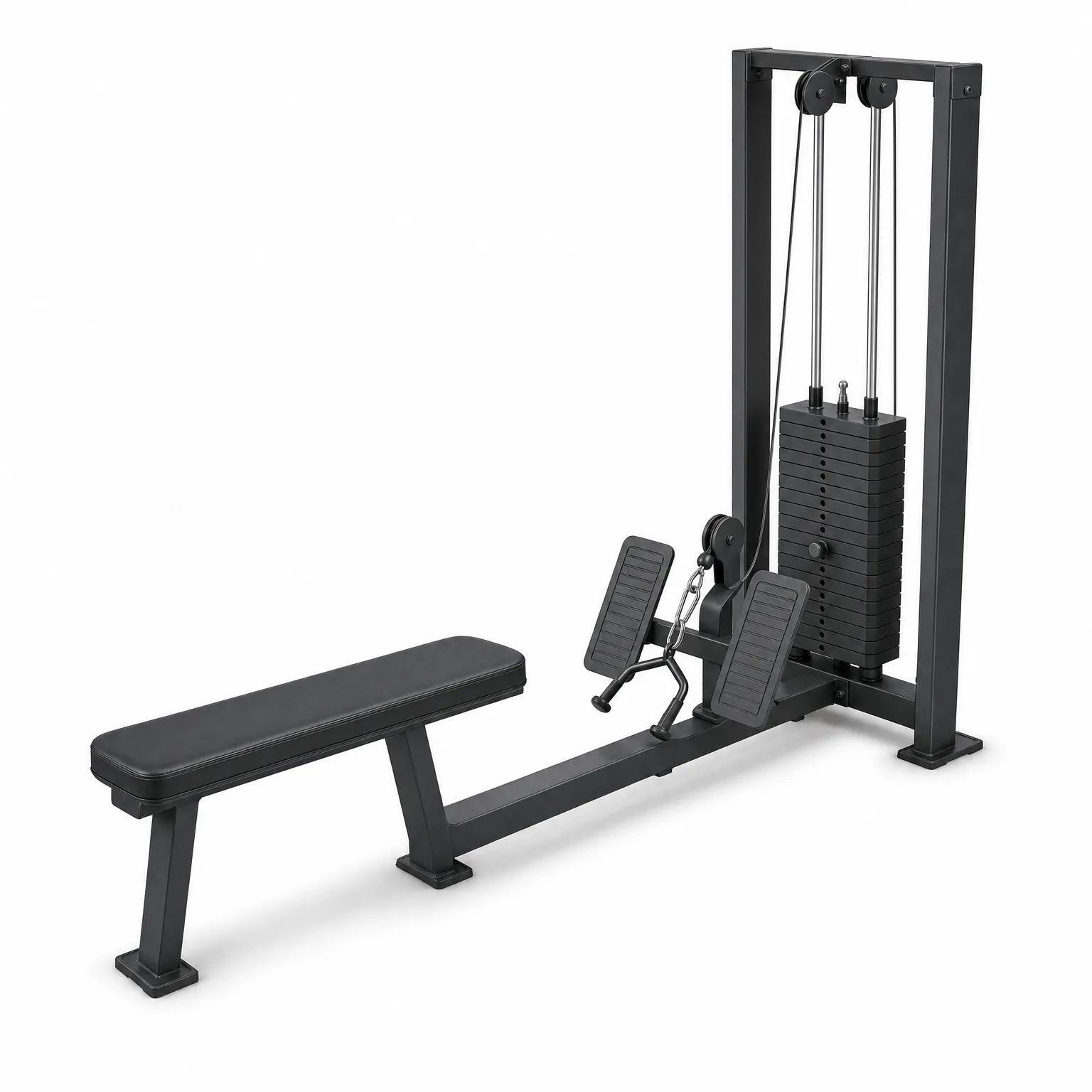
Seated row machine
A seat facing a low cable or a pair of lever arms. You pull the handles to your torso to train the mid back and lats.
Questions about chest press machine
What muscles does the chest press machine work?
Mainly the chest. The front shoulders and the triceps assist in every rep. An incline machine moves more of the work to the upper chest and front shoulders.
Chest press machine vs bench press: which is better?
The bench press trains more stabilizing muscles and is the standard test of pressing strength, but it takes practice and a spotter or safety bars for heavy sets. The machine is quicker to learn and lets you work close to failure alone. For chest size both work when the sets are hard.
How high should the seat be on a chest press machine?
High enough that the handles are level with the middle of your chest when you sit against the pad. Your forearms should point straight along the line of the press, and the elbows should sit a little below shoulder height.
How much weight should I start with on the chest press?
Start near the top of the stack, with one or two plates selected, and do 10–12 reps. Add a plate per set until the last two reps are hard but controlled. That is your working weight for now.
Build programs around what your client has
This guide comes from OnlineFitness.app, the app online coaches run their clients in.
Free for life for the first 100 coachesNo card