Pec deck machine
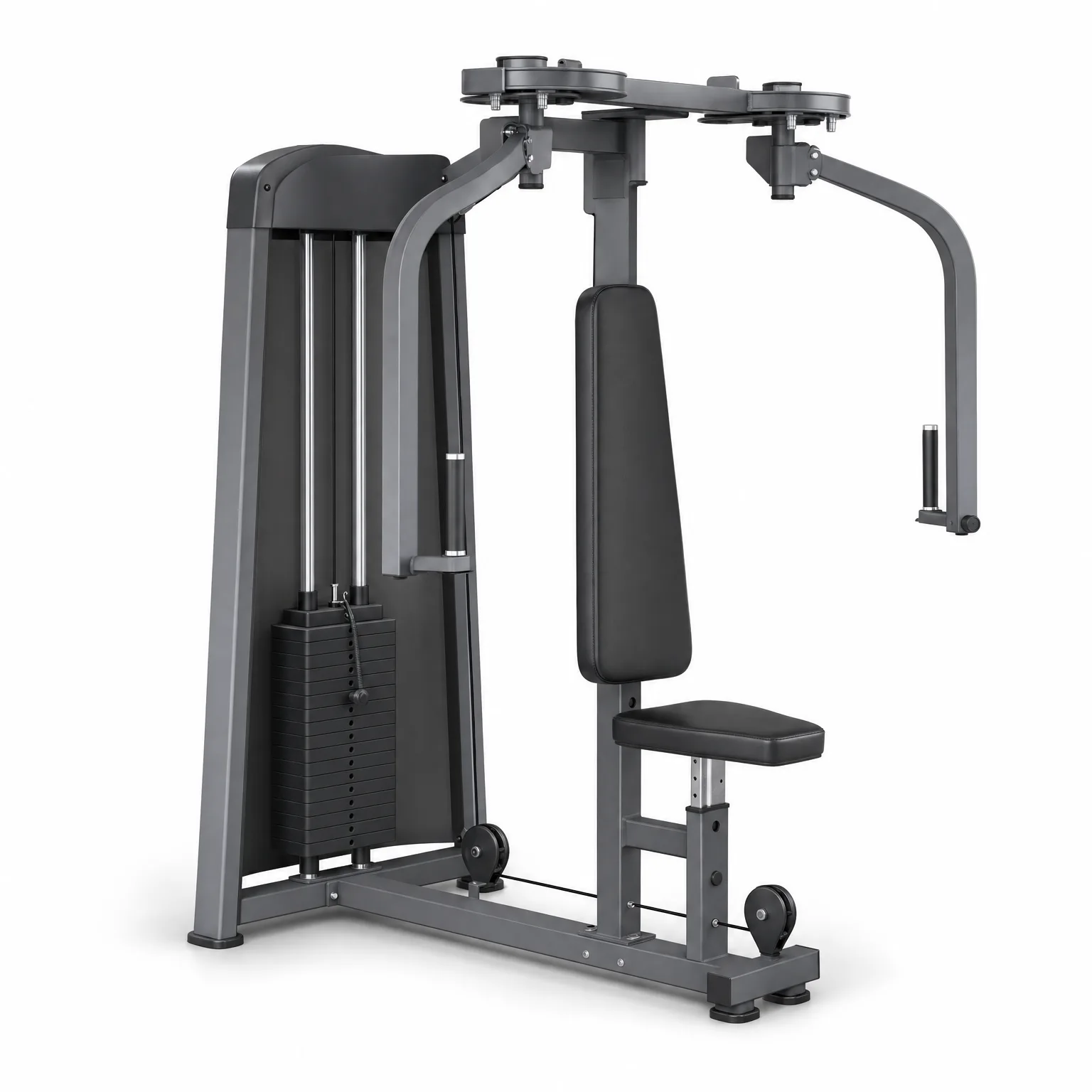
A seat with two arms that swing together in front of the chest. It isolates the chest, and facing the pad trains the rear delts.
In short
A pec deck is a seat with two arms that pivot beside the shoulders. You bring the arms together in front of the chest in a wide hugging arc. The elbows stay almost fixed, so the chest does the work without much help from the triceps.
Most modern machines are dual-purpose: sit facing the back pad and pull the handles apart, and the same machine becomes a reverse fly for the rear shoulders and upper back. It suits all levels and is usually done after presses.
- Category
- Gym machines
- Where
- Gym
- Level
- Beginner and up
- Space
- Needs a dedicated area
- Typical sizes
- Stacks are commonly 60–110 kg (130–240 lb); footprint about 1.2 x 1.5 m (4 x 5 ft)
- Also called
- pec deck, pec fly machine, chest fly machine, butterfly machine, machine fly, rear delt fly machine, reverse fly machine
Muscles it works
- Main
- Chest
- Also works
- Front delts, Rear delts, Mid back
What it is used for
- Chest flyes with constant tension through the whole arc
- Reverse flyes for the rear shoulders and upper back
- Finishing the chest after presses without tiring the triceps further
- One-arm flyes to work each side on its own
Types
Straight-arm fly. Long arms with vertical handles. You hold them with the elbows slightly bent. The most common current design, usually with a reverse fly setting.
Elbow-pad pec deck. The older design. Forearms rest on vertical pads with the elbows bent at 90 degrees, and you push with the elbows.
Fly and rear delt combo. Arms with a pin or dial that sets the start angle from far back for chest flyes to far forward for reverse flyes.
How to choose
Set the seat height
For chest flyes, adjust the seat so the handles are level with the middle of the chest and the upper arms are roughly parallel to the floor or slightly below shoulder height. Hands above the shoulders means the seat is too low.
Set the start angle
Use the pin or dial on each arm to choose where the handles begin. Set them so you feel a light stretch across the chest with the hands about in line with the shoulders. Do not start with the hands far behind the body. Set both arms to the same hole.
Set up for reverse flyes
Move both arms to the most forward setting, sit facing the pad with the chest against it, and raise or lower the seat until the handles are at shoulder height with the arms straight in front of you.
Choose a starting load
This is a single-joint exercise with a long lever, so use much less than on the chest press. Start with a few plates and aim for 12–15 controlled reps. Reverse flyes need less again.
How to start using it
- Sit back and lift the chest. Press the head, upper back and hips into the pad with the feet flat. Pull the shoulder blades back slightly and keep them there.
- Take the handles one at a time. Reach back for one handle, then the other, and bring both forward to the start position. Keep a small, fixed bend in the elbows.
- Bring the hands together in an arc. Sweep the arms forward as if hugging a wide tree until the handles almost touch in front of the chest. Squeeze for a moment. The elbow angle does not change.
- Open slowly. Let the arms go back in two to three seconds until you feel the stretch at your set start point. Stop before the plates touch the stack.
- For reverse flyes, lead with the elbows. Facing the pad, pull the handles apart and back in a wide arc until the arms are in line with the shoulders. Keep the chest on the pad and the shoulders down.
Common mistakes
Start position too far back
Setting the arms as far back as they go puts the shoulder at the end of its range under load at the start of every rep. Choose a setting with a light stretch only.
Turning the fly into a press
Bending the elbows more as the weight gets heavy brings in the triceps and shortens the lever. Lower the load and keep the elbow angle constant.
Shoulders rolling forward
Rounding the upper back to bring the handles together takes the chest out of the squeeze. Keep the shoulder blades on the pad and stop when the hands meet.
Too much weight on reverse flyes
The rear deltoids are small. A heavy stack makes the traps and lower back take over, with shrugging and leaning back. Use a light load and a pause at the end.
What to use instead
A cable machine with two pulleys at chest height gives the same fly with a free path. Dumbbell flyes on a bench work the chest, with less tension at the top of the rep. For the reverse fly, use bent-over dumbbell raises or a cable face pull. At home, a resistance band anchored behind you covers flyes, and a band pulled apart in front of the chest covers the reverse fly.
-
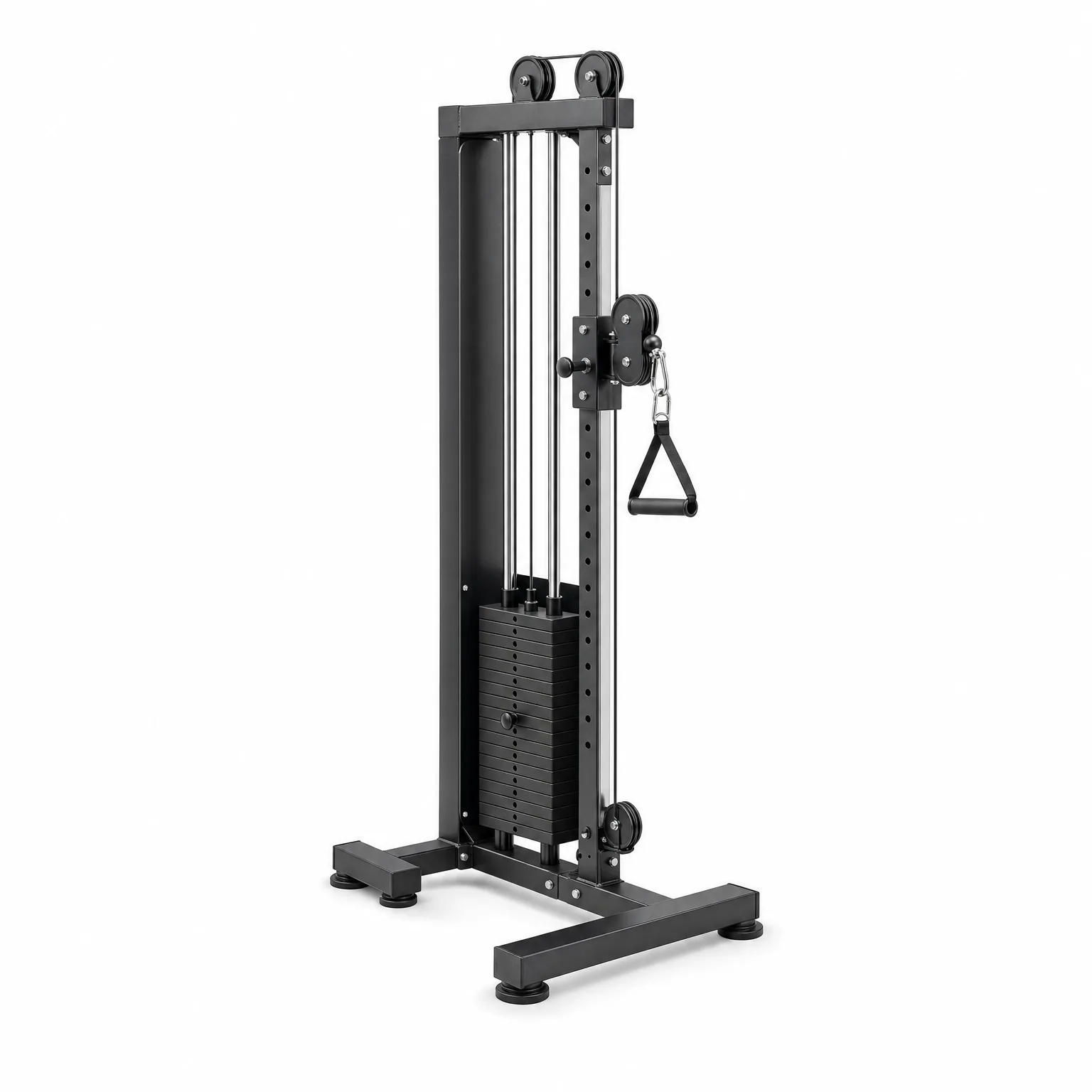
Cable machine
A weight stack on a pulley with a handle you can set at any height. It keeps tension on the muscle through the whole movement. -

Dumbbells
A pair of short handles with a weight at each end. One pair trains every major muscle group, at home or in a gym. -
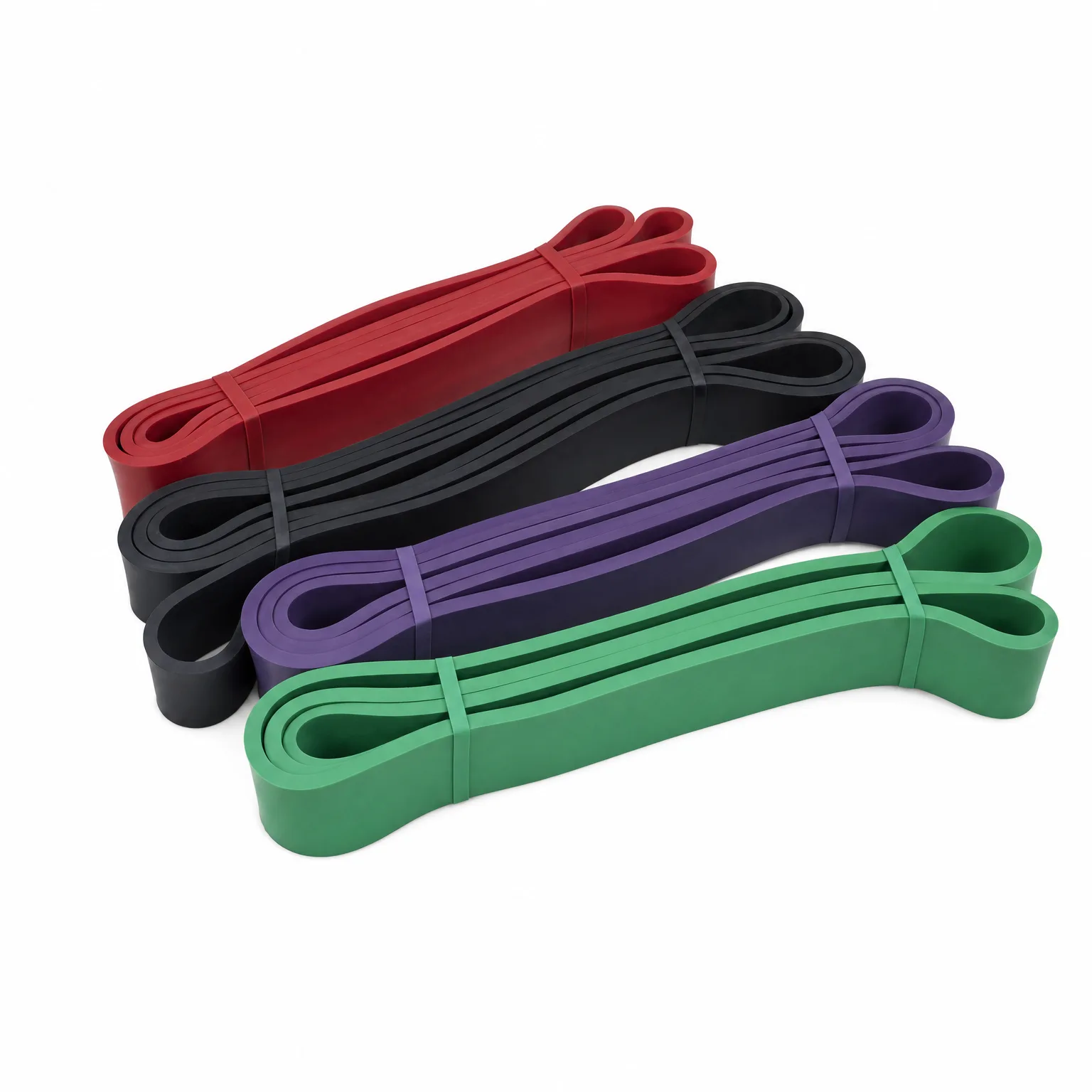
Resistance bands
Long closed loops of thick rubber. They add resistance to rows, presses and squats, or take weight off in pull-ups and dips.
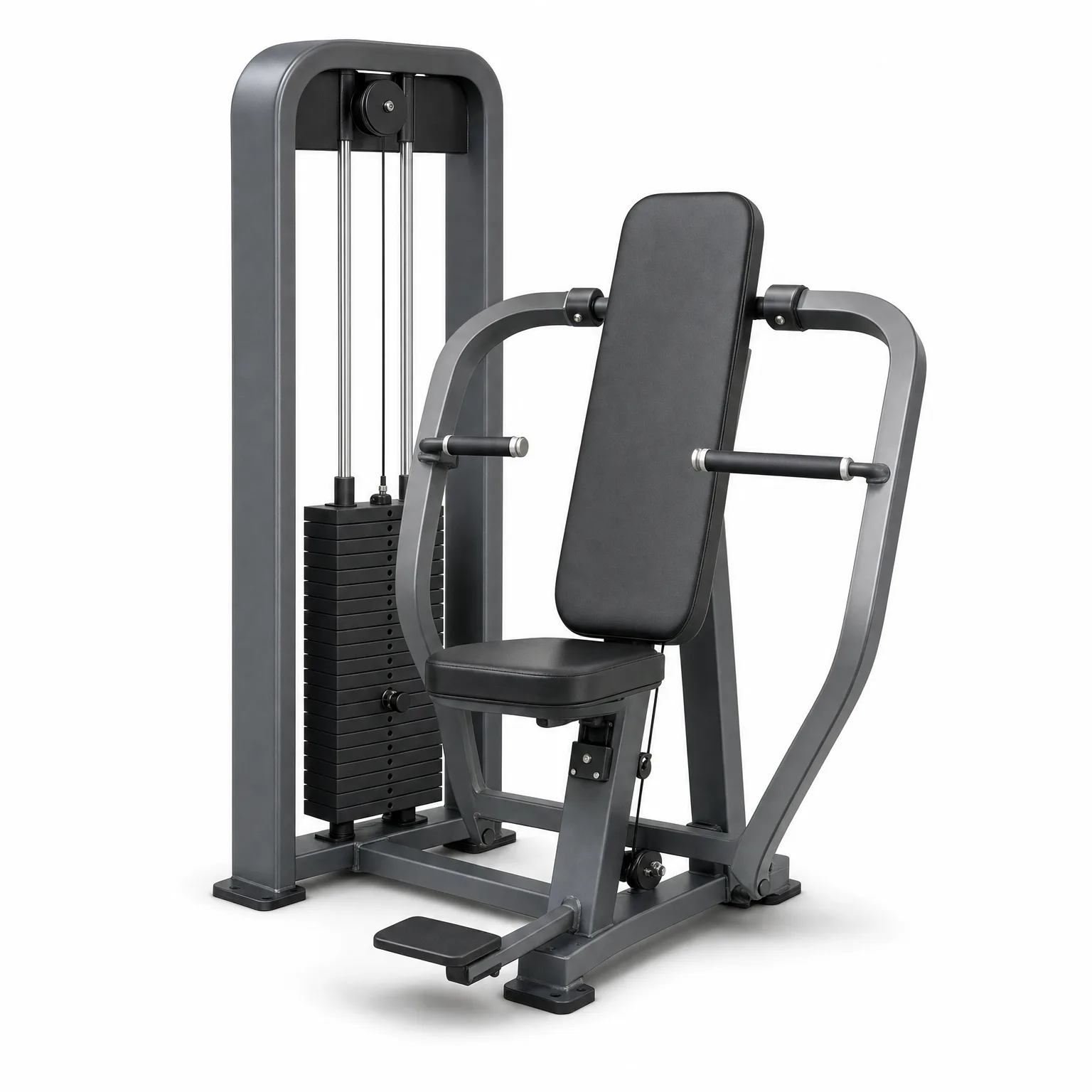
Often used with
Questions about pec deck machine
What muscles does the pec deck work?
In the fly direction, the chest, with a little help from the front shoulders. In the reverse direction, the rear deltoids and the muscles between the shoulder blades. The arms mostly just hold the handles.
Pec deck vs chest press: which is better for the chest?
They do different jobs. A chest press moves more weight and also trains the shoulders and triceps. A pec deck isolates the chest and keeps tension on it through the whole arc. A common order is the press first, then the pec deck.
Pec deck vs dumbbell flyes?
With dumbbells, the load fades as the hands come together above the chest, and the bottom of the rep is the hardest part. The machine keeps the resistance even through the arc and has a fixed start point, so it is easier to control and to load.
How do I use the pec deck for rear delts?
Set both arms to the most forward position, sit facing the pad, and set the seat so the handles are at shoulder height. Pull the handles out and back in a wide arc with nearly straight arms, pause, and return slowly. Use a light weight.
Build programs around what your client has
This guide comes from OnlineFitness.app, the app online coaches run their clients in.
Free for life for the first 100 coachesNo card