Knee sleeves
Neoprene tubes pulled over the knees for squats and other leg work. They compress the joint and keep it warm.
In short
Knee sleeves are tubes of neoprene, usually 3 to 7 mm thick, that you pull up over the knee. They squeeze the area around the joint and hold heat in. Most people who use them say the knees feel warmer and more secure at the bottom of a squat, and a thick, tight sleeve gives a slight push out of the deepest position.
They are worn for squats, lunges, leg presses and Olympic lifts by people who train legs heavy or often. They are not a medical brace: they have no hinges or straps and do not hold the joint in place. Evidence that they lower injury risk is limited, so think of them as a comfort and confidence aid.
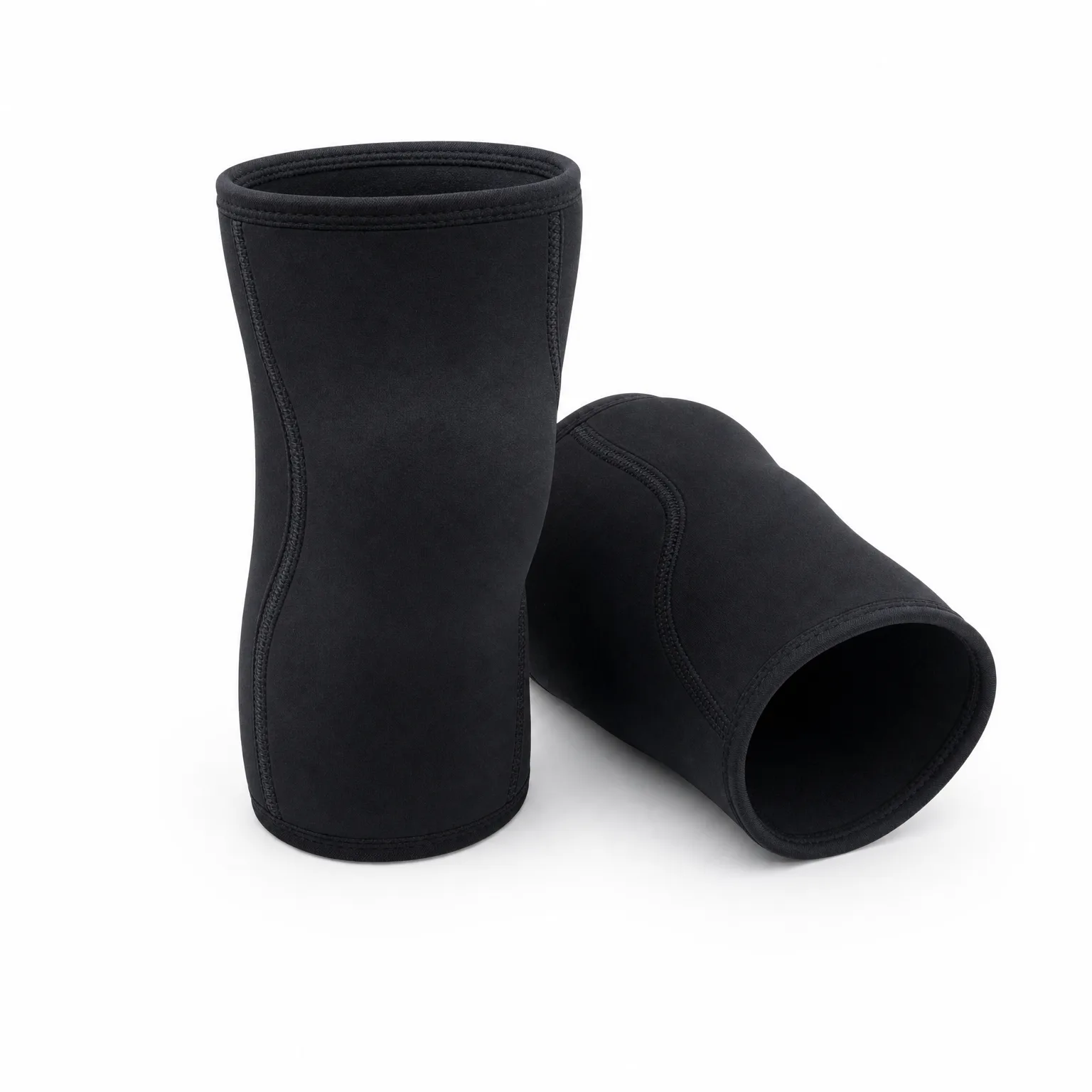
- Category
- Lifting accessories
- Where
- Gym, Home
- Level
- Intermediate and up
- Space
- Fits in a drawer or a bag
- Typical sizes
- 3, 5 or 7 mm thick, about 25–30 cm (10–12 in) long; sized by the manufacturer's chart from knee or calf circumference
- Also called
- knee sleeves for squats, neoprene knee sleeves, knee compression sleeves, squat sleeves, lifting knee sleeves, knee supports for lifting, 7mm knee sleeves
What it is used for
- Heavy and high-volume squats
- Lunges, split squats, leg presses and hack squats
- Olympic lifts, where the knees bend deeply and fast
- Kneeling and jumping work in mixed conditioning sessions, as padding and warmth
Types
3 mm sleeves. Thin and flexible. Light warmth and compression for running, conditioning and long sessions where you need to move freely.
5 mm sleeves. The all-round thickness for mixed training: enough compression for squats and still comfortable for lunges, jumps and Olympic lifts.
7 mm sleeves. Thick and stiff, made for heavy squats. The most compression and warmth, harder to get on, too bulky for running or jumping.
Knee wraps. A different tool: long elastic bandages wound very tightly around the knee. They store energy as the knee bends and add weight to a squat. Used in some powerlifting, not for general training.
How to choose
Choose thickness by your training
Pick 7 mm if squatting heavy is the main use. Pick 5 mm for a mix of lifting and conditioning. Pick 3 mm if you want light warmth for long or fast sessions.
Measure before you order
Brands size differently. Most ask for the circumference around the middle of the knee with the leg almost straight, some ask for the top of the calf. Use the chart of the sleeve you are buying, not your size from another brand.
Decide how tight you want them
A sleeve should be snug with no folds behind the knee and should not slide down. Going one size down gives a stiffer, competition-style fit that is hard to pull on and uncomfortable to keep on between sets.
Check the rules if you compete
Powerlifting federations limit sleeve thickness and length and often approve specific models. Read the equipment list before buying a pair for meets.
How to start using it
- Pull them on before the leg work. Slide the sleeve up over the calf and center it on the kneecap, with roughly equal lengths above and below the joint. A very tight sleeve goes on more easily if you fold it inside out halfway, pull it to the knee and unroll it upward.
- Smooth out the back. Bend the knee a few times and flatten any bunching behind it. Folds there pinch at the bottom of a squat.
- Warm up as usual. A sleeve keeps the knee warm but does not replace a warm-up. Do your lighter sets first, with the sleeves on or pushed down to the calves.
- Push them down between sets. If the sleeves are tight, roll them down to the calves during rest periods and pull them back up for the next set. Wash and dry them regularly, as neoprene holds sweat.
Common mistakes
Expecting them to deal with knee pain
A sleeve adds warmth and compression. It does not change what is happening in the joint. If a knee hurts during or after training, look at load, technique and recovery, and see a professional if it persists.
Buying far too small
Sleeves that need two people to pull on cut into the leg and can make the calves and feet go numb during a session. Tight is useful only up to the point where you can still wear them for a full set.
Confusing sleeves with wraps
Knee wraps add a large rebound and noticeably more weight to a squat. Sleeves add very little. Numbers set in wraps and in sleeves are not comparable.
Never washing them
Neoprene soaked in sweat and left in a gym bag smells strongly and can irritate the skin. Rinse or hand wash after sessions and dry them fully in open air.
What to use instead
There is no real household stand-in, and none is needed: knee sleeves are optional. A thorough warm-up with a few lighter sets of the same exercise brings warmth to the joint the same way. Long training tights or leggings keep some heat in on a cold gym floor. Elastic bandages from a pharmacy are not a like-for-like replacement, because wound tightly they act more like knee wraps and loosely they do very little.
Often used with
-

Barbell
A long steel bar loaded with plates at both ends. The standard tool for squats, deadlifts, presses and rows with heavy weight. -
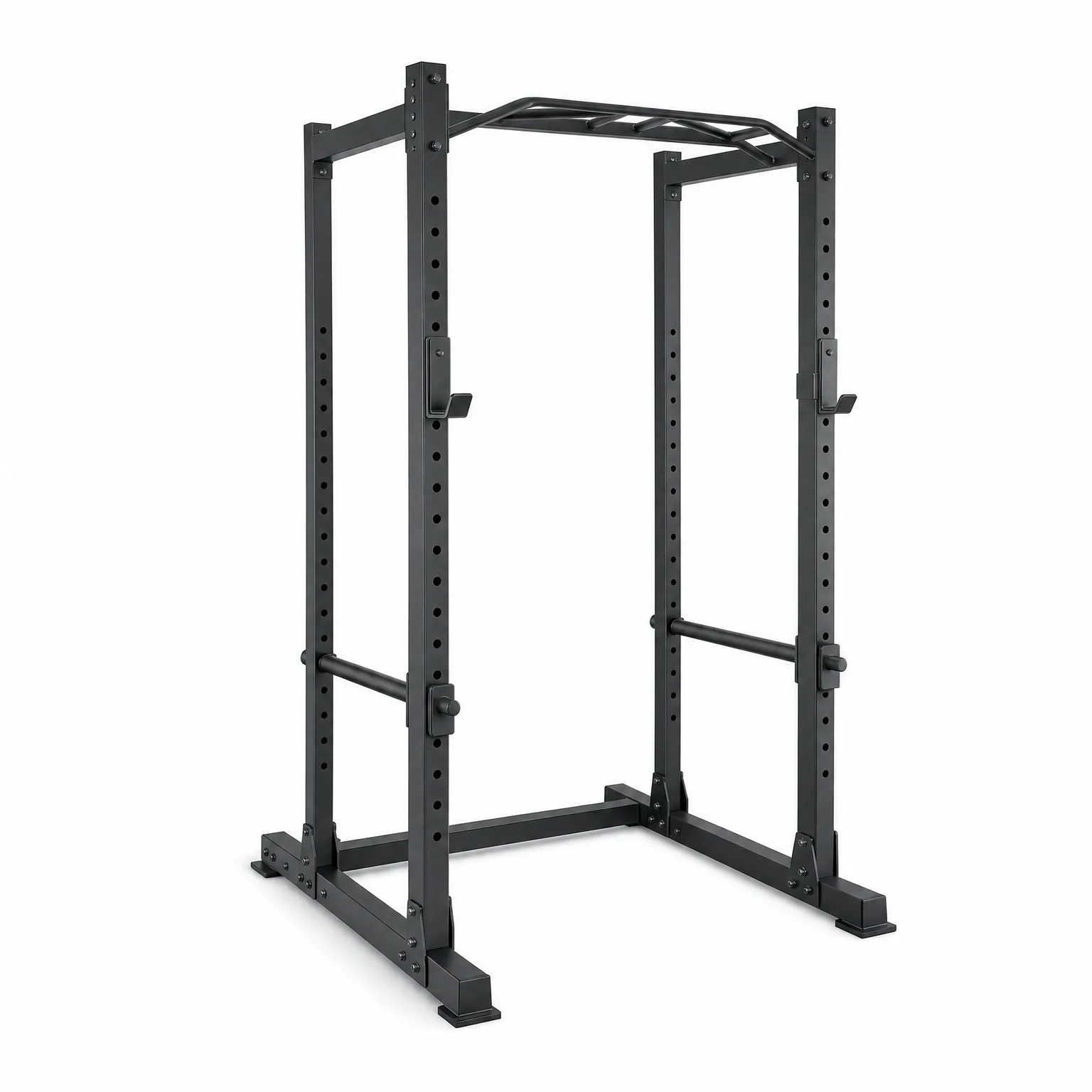
Squat rack
A steel frame that holds a barbell at the height you need and catches it if a rep fails. The base for squats and presses. -
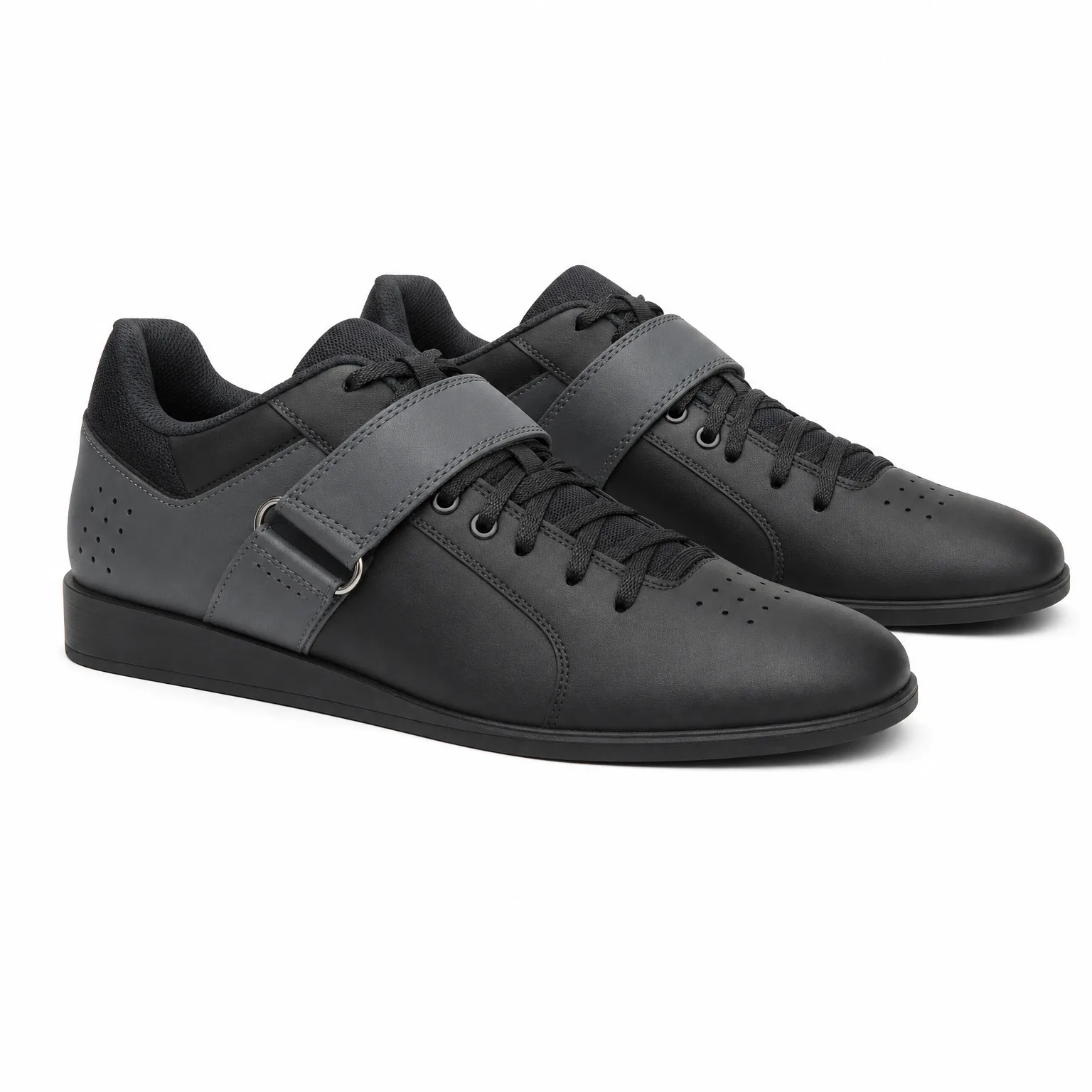
Lifting shoes
Shoes with a hard, flat sole and usually a raised heel that give a stable base for squats and Olympic lifts. -
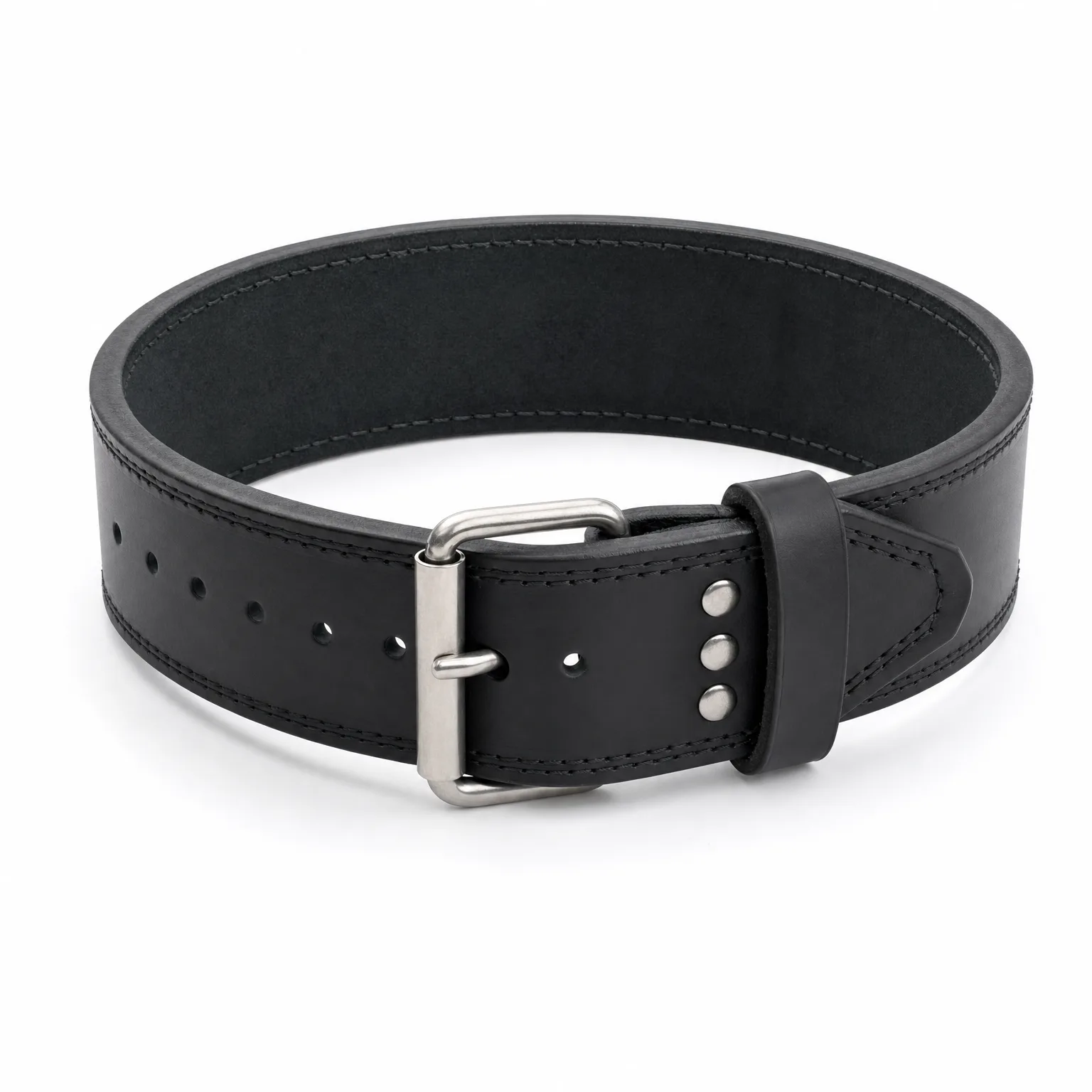
Lifting belt
A stiff belt worn tight around the waist on heavy squats, deadlifts and presses. It gives your abdomen a wall to brace against.
Questions about knee sleeves
What do knee sleeves do?
They compress the area around the knee and keep it warm. Many lifters report that their knees feel more comfortable and stable in deep squats with sleeves on. Thick, tight sleeves also give a small rebound at the bottom. They do not hold the joint in place the way a hinged brace does.
Do knee sleeves prevent injuries?
There is no strong evidence that they do. Research on sleeves is limited and mostly looks at comfort, the sense of joint position and small performance effects. Treat them as an aid to comfort in training, not as protection.
5 mm or 7 mm knee sleeves?
Choose 7 mm if you mainly squat heavy and want the stiffest feel. Choose 5 mm if you also lunge, jump, do Olympic lifts or conditioning in the same session, because a thinner sleeve bends more easily and is less hot.
Knee sleeves or knee wraps?
Sleeves are for everyday training: easy to wear, mild support, little effect on the weight lifted. Wraps are wound tightly for single heavy squat sets, add clear rebound and are uncomfortable for more than a minute or two. Unless you compete in a wrapped powerlifting division, sleeves are the practical choice.
Should beginners wear knee sleeves?
They are not needed to start squatting. Beginners gain more from learning the movement and building up load gradually. Sleeves are a reasonable later addition if you train legs hard several times a week or lift in a cold gym.
Build programs around what your client has
This guide comes from OnlineFitness.app, the app online coaches run their clients in.
Free for life for the first 100 coachesNo card