Cable attachments
The handles, bars, ropes and cuffs that clip onto a cable machine. Each one sets your grip and changes which exercises the cable can do.
In short
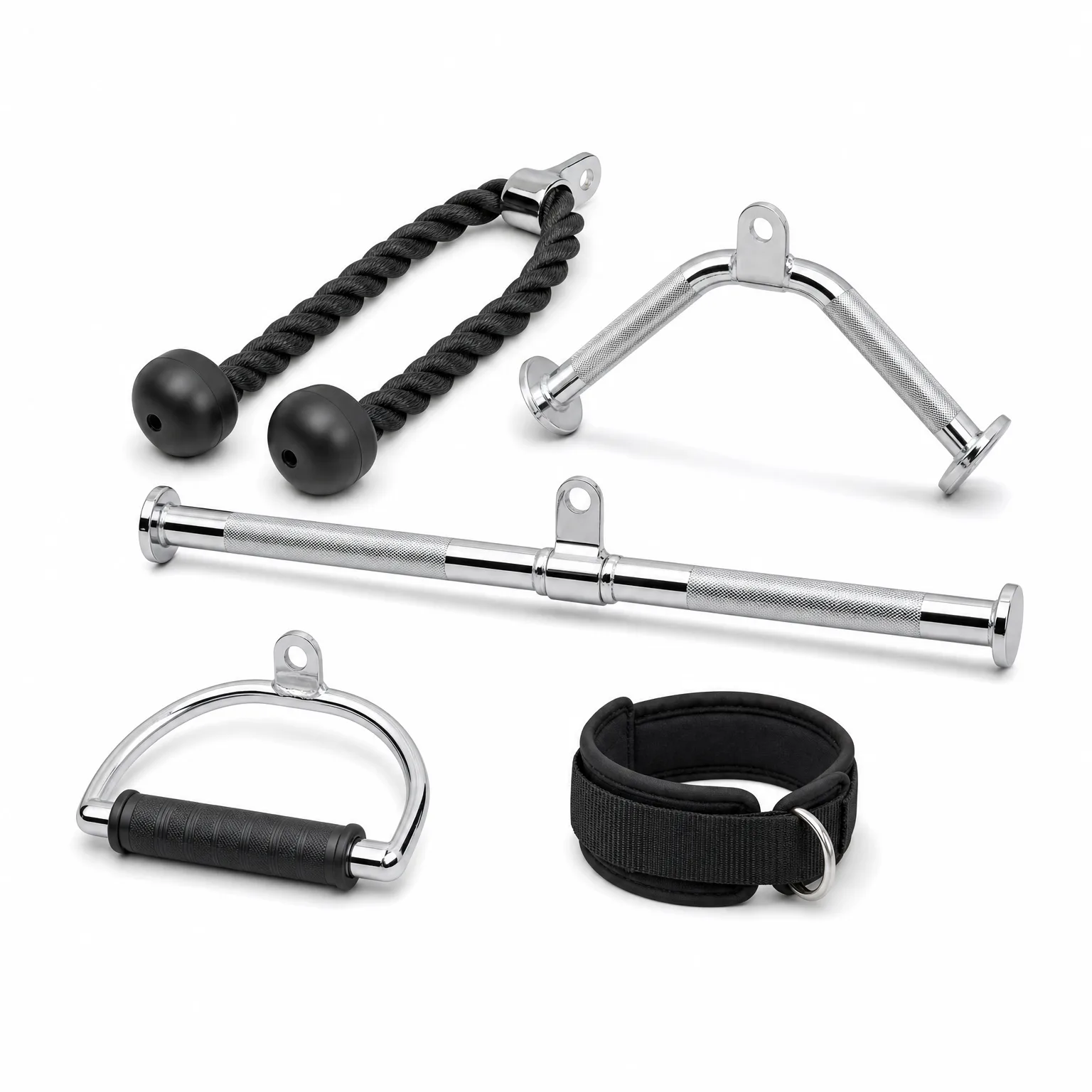
Cable attachments are the interchangeable handles that clip to the end of a cable with a carabiner: ropes, straight bars, V-bars, single D-handles, long lat bars and ankle straps. The machine supplies the resistance. The attachment decides how you hold it: one hand or two, palms up, down or facing each other, a narrow or a wide grip.
Every gym with a cable station keeps a rack of them, and home cable machines and pulley systems use the same ones. Choosing the right attachment is part of setting up the exercise. The rope suits pushdowns and face pulls, the long bar suits pulldowns, the D-handle suits one-arm work and the ankle strap suits leg exercises.
- Category
- Lifting accessories
- Where
- Gym, Home
- Level
- Beginner and up
- Space
- Fits in a drawer or a bag
- Typical sizes
- Rope 60–90 cm (24–36 in); straight bar about 50 cm (20 in); lat bar 90–120 cm (36–48 in)
- Also called
- cable handles, cable machine attachments, tricep rope, lat pulldown bar, v-bar handle, d-handle, ankle strap for cable machine, pulley attachments
What it is used for
- Triceps pushdowns, overhead extensions and face pulls with a rope
- Lat pulldowns and straight-arm pulldowns with a long or short bar
- Seated rows with a V-bar or two single handles
- One-arm presses, flyes, rows, raises and rotations with a D-handle
- Kickbacks, hip abduction and leg curls with an ankle strap
Types
Triceps rope. A thick braided rope with a rubber stop at each end. The ends can move apart during the rep. Used for pushdowns, overhead extensions, face pulls, hammer curls and cable crunches.
Straight bar. A short bar, often with a rotating center. Palms down for pushdowns, palms up for curls. Also used for upright rows and straight-arm pulldowns.
V-bar. Two handles joined at an angle, palms facing each other. The close-grip row handle is the usual choice for seated rows. A smaller angled V handle is used for triceps pushdowns.
D-handle. A single stirrup-shaped handle on a strap or chain. The most versatile attachment: one-arm presses, flyes, rows, lateral raises, curls and rotations.
Lat bar. A long bar with angled ends for wide-grip pulldowns. Some have neutral-grip handles at the ends. Too long for most low or mid pulley work.
Ankle strap. A padded cuff with a D-ring that closes around the ankle. Connects the leg to a low pulley for kickbacks, abductions, hip flexion and standing leg curls.
How to choose
Choose by the grip the exercise needs
Use a bar when both hands should move together, a rope when the hands should be free to separate or rotate, and single handles when each side should work on its own or through a longer range.
Match the width to your shoulders
On pulldowns and rows, a grip a little wider than the shoulders suits most people. Very wide grips shorten the range. If a fixed bar forces your wrists or elbows into an awkward angle, switch to a rope or two D-handles.
Pick the rope length for the exercise
A standard rope of about 70 cm (27 in) covers pushdowns and face pulls. A longer rope, or two ropes on one clip, gives more room to spread the hands at the end of a pushdown or pull.
For home use, check the hardware
Look for a welded or solid eyelet, a swivel on bars so the cable does not twist, and knurled or rubber grips. Check that the carabiner on your machine fits through the attachment's ring.
Start with three
A rope, a pair of D-handles and one bar cover almost every cable exercise. Add an ankle strap if you train the glutes and hips on the cable.
How to start using it
- Set the weight down before changing. Make sure the weight stack is fully resting and the cable is slack. Open the carabiner, swap the attachment and check that the gate has snapped fully shut.
- Set the pulley height. High for pushdowns and pulldowns, at chest or face height for rows, presses and face pulls, low for curls, upright rows and ankle-strap work. The cable should pull in line with the movement you intend.
- Grip the rope against the stops. Hold each end of the rope just above the rubber stop, palms facing each other, with the stops resting against the little-finger side of the hands. At the end of a pushdown or face pull, pull the ends apart.
- Fit the ankle strap snugly. Wrap the cuff just above the ankle bone over a sock or legging, close it firmly and turn the ring toward the pulley: at the back of the leg when you face away, at the front when you face the machine.
- Test with a light weight. A new attachment changes the leverage and the range. Do the first set with less weight than usual to find your position, then build up.
Common mistakes
Using one attachment for everything
Doing every exercise with whatever handle was left on the cable means awkward wrist angles and shorter ranges. Changing the attachment takes ten seconds.
Not checking the carabiner
A clip that is only half closed can let go mid-rep, and the handle comes at you fast. Look at the gate every time you change an attachment.
Gripping the rope too high
Holding the rope near the middle shortens it and leaves no room to separate the hands. Slide down to the stops.
Choosing a bar that is too wide
A very wide grip on a lat bar cuts the range of motion and is uncomfortable for many shoulders. Bring the hands in to just outside shoulder width.
A loose ankle strap
A cuff that slides down over the foot or rotates mid-set pulls unevenly and rubs. Tighten it and check the closure before each side.
What to use instead
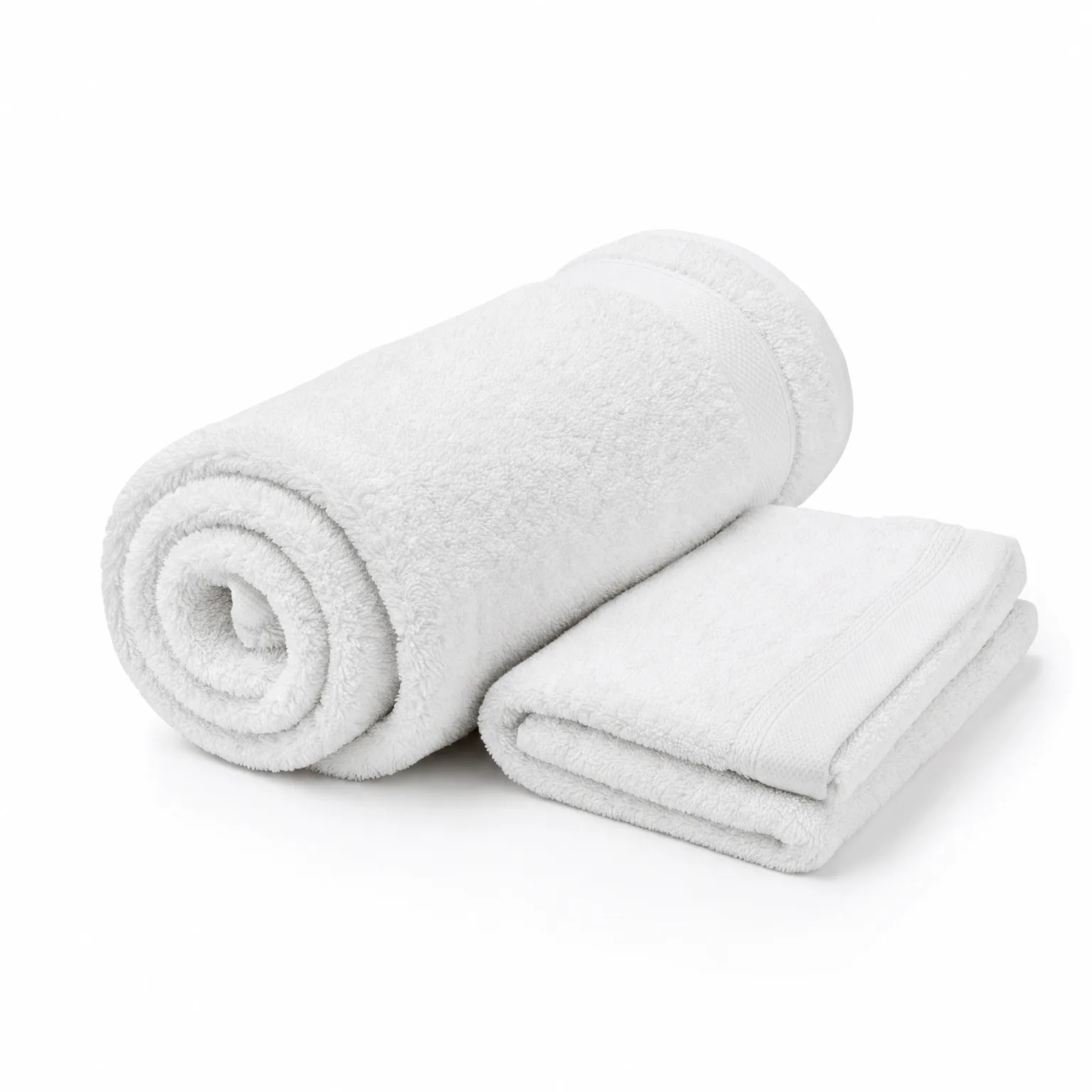
A small towel threaded through the carabiner and held by both ends works much like a rope for pushdowns, face pulls and rows. Two single handles clipped to one carabiner can replace a V-bar. A lat bar gripped close stands in for a straight bar. In place of an ankle strap, some people slip the foot through a D-handle's strap, which is less secure and suits light weights only. Without a cable machine, a tube band with handles reproduces most of these exercises.
Often used with
-
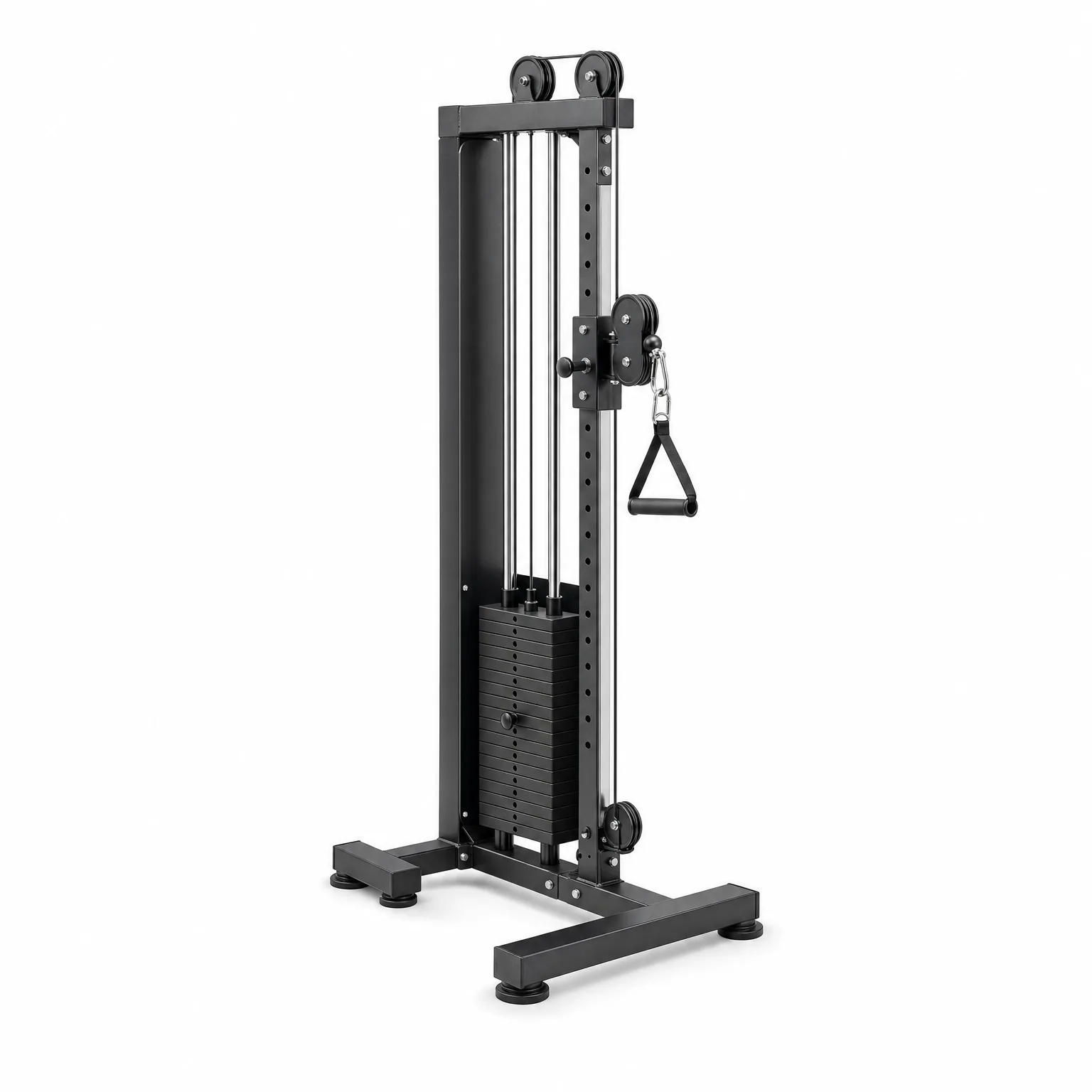
Cable machine
A weight stack on a pulley with a handle you can set at any height. It keeps tension on the muscle through the whole movement. -
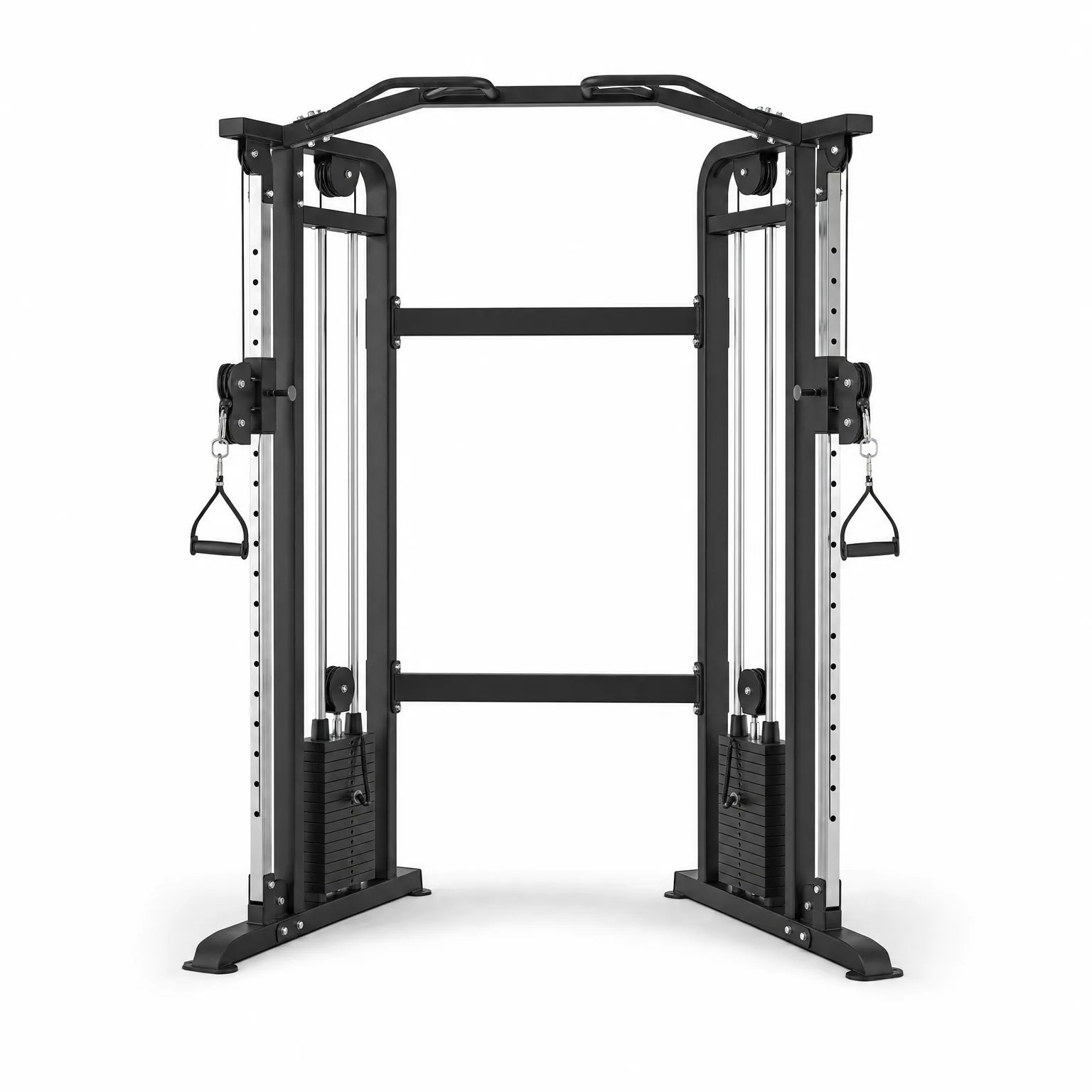
Functional trainer
Two adjustable cable columns in one frame, usually each with its own weight stack. Lets you train both sides at once from any height. -
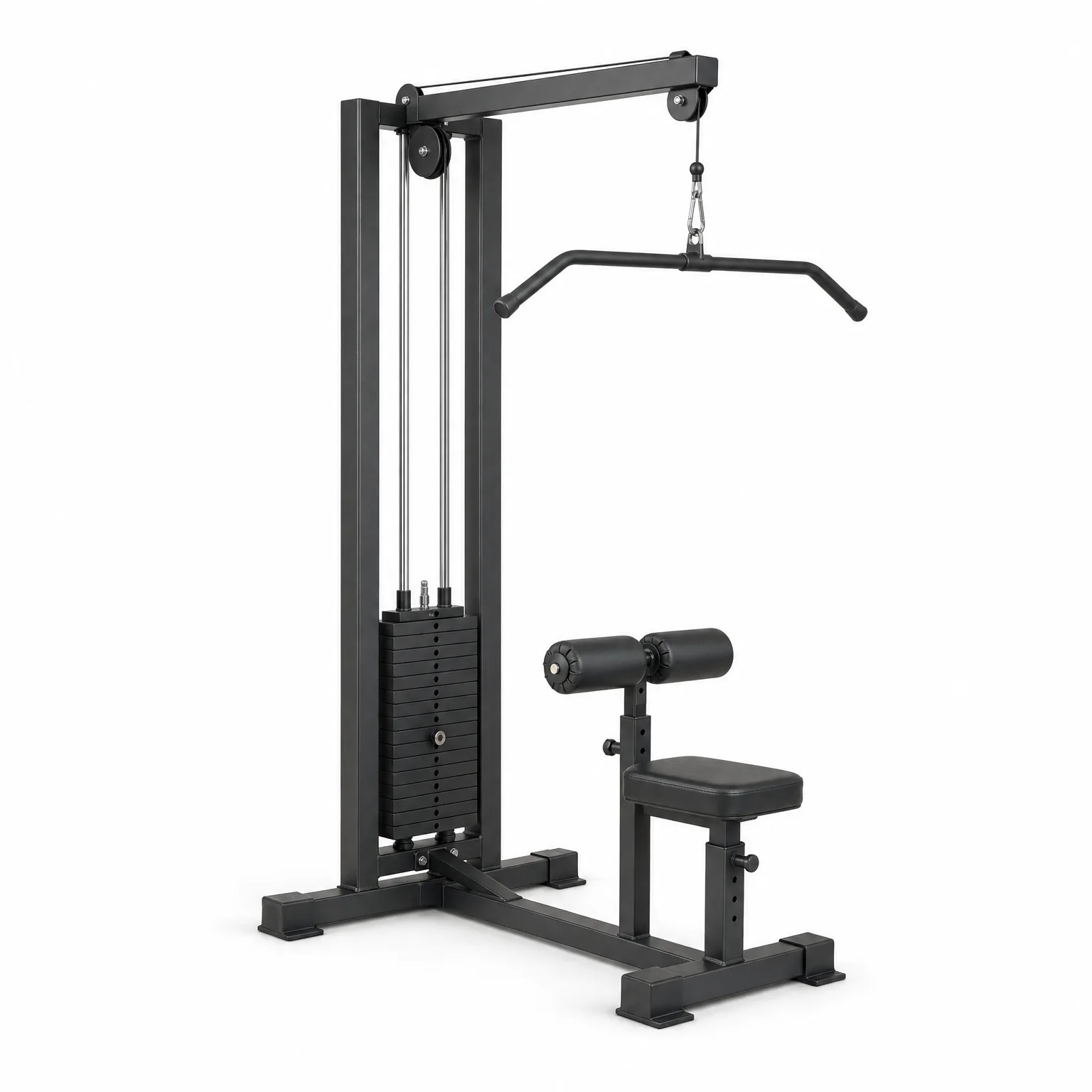
Lat pulldown machine
A seat with thigh pads under a high pulley and a wide bar. You pull the bar to your chest to train the lats and upper back. -
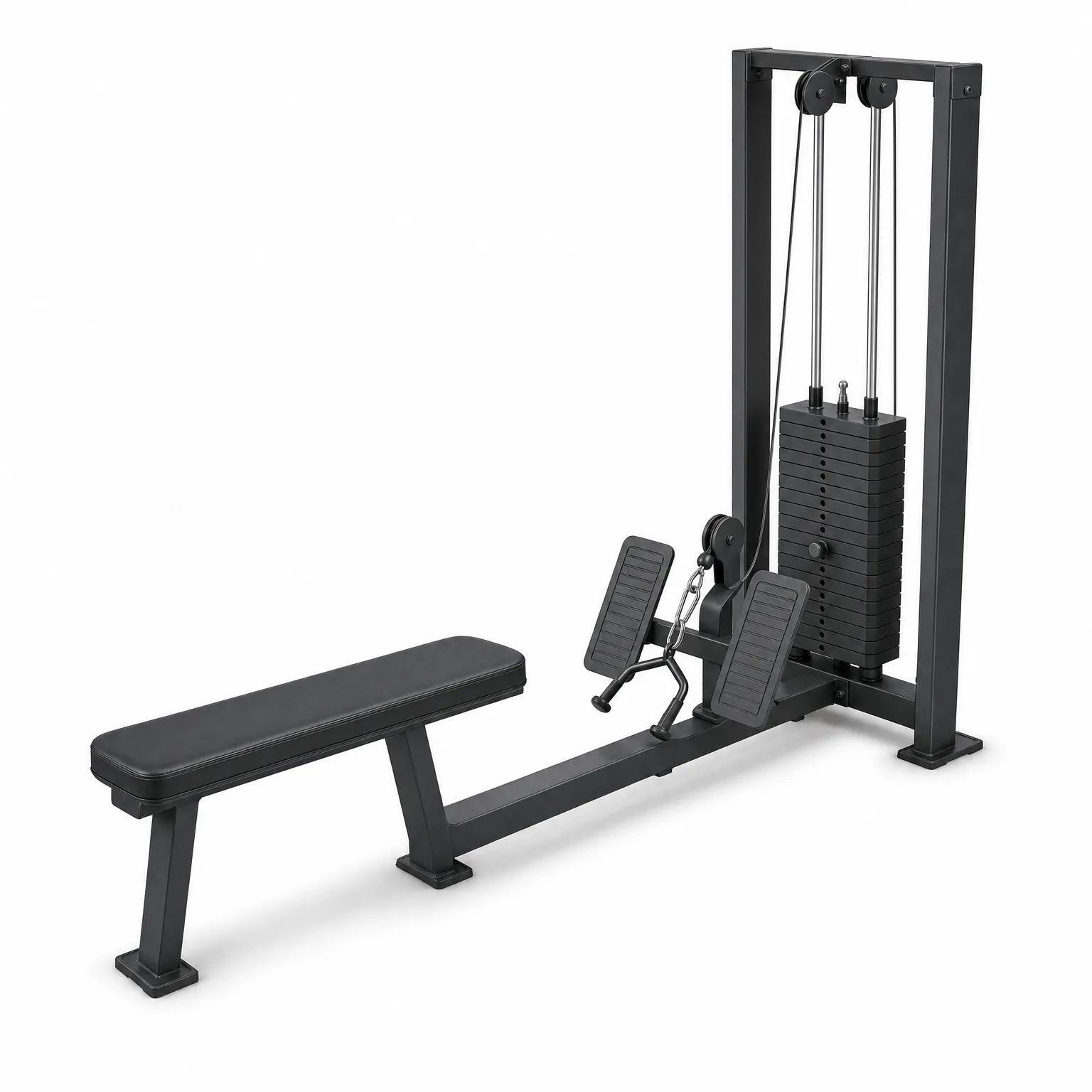
Seated row machine
A seat facing a low cable or a pair of lever arms. You pull the handles to your torso to train the mid back and lats.
Questions about cable attachments
Which cable attachment is best for triceps?
The rope and the straight or angled bar both work. The rope lets the hands turn and spread at the bottom, which many people find easier on the wrists and elbows. A bar is more stable, so most people can use more weight with it. Rotating between them is a reasonable approach.
What attachment do you use for lat pulldowns?
The long lat bar with a grip slightly wider than the shoulders is the standard. A V-bar or neutral-grip handles give a closer grip with palms facing each other, which often allows a longer range and is a comfortable option if the wide bar bothers your shoulders.
Do cable attachments fit every machine?
Almost always. Attachments connect with a standard carabiner, so they move freely between cable stations, functional trainers, pulldown and row machines and home pulley systems. The exceptions are machines with a fixed, built-in handle and no clip.
What is a D-handle used for?
For one-arm cable exercises: presses, flyes, rows, lateral raises, curls, triceps extensions and rotations. Because the handle is free to turn, the wrist can find its own angle. Two D-handles on a dual pulley replace a bar for most movements.
Which attachments should a home gym have?
A rope, two D-handles and a straight or lat bar cover nearly everything. Add a close-grip V-bar if you row often and an ankle strap for glute and hip work. Many home machines include some of these, so check what came in the box before buying.
Build programs around what your client has
This guide comes from OnlineFitness.app, the app online coaches run their clients in.
Free for life for the first 100 coachesNo card